

The melodic chirps of native birds are a welcome sound in any American garden, but often, these pleasant tunes are drowned out by the raucous chatter of the Common Starling (renamed from European Starling).
Introduced to the U.S. in 1890 in New York City's Central Park by a Shakespeare enthusiast, these adaptable birds have since exploded in population, numbering around 150 million across North America.
While their iridescent plumage can be striking, their invasive nature and destructive habits have made them a significant nuisance, impacting native bird populations, agricultural yields, and even posing public health and safety risks.
If you're grappling with a starling problem, understanding their behavior and implementing targeted strategies is crucial to effectively, and often humanely, regain control of your property.

The Problem with Starlings: Why Control is Necessary
Common Starlings are not just a minor annoyance; they pose substantial threats across various sectors. Their adaptability to diverse habitats, nesting sites, and food sources has allowed them to spread rapidly and dominate.
Impact on Native Birds
One of the most significant concerns is their aggressive competition with native cavity-nesting birds. Starlings are notorious for usurping nest boxes from beloved species like Eastern Bluebirds, Purple Martins, Wood Ducks, and various woodpeckers.
They'll often eject eggs or young, delaying native birds' breeding cycles or forcing them to abandon nests altogether. This aggressive behavior directly threatens the success of America's indigenous avian populations.
Agricultural Damage
In agricultural settings, starlings are responsible for millions of dollars in crop damage annually. They feast on fruits such as apples, blueberries, cherries, grapes, peaches, and strawberries, causing direct losses. Beyond consumption, their pecking and slashing can reduce fruit quality and increase susceptibility to diseases.
They also congregate in large numbers at cattle feedlots and dairies, consuming high-protein supplements meant for livestock and potentially transmitting diseases like salmonellosis, leading to increased veterinary costs for producers.
Property Damage and Health Concerns
In urban and suburban areas, large starling roosts can create a host of problems. Their excessive droppings, which contain corrosive uric acid, can stain and damage buildings, vehicles, and sidewalks, leading to significant cleanup costs and property degradation. Nests built in vents, chimneys, and attics can create fire hazards due to flammable materials and can lead to water damage from clogged gutters.
Beyond property damage, large accumulations of droppings can harbor the fungus Histoplasma capsulatum, which causes histoplasmosis, a respiratory disease that can be particularly concerning for individuals with weakened immune systems. Furthermore, their sheer numbers can pose a hazard, as evidenced by tragic aircraft collisions involving large starling flocks.

Legal Status of Starlings
Unlike most native migratory birds, Common Starlings are not protected by the Migratory Bird Treaty Act (MBTA) of 1918.
This means that, in most states, their nests, eggs, young, and adults may be removed or destroyed at any time without a federal permit. However, it's always advisable to check local and state regulations, as some jurisdictions may have specific rules regarding control methods, and it's crucial to avoid harming protected native bird species during any control efforts.
Effective Strategies for Starling Control
Getting rid of starlings often requires a multi-pronged approach, focusing on habitat modification, exclusion, deterrence, and, in some cases, removal.
Habitat Modification & Exclusion
The first and most humane step is to make your property less appealing to starlings.
Starlings are attracted to easy meals. Secure garbage cans with tight-fitting lids, clean up spilled birdseed or pet food (especially high-fat suet cakes which they love), and ensure compost piles are properly managed.
If you have bird feeders, switch to seeds starlings dislike, such as safflower or Nyjer, which are still appealing to many native birds like finches.
Eliminate Water Sources
While they don't drink vast amounts, accessible water sources like standing puddles, leaky outdoor spigots, or open stock tanks can attract them. Consider covering rainwater collection barrels or making gutters less accessible.
Block Entry Points
Starlings are cavity nesters. Inspect your home for potential entry points like open vents, uncapped chimneys, or gaps in siding and under eaves. Install vent covers, chimney caps, and use durable materials like hardware cloth or steel mesh to seal any openings larger than 1 inch in diameter. Regularly check and remove any nest material you find before eggs are laid.

Prune Roosting Sites
Thinning dense trees and shrubs, particularly those close to your home or areas you want to protect, can make them less attractive as roosting or nesting sites.
Physical Deterrents
These methods create unwelcoming surfaces or barriers without harming the birds.
Bird Netting
For larger areas like fruit trees, vegetable gardens, or even sections of buildings like rafters and eaves, bird netting (with a mesh size of 1-1/8 inches or smaller) is highly effective. It creates a physical barrier that prevents starlings from accessing the protected area. Ensure the netting is taut and secured to prevent birds from getting tangled.
Bird Spikes
These humane, blunt-tipped spikes can be installed on ledges, rooflines, window sills, and other flat surfaces where starlings perch. They make it uncomfortable for birds to land, forcing them to find other spots.
Bird Wire/Post-and-Wire Systems
Thin, taut wires strung above ledges can make it difficult for starlings to land.
Auditory and Visual Deterrents
These methods aim to scare starlings away by making them feel unsafe.
Reflective Objects
Shiny tape, old CDs, small mirrors, or "scare-eye" balloons that reflect light can disorient and frighten starlings. Their effectiveness is often temporary, as birds can habituate. Repositioning them frequently can help.
Auditory Devices
Devices that broadcast predator calls or starling distress calls can be effective, especially when used inconsistently to prevent habituation. Gas cannons (for agricultural settings) or sonic repellers can also be used, but be mindful of noise ordinances and potential disturbance to neighbors. Automated laser systems are emerging as a highly effective, non-invasive option for larger areas, as birds perceive the moving green light as a physical object and flee.
Decoys
Fake owls or hawks can sometimes deter starlings, but they often become ineffective once crows realize they are not real threats. Adding movement or repositioning them frequently can improve their efficacy.

Trapping and Removal
For severe infestations or when other methods have failed, trapping and removal may be necessary.
Live Trapping
Modified crow traps, or smaller repeating nest-box traps, can be used. These traps often utilize live decoy starlings (kept humanely with food, water, and shelter) to attract more birds. Trapped starlings can then be humanely euthanized or removed.
Nest Box Traps
If starlings are consistently taking over nest boxes, specialized traps can be installed that capture the starling as it enters, allowing for its removal.
Professional Assistance
For large-scale problems, such as major roosts in urban areas or agricultural settings, consulting with USDA Animal and Plant Health Inspection Service (APHIS) Wildlife Services or a professional pest/wildlife control operator is highly recommended. They have the expertise, equipment, and permits (if necessary) to manage large starling populations safely and effectively, including the use of approved avicides like DRC-1339 in controlled settings.
Getting rid of starlings is an ongoing process, not a one-time fix. Persistence, a combination of methods, and adapting your strategy based on the starlings' response are crucial for regaining control and restoring balance to your U.S. garden or property.
Frequently Asked Questions
Will A Fake Owl Keep Starlings Away?
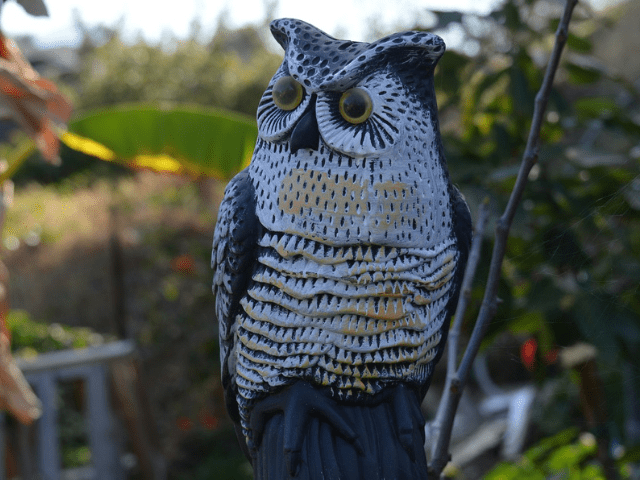
Yes, it'll keep them away because starlings know owls are predators. For the first few days, starlings will stay away from your property. However, they'll cunningly test the dummy to confirm it's a live owl, and that'll be the end of your trick. Hence, use an owl alongside distress calls or other audio devices. Also, change the owl's position regularly to make its presence more natural.
Will starling deterrents affect native birds?
Great question. While starling control is often necessary due to their invasive nature, it's vital to implement methods that are as species-specific and humane as possible, with constant vigilance to protect native bird populations.
Exclusion methods (netting, sealing holes, proper feeder choice) and habitat modification are generally the safest for native birds. Any method involving trapping or chemicals requires extreme caution and, ideally, professional guidance.
Wrapping Up
Starlings will double your bird feeding budget. They don't show up in your backyard alone. No, they come in flocks and stay as long as there's food in your bird feeder.
With such large numbers taking over your backyard, your curb appeal will also be at stake. These birds nest in cavities, and they can occupy vents and cracks on walls. Even though they are small birds, they bully others and take control of the feeder.
Therefore, remove the foods they like, starling-proof your feeder, and lock them out of nest boxes so you can deter starlings.
Not sure about starlings and grackles? We solve the problem.

Starling murmurations are not interesting or beautiful, the present a disgusting example of an invasive species of bird.
of these invasive species and I consider them a health hazard and a hazard to property. They are ruining the siding on our house, the paint on our cars and our driveway is a mess. I have 2.5 acres, the neighbor has 4 acres and that gives an idea of our area. There is only one one in my mind to deal with Starlings and that means a dead Starling. Now I know why my dad, a guy that grew up on a farm, hated Starlings. We need a Federal program to eradicate this bird.