

Virginia, with its dynamic topography stretching from the Appalachian Mountains to the Chesapeake Bay and Atlantic coastline, provides a rich mosaic of habitats for a diverse array of raptors. Among these magnificent birds of prey, hawks are particularly prominent, with several species commonly observed across the Commonwealth.
Birdwatchers in Virginia can enjoy the thrill of spotting powerful Buteos soaring high overhead, agile Accipiters darting through dense woodlands, and unique specialists hunting in open fields. This article explores six notable hawk species found in Virginia, encompassing both its prevalent native residents and fascinating rare visitors.
Hawks of Virginia
1. Red-tailed Hawk (Buteo jamaicensis) - The Ubiquitous Soarer

The Red-tailed Hawk is arguably the most common and widely recognized hawk in Virginia, a familiar sight year-round across virtually all habitats. Whether perched on a roadside telephone pole, circling over open fields, or soaring above fragmented woodlands, its presence is a constant reminder of nature's prowess.
Identification: Adults are easily distinguished by their iconic rusty-red tail, which is particularly vibrant when seen in good light. Their underparts are generally pale, often with a subtle "belly band" of dark streaking across the lower breast. Upperparts are dark brown. Juveniles, however, sport a barred tail (brown and white) instead of red. Their piercing, raspy "kee-eeeee-arr" call is classic.
Habitat and Diet: Red-tailed Hawks are highly adaptable, thriving in a mix of open country and woodlands. They are opportunistic hunters, primarily preying on small to medium-sized mammals like voles, mice, gophers, and rabbits, but also taking reptiles, amphibians, and other birds. They typically hunt from a high perch or while soaring.
2. Red-shouldered Hawk (Buteo lineatus) - The Woodland Dweller
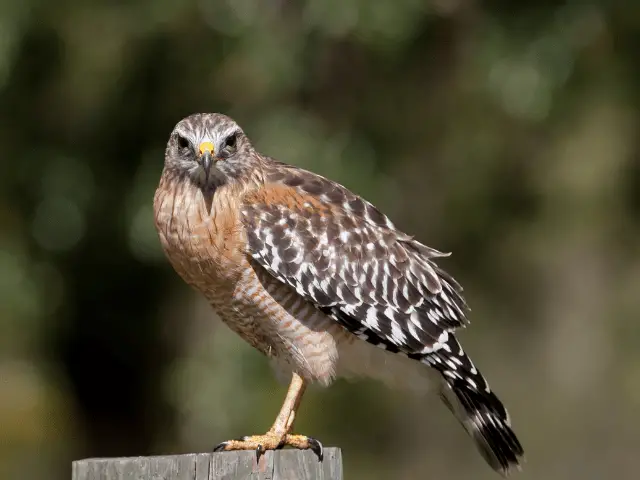
Another common and vocal hawk found year-round in Virginia is the Red-shouldered Hawk. This medium-sized Buteo prefers moist, mature deciduous or mixed forests, often near water sources like rivers or swamps.
Identification: Adults are striking with their reddish-brown barring on the breast and belly, and bold black and white banding on their wings and tail. They have prominent reddish-orange shoulder patches (though these can be hard to see). In flight, distinctive translucent crescents near the wingtips are often visible. Their characteristic call is a loud, ringing "kee-ah, kee-ah, kee-ah!"
Habitat and Diet: Red-shouldered Hawks are forest specialists, building stick nests high in trees. Their diet consists of a variety of prey, including small mammals, amphibians (especially frogs), reptiles, and large insects. They often hunt from a low perch within the forest understory.
3. Cooper's Hawk (Accipiter cooperii) - The Agile Bird Hunter
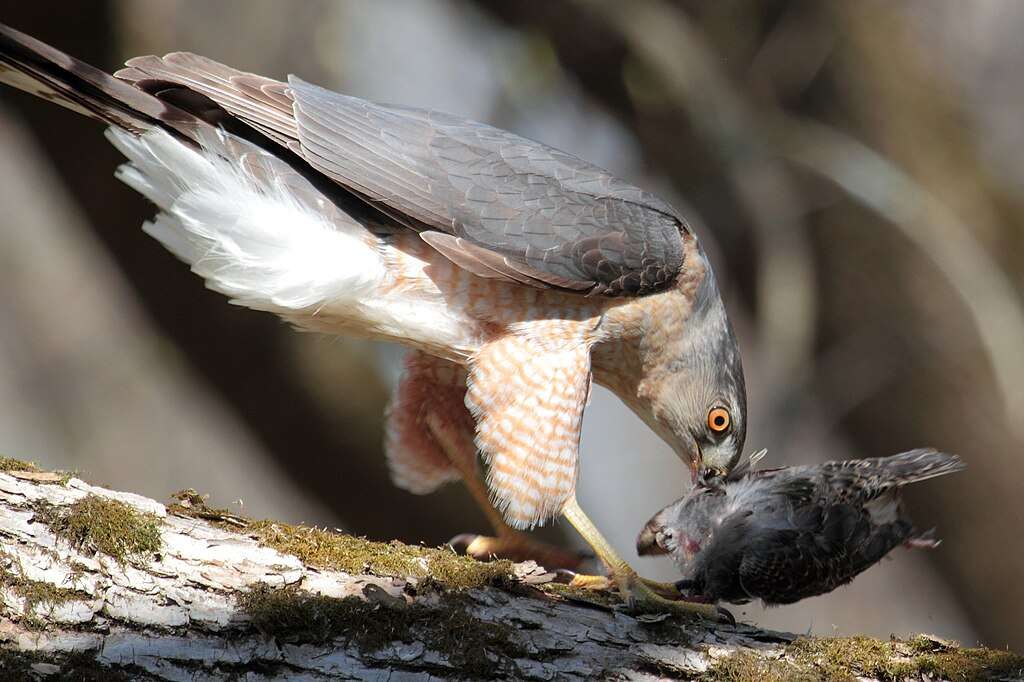
The Cooper's Hawk is a medium-sized Accipiter, known for its incredible agility and stealth in pursuing avian prey. Once in decline due to pesticide use, its population has rebounded, and it is now a common sight in Virginia's woodlands, and increasingly, in suburban areas.
Identification: Adults have slate-gray upperparts, a contrasting black cap, and warm reddish-orange barring on their underparts. Their long tail is banded with dark and white stripes and has a distinct rounded tip. A key field mark when comparing to the very similar Sharp-shinned Hawk is its relatively large head and thicker neck. Juveniles are brown above with streaking on their white underparts and yellow eyes (adults have red eyes).
Habitat and Diet: Cooper's Hawks are adept at maneuvering through dense tree cover, which is where they primarily hunt. They prey mostly on medium-sized birds like robins, jays, and doves, but also take small mammals. They are often seen in backyards, much to the alarm of feeder birds.
4. Sharp-shinned Hawk (Accipiter striatus) - The Smallest Pursuit Predator

The Sharp-shinned Hawk is the smallest hawk in Virginia and North America. Like the Cooper's Hawk, it is an Accipiter, built for speed and agility in forested environments. It is a common migrant and winter resident in Virginia, though a smaller number may breed in the state's western mountains.
Identification: Much smaller than the Cooper's Hawk (roughly Blue Jay-sized), adults have blue-gray upperparts and reddish-orange barring on their underparts. Their tail is square-tipped (sometimes appearing slightly notched) and has dark bands. Key distinguishing features from the Cooper's Hawk include its smaller head, appearing almost "hooded," and thinner legs. Juveniles are brown above with streaking on their underparts.
Habitat and Diet: Sharp-shinned Hawks prefer dense forests for breeding and utilize forest edges and even backyard feeders during migration and winter to hunt small songbirds, their primary prey.
5. Northern Harrier (Circus hudsonius) - The "Marsh Hawk"
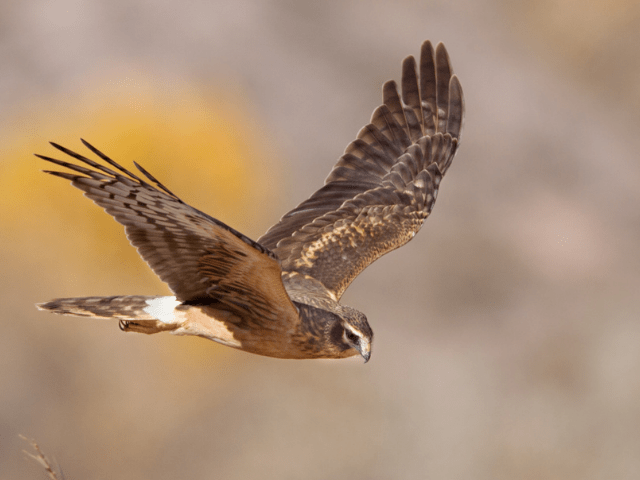
The Northern Harrier is a distinctive hawk of open country, often seen gliding low over marshes, grasslands, and agricultural fields. It is a common winter resident and migrant in Virginia, with a limited number breeding in specific wetland habitats.
Identification: Harriers have a unique, owl-like facial disc that helps them locate prey by sound. They are slender hawks with long wings and a long tail. A key field mark is the conspicuous white rump patch, visible as they fly. Males are pale gray above with white underparts, often called "Gray Ghosts." Females and juveniles are brown above with streaking on their buffy underparts. They fly with a characteristic buoyant, rocking motion.
Habitat and Diet: True to their old name "Marsh Hawk," Northern Harriers favor open wetlands, salt marshes, and extensive grasslands. They hunt by flying low, quartering the ground to surprise small mammals (especially voles and mice) and ground-nesting birds.
6. American Goshawk (Astur atricapillus) - The Elusive Forest Ghost (Rare)

The American Goshawk is the largest and most powerful Accipiter in North America. While widespread across the continent, it is considered a rare and elusive resident in Virginia, primarily found in mature, extensive coniferous or mixed forests of the western mountains. Sightings are highly prized by birders.
Identification: Goshawks are significantly larger than Cooper's Hawks, with broad, rounded wings and a relatively short tail for an Accipiter. Adults are dark blue-gray above with fine gray barring on their white underparts. They have a striking dark cap and a prominent white eyebrow stripe. Their eyes are deep red. Juveniles are brown above with heavy streaking on their underparts.
Habitat and Diet: American Goshawks require vast tracts of old-growth or mature forests. They are formidable predators, preying on medium to large birds (such as grouse, jays, and crows) and mammals (like squirrels and rabbits). Their secretive nature and preference for dense, undisturbed forests make them difficult to observe. Their rarity in Virginia reflects the fragmentation of their preferred habitat.
Where To See Hawks In Virginia
Rockfish Gap Hawk Watch (Afton Mountain, near Waynesboro, VA):
Why it's good: This is one of Virginia's premier hawk-watching sites, located at a significant point along the Blue Ridge Mountains where migrating raptors are funneled through. It offers a 180-degree panoramic view of Rockfish Gap, the Shenandoah Valley, and the Piedmont Region. The site is easily accessible, allowing you to drive up, park, and set up your viewing equipment.
What you might see: During peak fall migration (typically the last two weeks of September), you can witness thousands of hawks, particularly Broad-winged Hawks forming massive "kettles." You'll also have excellent chances to see Red-tailed Hawks, Sharp-shinned Hawks, Cooper's Hawks, Northern Harriers, Ospreys, Bald Eagles, and various falcons like American Kestrels, Merlins, and Peregrine Falcons. Golden Eagles are also regularly spotted here, especially later in the fall.
Best Time: Mid-August through November, with peak migration in late September. Weekends during peak times can get busy with fellow birders.
Read more here.
Kiptopeke State Park (Cape Charles, Eastern Shore, VA):
Why it's good: Located at the southern tip of the Delmarva Peninsula on Virginia's Eastern Shore, Kiptopeke is strategically positioned on a major migratory flyway. Southbound raptors (and many other bird species) are "funneled" down the peninsula before crossing the Chesapeake Bay or continuing south along the coast. The Coastal Virginia Wildlife Observatory conducts a long-running hawk watch here.
What you might see: Kiptopeke is especially famous for its impressive numbers of migrating falcons, including Merlins and Peregrine Falcons, with daily counts sometimes reaching into the hundreds for these species. You'll also see large numbers of Sharp-shinned Hawks, Ospreys, and Northern Harriers, along with Cooper's Hawks, Red-tailed Hawks, and Bald Eagles. Theunique coastal habitat also attracts a wide variety of shorebirds and songbirds, adding to the overall birding experience.
Best Time: September 1st through November 30th for the official hawk watch. The latter half of September and early October are often peak for falcons and accipiters.
Read more here.
Snickers Gap Hawk Watch (near Bluemont, Northern VA):
Why it's good: Situated in the northern Virginia portion of the Blue Ridge Mountains, Snickers Gap offers another fantastic ridge-top location for observing hawk migration. It provides year-round access to deciduous forest, good for resident woodpeckers and other woodland birds, but truly shines during the fall raptor migration.
What you might see: Similar to Rockfish Gap, Snickers Gap is excellent for Broad-winged Hawk kettles in mid-September. You'll also regularly observe Red-tailed Hawks, Sharp-shinned Hawks, Cooper's Hawks, Northern Harriers, Ospreys, Bald Eagles, American Kestrels, Merlins, and Peregrine Falcons. There's also the chance for rarer species later in the season.
Best Time: Mid-September is peak for Broad-winged Hawks. The hawk watch operates through the fall migration period, offering opportunities for other species later in the season.
Read more here.
Frequently Asked Questions
What is the difference between the Red-shouldered and Red-tailed Hawks?
The Red-shouldered Hawk and the Red-tailed Hawk are two of the most common and widespread Buteo hawks in North America, and they frequently overlap in range. However, they have distinct differences in appearance, behavior, and habitat preference.
- Red-tailed Hawk: Red tail (adult), belly band, dark patagial marks, prefers open country, raspy "kee-eeeee-arr" call.
- Red-shouldered Hawk: Black and white banded tail, reddish-brown barred underparts, translucent wing crescents, prefers woodlands near water, loud "kee-ah!" call.
To easily identify Broad-winged, Red-shouldered, and Red-tailed Hawks, watch this video:
Can you kill hawks in Virginia?
No, because the 1918 Migratory Bird Treaty Act protects them. Therefore, it's illegal to own, transport, kill, or sell one unless you have a permit.
Final Thoughts
Virginia's diverse landscapes provide a crucial home and migratory pathway for these fascinating hawk species. From the familiar soaring of the Red-tailed to the elusive darting of the American Goshawk, each encounter offers a glimpse into the wild beauty and ecological balance of the Commonwealth. Observing these top predators is a rewarding experience for any nature enthusiast.
And keep in mind the amazing hawk watch events. This is a specific location, usually on a ridge, coastline, or other geographical feature, where observers gather to count and identify migrating birds of prey (raptors) as they pass through predictable flyways, typically in spring and fall.
