
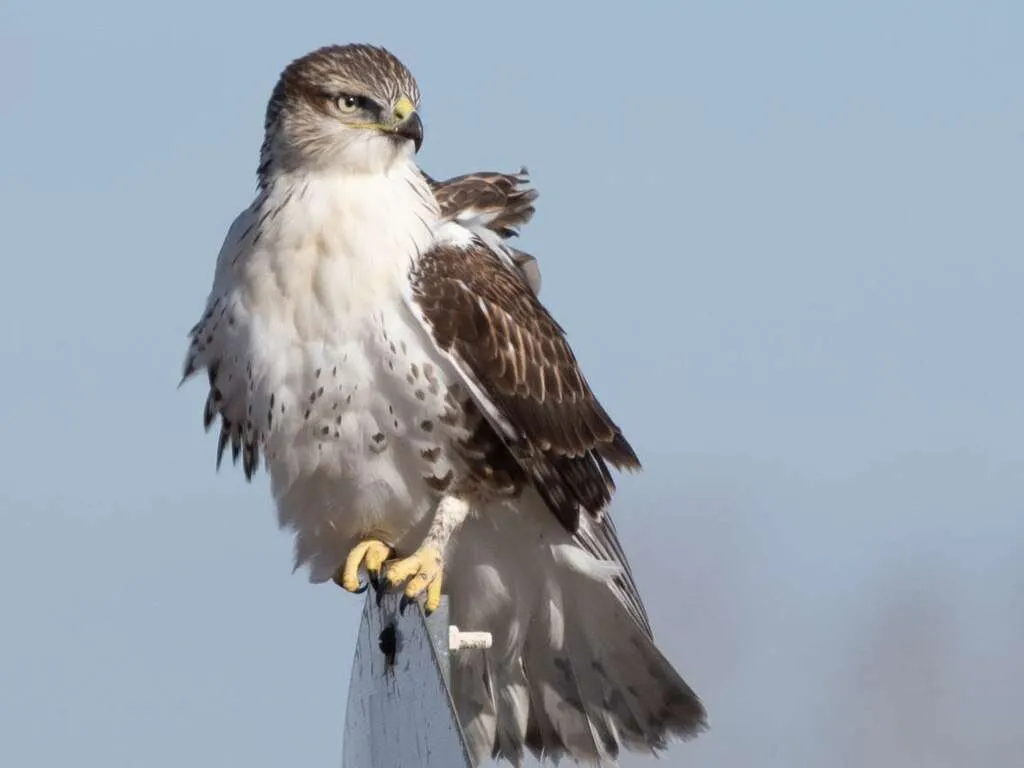
What birds give you a hard time trying to ID them?
It must be falcons, hawks, and eagles.
They are all raptors.
And they fly in an almost similar style.
What do you know about their plumage, nesting, mating habits...? Which one do you think is faster? Before we learn more about each bird, below are the highlights in the hawk vs falcon debate.
In the vast and open skies of the United States, two prominent groups of raptors command attention: falcons and hawks. While both are formidable birds of prey, often seen soaring high above or perched majestically, they belong to entirely different taxonomic families and possess distinct physical characteristics, hunting styles, and flight patterns. For the casual observer, distinguishing a falcon from a hawk might seem challenging, but with a keen eye and an understanding of their key differences, identification becomes a rewarding aspect of birdwatching.
Understanding these distinctions is not just for the seasoned birder; it deepens our appreciation for the specialized adaptations these magnificent predators have evolved to thrive in their respective ecological niches.
Taxonomy: More Than Just a Name
Perhaps the most fundamental difference lies in their scientific classification. While both falcons and hawks are birds of prey (raptors), they belong to separate families:
Hawks
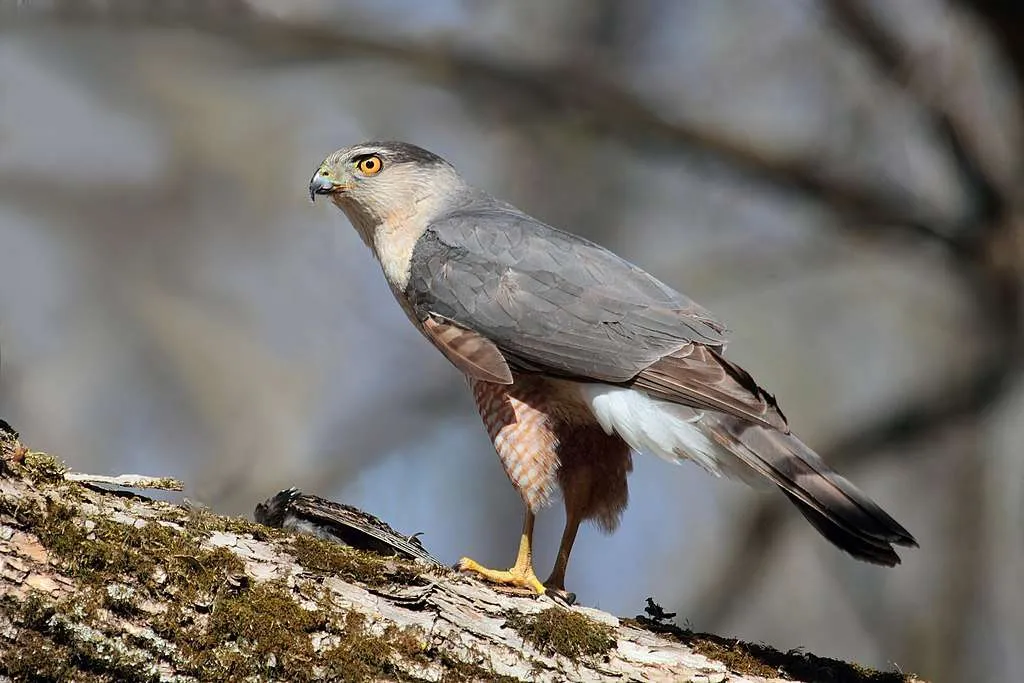
Hawks are part of the family Accipitridae. This large and diverse family includes a wide array of birds such as eagles, true hawks (Accipiters like Cooper's Hawk), buzzards (Buteos like Red-tailed Hawk), kites, and harriers. They are all characterized by strong, hooked bills and powerful talons.
Falcons
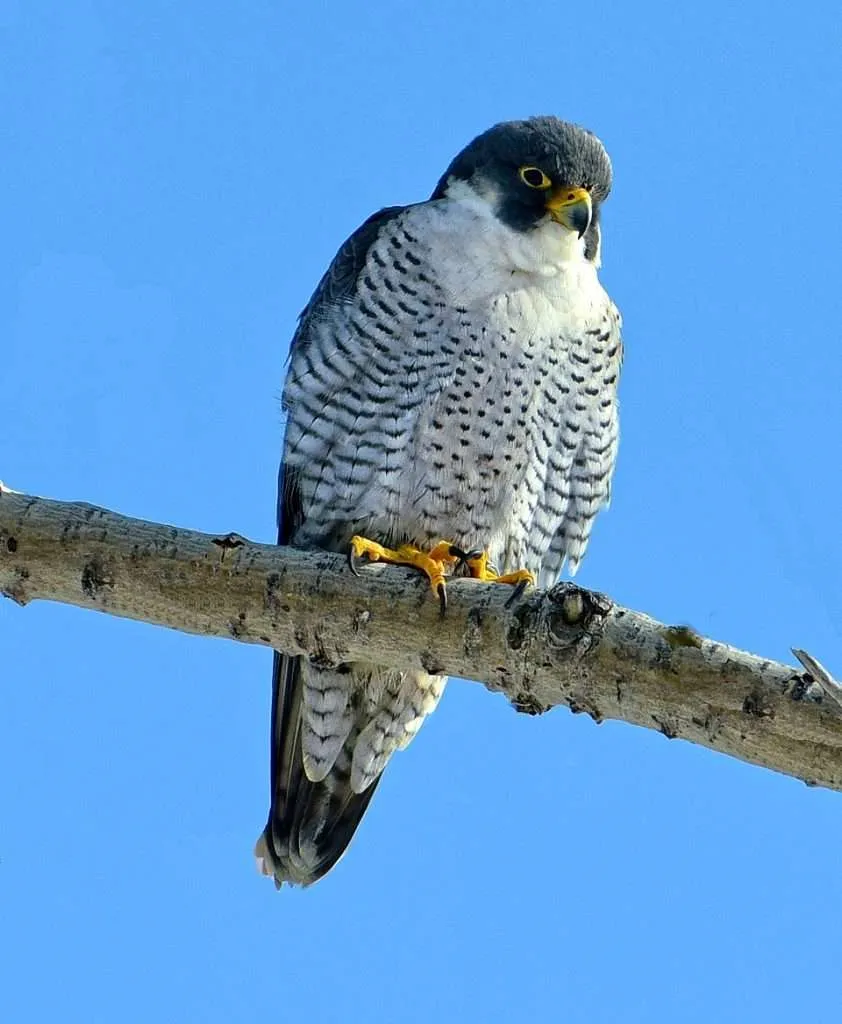
Falcons belong to the family Falconidae. This family also includes caracaras. Interestingly, genetic studies suggest that falcons are more closely related to parrots and passerines (songbirds) than they are to the Accipitridae family, highlighting a fascinating evolutionary divergence.
This fundamental taxonomic difference underpins many of the physical and behavioral distinctions we observe.
Wing Shape and Flight Style: The Most Obvious Clue
The shape of their wings and their typical flight behavior are often the quickest ways to differentiate a falcon from a hawk, even at a distance.
Hawks (Accipitridae)
Wings
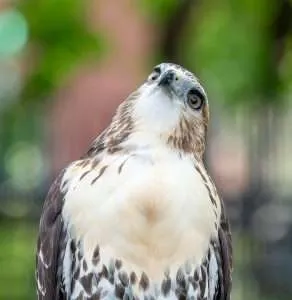
Generally have broad, rounded wings with prominent 'fingers' (separated primary feathers) at the tips when soaring.
Flight
Hawks, particularly the Buteos (like Red-tailed Hawks), are built for soaring. They often spend extended periods circling high on thermals, with minimal flapping. Their wingbeats, when they do flap, are typically slower and more deliberate. Accipiters (like Cooper's Hawks), designed for navigating dense cover, have shorter, more rounded wings and a characteristic "flap-flap-glide" flight pattern, using quick bursts of wingbeats followed by short glides. They are incredibly agile in tight spaces.
Maneuverability
Accipiters excel at quick, sharp turns, allowing them to chase prey through dense vegetation. Buteos are masterful gliders and can make wide, sweeping turns.
Falcons (Falconidae)
Wings
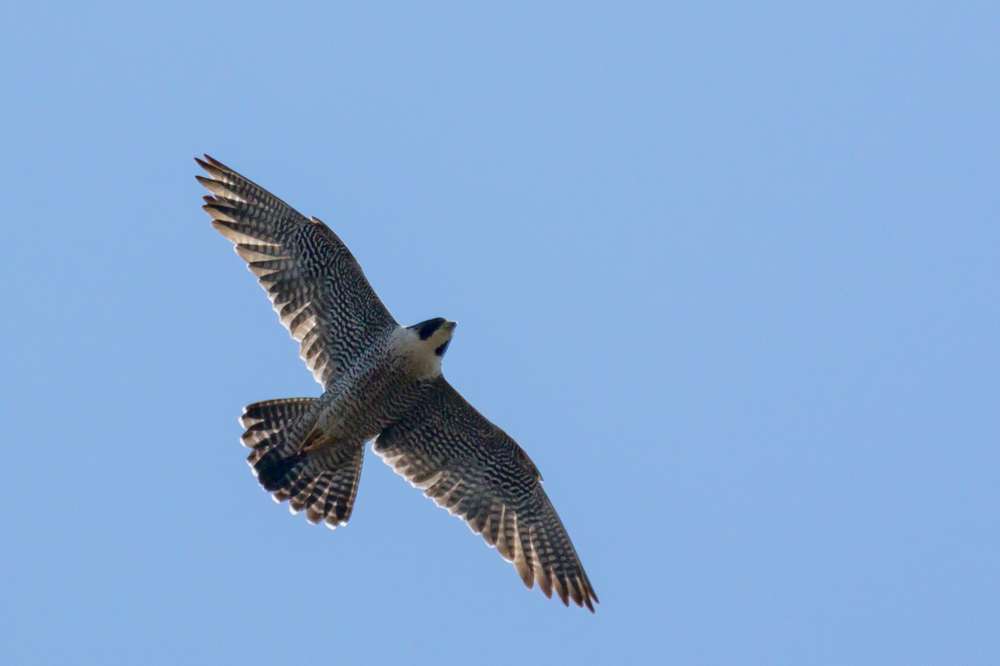
Characteristically possess long, slender, and pointed wings. These wings are built for speed and direct, powerful flight.
Flight
Falcons are the speed demons of the avian world. They are known for rapid, powerful wingbeats and direct flight paths. When hunting, they employ breathtaking high-speed dives called "stoops," most famously by the Peregrine Falcon, which can reach speeds over 200 mph. They don't typically soar as much as buteos, but they can hover in place using rapid wingbeats (like the American Kestrel).
Maneuverability
Their streamlined bodies and pointed wings make them incredibly fast in open air, but less agile in dense forest compared to accipiters.
Body Proportions and Overall Silhouette
While size can vary greatly within both families, general proportions often differ.
Hawks
Tend to have a more robust, stocky body relative to their wingspan, especially buteos. Their tails vary in length but are often broader or more fanned than falcons' tails. Accipiters have relatively long tails compared to their short wings.
Falcons
Generally appear more slender and aerodynamic. Their long, pointed wings often extend nearly the full length of their body when perched. Their tails are typically longer and more tapered or straight-edged compared to many hawks.
Beak Structure and Killing Method
This is a crucial anatomical difference reflecting their specialized hunting techniques.
Hawks
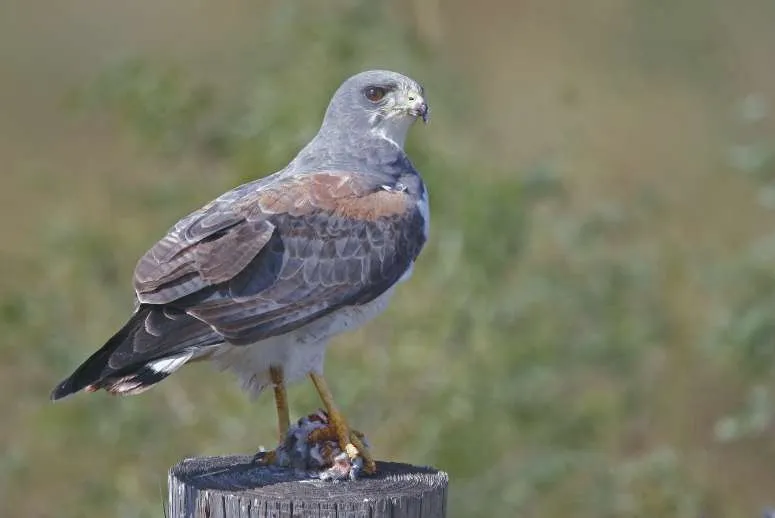
Possess a strong, sharply curved, and simply hooked beak. They primarily use their powerful talons (feet) to capture, squeeze, and kill their prey, often puncturing vital organs. The beak is then used to tear apart the captured prey.
Falcons
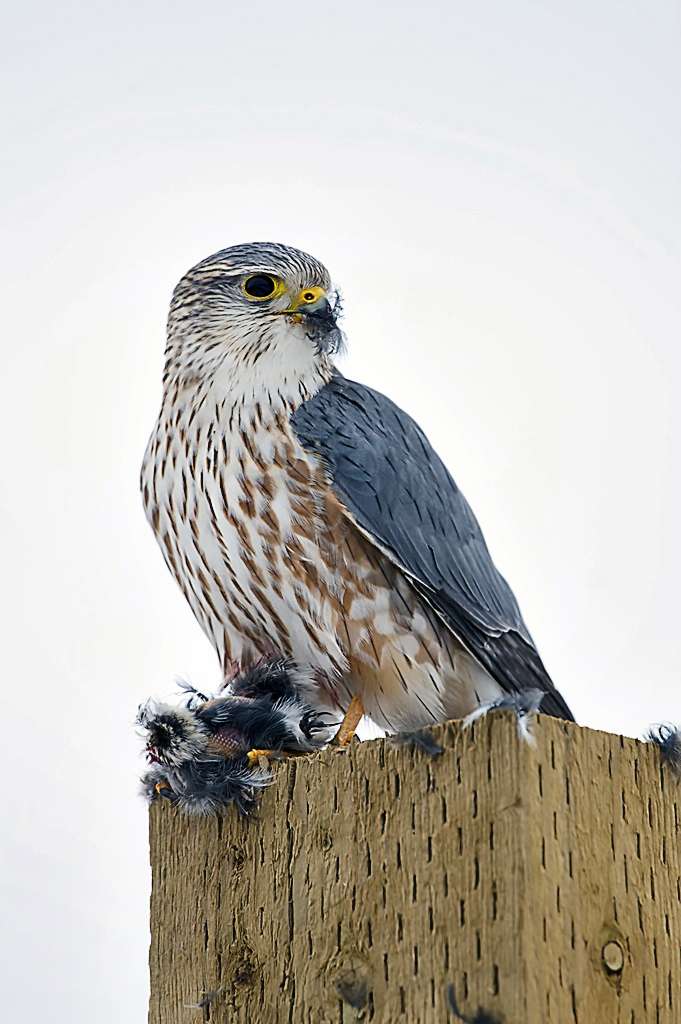
Also have a hooked beak, but a key distinguishing feature is the presence of a unique "tomial tooth" or "notch" on the upper mandible, along with a corresponding notch on the lower mandible. This specialized tooth is used to deliver a precise, fatal bite to the neck of their prey, often severing the spinal cord. They capture prey with their talons, but often finish the kill with their beak.
Hunting Style and Preferred Prey
Their physical adaptations directly inform their hunting strategies.
Hawks
Buteos
Typically perch-and-pounce hunters, often seen on elevated perches like utility poles or tall trees, scanning the ground below. They then swoop down to capture small mammals (rodents, rabbits, squirrels) or reptiles. Some, like the Northern Harrier, hunt by flying low over open fields.
Accipiters
Are agile ambush hunters that pursue prey through dense vegetation. They specialize in catching birds in flight, darting through forests and thickets with incredible speed. Their diet is largely avian.
Falcons
Aerial Hunters
Falcons are masters of mid-air pursuit. They often catch their prey "on the wing." The larger falcons (like Peregrines) use their famous high-speed stoops to strike birds in flight. Smaller falcons (like Kestrels) might hover before dropping onto large insects or small mammals.
Falcons tend to specialize in avian prey, though they will also take large insects, small mammals, and reptiles.
Nesting Habits
While there's some overlap, general nesting preferences can also offer clues.
Hawks
Many hawk species, particularly buteos, build large stick nests high in trees, often reusing them year after year. Accipiters also build stick nests in trees, usually in denser parts of forests. Some species may nest on cliffs or even on the ground.
Falcons
Generally, falcons do not build their own nests. Instead, they typically use scrapes on cliff ledges, abandoned nests of other large birds (like crows or eagles), or readily adapt to human-made structures like ledges on tall buildings, bridges, or even specially designed nest boxes.
Head Shape and Facial Markings
Closer observation can reveal subtle but consistent differences.
Hawks
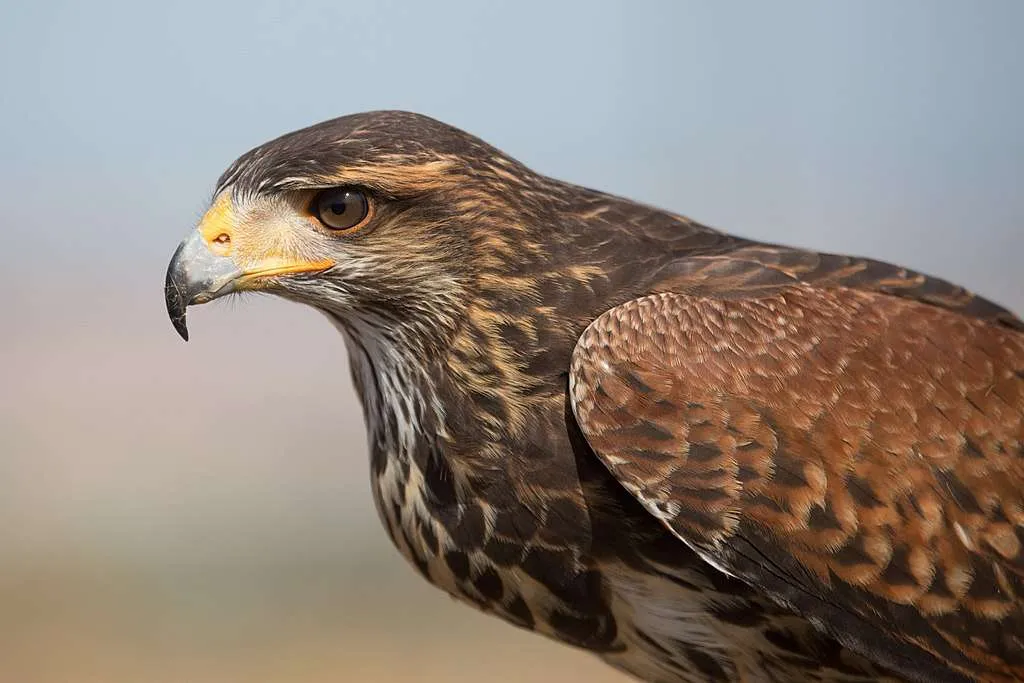
Often have a more rounded or broader head profile. While some have facial markings, they generally lack the prominent "malar stripe" (a dark stripe below the eye) characteristic of many falcons.
Falcons
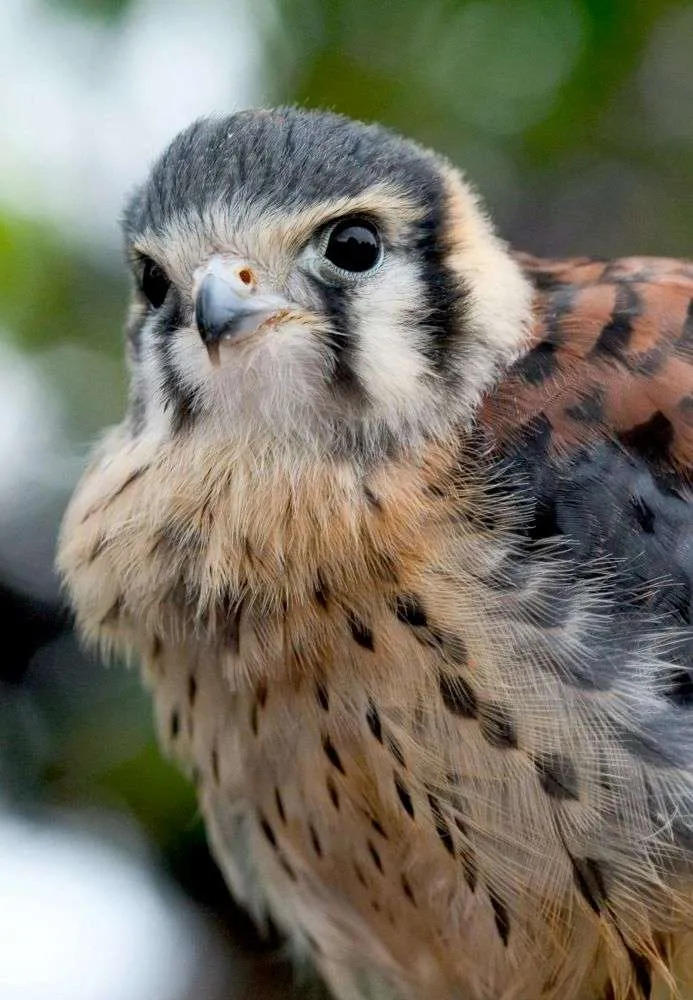
Many falcon species exhibit a distinct dark "malar stripe" or "mustache" that contrasts with lighter cheek patches, giving them a fierce, masked appearance. Their heads often appear somewhat smaller and more rounded in proportion to their sleek bodies.
Frequently Asked Questions
How Can You Tell A Falcon From A Hawk?
If it's in motion, then gauge the speed as falcons are faster than hawks. Also, when you see it dive, you'll know a falcon as it has a stunning dive at top speed.
Another feature is the eyes. A hawk's eyes have shades of yellow, red, and brown, but a falcon's eyes are dark. Lastly, if you're looking at both male and female birds, though the female birds are bigger for both, female hawks are the biggest.
Which One Is Faster -- Hawk Or Falcon?
Hands down, a falcon will outrun a hawk. When it's doing over 60 miles per hour with its strong nostrils allowing it to breathe in motion, the hawk will be gliding at about 40 miles per hour. Consequently, a falcon beats all other fast species to rank as the world’s fastest bird.
Watch the video of one of their most common species, the peregrine falcons:
Falcon Vs. Hawk -- Who Would Win?
As we have noted above, falcons are faster; therefore, they would win when comparing the speeds of these two birds. However, when we look at the ability to nest, hawks build theirs from scratch, so they win that round.
In terms of giving you an unforgettable birding experience, falcons are spectacular at diving, so you can watch them for hours as they stoop to catch songbirds or waterfowl.
Wrapping Up
While both hawks and falcons embody the power and grace of raptors, they represent two distinct evolutionary paths to predatory success. The broad-winged, soaring hawks epitomize the patient, powerful hunter, dominating open skies and woodlands alike. The slender, pointed-winged falcons are the epitome of speed and aerial agility, ruling the open air with unparalleled swiftness.
By observing their wing shape, flight style, hunting methods, and subtle physical features like their beaks and facial patterns, even novice birdwatchers can begin to unlock the secrets of identifying these magnificent birds of prey soaring across the diverse landscapes of the U.S. Each sighting becomes not just an encounter with a bird, but a lesson in the incredible diversity and specialization of nature's winged hunters.
Ever wondered what a group of hawks is called? Read on
