
Colorado, with its dramatic landscapes ranging from the expansive eastern plains to the towering peaks of the Rocky Mountains and the vast western plateaus, offers an unparalleled stage for raptor enthusiasts. This ecological diversity creates ideal habitats for a rich array of birds of prey, among which hawks stand out as prominent figures in the state's avian tapestry.
Whether soaring on thermals high above the plains or darting through mountain forests, identifying these powerful hunters can be a rewarding challenge. This article describes eight of Colorado's most commonly observed hawk species, providing essential identification tips to help you distinguish them in the field.
1. Red-tailed Hawk (Buteo jamaicensis) – The Iconic Soarer

Status in Colorado: Common year-round resident and breeder across all elevations.
Key ID Features: This is perhaps Colorado's most recognizable hawk. Adults boast a rusty-red tail (visible from above or backlit from below) and a distinctive dark "belly band" of streaks across their pale underparts. Dark "patagial marks" on the leading edge of the underwing are also characteristic. In flight, they have broad, rounded wings ideal for soaring. Juveniles have a distinctly banded brown-and-white tail instead of red.
Habitat/Behavior: Extremely adaptable, found in nearly every open and semi-open habitat from plains to mountains. Often seen perched on power poles, fence posts, or soaring in wide circles. Their call is a classic, raspy, descending "kee-eeeee-arr."
2. Swainson's Hawk (Buteo swainsoni) – The Insectivorous Migrant

Status in Colorado: Common summer breeder on the plains, migrant through the state.
Key ID Features: Adults exhibit variable plumage (light and dark morphs exist). Light morph adults have a dark "bib" across a white breast and belly, and a pale underwing with dark flight feathers and a pale leading edge. Their tail is pale with faint banding and a dark subterminal band. Dark morphs are uniformly dark brown. They are more slender than Red-tailed Hawks, with longer, narrower wings, often held in a slight dihedral (V-shape) when soaring.
Habitat/Behavior: Prefers open grasslands, agricultural areas, and prairies. Known for their incredible long-distance migrations to South America. While breeding, they eat small mammals and birds, but during migration, they often feed heavily on large insects like grasshoppers and dragonflies, sometimes foraging on the ground in large flocks.
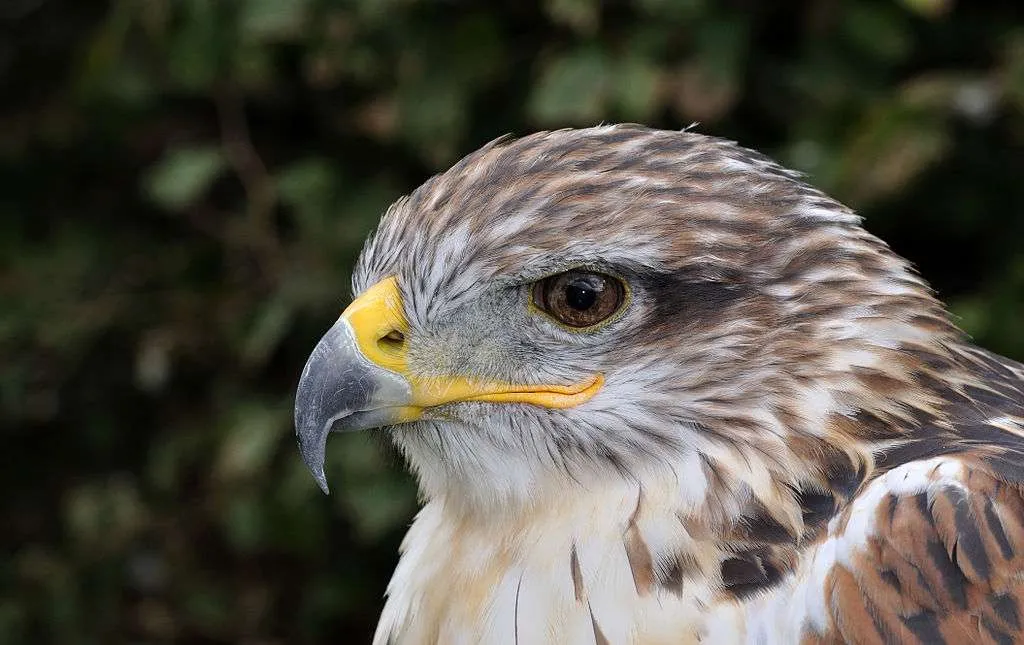
3. Ferruginous Hawk (Buteo regalis) – The Golden Giant

Status in Colorado: Fairly common summer breeder on the eastern plains, some overwinter.
Key ID Features: Colorado's largest hawk, often appearing eagle-like. Light morphs are distinctive: rusty "ferruginous" coloration on the back and feathered legs (tarsi), with a bright white belly. In flight, they show a prominent rusty "V" on the white underbelly formed by their feathered legs. The tail is pale, often with a rusty wash. Dark morphs are entirely dark brown/rufous. They have a massive bill and wide gape.
Habitat/Behavior: Strictly a bird of expansive, arid and semi-arid grasslands and sagebrush, where their primary prey (prairie dogs and ground squirrels) are abundant. They frequently hunt from a low perch, or even by walking/running on the ground.
4. Rough-legged Hawk (Buteo lagopus) – The Arctic Visitor
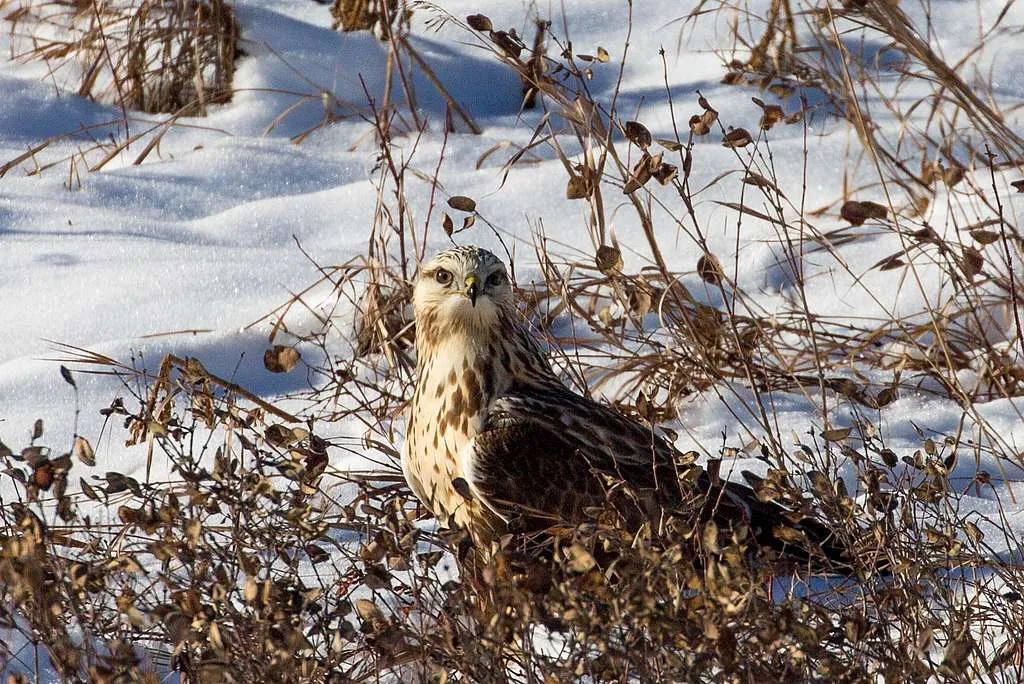
Status in Colorado: Common winter visitor to the plains and valleys.
Key ID Features: A large Buteo, easily recognized by its feathered legs down to the toes. Light morphs (most common) have a distinctive dark belly patch and dark "carpal patches" (at the "wrist" of the underwing). Their tail is white at the base with a broad, dark subterminal band. They often hover in place against the wind while hunting.
Habitat/Behavior: Prefers open grasslands, prairies, and agricultural fields in winter. Hunts primarily small rodents like voles and mice. Its hovering flight is a key identification clue.
5. Northern Harrier (Circus hudsonius) – The "Marsh Hawk"
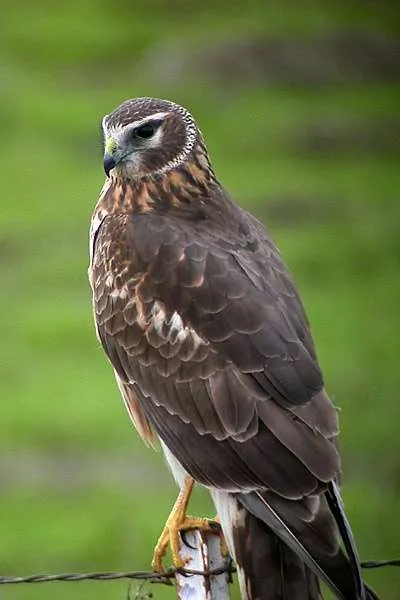
Status in Colorado: Common year-round resident, more widespread in winter.
Key ID Features: Slender, medium-sized hawk with long wings and a long tail. The most crucial ID mark is the conspicuous white rump patch, easily seen as they fly low. Males are pale gray above with white underparts ("Gray Ghosts"). Females and juveniles are brown above with streaking on their buffy underparts. They fly with a characteristic buoyant, rocking motion, often quartering low over fields. They have an owl-like facial disk.
Habitat/Behavior: Found in open habitats like grasslands, marshes, and agricultural areas. Hunts by flying low, relying on keen hearing to detect small mammals and ground-nesting birds.
6. Cooper's Hawk (Accipiter cooperii) – The Agile Bird Hunter
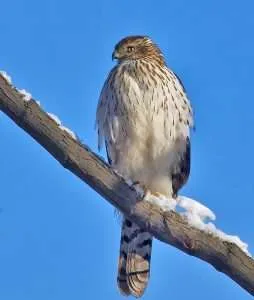
Status in Colorado: Common summer breeder in wooded areas, some overwinter.
Key ID Features: Medium-sized Accipiter. Adults have slate-gray upperparts, a contrasting black cap, and warm reddish-orange barring on their underparts. Their long tail is banded with dark and white stripes and has a distinct rounded tip. A relatively large head and thicker neck compared to the similar Sharp-shinned Hawk. Juveniles are brown above with streaking on white underparts and yellow eyes.
Habitat/Behavior: Prefers mixed and deciduous forests, increasingly common in suburban areas with mature trees. Agile fliers, they hunt primarily medium-sized birds, often darting through dense foliage.
7. Sharp-shinned Hawk (Accipiter striatus) – The Smallest Accipiter

Status in Colorado: Common summer breeder in mountain forests, more widespread migrant and winter visitor.
Key ID Features: The smallest hawk in Colorado. Adults have blue-gray upperparts and reddish-orange barring on their underparts. Their tail is typically square-tipped (though it can appear slightly notched) and banded. Key differences from Cooper's include a smaller, more "hooded" head, and thinner legs. Juveniles are brown above with streaking.
Habitat/Behavior: Breeds in dense coniferous or mixed forests. During migration and winter, they are found in various wooded areas and often target bird feeders, preying on small songbirds with remarkable agility.
8. American Goshawk (Astur atricapillus) – The Elusive Forest Predator
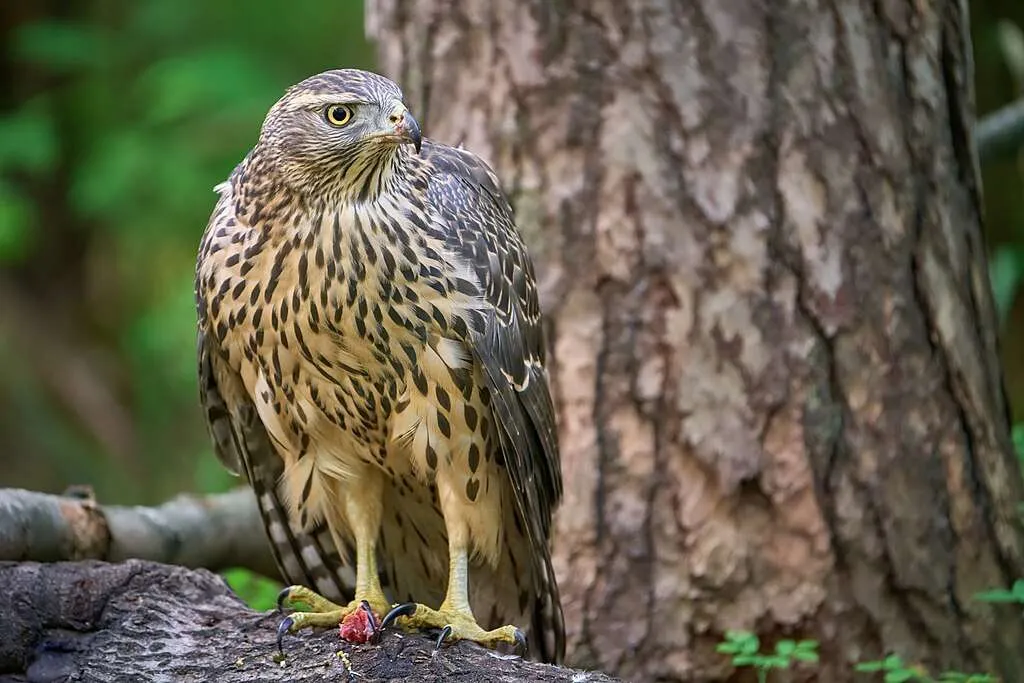
Status in Colorado: Uncommon permanent resident in dense mountain forests.
Key ID Features: The largest and most powerful Accipiter. Adults are dark blue-gray above with fine gray barring on their white underparts. They have a striking dark cap and a prominent white eyebrow stripe. Their eyes are deep red. Juveniles are brown above with heavy streaking on their underparts. Their flight is powerful and direct.
Habitat/Behavior: Requires vast tracts of mature, undisturbed coniferous or mixed forests at higher elevations. Highly secretive, they are fierce predators of medium to large birds (like grouse) and mammals (like snowshoe hares). Seeing one is a rare and exciting event.
How to ID Them All: General Tips
- Size and Shape: Is it a broad-winged Buteo (soaring, often in circles) or a more slender Accipiter (flap-flap-glide, darting)?
- Tail: Is it red? Banded black and white? Square, rounded, or notched?
- Underparts: Solid, streaky, barred, or a distinct belly band?
- Underwing Pattern: Are there dark patches at the wrist (carpals) or leading edge?
- Flight Style: Does it soar, hover, or use a flap-flap-glide motion?
- Habitat: Is it in open plains, dense forest, or a wetland?
- Voice: Learn their calls! Often, you'll hear a hawk before you see it.
- Season: Is it a resident or a seasonal visitor?
By paying attention to these key features, you'll greatly enhance your ability to identify the magnificent hawks that grace the skies of Colorado. Each sighting offers a thrilling glimpse into the wild heart of the Centennial State.
Frequently Asked Questions
Where are good places to see hawks in Colorado?
Based on the information about hawk habitats in Colorado, here are a couple of good places to see hawks.
Eastern Plains of Colorado
These expansive open grasslands and agricultural areas are excellent for seeing a variety of hawks, especially during migration and winter. You'll commonly find Red-tailed Hawks, Swainson's Hawks (in summer), Ferruginous Hawks, and Rough-legged Hawks (in winter).
Rocky Mountains (dense coniferous or mixed forests)
The mountain forests are prime habitat for species like the Cooper's Hawk, Sharp-shinned Hawk, and the more elusive Goshawk. Look for them in areas with mature trees.
What hawks can be seen in Colorado?
The eight hawks to see are the Red-tailed, Cooper's, Sharp-shinned, Ferruginous, Rough-legged hawks, the Northern Harrier, the American Goshawk, plus the Swainson's Hawk. Colorado has many birding locations with different species of hawks.
Are there Red-tailed Hawks in Colorado?
Yes, you can see the Red-tailed Hawk in this state throughout the year. They are one of the most common hawks in the country.
Watch this rare sighting of a Colorado Red-tailed Hawk:
Wrapping Up
Colorado has an impressive number of hawks for a long birding trip. Most of its hawks are year-round residents, which means you can go birding any time of the year. Even more interesting, you might see the rare Ferruginous Hawk.
Of course, you'll start your sightings with the Red-tailed Hawk as it's so common in the US. Don't forget to look beyond the plumage to ID birds by their nest structure, habitats, plus sounds.
Good luck!
Read about the hawks of California.
