
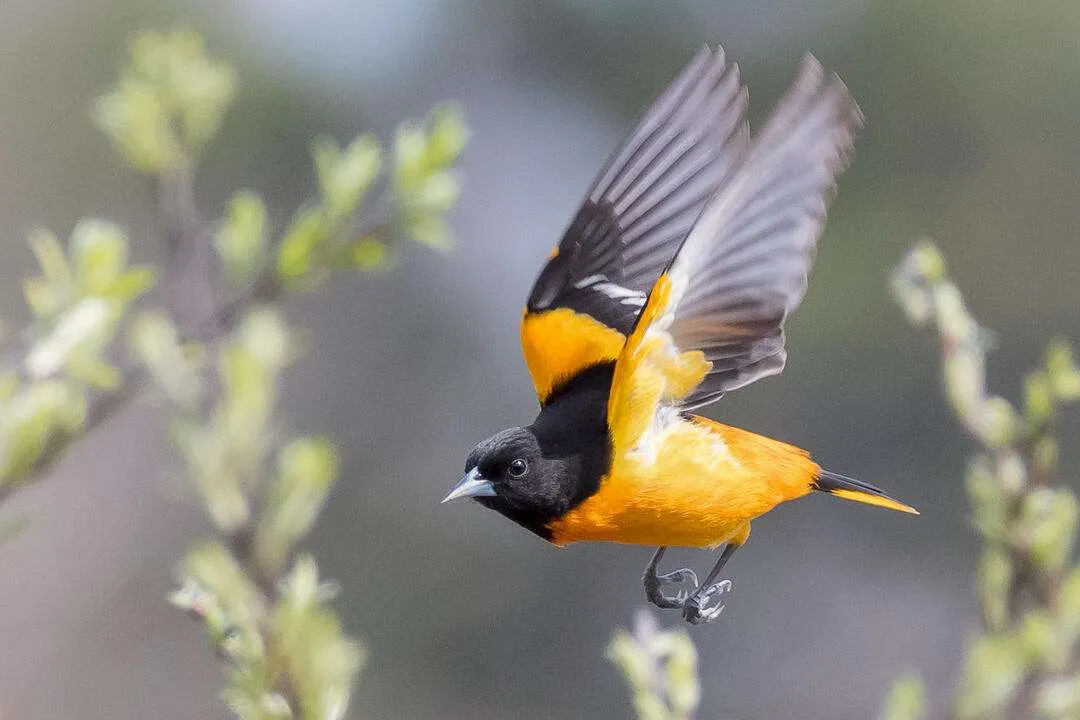
The world of North American birds is a vibrant tapestry of colors, and the striking combination of black and orange is particularly captivating.
This bold contrast can be found on a variety of species, from tiny songbirds flitting through the foliage to larger, more conspicuous residents of our woodlands and wetlands.
Spotting a black and orange bird is often a memorable experience for birdwatchers of all levels.
Here are 12 awesome avian species found within the United States that proudly display this eye-catching color palette, along with tips on how to identify them.
1. Baltimore Oriole (Icterus galbula): The Backyard Beauty
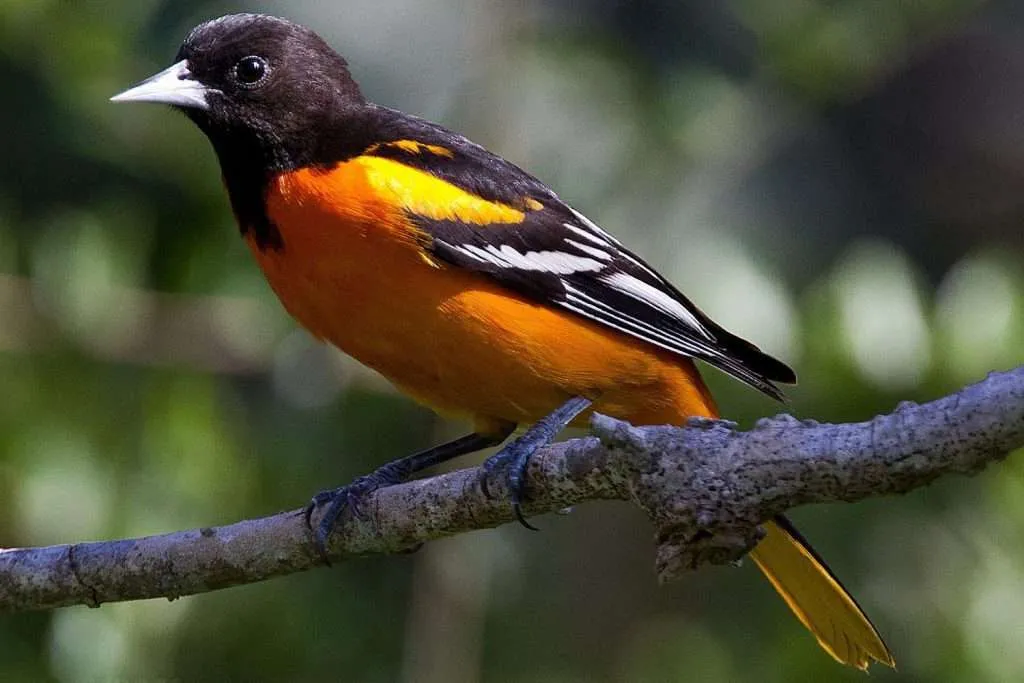
Identification: Males are a brilliant flame-orange on the underparts, shoulders, and rump, with a solid black head, throat, back, and wings (often with white wing bars). Females are a duller yellowish-orange below with a grayish-brown back and head.
Habitat: Deciduous woodlands, especially near water, orchards, and suburban gardens across the eastern and central United States during breeding season.
How to Spot: Listen for their rich, whistling song. Look for their intricately woven pouch nests hanging high in trees. They are attracted to fruit and nectar feeders.
2. Orchard Oriole (Icterus spurius): The Smaller Sibling
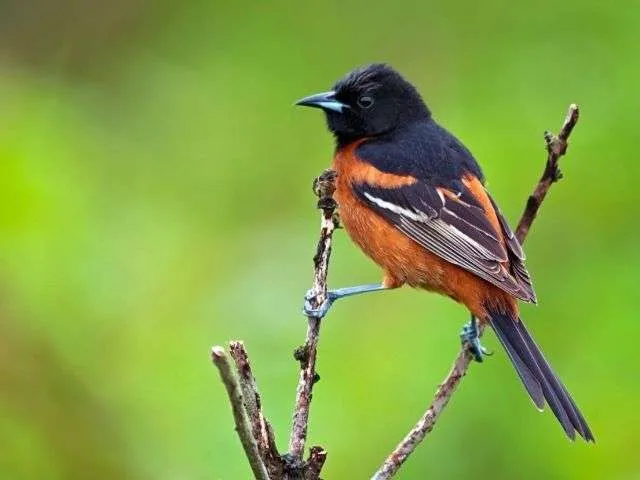
Identification: Adult male is a deep chestnut-orange on the underparts and rump with a black head, throat, back, and wings (no wing bars). Females are yellowish-green above with a yellow breast and belly.
Habitat: Open woodlands, savannas, and edges of forests, often near water, across the eastern and central United States during breeding season.
How to Spot: Their song is a series of rapid, sweet whistles. They are smaller and more agile than Baltimore Orioles. Look for their hanging nests, often in fruit trees.
3. Hooded Oriole (Icterus cucullatus): The Southwestern Charmer
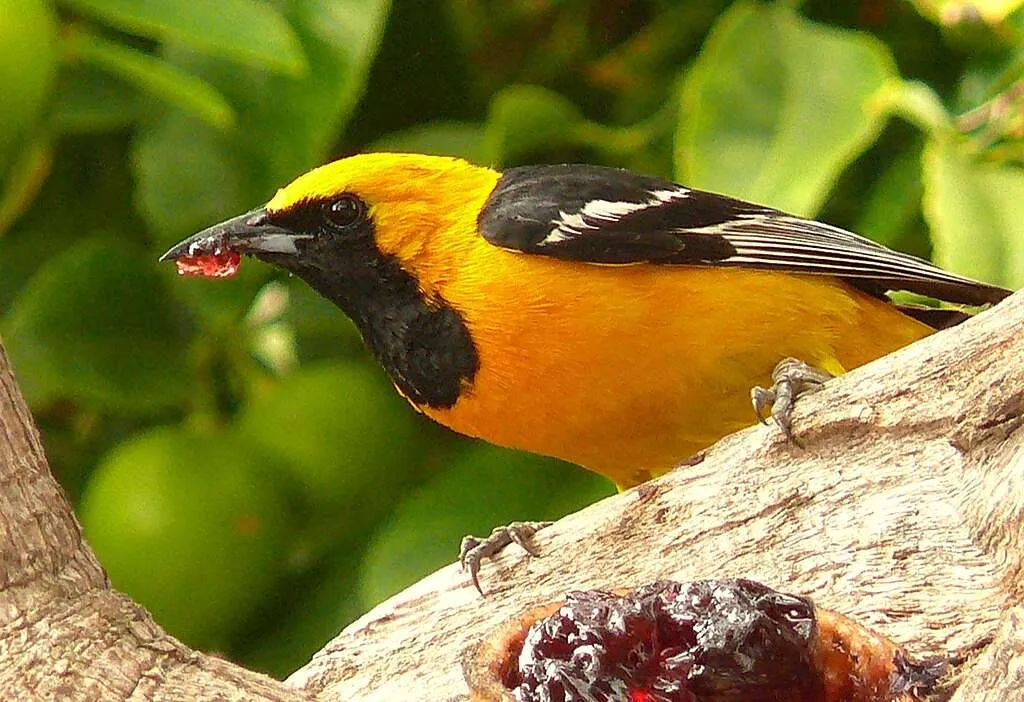
Identification: Male has a bright orange body with a black face, throat, and back, and black wings with white edging. Females are yellowish-orange with a grayish back and a black bib (sometimes faint).
Habitat: Riparian woodlands, palm groves, and suburban gardens in the southwestern United States, particularly California, Arizona, and Texas.
How to Spot: Listen for their chattering, musical calls. They often nest in palm trees, attaching their woven pouches to the underside of fronds.
4. Bullock's Oriole (Icterus bullockii): The Western Jewel
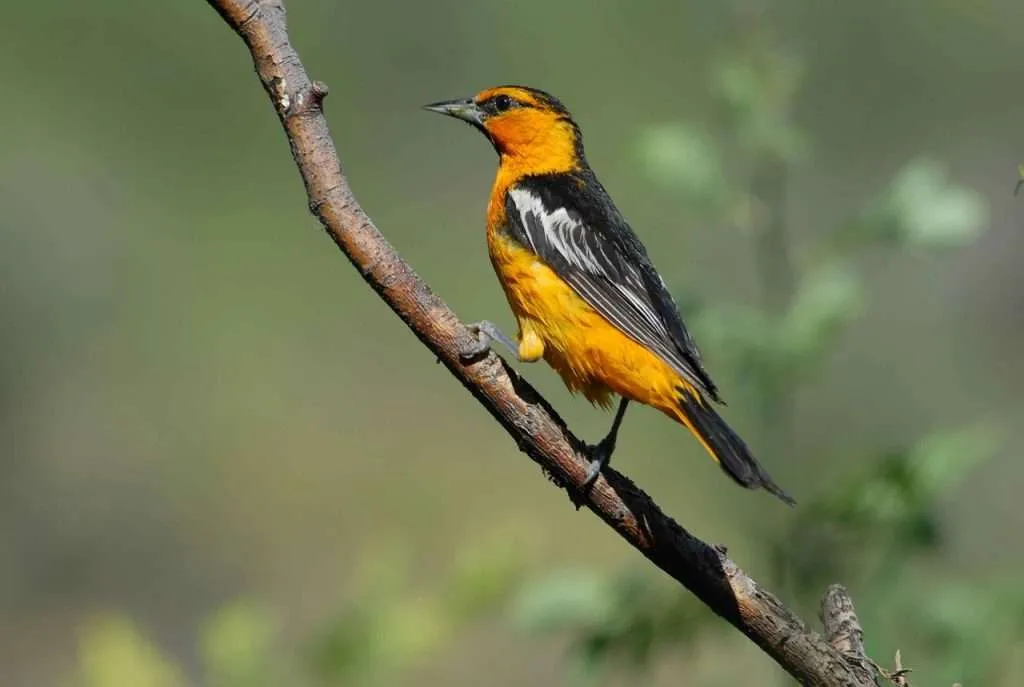
Identification: Male has a bright orange-yellow chest and belly, black throat, black back, and black wings with a prominent white wing patch. Females are grayish above with a yellowish breast and hints of orange.
Habitat: Open woodlands, riparian areas, and suburban gardens across the western United States.
How to Spot: Their song is a series of loud whistles and chatters. They build hanging nests, often in deciduous trees like cottonwoods.
5. Eastern Towhee (Pipilo erythrophthalmus): The Ground Scratcher
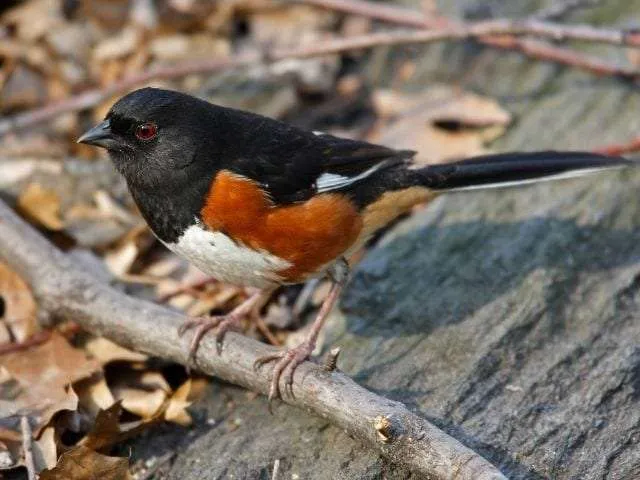
Identification: Male has a sooty black head, throat, back, and wings with rusty-orange flanks and a white belly. Females are similar but with brown replacing the black.
Habitat: Brushy thickets, woodland edges, and overgrown fields across the eastern United States.
How to Spot: Listen for their distinctive "drink-your-tea!" song or their rustling in leaf litter as they scratch for food on the ground.
6. Spotted Towhee (Pipilo maculatus): The Western Counterpart
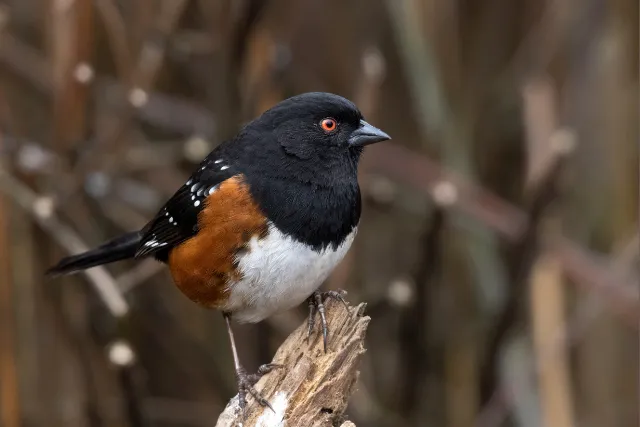
Identification: Similar to the Eastern Towhee in pattern, but with white spots on the black wings and back. Rusty-orange flanks and a white belly. Females have brown instead of black.
Habitat: Brushy areas, chaparral, and woodland edges across the western United States.
How to Spot: Their calls and songs are similar to the Eastern Towhee but with regional variations. Look for them scratching in undergrowth.
7. American Redstart (Setophaga ruticilla): The Flitting Warbler
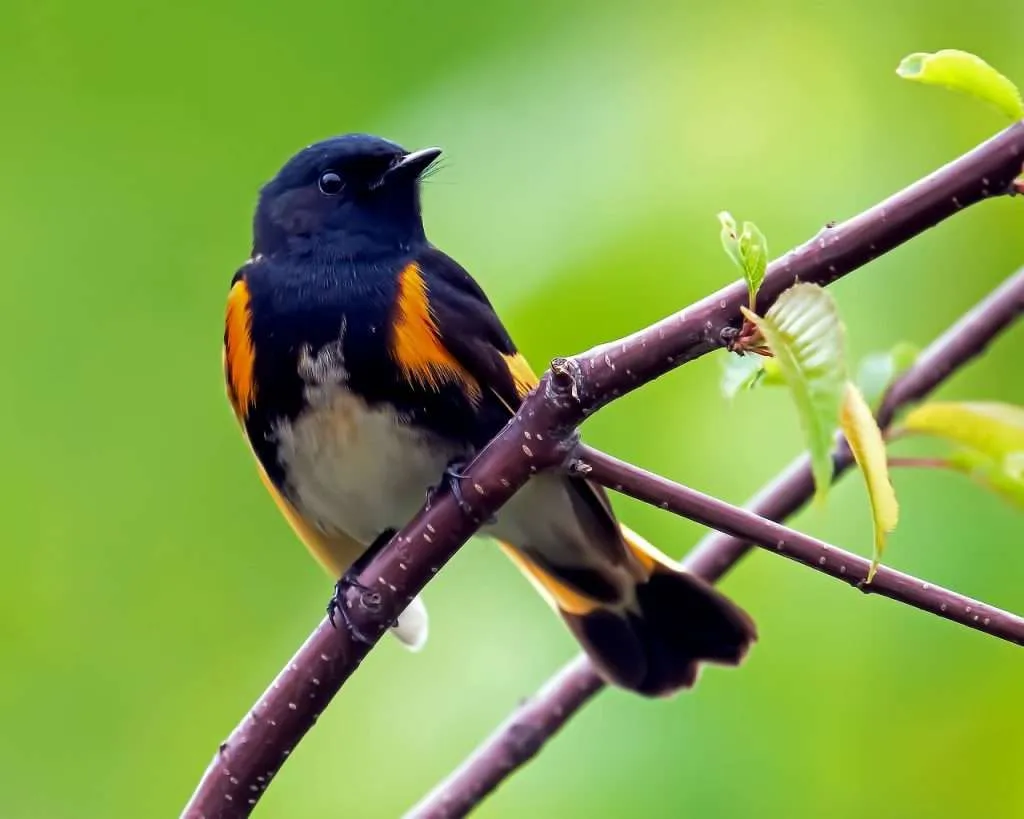
Identification: Male is glossy black above with bright orange patches on the sides of the breast, wings, and tail. Females have gray upperparts and yellow patches in the same locations.
Habitat: Deciduous woodlands, especially young forests and forest edges, across much of North America during breeding season.
How to Spot: Their active, flitting behavior and constant tail flicks are characteristic. Males have a buzzy "zee-zee-zee-zoo-zee" song.
8. Blackburnian Warbler (Setophaga fusca): The Fiery Throat
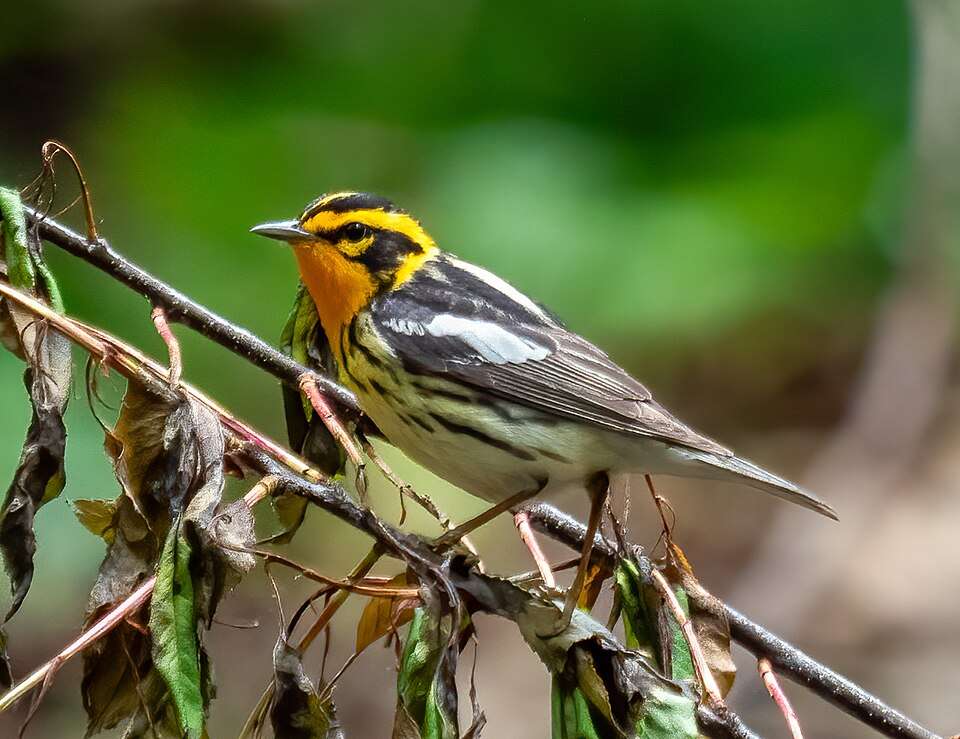
Identification: Breeding male is strikingly patterned with a bright orange throat, a black crown and face, and black streaking on its white belly. Females have a yellowish throat and similar pattern.
Habitat: Mature coniferous and mixed forests in the northeastern United States and Canada during breeding season.
How to Spot: They often forage high in the canopy. Look for the flash of their bright orange throat. Their song is a high-pitched, wiry series of notes.
9. Black-headed Grosbeak (Pheucticus melanocephalus): The Robust Singer
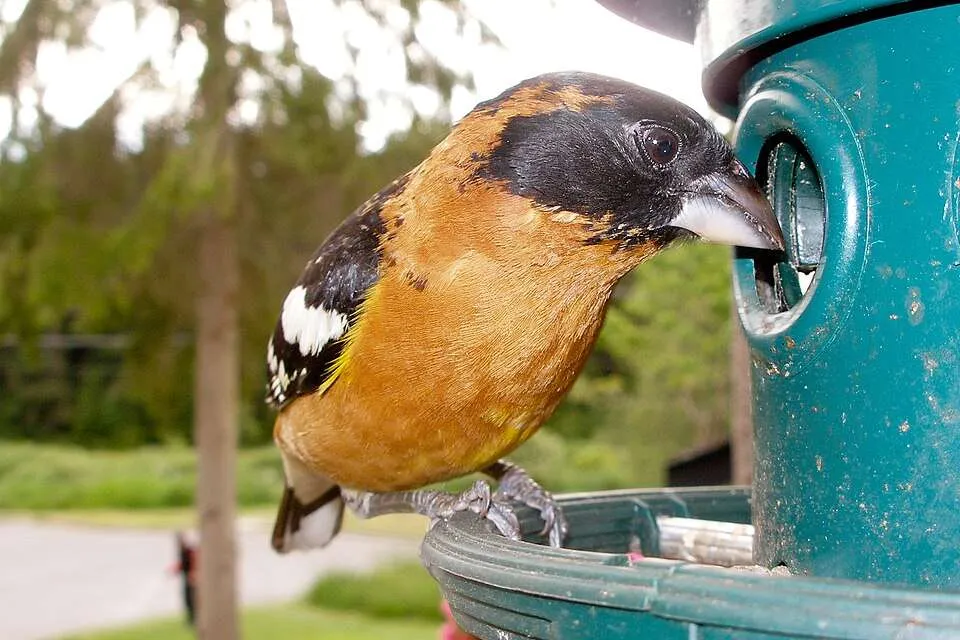
Identification: Male has a black head, a rusty-orange breast, and a black-and-white patterned back. Females are brown and streaky with a yellowish wash.
Habitat: Deciduous and mixed forests across the western United States during breeding season.
How to Spot: Listen for their rich, robin-like song. They are often seen at feeders, especially those with sunflower seeds.
10. Painted Bunting (Passerina ciris): The Rainbow Bird (Males)
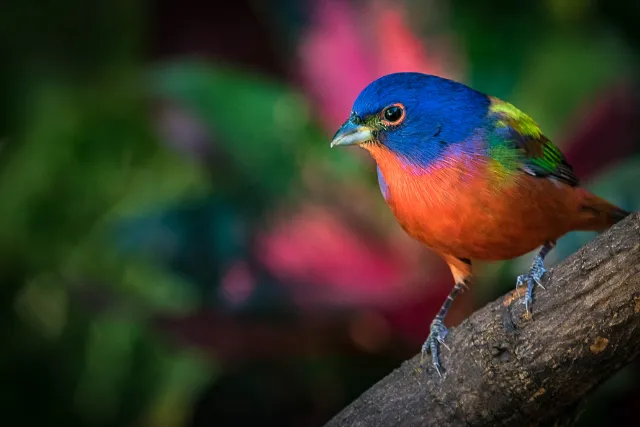
Identification: Adult male is a riot of color, including a blue head, green back, and red underparts. Immature males and females are a more uniform greenish-yellow, but some young males show black and orange patches as they mature.
Habitat: Brushy thickets, woodland edges, and overgrown fields in the southeastern and south-central United States.
How to Spot: Males are unmistakable. Listen for their sweet, warbling song. They are sometimes seen at seed feeders.
11. Varied Thrush (Ixoreus naevius)
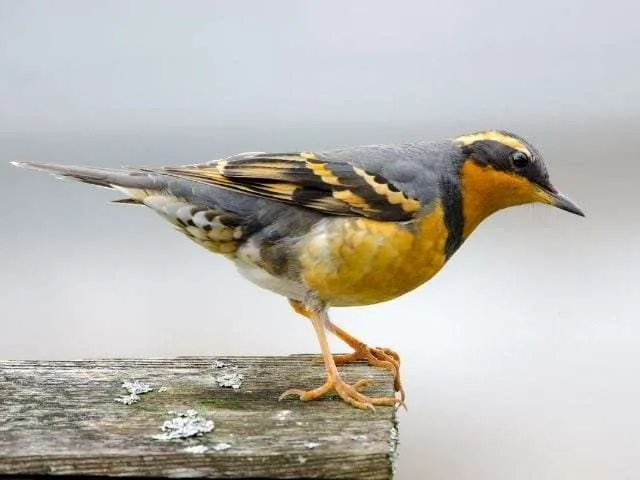
Identification: The male is particularly stunning, with a sooty gray to black back and head. It has a rusty-orange breast, belly, and a prominent orange stripe over its eye. A distinctive black "necklace" or band runs across its chest. The female is a duller, brownish-gray version of the male, with a less defined chest band.
Habitat: This bird is a resident of coniferous forests, especially those with dense undergrowth, from Alaska and British Columbia down the Pacific coast to northern California. They are most commonly seen during the winter in the Pacific Northwest, where they are a common backyard bird.
- How to Spot: It forages on the forest floor, using its bill to flip over leaves and leaf litter in search of insects, spiders, and earthworms. In the winter, it will readily visit backyard feeders, especially for suet or sunflower seeds.
13. American Robin (Turdus migratorius)
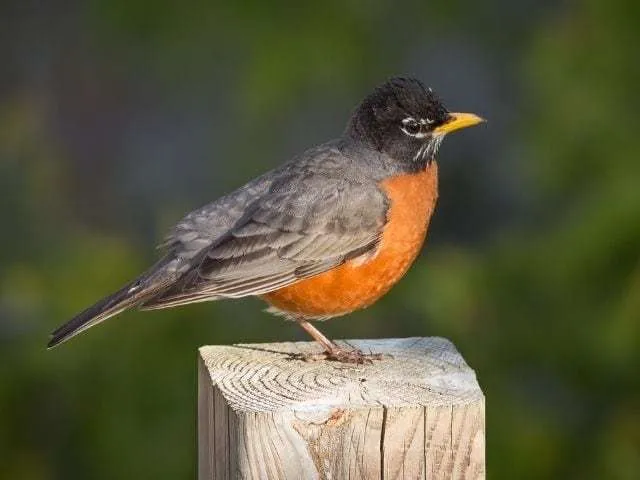
Indentification: This is a large thrush with a rusty-orange breast and belly, a dark gray to black head, and a gray back. The male's colors are typically brighter than the female's.
Habitat: Robins are highly adaptable and thrive in a wide variety of habitats, including lawns, parks, gardens, open woodlands, and forests. They are often seen hopping on the ground in search of earthworms.
How to Spot: The American Robin's song is a well-known sound, a series of rich, musical phrases. They are ground foragers that listen for movement underground and are known for their distinct upright posture.
12. Barn Swallow (Hirundo rustica)
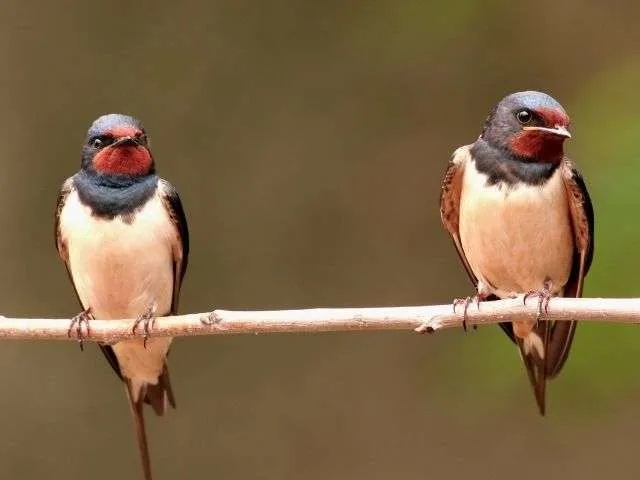
Identification: This is a small, streamlined bird with a dark, iridescent blue back and head. It has a rusty-orange throat and forehead, a pale, pinkish-orange belly, and a deeply forked, long tail that is a key identification feature.
Habitat: As its name suggests, the Barn Swallow often nests in man-made structures like barns, bridges, and culverts. They prefer open spaces near water, such as fields, marshes, and coastlines, where they can hawk for insects.
How to Spot: Barn Swallows are master fliers, spending most of their time in the air catching insects. They build distinctive mud cup nests, often in colonies, and are known for their rapid, graceful movements and twittering songs.
Frequently Asked Questions
What is the difference between a Baltimore Oriole and an Orchard Oriole?
Baltimore and Orchard Orioles can be difficult to tell apart, but focusing on a few key differences in their size, color, and habitat can make identification much easier.
Size and Plumage
Male orioles are the easiest to distinguish. The Baltimore Oriole is larger and has a much more vibrant, bright orange plumage with a solid black head, throat, and back. The Orchard Oriole is noticeably smaller, and its orange is a deeper, more reddish-chestnut color.
For females and young birds, the differences are more subtle:
Female Baltimore Orioles are typically a duller orange or yellowish-orange with some brown on their back and a strong white bar on their wings.
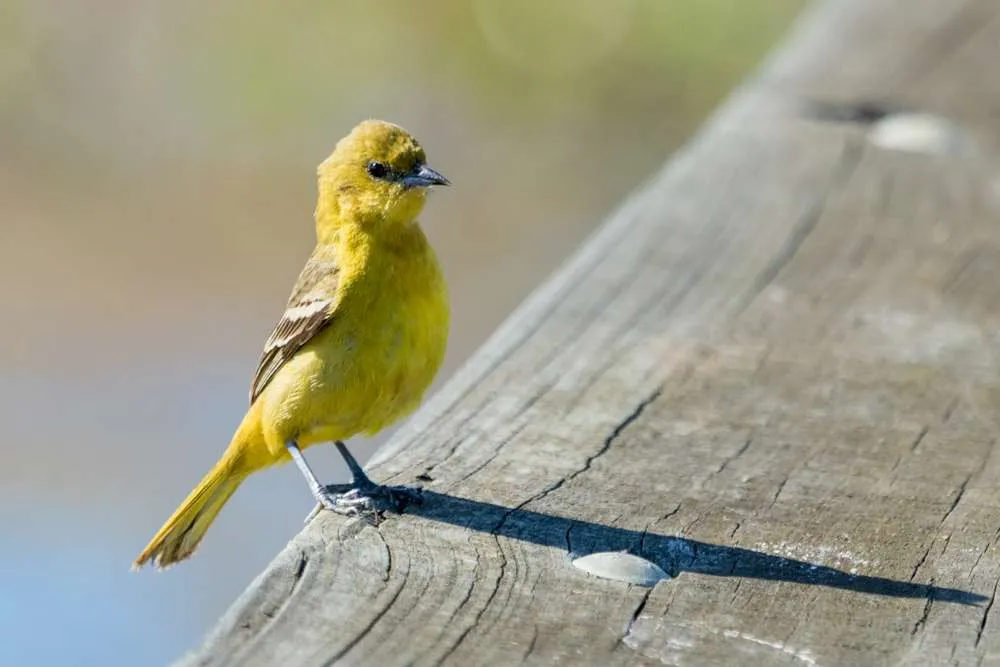
Female Orchard Orioles lack any orange tones, appearing more of a greenish-yellow overall, and they have a smaller, more compact bill.

Female Orchard Oriole
Habitat and Behavior
Both species are fond of semi-open habitats with deciduous trees, but their specific preferences can differ.
Baltimore Orioles prefer to nest in mature, tall deciduous trees, often near water, in parks, or in suburban areas. Their nests are a distinctive woven pouch that hangs from a thin branch. Their song is a series of rich, flute-like whistles.
Orchard Orioles often favor younger woodlands, especially along forest edges, riversides, and, as their name suggests, in orchards. They tend to be a bit more social and less territorial than their Baltimore cousins. Their song is a faster, more hurried series of whistles.
What gives birds orange feathers?
Wrapping Up
The bold and beautiful combination of black and orange on a bird's feathers is a striking sight found across the United States. Many of these birds are part of the oriole family, with species like the Baltimore Oriole in the east and the Bullock's Oriole in the west displaying a brilliant orange that contrasts sharply with their black heads and wings.
Other species, like the American Redstart, use this color scheme to great effect as they flit through the trees. The Varied Thrush of the Pacific Northwest and the Spotted Towhee also sport rich orange and black patterns.
This vibrant coloration is often a result of pigments from a bird's diet and serves as a key visual cue for attracting mates and defending territory, making these species a captivating find for birdwatchers in a variety of habitats.
Find out what it means if you see a yellow bird.
Yellow Bird Meaning and Symbolism - Beliefs & Revelations
