
When we think of birds, our minds often conjure images of vibrant hues and dazzling colors adorning the skies. Yet, other birds exist with an equally captivating, albeit more subtle, spectrum of beauty within the avian realm—the world of gray birds.
These unassuming feathered creatures, often referred to as gray birds possess an array of shades, patterns, and behaviors that have enthralled bird enthusiasts and researchers alike. In this comprehensive exploration, we will delve into the lives of 20 intriguing species of grey birds from various corners of the globe.
Each species of gray bird unveils its unique origins, captivating mating rituals, and fascinating dimensions of size. This offers a glimpse into the captivating realm of these understated yet enchanting creatures.
1. Gray Catbird (Dumetella carolinensis)
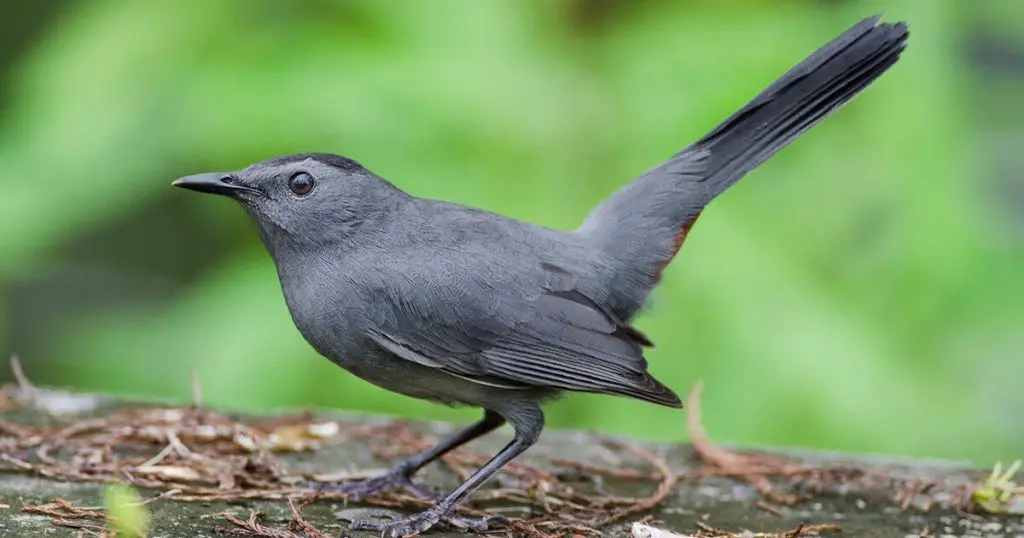
Originating from the eastern United States and parts of Canada, Gray Catbirds are a medium-sized bird that graces our presence with its distinct beauty. This charismatic species is recognized for its jet-black cap and tail, which contrast elegantly with its light gray body.
However, it is the melodic and diverse song of the Gray Catbird that truly captures the heart of the residents of the eastern United States who get to hear it. During the mating season, the male gray Catbirds engage in an enchanting symphony of calls, serenading potential mates and establishing territorial boundaries.
The male of this gray bird has a beautiful song. The medley of the melodious tunes makes it a delightful visitor to any bird feeder.
Their captivating performances make them great for bird watching. They are known to showcase their vocal prowess and striking appearance. With a length of approximately 8.3 to 9.1 inches, the Gray Catbird is a charming addition to the family of grey birds.
2. Northern Mockingbird (Mimus polyglottos)

Mockingbirds, those charismatic virtuosos of the avian world, hold a captivating allure with their remarkable vocal prowess and distinctive appearance. Renowned for their exceptional ability to mimic the songs of other birds and even environmental sounds, mockingbirds are nature's maestros.
These gray birds harmonize an array of melodies they heard from other birds into their own symphonic compositions.
Their plumage, while modest in color, boasts subtle elegance with touches of grey, black, and white. But, a closer examination reveals the charming detail of their black wings with outer white tail feathers. This adds a delicate contrast to their ensemble.
As they weave their intricate medleys of sound, mockingbirds reveal an enchanting connection between their auditory dexterity and the visual nuances that grace their feathered attire. This makes them truly a mesmerizing marvel of the natural world.
3. Grey Butcherbird

The Grey Butcherbird is endemic to Australia. It is a medium-sized bird, typically measuring between 10 and 20 in in length and weighing 70 to 120 grams.
Adults have a striking black head and face, with a clear white collar that separates the black from its grey back. The back and wings are grey, often with large patches of white on the wings. The underparts are pure white.
A distinctive feature is its long, strong, and slightly hooked grey and black bill, which is a tool for its predatory habits.
The Grey Butcherbird is widespread throughout Australia, although it is absent from the arid deserts of the central part of the continent and the far northern monsoon tropics. Its range includes:
It inhabits a variety of wooded environments, including open forests, woodlands, and even suburban gardens and parks.
4. Grey Wagtail

From the Arctic tundra, our expedition guides us to the serene landscapes of Europe and Asia, where the Grey Wagtail finds its home. A master of subtlety, this grey bird species wears a light gray plumage with delicate yellow accents on its belly.
The Yellow Wagtail's courtship dance is a sight to behold, as it engages in graceful displays that showcase its vibrant underparts. The wagging of its black tail adds a playful touch to its courtship rituals, enchanting observers and potential mates alike.
With a modest size of approximately 7.5 inches, the Grey Wagtail exemplifies the elegance and poise inherent in the avian world.
5. Mottled Petrel
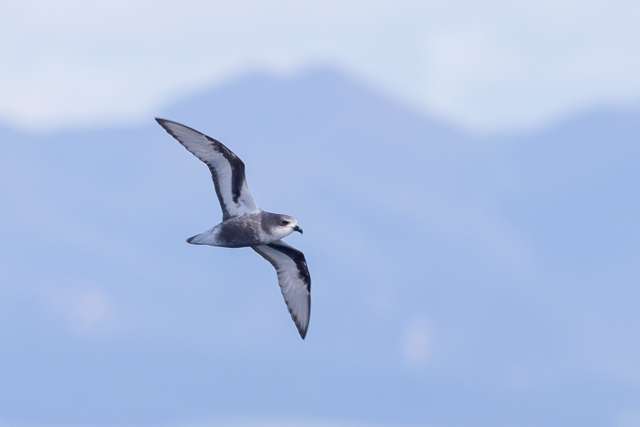
The Mottled Petrel is a seabird with a distinctive appearance and a remarkable migratory journey. It has a striking combination of grey, black, and white plumage.
The crown, back, and upperwings are grey. A prominent 'M' pattern is formed by darker bars that run across the wings and connect on the back. The rump and tail are also pale grey.
The face, chin, and throat are white, which contrasts with a dark patch around the eye. The lower breast and belly are covered by a smudgy grey patch, a key identification feature. The rest of the underparts, including the undertail coverts, are white.
The Mottled Petrel is a medium-sized petrel. It is roughly the size of a crow.
This species is a long-distance migrant, spending most of its life at sea.
The Mottled Petrel is endemic to New Zealand, where it breeds on islands in the southern part of the country. After breeding, the petrels undertake a massive migration, traveling north across the Pacific Ocean.
6. Gray Plover

As the seasons shift, we find ourselves in the vast Arctic tundra, the breeding grounds of the Gray Plover. This nomadic species embarks on epic journeys, migrating to coastal areas across the globe during the non-breeding season.
A study in contrasts, the Gray Plover dons a cloak of light and dark grey plumage, creating an exquisite balance that mirrors its surroundings. During mating rituals, the grey birds of this species engage in courtship flights, displaying their distinctive black underparts in dazzling aerial acrobatics.
Their journeys take them to various corners of the world, underscoring their remarkable adaptability and endurance. With a size of 10 to 11 inches, the Gray Plover is a symbol of resilience and grace.
Known for its striking appearance, the gray plover species features a mix of light and dark gray plumage. It travels great distances between its breeding grounds in the Arctic and its wintering areas.
7. Grey Wagtail
From the Arctic tundra, our expedition guides us to the serene landscapes of Europe and Asia, where the Grey Wagtail finds its home. A master of subtlety, this grey bird species wears a light gray plumage with delicate yellow accents on its belly.
The Yellow Wagtail's courtship dance is a sight to behold, as it engages in graceful displays that showcase its vibrant underparts. The wagging of its black tail adds a playful touch to its courtship rituals, enchanting observers and potential mates alike.
With a modest size of approximately 7.5 inches, the Grey Wagtail exemplifies the elegance and poise inherent in the avian world.
8. Gray Hawk (Buteo plagiatus)

Transitioning to the Americas, the Gray Hawk takes us on a journey through the landscapes of North and Central America. With a palette of dark and soft gray feathers, this raptor exudes an air of quiet elegance.
The Gray Hawk's courtship rituals involve captivating aerial displays, where males swoop and dive in graceful maneuvers to captivate potential mates. These displays, set against the backdrop of open landscapes, celebrate the freedom and majesty of flight.
These gray birds have an average wingspan of 18 to 20 inches. The Gray Hawk commands the skies with both power and finesse, making them great for bird watching.
9. Grey Falcon (Falco hypoleucos)
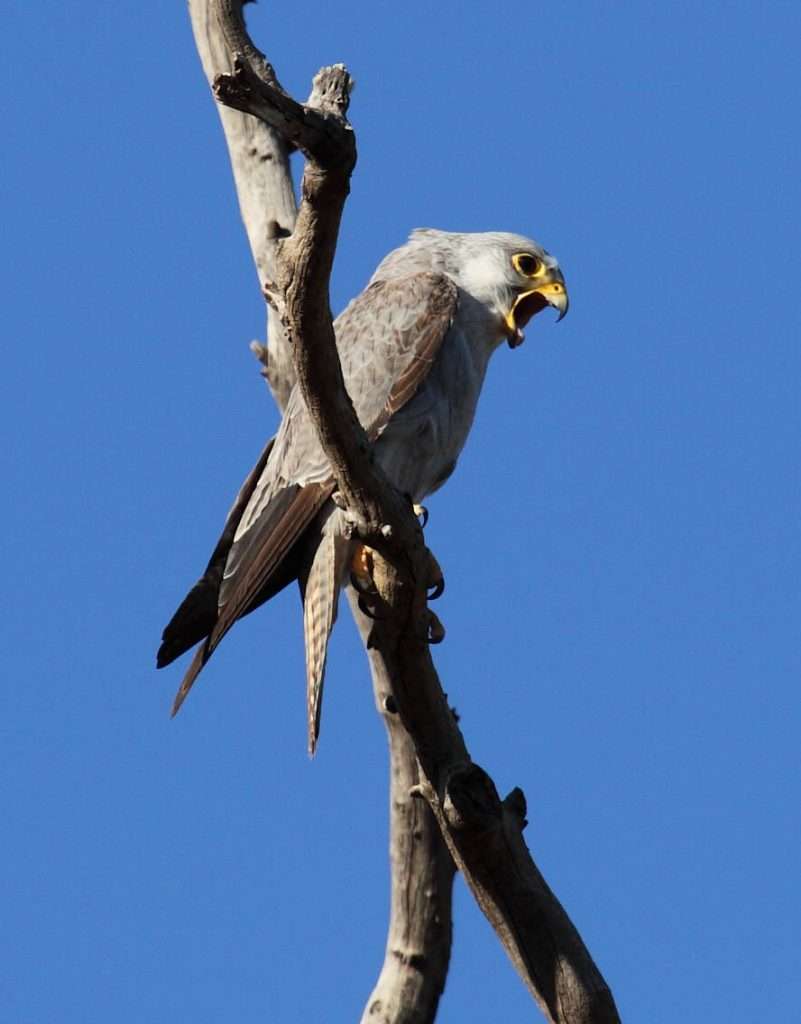
As our journey takes us to the varied landscapes of Australia, we encounter the captivating presence of the Grey Falcon. With its pale grey plumage and darker grey markings, this raptor embodies the spirit of the Australian outback.
The Grey Falcon's courtship rituals are a celebration of swift flight and dynamic aerial displays, as males engage in swoops and dives that showcase their prowess and agility.
This visual symphony of flight underscores the freedom and majesty of movement that define the world of these grey birds. With a size of 13 to 15 inches, the Grey Falcon commands both the skies and the imagination with its grace and power.
10. Grey Goshawk (Tachyspiza novaehollandiae)

The Grey Goshawk is a bird of prey with some unique characteristics, including its striking plumage and a significant size difference between males and females.
The Grey Goshawk is known for having two distinct color morphs including the grey morph, which gives the bird its name. Adults have a pale grey head and back, with slightly darker wingtips. Their underparts are white, often with fine grey barring on the chest. The eyes are a deep red, and the legs and feet are yellow.
The Grey Goshawk is a medium-sized raptor, but there is a pronounced difference in size between males and females.
Length: 16–22 in
Wingspan: 28–43 in
The Grey Goshawk is found along the coastal regions of parts of Australia, including Tasmania.
Their preferred habitats are forests and tall woodlands, especially mature, wet forests, including rainforests. However, they can also be seen in more open woodlands, wooded farmlands, and even urban fringes.
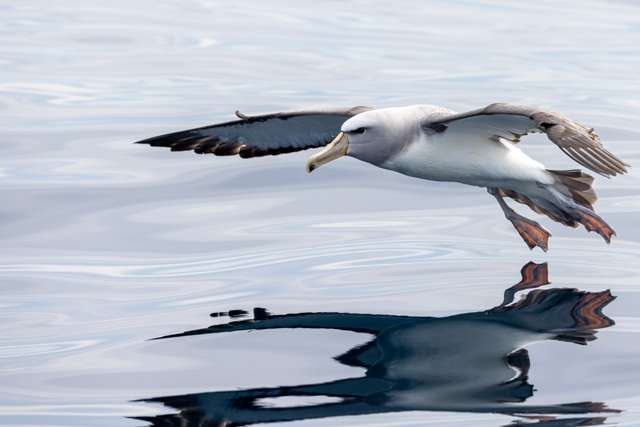
11. Salvin's Mollymawk (Thalassarche salvini)

The Salvin's Mollymawk, is a medium-sized albatross with a distinctive appearance and a wide range in the Southern Ocean.
The adult Salvin's Albatross has a silvery-grey head, face, and upper throat. The back, upperwings, and tail are a darker grey-black. It has a contrasting white rump and white underparts. The bill is a pale grey-green, with a distinctive bright yellow tip on the upper mandible. Juveniles have more extensive grey areas and a blue-grey bill with black tips on both mandibles.
The Salvin's is considered one of the larger members of the mollymawk group. Its body length is about 35 inches, and its impressive wingspan can reach up to 8.4 feet. It weighs between 7.3 and 10.8 lbs.
The breeding range of the Salvin's Mollymawk is very restricted, primarily to a few islands off the coast of New Zealand. After the breeding season, they disperse widely across the Southern Ocean, foraging from South Africa to Australia and as far east as the coast of South America.
12. Gray Gull (Leucophaeus modestus)
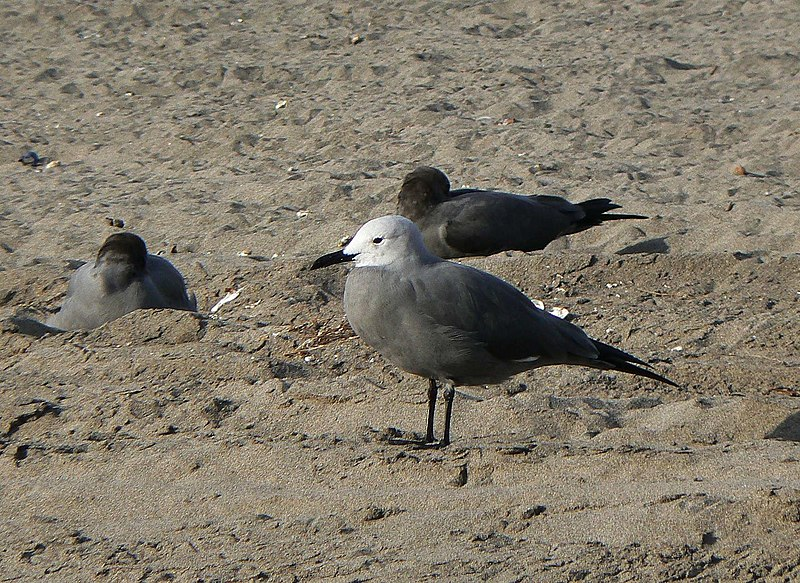
From the southern oceans, we journey to the coastal regions of South America, where the Grey Gull takes flight. Exuding an air of quiet sophistication, this bird displays an understated palette of pale grey and darker grey markings.
The Grey Gull's mating rituals are marked by monogamous pairings and coordinated displays, reflecting the importance of collaboration and communication in building lasting bonds.
With a length of 14 to 15 inches, the Grey Gull serves as a reminder that strength lies not only in bold colors but also in the subtleties that define our interactions.
13. Grey Antbird (Myrmeciza griseiceps)
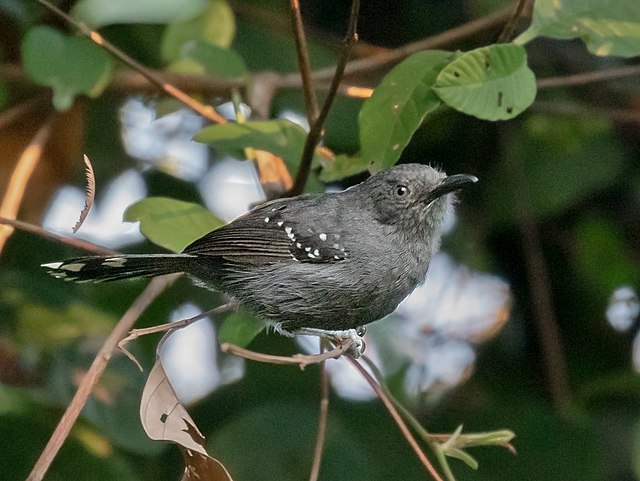
Our exploration continues deep into the heart of the Amazon rainforest, where the Grey Antbird showcases its unique allure. Adorned in shades of grey, this bird boasts a distinctive black tail and outer white tail feathers, setting it apart from its verdant surroundings.
The Grey Antbird's courtship dance is a symphony of calls and responses, as males sing to establish territories and females respond with soft calls that indicate interest. These grey birds have a size of 6 to 7 inches.
The Grey Antbird is a testament to the diversity and complexity of life thriving within the rich ecosystems of Central and South America.
14. Grey Go-away-bird (Corythaixoides concolor)

From the Amazon rainforest, our journey leads us to the woodlands of eastern and southern Africa, where the Grey Go-away-bird graces the canopy. With its soft grey plumage, this species of bird is a master of blending into its environment, offering a reminder of the beauty found in subtlety.
The Grey Go-away-bird's vocalizations are both enchanting and amusing, as it mimics its own name in a call that resonates through the woodlands. This means it has a distinct call that sounds like it's saying "Go away".
The unique approach to courtship of these gray birds, characterized by playful calls that evoke both curiosity and humor, underscores the multifaceted nature of avian communication. With a length of 18 to 20 inches, the Grey Go-away-bird stands as a charismatic ambassador of Africa's diverse birdlife.
15. Grey-headed Lapwing (Vanellus cinereus)
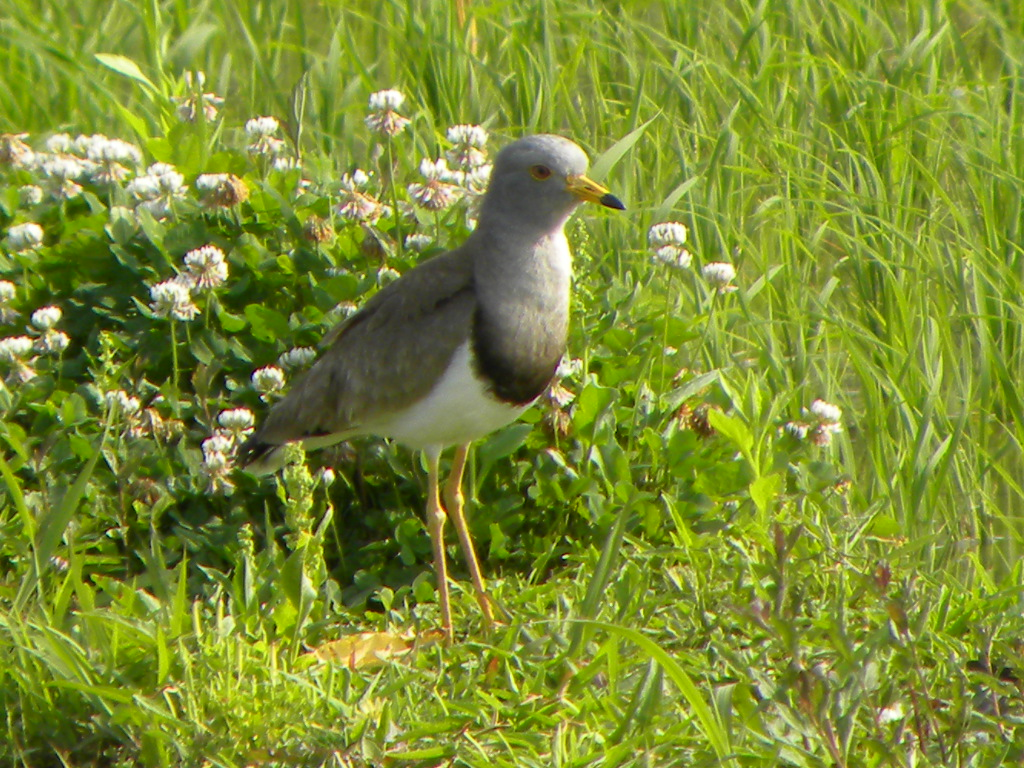
Inhabiting the grasslands of Asia and the Middle East, this bird showcases a light gray head and a contrasting black cap during the breeding season.
Our voyage carries us to the grasslands and wetlands of Asia and the Middle East, where the Grey-headed Lapwing resides. This bird, characterized by its light grey head and striking black cap, engages in courtship flights that celebrate movement and grace.
The Grey-headed Lapwing's displays are a visual symphony, where aerial maneuvers are interwoven with the harmony of plumage and flight. With a size of 12 to 14 inches, the Grey-headed Lapwing is a living testament to the beauty that emerges when nature's elements converge.
16. Grey Nightjar (Caprimulgus jotaka)
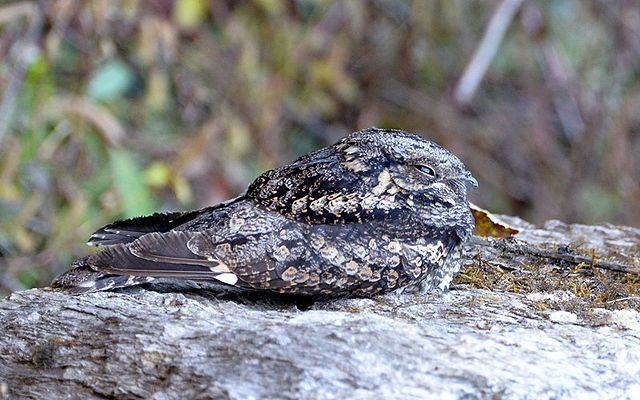
Now we traverse to the mesmerizing landscapes of East Asia, where the Grey Nightjar takes center stage. A nocturnal marvel, these gray birds come to life during twilight hours. They proudly showcase their intricate grey and brown camouflage that helps them blend seamlessly into their surroundings.
Courtship for the Grey Nightjar is a symphony of churring calls that resonate through the night.
Males utilize their vocal prowess to attract potential mates. This auditory courtship dance adds a layer of mystique to the dark gray bird's presence, highlighting the allure of the hidden and the unseen. With a size of 9 to 10 inches, the Grey Nightjar is a testament to the marvels that unfold under the cover of darkness.
17. Grey Hypocolius (Hypocolius ampelinus)

Transitioning to the Middle East, we encounter the Grey Hypocolius—a bird species that embodies the arid landscapes in which it thrives. With a palette of soft grey feathers, this bird captures the essence of subtlety in its appearance.
The Grey Hypocolius' courtship rituals are marked by coordinated feeding behaviors. These gray birds gather in small flocks to engage in a symphony of movement and unity.
This unique approach to courtship underscores the importance of cooperation and community in building lasting connections.
With a size of 8 to 9 inches, the Grey Hypocolius is a testament to the power of collective effort in the pursuit of companionship.
18. Grey-headed Tanager (Eucometis penicillata)

Our journey continues through the lush landscapes of Central and South America, where the Grey-headed Tanager graces the trees with its presence. With its soft grey plumage and vibrant colors adorning its head and body, this bird captures the essence of vivacity within the subtleties of its appearance.
The Grey-headed Tanager's courtship rituals reflect its social nature, as these birds form mixed-species flocks during the breeding season—a harmonious celebration of unity and diversity. With a size of 6 to 7 inches, the Grey-headed Tanager stands as a vibrant testament to the power of collaboration in forging connections.
19. Grey Heron (Ardea cinerea)

Journeying back to the old world, we find ourselves in the heart of Europe, Asia, and Africa, where the Grey Heron commands the wetlands and water bodies. Adorned in an exquisite coat of grey plumage, this majestic bird embodies the tranquility and grace of its aquatic habitats.
The Grey Heron's courtship rituals are a ballet of mutual preening and bill clacking, as pairs engage in harmonious displays that underscore the beauty of partnership.
This visual symphony of unity resonates with the delicate balance that defines the avian world. With a height of 36 to 40 inches, the Grey Heron is a living embodiment of the elegant coexistence between bird and environment.
20. Grey Silky-flycatcher (Ptilogonys cinereus)
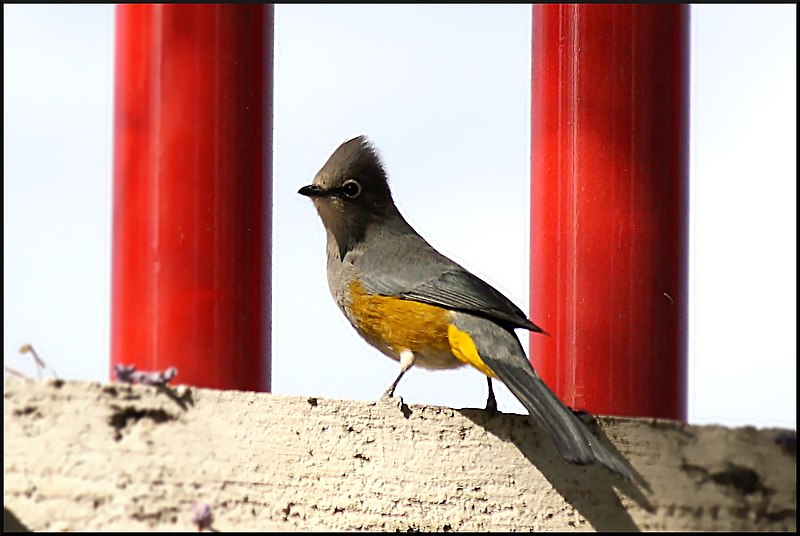
From the wetlands, our journey takes a tropical turn as we immerse ourselves in the vibrant landscapes of Central America, where the Grey Silky-flycatcher graces the trees with its presence. With its ash-grey plumage and distinctive crest, this species of bird embodies the playfulness and vibrancy of its surroundings.
The Grey Silky-flycatcher's courtship rituals are marked by acrobatic flights and playful displays, as these birds engage in symphonies of movement that celebrate both courtship and the sheer joy of flight.
With a size of 8 to 9 inches, the Grey Silky-flycatcher stands as a testament to the harmonious coexistence of form and function in the avian world.
21. Grey Crowned Crane (Balearica regulorum)
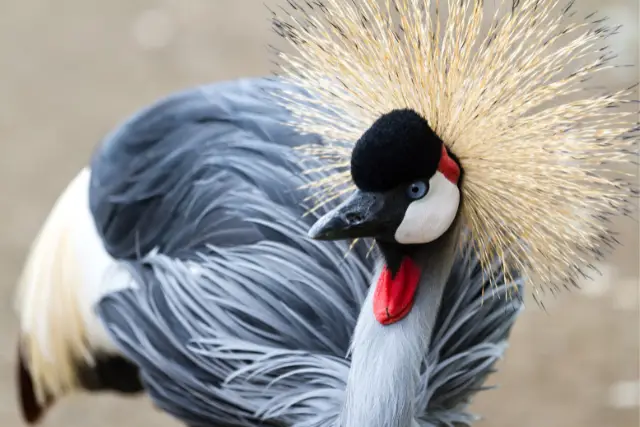
Venturing once again into the heart of Africa, we encounter the regal presence of the Grey Crowned Crane in wetlands and grasslands. Adorned with a crown of grey atop its head and a radiant plumage of gold, this bird embodies the splendor and majesty of its native habitats.
Native to Africa, this stately bird boasts a gray crown atop its head. This contrasts beautifully with its golden plumage.
The Grey Crowned Crane's courtship rituals are a breathtaking dance of jumps, bows, and wing-flapping that celebrate both beauty and movement. This visual symphony of courtship serves as a testament to the power of grace and expression in forging connections.
With a height of 39 to 44 inches, the Grey Crowned Crane stands as a living embodiment of the elegance and poise inherent in the world of birds.
Frequently Asked Questions
How are birds grey?
Birds get their grey coloration primarily from a pigment called melanin.
Melanin is a pigment that birds produce themselves and is responsible for a range of colors from black to brown and grey. The specific shade of grey depends on the concentration and distribution of melanin granules within the feather structure.
In some cases, grey plumage can also be a result of a combination of pigments and structural coloration. This happens when the microscopic structure of a feather scatters light in a way that produces blue, while an underlying layer of melanin absorbs other wavelengths. The resulting mix of light can be perceived as grey.
What type of bird is gray and white?
The Grey Heron (Ardea cinerea) is an example of a bird that displays a combination of grey and white plumage. These elegant grey birds can be found across Europe, Asia, and Africa, often near water bodies, and are recognized for their striking appearance.
What bird is gray and black?
The Grey Catbird (Dumetella carolinensis) is a species of bird that features a mix of grey and black plumage. Native to the eastern United States and parts of Canada, it is known for its dark grey body, black cap, and tail, creating a striking contrast.
What is a gray bird with black wingtips?
The Western Meadowlark (Sturnella neglecta) is an example of a grey bird with black wingtips. This bird, found in grasslands of North America, displays a combination of grey and brownish plumage with distinct black V-shaped markings on its wings, making it easily recognizable.
Can doves be grey in color?
Yes, doves can indeed be grey in color. Grey is a common and natural plumage color for many dove species. While some doves may have variations of brown, white, or even iridescent hues, shades of grey are frequently observed in their feathers.
Wrapping Up
From the lively song of the Gray Catbird to the majestic flight of the Mottled Petrel, these grey species of bird remind us that beauty comes in all shades.
Whether nestled in the dense rainforests of South America or soaring over the vast oceans, these wild birds captivate our imagination and enrich our understanding of the avian world. Their subtle hues and unique characteristics make them a testament to the diversity and wonder of nature's creations.
