
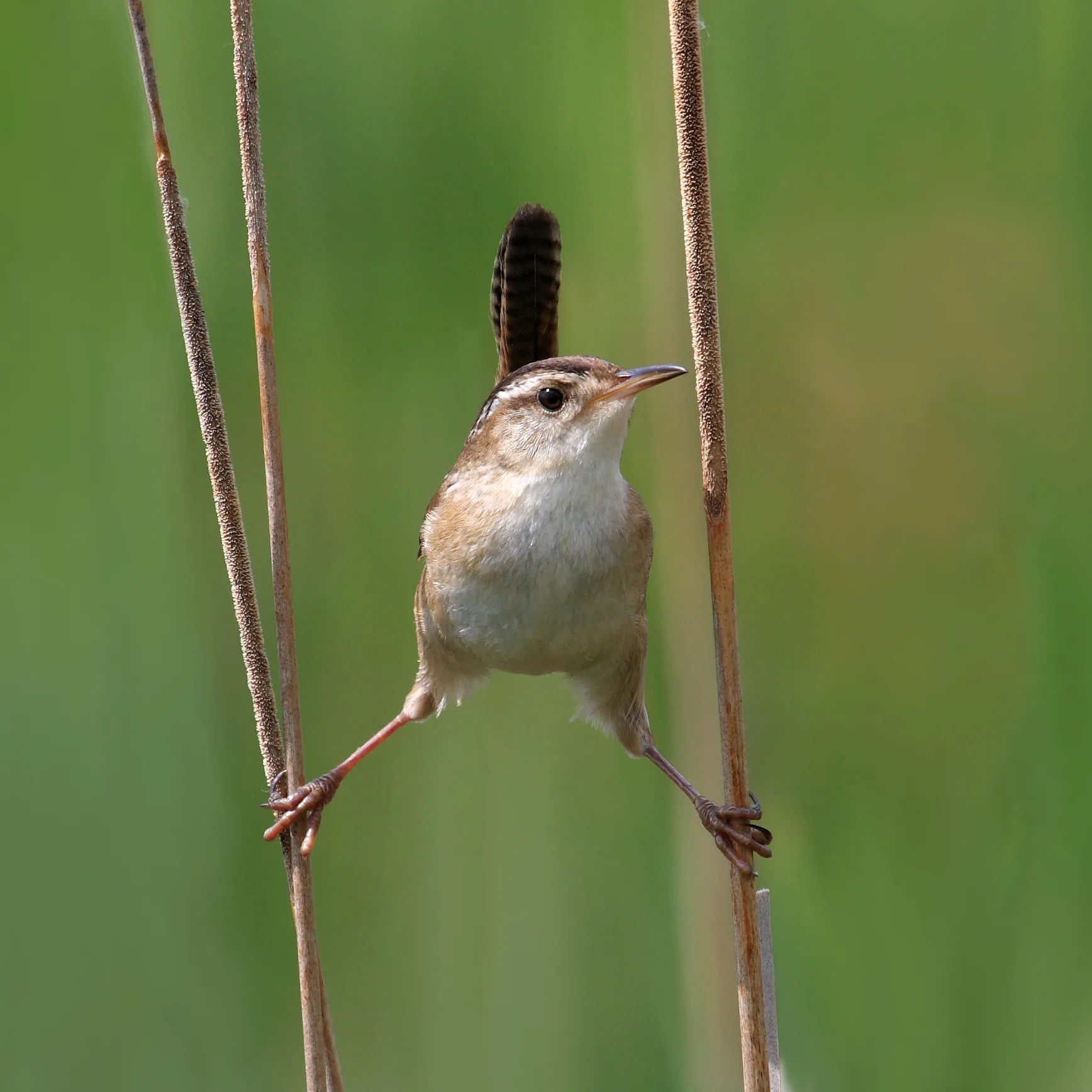
In the world of North American birds, few families punch as far above their weight class as the Troglodytidae, better known as the Wrens. These birds are small, often clad in unassuming shades of brown, and possess a physical stature that makes them easy to overlook in a dense thicket. However, what they lack in size, they more than make up for in volume, attitude, and architectural ambition.
Across the United States, from the soggy forests of the Pacific Northwest to the arid deserts of the Southwest, wrens are a ubiquitous presence. They are the "loud neighbors" of the avian world, known for complex, bubbling songs that can drown out birds twice their size. For a U.S.-based audience, understanding our native wrens is a lesson in the incredible diversity of our continental ecosystems.
1. The House Wren: The Backyard Resident

If you live in a suburban area anywhere in the Lower 48 during the summer, you have likely hosted a House Wren (Troglodytes aedon). These are the most widespread wrens in the country, arriving in the spring to nest in birdhouses, mailboxes, or even the pockets of laundry left too long on the line.
Appearance: They are the "plain Jane" of the family—brown overall with subtle darker bars on the wings and tail. They lack the bold "eyebrows" found on many of their cousins.
Personality: Don't let the plain look fool you. House Wrens are notoriously feisty. Male House Wrens often build "dummy nests" in every available cavity in their territory to prevent other birds from moving in.
Song: A rapid, liquid series of notes that rises and then falls in a bubbly trill.
The Whooper Swan: A Majestic Traveler of the Northern Wetlands
2. The Carolina Wren: The Voice of the South

While the House Wren is a summer visitor to the North, the Carolina Wren (Thryothorus ludovicianus) is the year-round king of the Southeast and Mid-Atlantic. In recent years, due to warming winters, their range has been steadily creeping northward into New England and the Great Lakes.
Appearance: This is a chunky, "rotund" wren with a rich cinnamon-orange belly and a very bold, white stripe above the eye (the supercilium).
The "Tea-Kettle" Song: They are famous for their loud, ringing "tea-kettle, tea-kettle, tea-kettle!" chant. Because they are non-migratory, you can hear this song even on the coldest mornings in January.
Behavior: Carolina Wrens are incredibly curious and often find their way into garages, sheds, and porches, much to the surprise of homeowners.
3. The Bewick’s Wren: A Tale of Two Regions

The Bewick’s Wren (Thryomanes bewickii) is a bird of contrasts. Once common in the Eastern U.S., it has almost entirely vanished from the Appalachian region, likely due to competition for nesting sites with the more aggressive House Wren. Today, it remains a common and beloved sight in the Western U.S.
Appearance: It looks like a sleeker version of the Carolina Wren, with a long, white-edged tail that it wags and fans frequently. It also sports a very sharp, white eyebrow.
Western Staple: In states like Texas, California, and Arizona, the Bewick's is the dominant backyard wren, favoring brushy areas and gardens.
4. The Marsh Wren and Sedge Wren: The Wetland Specialists
While most wrens are associated with gardens or forests, these two species have conquered the U.S. wetlands.
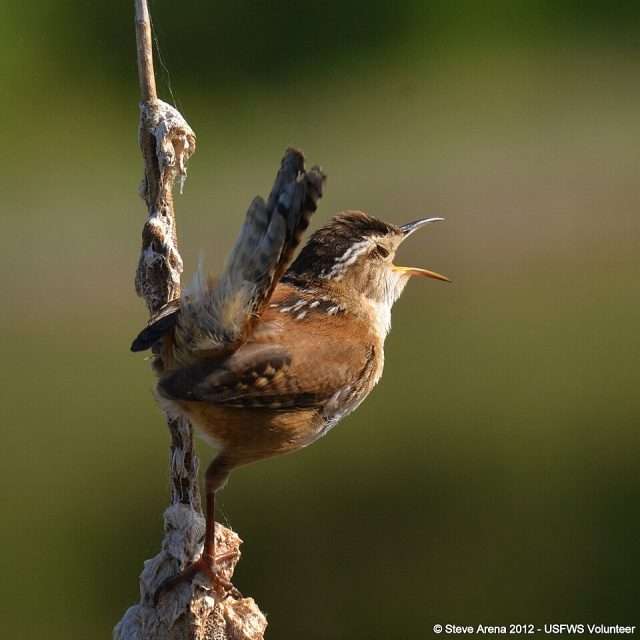
The Marsh Wren (Cistothorus palustris): Found in cattail marshes across the country, this bird is more often heard than seen. Its song is a mechanical, rattling gurgle that sounds a bit like an old sewing machine. They are famous for building multiple spherical nests among the reeds.
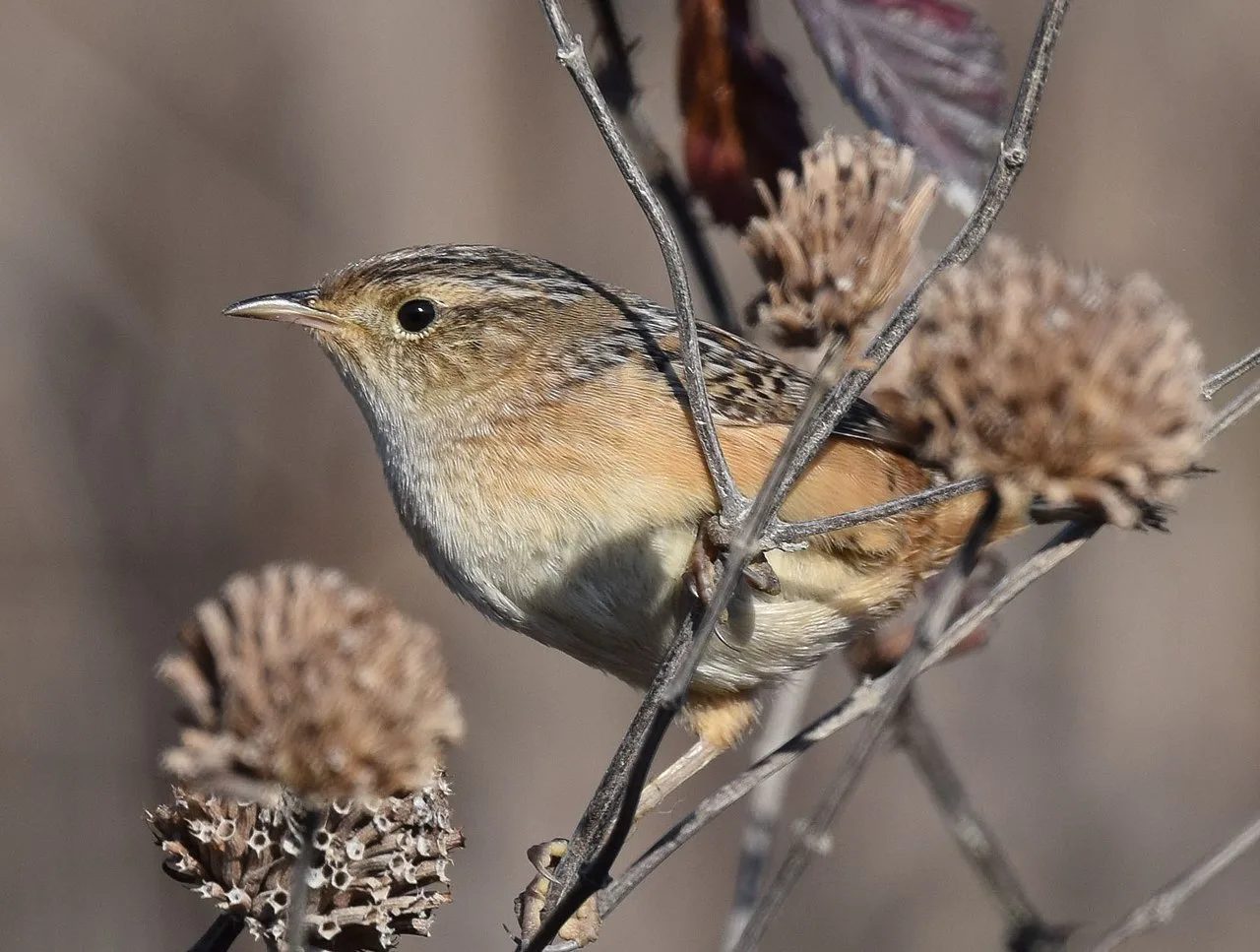
The Sedge Wren (Cistothorus stellaris): Formerly known as the Short-billed Marsh Wren, this bird is smaller and much more secretive. It prefers wet meadows and tall grasses over standing-water marshes. Because their habitat is frequently lost to agriculture, they are a species of conservation concern in many Midwestern states.
5. The Cactus Wren: The Desert Giant

Moving into the Southwest, everything changes. The Cactus Wren (Campylorhynchus brunneicapillus) is the largest wren in the United States, reaching nearly eight inches in length—roughly the size of a Spotted Towhee.
Habitat: It is a specialist of the Sonoran and Chihuahuan deserts. It builds large, football-shaped nests inside the protective spines of Cholla cacti.
Song: Unlike the musical trills of other wrens, the Cactus Wren has a harsh, rhythmic "chut-chut-chut-chut" that sounds like a car engine trying to start on a cold morning.
Appearance: Heavily spotted and streaked, it looks more like a thrasher than a typical wren.
6. The Winter Wren and Pacific Wren: The Forest Dwellers
For a long time, these were considered a single species called the "Winter Wren." However, scientists discovered that the birds in the East and West have different songs and genetic markers.
The Winter Wren (Troglodytes hiemalis): Found in the Eastern U.S., this tiny, dark bird favors mossy logs and the roots of fallen trees in damp forests.

The Pacific Wren (Troglodytes pacificus): Found in the towering evergreen forests of the West Coast.
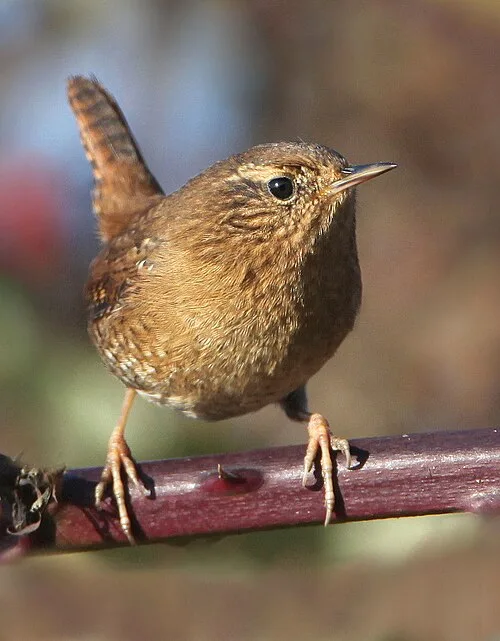
Song Magic: Both species possess songs that are impossibly long and complex for their size—a 10-second cascade of tinkling, high-pitched notes that sounds like a tiny woodland flute.
7. The Canyon Wren and Rock Wren: The Cliff Dwellers
In the mountainous West, wrens have adapted to vertical landscapes.
The Canyon Wren: Known for the most beautiful song in the desert—a descending series of clear, liquid whistles that echoes off canyon walls. They have flattened heads and long bills to reach into rock crevices for spiders.
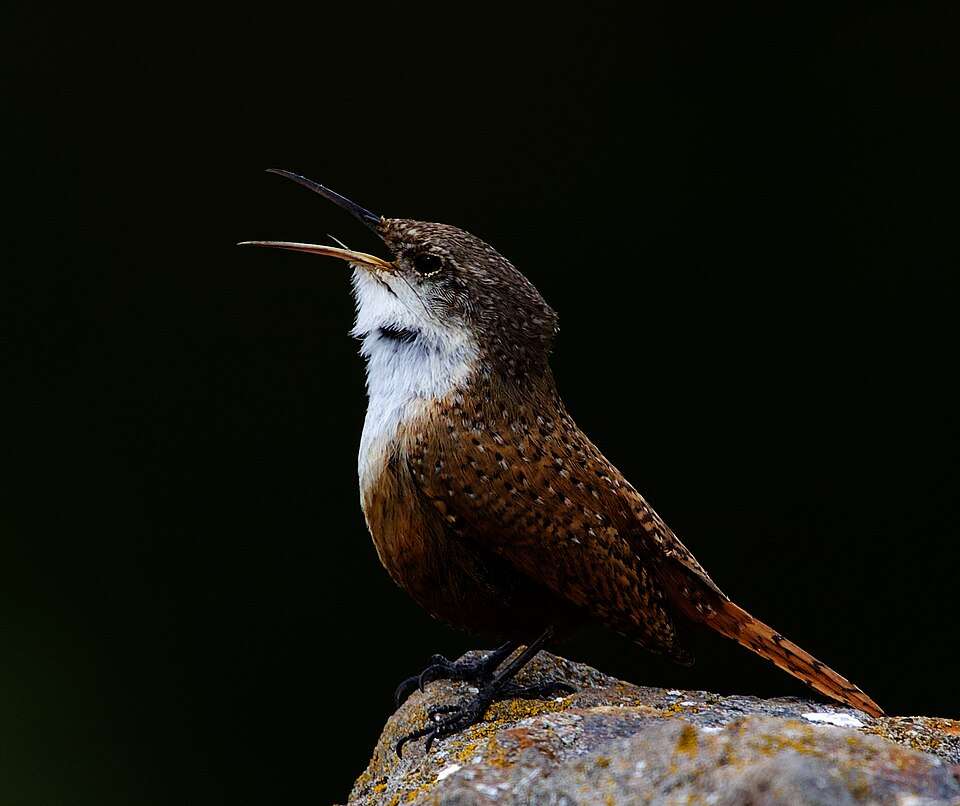
The Rock Wren: Distinguished by its habit of "paving" the entrance to its nest with small pebbles. It is a master of camouflage, blending perfectly with the gray and tan boulders of the high desert.

Summary Table: Comparing Common U.S. Wrens
| Species | Primary Habitat | Distinguishing Mark | Key Trait |
| House Wren | Backyards / Suburbs | Plain face, no stripe | Aggressive nester |
| Carolina Wren | SE Forests / Gardens | Bold white eye stripe | Loud "tea-kettle" song |
| Cactus Wren | SW Deserts | Large size, spotted chest | Nests in cacti |
| Marsh Wren | Cattail Marshes | White-streaked back | Mechanical song |
| Pacific Wren | Old-growth Western Forest | Very short tail, dark | Long, complex song |
Conservation and the Future of U.S. Wrens
Wrens are remarkably resilient, but they are not immune to the challenges of the 21st century. Habitat fragmentation is the primary threat, particularly for the Sedge Wren and the Marsh Wren, as our remaining wetlands are drained. In the East, the decline of the Bewick’s Wren serves as a sobering reminder of how delicate the balance between species can be.
Additionally, because many wrens (like the Carolina and House Wren) are insectivores, they are highly sensitive to pesticide use in suburban gardens. Providing a "wild" corner in your yard with a brush pile and native plants is one of the best ways to ensure these tiny powerhouses continue to provide the soundtrack to our American landscapes.
Whether it’s the booming "tea-kettle" of a Carolina Wren on a humid Georgia morning or the ethereal whistle of a Canyon Wren in a Utah gorge, wrens are the voices that define our wild places. They prove that you don't need size to command attention—you just need a bit of spirit and a very loud song.
