
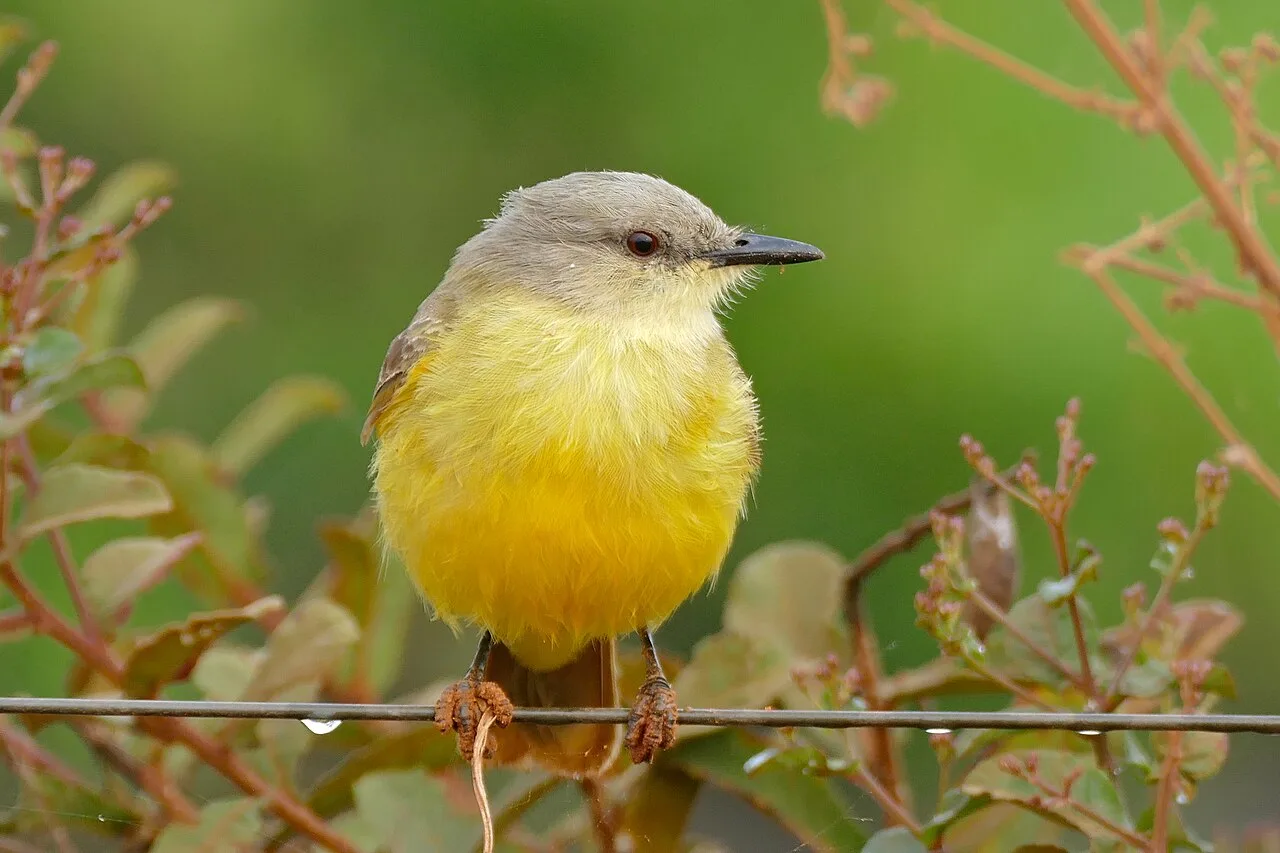
If 2026 was a book, the chapter on avian rarities would be a thick one. But even in a year of European Robins and Siberian flycatchers, the arrival of the Cattle Tyrant (Machetornis rixosa) in Texas has managed to stop the birding world in its tracks. Typically a resident of the open savannas of South America—ranging from Colombia down to Argentina—this medium-sized flycatcher has never been recorded in the United States.
Until now.
Its discovery in a dusty lot near Corpus Christi this April hasn't just added a new name to the ABA (American Birding Association) checklist; it has sparked a detective story involving thousands of miles of ocean, international shipping lanes, and a bird with a very specific set of survival skills.
1. Anatomy of an Outlier: Identifying the Cattle Tyrant

The Cattle Tyrant is a striking bird that looks like a cross between a Western Kingbird and a large pipit. It is a bold, ground-dwelling flycatcher that carries itself with a confident, upright posture.
The Colors: It features a dull olive-brown back and wings, but its underside is a vibrant, sunny yellow. Its most distinguishing feature is its head: a pale gray crown with a concealed fiery-red or orange patch (the "tyrant" crown) that it only reveals when excited or during displays.
The Legs: Unlike most flycatchers that have short, weak legs for perching, the Cattle Tyrant has long, strong legs built for running. It is a terrestrial hunter, often seen sprinting across the ground like a tiny plover.
The Tail: It has a long, slightly notched tail that it pumps or wags as it walks, adding to its animated appearance.
2. The "Cowboy" of the Bird World
The name "Cattle Tyrant" isn't a commentary on its personality (though like most flycatchers, it is feisty). It refers to its specialized feeding strategy. In its native South American range, these birds are almost always found in the company of large mammals—cows, horses, or even capybaras.
They serve as a sort of "cleaner crew," perching directly on the backs of livestock to snatch up insects stirred up by the animals' hooves or picking ticks directly off their hides. In the absence of cattle, they are known to follow tractors or even people walking through tall grass. In the case of the Texas visitor, it was spotted foraging near park benches and parking lot edges, treating humans and their vehicles as "urban cattle."
3. The Great Migration Mystery: Ship or Wing?
How does a bird from the Southern Hemisphere end up in South Texas? The distance from its northernmost range in Panama to Corpus Christi is nearly 2,000 miles, much of it across the Gulf of Mexico.
While some "vagrants" fly off-course, many experts believe the Cattle Tyrant may have been a ship-assisted traveler. Corpus Christi is one of the busiest ports in the United States, receiving massive cargo vessels from South American ports daily. It is highly likely that this bird landed on a ship in the Caribbean or off the coast of South America and simply "rode the rail" all the way to Texas, foraging for insects on the deck during the journey.
4. Cattle Tyrant vs. Western Kingbird

For Texas birders, the challenge is separating this rarity from the very common Western Kingbirds that are currently migrating through the state.
| Feature | Cattle Tyrant | Western Kingbird |
| Feeding Style | Runs on the ground; hops on livestock. | Hunts from high perches; "hawking" in air. |
| Tail | Brown with pale tips; wags frequently. | Black with distinct white outer edges. |
| Legs | Long and sturdy. | Short and black. |
| Voice | High-pitched, squeaky trills. | Sharp, buzzy "whit" calls. |

5. Why the Cattle Tyrant Matters
The sighting of a Cattle Tyrant is a "First State Record" and a "First Continental Record" for the Lower 48. Beyond the excitement for "listers," it highlights the changing dynamics of the Gulf Coast. As global shipping increases and climate patterns shift, we are seeing more "accidental" visitors from the Southern Hemisphere.
This bird has become a local celebrity in Corpus Christi. Business owners have reported a surge in "birder business," and local parks have seen record attendance. It proves that a single, six-inch bird can bridge the gap between two continents and bring an entire community together in a shared moment of wonder.
Tips for Chasing the Tyrant
If you are heading to the Texas coast to find this visitor:
Check the Ground: Don't just look in the trees. Scan the short grass and the edges of paved paths.
Watch the Livestock: If there are cattle or horses nearby, check their backs! The bird's instinct is to find a "host."
Be Mindful of the Heat: April in Texas can already be scorching. Bring water, wear sunscreen, and remember that rare birds are often stressed—keep a respectful distance.
The Cattle Tyrant is a reminder that the world is smaller than we think. Whether it flew 2,000 miles or took a luxury cruise on a tanker, its presence in Texas is a testament to the incredible adaptability of life. Keep your eyes on the ground—you never know when a visitor from the Amazon might show up in your local park.
