
While Curlew Sandpipers remain a rare and exciting find in the United States, recent reports for April 2026 suggest birders are keeping a close watch on both Delaware and Kansas as spring migration accelerates and sightings have been reported.
Delaware Sightings
In Delaware, the focus has shifted to the return of shorebirds as migration hits its stride in mid-April.
Key Locations: A Curlew Sandpiper individual has been reported in the last few days in Sussex County. Delaware is a great place to see migratory shorebirds and recent activity at Seaside Nature Center and Pea Patch Island (Fort Delaware) has shown a significant influx of sandpiper species.
Context: Historically, this species is most often spotted along the Delaware bayshore or at Bombay Hook NWR during this window. Local bird walks are currently scheduled throughout April to monitor these arrivals.
Kansas Sightings
Kansas is currently experiencing an unusually early migration season, with many shorebird species arriving roughly two weeks ahead of schedule.
- Key Locations: Reports from Stafford County of Curlew Sandpiper have been confirmed. The Kansas Wetlands Education Center at Cheyenne Bottoms noted that spring migration "switched on" early this year. While the Curlew Sandpiper is classified as a "very rare migrant" in the state, the window for potential sightings typically opens in late March and runs through May.
Migration Peak: For Central Kansas, the average first-of-season observation for rare shorebirds often falls around April 16th to 21st, placing current dates right in the peak window for a potential rarity to appear.
Summary Table: Current Birding Outlook
| Location | Status for Curlew Sandpiper | Recommended Spotting Areas |
| Delaware | Rare/High Interest | Indian River Inlet, Bombay Hook, Seaside Nature Center |
| Kansas | Very Rare/Accidental | Cheyenne Bottoms, Quivira NWR |
Photographic Comparison
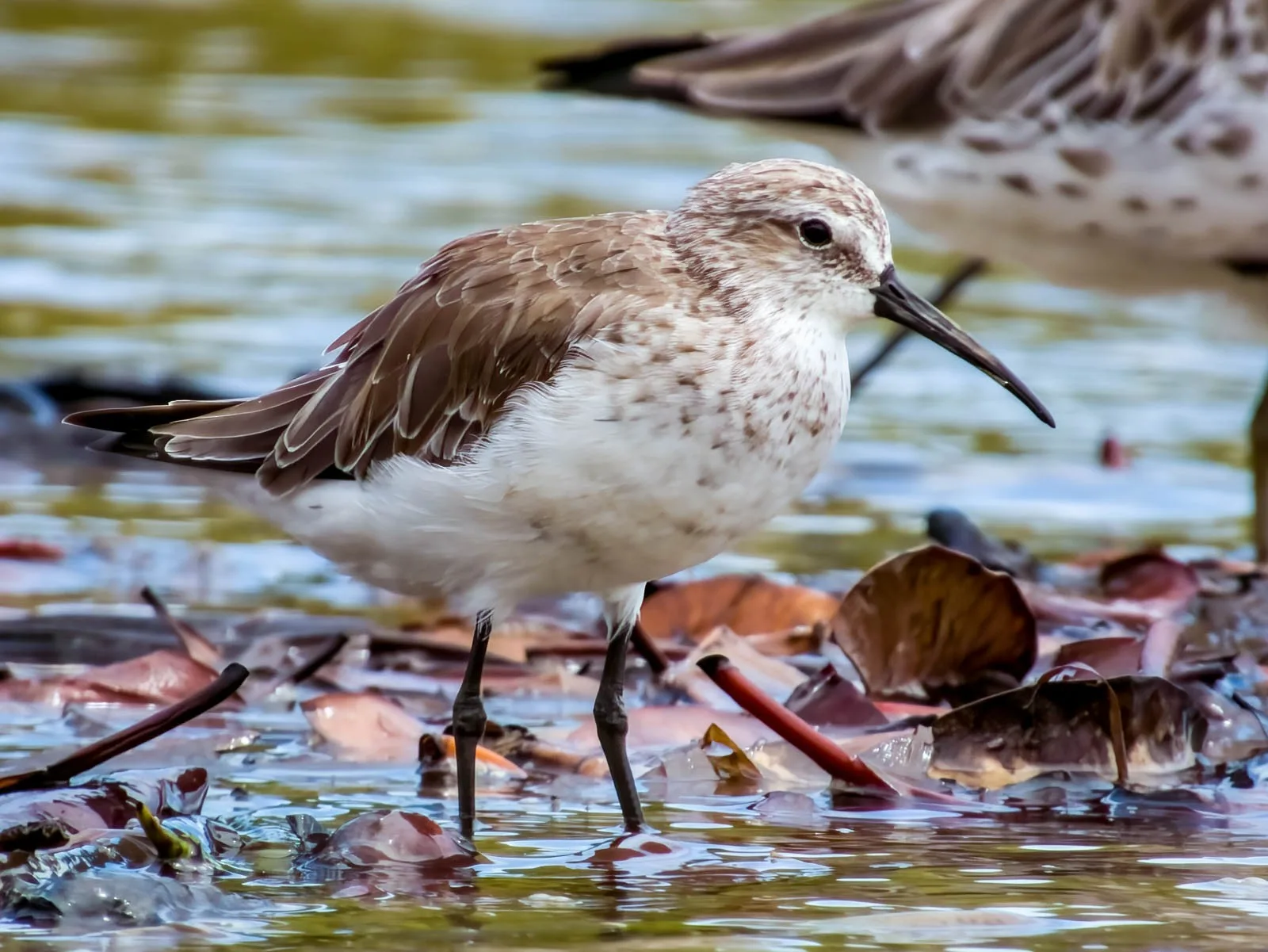
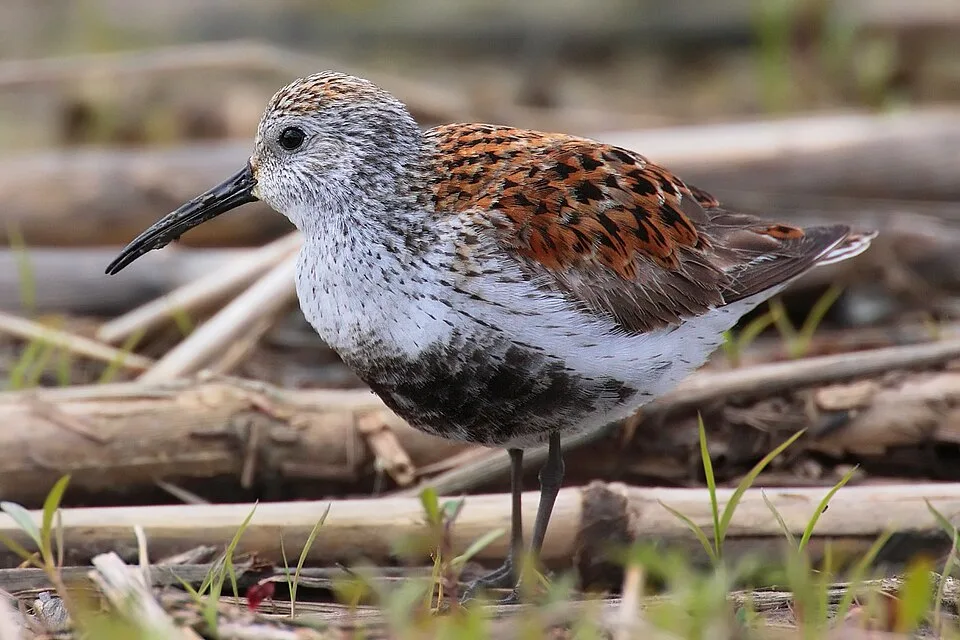
Photographs for both sightings in Delaware and Kansas have been provided and prove to the very interesting.

Comparing these two images, you can immediately see they look like different birds (although, of course, birds of the same species can show great variation in appearance) . To me, the bill length and overall structure are noticeably different, which is a key part of the puzzle when identifying rare shorebirds.
The short answer is that the first bird (Delaware) is likely a different species, while the second bird (Kansas) is a much better match for a Curlew Sandpiper and has been confirmed as such by eBird.
You can check them for yourself here:
Photo 1: The Delaware Bird
The bird in this photo has a much shorter, straighter bill than what is typical for a Curlew Sandpiper.
Bill Shape: It is relatively straight with only a very slight, blunt droop at the tip. A Curlew Sandpiper’s bill is longer and features an even, graceful downward curve throughout the outer half.
Likely ID: This looks very much like a Dunlin in non-breeding or transitional plumage. Dunlins are common in Delaware and are the most frequent "look-alike" for the Curlew Sandpiper.
Key Difference: Note the "thick" base of the bill and the shorter legs compared to the body size.
Photo 2: The Kansas Bird
This photo shows the classic silhouette of a Curlew Sandpiper, particularly one transitioning into its breeding plumage.
Bill Shape: Notice the distinct, decurved (down-turned) bill. It is longer and more slender than the bird in the first photo, looking almost like a miniature curlew.
Plumage: You can see the warm, rufous (reddish) tones starting to emerge on the breast and neck. This is a hallmark of the Curlew Sandpiper as it molts into its stunning breeding colors.
Legs: The legs appear slightly longer and more "elegant," giving it a taller stance than a Dunlin.
Quick Comparison Table
| Feature | Dunlin (Typical Delaware Look-alike) | Curlew Sandpiper (Typical Kansas Rarity) |
| Bill | Medium length; droops mostly at the tip. | Longer; even, decurved arch. |
| Structure | Often looks "hunched" or "pot-bellied." | More upright and elongated posture. |
| Rump | Black line down the center of the tail. | Solid white rump (best seen in flight). |
| Legs | Shorter, usually black. | Noticeably longer, making it look "leggier." |
The Verdict
The Kansas bird is almost certainly the Curlew Sandpiper you are looking for. The Delaware bird appears to be a Dunlin, which often tricks birders because their bills can vary slightly in length, but they never quite achieve that perfectly arched "curlew" look.
It is so difficult in the field to distinguish between these small birds, often far away and in non-breeding colors. If you can get photos, it is a huge help. A photo of the Delaware bird, in particular, taking flight, a pure white rump would confirm a Curlew Sandpiper, whereas a dark line through the white rump confirms a Dunlin!
Update on Identification
eBird has in fact confirmed that the sighting in Delaware IS of a Curlew Sandpiper. So, I got it wrong. I am quite confident in my shorebird identification but it just goes to show that you never can tell. This is obviously a very good birder. He wrote in the comments:
Flew in with Dunlin but was taller, had longer legs, longer thin bill that curved downward and was different from Dunlin bill when compared side by side.
Great catch!
Cheyenne Bottoms, Kansas: The Shorebird Capital of North America
