
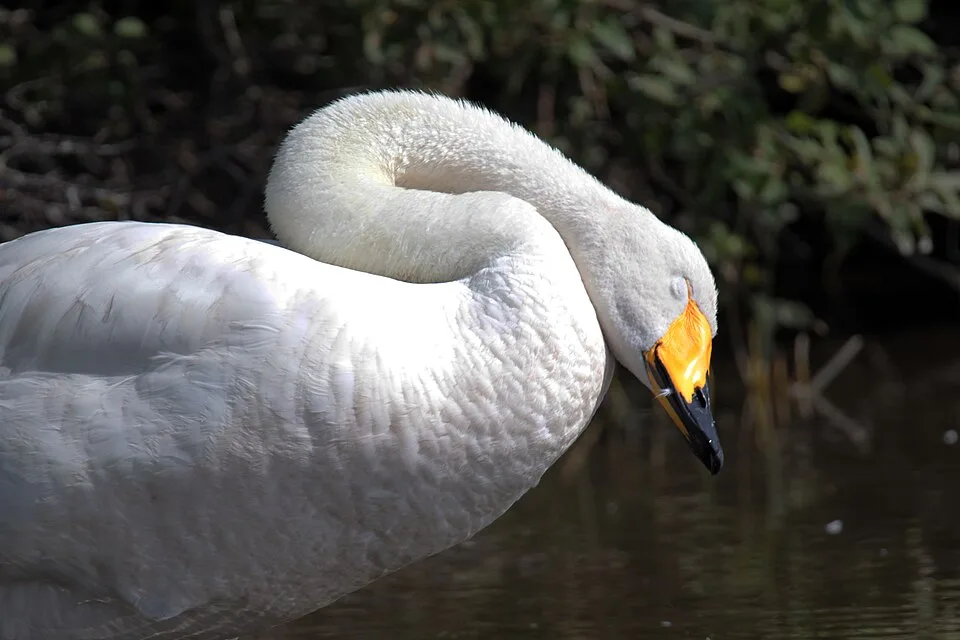
The Whooper Swan (Cygnus cygnus) is a sight that captures the imagination—a symbol of wild, untamed beauty in the vast northern landscapes it inhabits. With its impressive size, snowy-white plumage, and distinctive vocalizations, it stands as one of the most recognizable and revered waterfowl species across the Palaearctic region. This majestic bird is a quintessential example of a long-distance migrant, undertaking epic journeys between its Arctic and sub-Arctic breeding grounds and its more temperate wintering habitats.
Identification and Distinctive Features
While visually similar to the Mute Swan, the Whooper Swan is easily distinguished upon closer inspection, particularly by its bill and neck posture.
Size and Plumage: The Whooper Swan is a large bird, typically measuring between 55 to 65 inches in length, with a formidable wingspan that can reach up to 94 inches. It is entirely covered in dazzling white plumage, which often appears brilliant against the backdrop of dark water or snow.
The Diagnostic Bill: The most striking feature is the large, wedge-shaped bill. Unlike the Mute Swan's bill, which is orange with a black knob, the Whooper Swan's bill is patterned in a vibrant combination of yellow and black. The extent of the yellow and black varies between individuals, but the yellow typically dominates the base and extends to a point, contrasting sharply with the black tip.
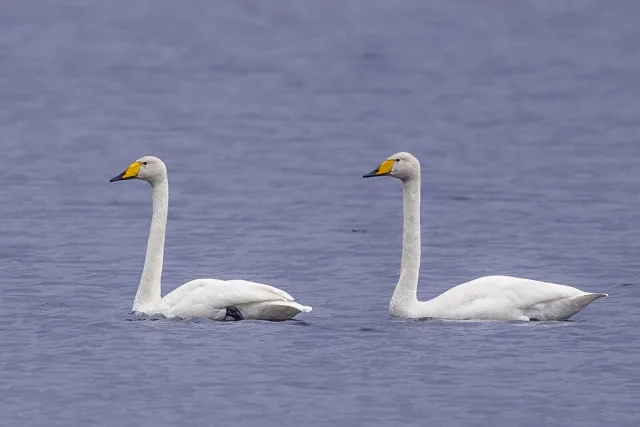
Neck Posture and Voice: In flight and while swimming, the Whooper Swan holds its long, graceful neck straight and erect, unlike the S-curve often adopted by the Mute Swan. The second part of its common name, "Whooper," refers to its loud, resonant, and bugle-like call. These calls, often described as a "whoop-whoop-whoop" or "ko-ho-ko-ho," carry for long distances across the wetlands and are the defining sound of a flock in the air.

Whooper Swan
Range, Habitat, and Migration
The Whooper Swan’s life is governed by the seasons and the availability of open water.
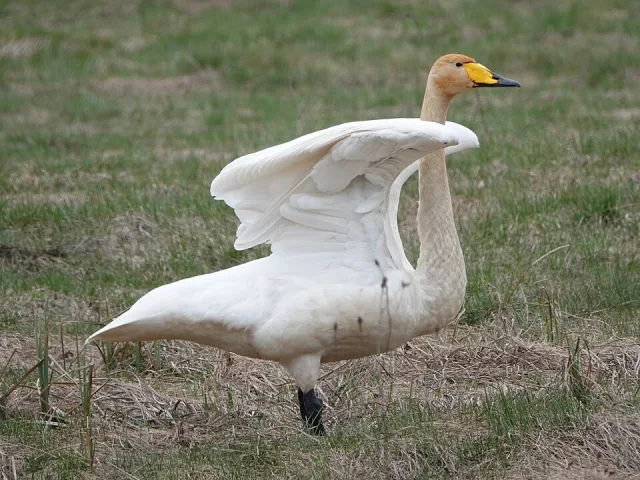
Breeding Grounds: The swans are distributed across a wide belt of the northern hemisphere, breeding in the tundra and boreal forests of Iceland, Fennoscandia, the Baltic region, and across Siberia eastward to the Russian Far East. They seek out shallow freshwater bodies—lakes, marshes, and slow-moving rivers—that are relatively undisturbed.
A Life of Travel: The Whooper Swan is a classic long-distance migrant. As the northern waters begin to freeze in autumn, they undertake impressive journeys to warmer, ice-free wintering grounds.
Wintering Areas: The western populations, including those from Iceland, typically migrate to the British Isles and Ireland. The central and eastern populations move to the shores of the North Sea, the Baltic Sea, and further east to coastal areas in China, Japan, and Korea. These wintering sites must provide ample shallow water and aquatic vegetation for feeding.

Whooper Swan
Diet and Foraging
The Whooper Swan is an herbivore, relying heavily on aquatic and terrestrial vegetation.
Main Food Sources: Its diet consists primarily of the underwater parts of aquatic plants, including roots, stems, and leaves. They also feed on grasses and agricultural crops, especially during the winter months when they may forage in fields near their wetlands.
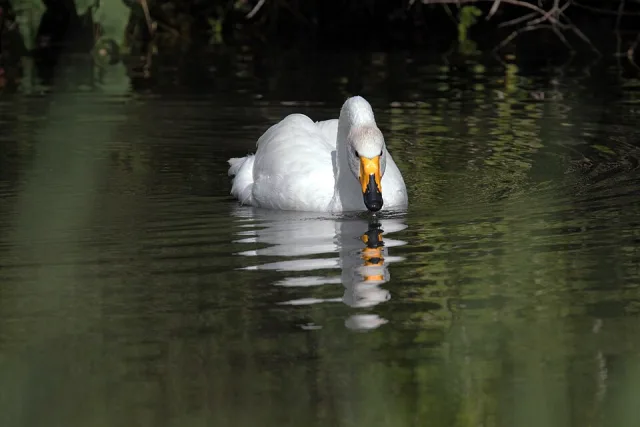
Foraging Technique: The swan uses its long neck to reach submerged vegetation, often "tipping up" (like a dabbling duck) to access food at the bottom of shallow water bodies. They also use their feet to stir up the bottom sediment, dislodging roots and tubers. This specialized feeding habit is crucial for maintaining the health of wetland ecosystems by regulating plant growth.
Family Life and Social Structure
The Whooper Swan exhibits strong pair bonds and dedicated parental care.
Pair Bonds: Whooper Swans form monogamous pair bonds that often last for life. The pairs usually migrate and winter together, strengthening their lifelong commitment.
Nesting and Young: The nest is a large mound built from vegetation, typically located on a small island or a hidden spot near the water's edge to provide protection from predators. The female lays a clutch of 3 to 7 eggs, which she incubates for about 35 to 42 days.
Cygnets: The young, called cygnets, are initially a dull brownish-grey. They are precocial, meaning they leave the nest soon after hatching, but they remain under the close protection of both parents for a long period, often for an entire year. The family unit stays intact through the first southward migration, demonstrating the crucial role of parental guidance in teaching the demanding migration routes.
Conservation and Threats
While the Whooper Swan is currently classified as Least Concern globally, its populations face continuous challenges.
Habitat Loss: The drainage and development of wetlands, both in their breeding and wintering ranges, remains the most significant long-term threat.
Climate Change: Changes in ice cover and vegetation composition in the Arctic breeding grounds can affect their reproductive success.
Human Impact: Collisions with power lines, lead poisoning from fishing weights, and disturbance from human activity can locally impact populations.
The Whooper Swan remains a powerful symbol of the northern wilderness. Its annual migration is a testament to the resilience of nature and a dramatic reminder of the importance of preserving the vast network of wetlands that connect the Arctic tundra to the temperate coasts. To see a flock take flight, their bugling calls echoing through the crisp air, is to witness one of the great avian spectacles of the world.
