
Louisiana is often described by two geographical concepts: the Delta and the Coast. These two regions, perpetually defined by the meandering might of the Mississippi River and the sprawling reach of the Gulf of Mexico, create a vast, intricate tapestry of wetland ecosystems unmatched in North America. This aquatic richness—encompassing cypress swamps, brackish marshes, and coastal estuaries—is the foundation for an astonishing biodiversity, the most visible and beloved component of which is the state's spectacular collection of wading birds.
Biologists estimate that Louisiana hosts one of the largest concentrations of wading birds in the entire United States. These long-legged, long-necked, and long-billed specialists—including the families of herons, egrets, ibises, and spoonbills—are the airborne sentinels of the Bayou, transforming the emerald wetlands into a canvas of color, motion, and primordial elegance.
The Herons and Egrets: Marsh Specialists
The family Ardeidae—herons and egrets—form the backbone of Louisiana’s wading bird population, displaying a stunning range of sizes, colors, and foraging styles.
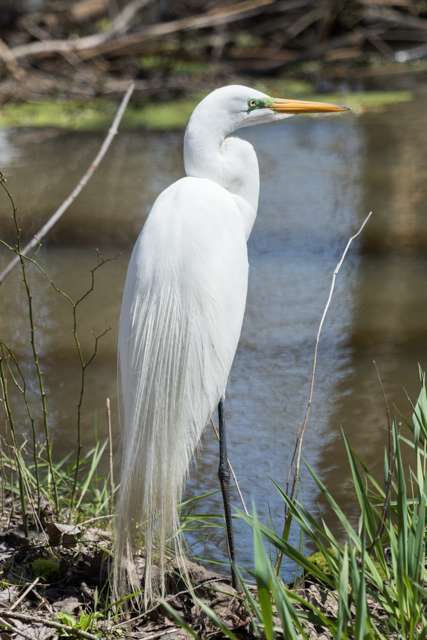
The Great Egret (Ardea alba) is perhaps the most iconic, a vision of pure white plumage that nearly led to its extinction in the late 19th century when its feathers were prized for women's hats. Today, this stately bird, with its brilliant yellow bill and dark legs, stands sentinel over open water, striking with lightning speed to secure fish or amphibians. Sharing the marshes is the smaller, daintier Snowy Egret (Egretta thula), distinguishable by its black bill, black legs, and bright yellow “slippers”—feet that it often wiggles in the mud to startle prey into motion.
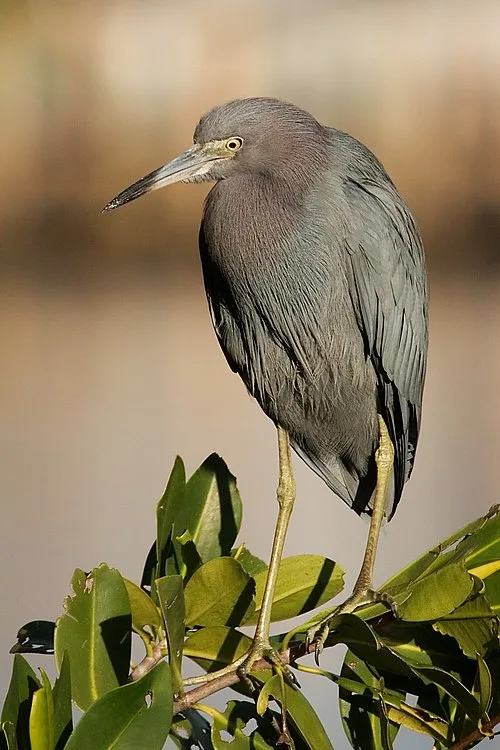
Color adds to the spectacle with species like the Little Blue Heron (Egretta caerulea) and the Tricolored Heron (Egretta tricolor). The Little Blue Heron is famous for its dramatic change from an all-white juvenile (often confused with the Snowy Egret) to the deep, slate-blue adult. The Tricolored Heron, once commonly called the Louisiana Heron, is the epitome of elegance with its dark upper body, white belly, and blue and purplish breeding colors. It is a highly active hunter, often chasing prey with a frantic, theatrical energy.

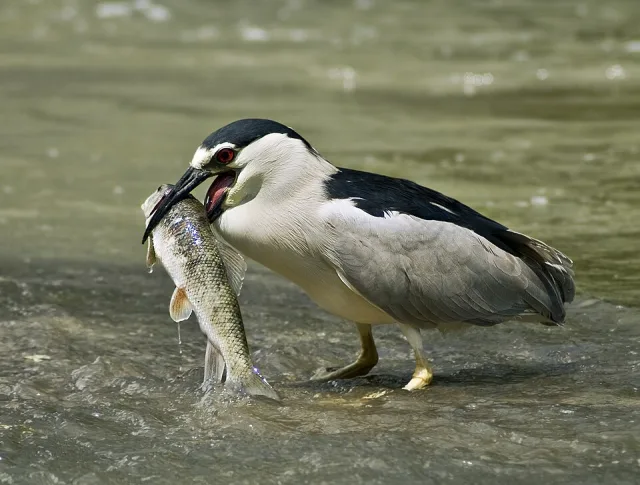
Adding a touch of the secretive are the herons that hug the shadows. The Green Heron (Butorides virescens) is a small, stocky master of camouflage, often seen hunched on low branches, renowned for its habit of using bait, like bread or insects, to lure fish—one of the few tool-using birds in the world. Meanwhile, the nocturnal Night-Herons—the Black-crowned and the Yellow-crowned—spend the day roosting in dense cover, emerging at dusk to hunt crabs, crayfish, and other slow-moving prey.
The Exotic Trio: Ibises, Spoonbills, and Storks
While herons represent graceful verticality, the ibises and the Roseate Spoonbill offer a contrast in curved and flattened bill shapes that reflect specialized feeding niches.
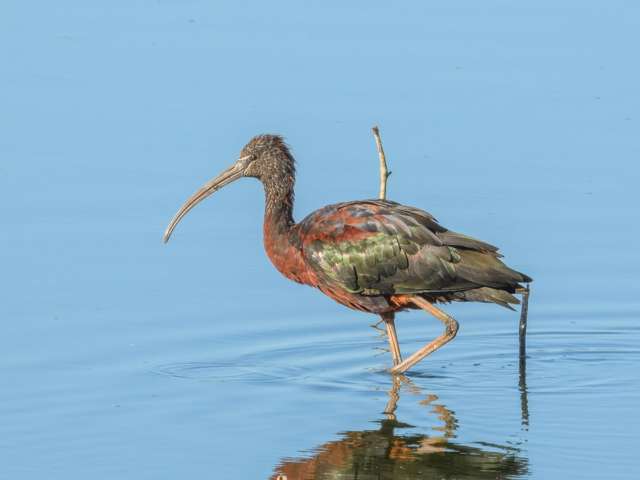
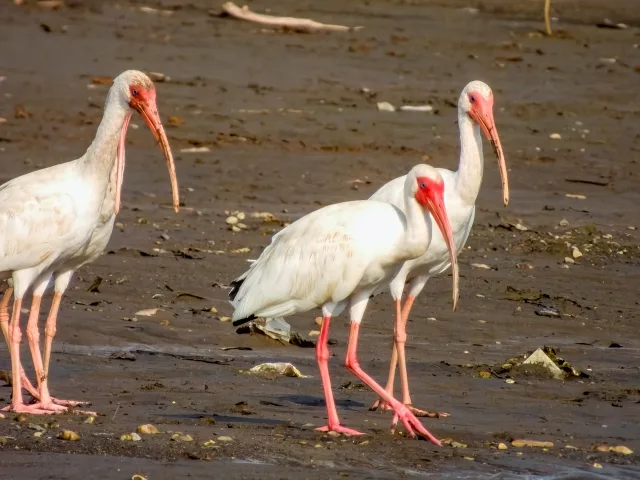
The White Ibis (Eudocimus albus) is a ubiquitous sight in Louisiana, its bright white body and deeply curved, reddish-pink bill making it unmistakable as it probes through soft mud. Ibises are colonial birds, and their massive nesting colonies are one of the region’s great wildlife wonders. The state also hosts the Glossy Ibis (Plegadis falcinellus) and the White-faced Ibis (Plegadis chihi), whose iridescent, oil-slick plumage—a mix of deep purple, bronze, and green—requires a close look in good light to fully appreciate.
The most flamboyantly colored of all is the Roseate Spoonbill (Platalea ajaja). With its brilliant pink feathers, a color derived from its crustacean diet, and its bizarre, spatulate bill, the spoonbill looks like a creature from a tropical fever-dream. It feeds by sweeping its bill side-to-side through the water, snapping shut on small fish and aquatic invertebrates. Louisiana is a vital nesting location for this species, and spotting a flock feeding in the gold-tinged sunset is an essential Louisiana experience.

Finally, the immense Wood Stork (Mycteria americana), North America’s only native stork, is a common summer resident and post-breeding visitor. Its large size, bald gray head, and heavy, slightly curved bill distinguish it from the herons and egrets. Like the spoonbill, it has a specialized feeding technique called "grope-feeding," sweeping its bill in the water and snapping it shut on contact.

The Foundation of Abundance: Louisiana’s Unique Ecosystem
The reason for this unparalleled avian abundance lies in the state’s dynamic hydrology. The coastal zone is an endless flatland where freshwater from the swamps and the Mississippi River slowly mixes with saltwater from the Gulf. This creates a gradient of habitats—freshwater marsh, intermediate marsh, brackish marsh, and salt marsh—each with slightly different plant and invertebrate communities, but all offering vast, shallow water perfect for wading.
This shallow-water matrix provides three critical elements:
- Foraging Habitat: The long legs and probing bills of the waders are perfectly adapted to the shallow margins of the bayous and estuaries. This extensive feeding ground allows large numbers of birds to forage efficiently across different tidal and seasonal conditions.
- Nesting Rookeries: Wading birds are colonial nesters, forming massive, mixed-species breeding colonies. They require secluded, predator-proof islands or dense stands of vegetation (like cypress-tupelo swamps or mangrove thickets) that are surrounded by water. Louisiana's numerous natural barrier islands, dredge spoil islands, and swampy lake margins provide this crucial, protected real estate.
- The Mississippi Flyway: Louisiana’s position at the terminus of the mighty Mississippi Flyway means it serves as a critical wintering ground and rest stop for millions of migratory birds, further augmenting its resident population.

American White Ibis
Conservation and The Future of the Waders
The history of Louisiana's waders is a conservation success story, though their future remains precarious. The near-extinction of the egrets a century ago galvanized early conservation efforts. However, the most significant modern threat is the coastal land loss that has plagued the state for decades. Erosion, subsidence, and the destructive power of hurricanes are rapidly dissolving the marsh and the barrier islands that the colonial waders depend upon for their nesting sites.
The recovery of species like the Brown Pelican and the ongoing health of the wading bird populations are a testament to the resilience of these birds and the efforts of organizations and state agencies working to protect their remaining habitat.
Where to Witness the Spectacle

To see Louisiana’s waders in their full glory, one must venture into the coastal wilderness. Key locations include:
- Morley Nelson Snake River Birds of Prey National Conservation Area (NCA): This is the ultimate viewing spot. From March through June, the sheer concentration of nesting raptors (eagles, falcons, and hawks) along the canyon cliffs is a world-class sight.
- The World Center for Birds of Prey (Boise): A top-tier educational facility and the global headquarters of The Peregrine Fund. Visitors can see many endangered raptors up close and learn about their conservation.
- Lucky Peak (near Boise): An essential destination during fall migration, this spot offers the chance to watch a high-volume corridor of migrating hawks and falcons using the ridge to gain altitude.
- Lake Coeur d’Alene (North Idaho): During the winter (November–February), this is the prime spot for viewing large congregations of Bald Eagles that feed on spawning Kokanee salmon.
The wading birds of Louisiana are not just a collection of beautiful species; they are a vibrant, living indicator of the health of the continent’s largest river delta. Their soaring flights and silent hunts across the mirrored surface of the Bayou offer a profound connection to the wild, watery soul of the state.
