
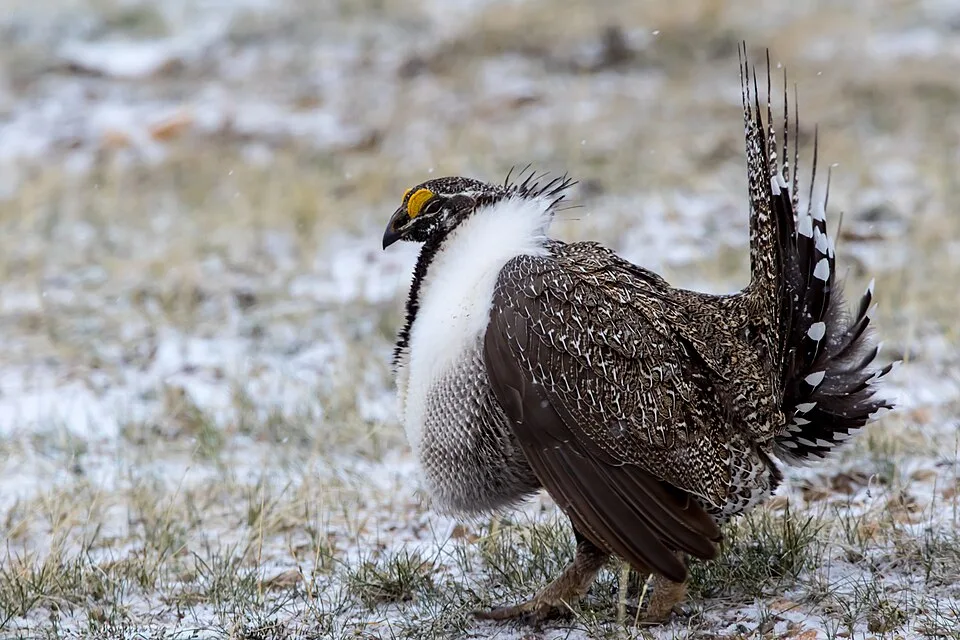
Colorado's vast, high-desert plains and mountain valleys are home to a remarkable and imperiled ecological treasure: the Sage-Grouse. Far from being a single species, Colorado is one of the few places where two distinct species of this charismatic bird exist, each facing its own unique conservation challenges: the widespread Greater Sage-Grouse (Centrocercus urophasianus) and the critically rare, endemic Gunnison Sage-Grouse (Centrocercus minimus). Both are obligate residents of the Sagebrush Sea, their fate inextricably linked to the health and vastness of this iconic Western ecosystem. Their spectacular mating ritual, known as "lekking," is one of nature's most stunning pageants, but their declining numbers serve as a stark warning about habitat loss and fragmentation across the American West.
A Tale of Two Grouse: The Split
For decades, all sage-grouse were considered a single species. However, in 2000, scientists formally recognized a genetically, morphologically, and behaviorally distinct population: the Gunnison Sage-Grouse. This taxonomic split was a crucial step for conservation, immediately highlighting the extreme vulnerability of the smaller population.
Greater Sage-Grouse: The Northern Giant
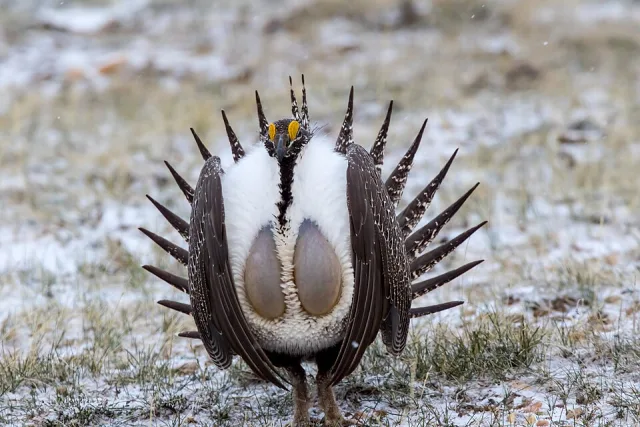
The Greater Sage-Grouse is the largest grouse in North America, with males reaching up to 30 inches in length. In Colorado, they primarily inhabit the extensive sagebrush steppe of the Northwest—Moffat, Routt, and Rio Blanco counties—which contains the largest continuous sage-grouse population in the state. They share this vast range with populations across 11 other western states and are a Tier 1 Species of Greatest Conservation Need in Colorado due to historic population declines and threats to their habitat.
Gunnison Sage-Grouse: The Southern Rarity
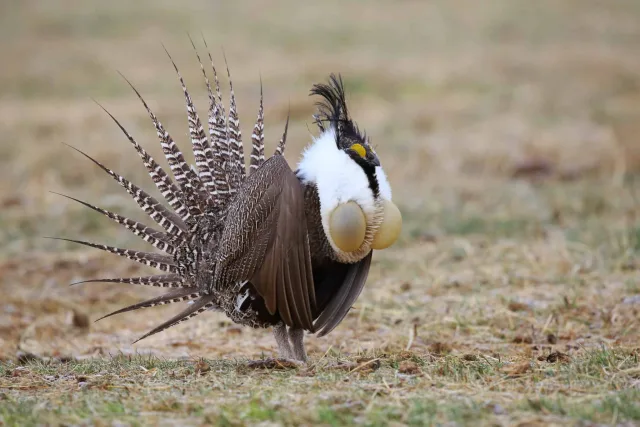
The Gunnison Sage-Grouse is a distinct and much smaller bird, approximately two-thirds the size of its relative. Males also display unique physical differences, including a more defined black band on the tail feathers and more prominent filoplumes (hair-like feathers) on the back of the head, giving the appearance of a decorative 'ponytail'.
Critically, the Gunnison Sage-Grouse has an extremely restricted range, occupying less than 10% of its historic distribution. Nearly 85% of the remaining global population is concentrated in the Gunnison Basin of southwestern Colorado, with six other small, geographically isolated satellite populations scattered across the region and into southeastern Utah. Due to its perilously low numbers (currently estimated at under 4,000 total individuals) and fragmented habitat, it was listed as Federally Threatened under the Endangered Species Act (ESA) in 2014.
The Lek: A Western Wildlife Spectacle
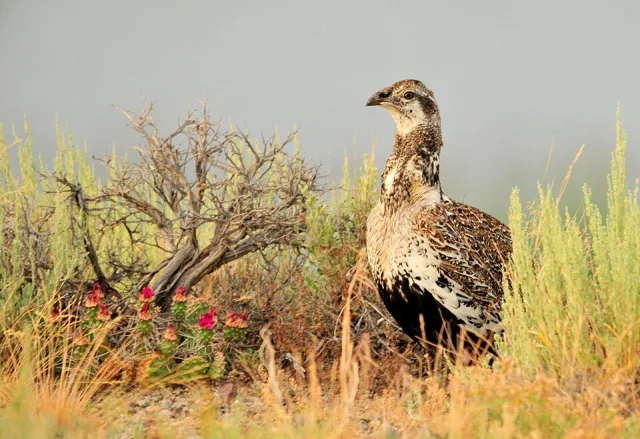
The most defining and mesmerizing feature of both Sage-Grouse species is their complex, highly choreographed mating ritual, known as lekking.
A lek is a communal, ancestral strutting ground—an open area in the sagebrush, such as a broad ridgetop or grassy swale, to which the birds return year after year. Every spring, from late March through May, male grouse gather at these sites before dawn to compete for a single purpose: to attract a female.
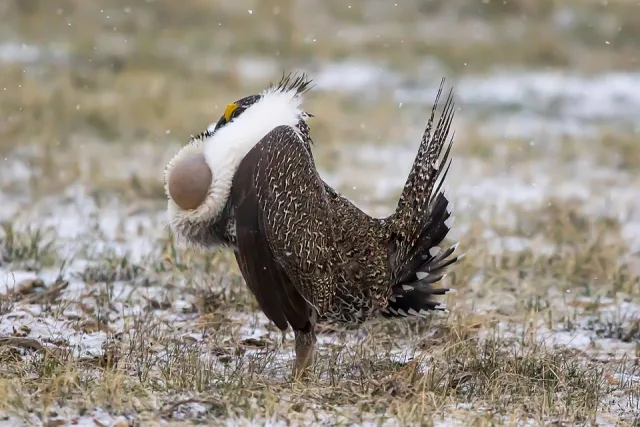
The male display is an incredible feat of sexual selection. The males inflate two large, yellowish-green air sacs on their chests, fanning their spiky tail feathers into a glorious, snowy ruff. The air sacs are rapidly inflated and deflated, creating a unique, hollow, plopping or "swish-swish-coo-oopoink" sound that can carry for more than a mile across the quiet prairie. The dance is costly for the males, as they lose significant body weight and are left vulnerable to predators like Golden Eagles.

The females visit the lek to observe the spectacle, typically choosing to mate with only one of the most dominant males, who occupy the center of the lek. The intense focus of mating success on a few top males creates immense selective pressure, driving the evolution of this extravagant display. For the female, the choice is purely for the male’s genes; she receives no parental care or nesting resources from him, leaving immediately after mating to build her nest and raise the chicks alone.
The Sagebrush Imperative
The Sage-Grouse is known as a sagebrush obligate—the plant is the foundation of their entire life cycle.
- Year-Round Food and Cover: Sagebrush leaves are the primary food source throughout the year, becoming virtually 100% of their diet in winter when snow covers other forage. The plant provides essential cover from weather and predators.
- Nesting: Females build their nests on the ground, often hidden beneath a canopy of sagebrush within a few miles of the lek.
- Brood Rearing: While the chicks cannot digest sagebrush for their first few weeks, they are reliant on the habitat's understory—native grasses and wildflowers (forbs)—which are rich in protein and insects.
The continued health of the grouse, therefore, requires large, intact, healthy expanses of sagebrush habitat.
Threats and Collaborative Conservation
The decline of both Sage-Grouse species is a barometer of the larger ecosystem health of the American West. The primary threat to both species is habitat loss and fragmentation.
Habitat Fragmentation
The vast sagebrush sea is being broken up by:
- Energy and Residential Development: Oil and gas drilling, mining, and human expansion carve up continuous habitat, introducing roads, power lines, and human disturbance.
- Pinyon-Juniper Encroachment: In some areas, fire suppression and climate shifts have allowed pinyon and juniper trees to invade sagebrush lands, reducing the quality and suitability of the grouse’s habitat.
- Invasive Species and Fire: Non-native grasses, like cheatgrass, fuel massive wildfires that burn hotter and more frequently, destroying slow-to-recover sagebrush ecosystems and preventing their return.
Conservation in Colorado
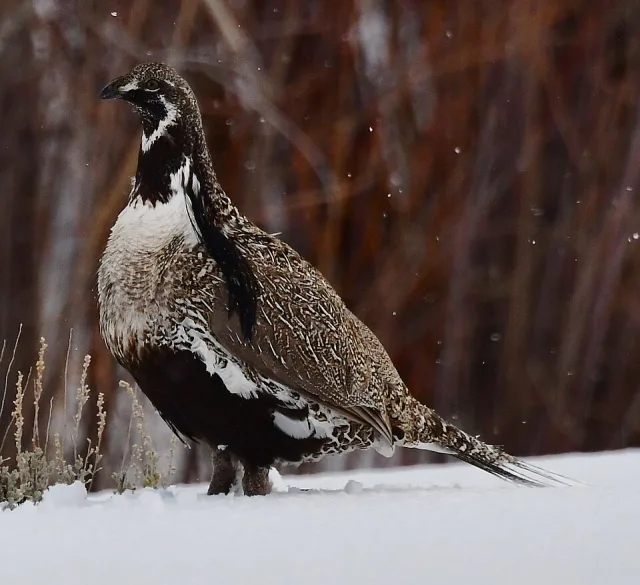
In Colorado, conservation is a massive, multi-partner effort, particularly critical for the Gunnison Sage-Grouse.
- Gunnison Sage-Grouse Recovery: Since its ESA listing, conservation efforts have focused on protecting and restoring critical habitat, especially around the Gunnison Basin. This involves collaboration between Colorado Parks and Wildlife (CPW), federal agencies (BLM, USFS), private landowners, and local working groups to develop conservation easements, improve grazing practices, and remove encroaching conifers. Translocation of grouse has also been attempted to bolster the small, isolated satellite populations.
- Greater Sage-Grouse Management: Conservation for the Greater Sage-Grouse in Northwest Colorado focuses on landscape-scale planning and mitigation, often driven by local working groups. These efforts aim to balance the needs of the grouse with the importance of local economies, including agriculture and energy development. Projects include removing invading Pinyon-Juniper, reseeding native sagebrush, and marking or removing problematic fences that the low-flying grouse can collide with.
The future of Colorado’s Sage-Grouse species—and the intricate drama of the lek—is a direct reflection of human commitment to preserving the Sagebrush Sea. The collaborative effort across private and public lands is not just about saving two bird species; it’s about conserving the entire, unique ecosystem that supports over 350 other wildlife species, from pygmy rabbits to mule deer, ensuring that the swish-swish-coo-oopoink continues to echo across the high plains of Colorado.
