
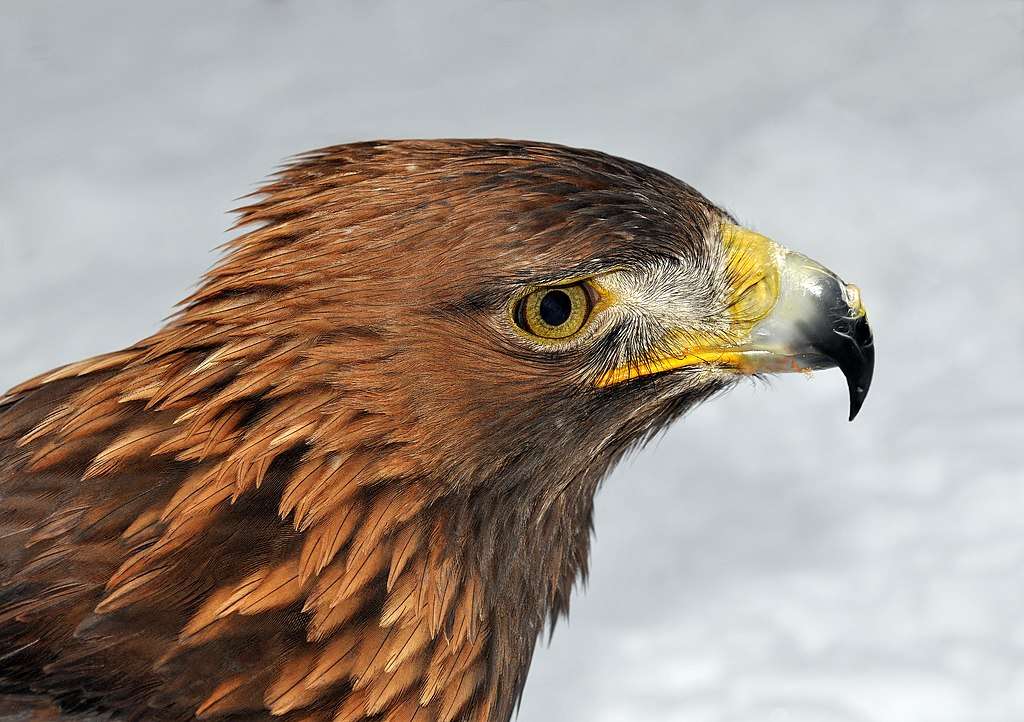
Idaho, a land of rugged mountains, rolling sagebrush steppe, and deep river canyons, is celebrated for its pristine wilderness and stunning biodiversity. Yet, for a devoted segment of nature lovers, the Gem State is revered for one specific ecological marvel: it is the undisputed capital of North American raptors. Nowhere else on the continent, and perhaps the world, does such a sheer density and diversity of birds of prey gather, nest, and thrive.
From the mighty Golden Eagle soaring over the high desert to the diminutive American Kestrel hovering patiently on a fencepost, Idaho offers an unparalleled spectacle of aerial predation. This unique status is not accidental; it is the result of a geological and ecological perfect storm, primarily centered on the legendary Morley Nelson Snake River Birds of Prey National Conservation Area (NCA).
The Raptors’ Roster: Diversity in the Idaho Skies
Idaho’s varied terrain—encompassing arid canyons, riparian corridors, dense forests, and open plains—supports a remarkable list of raptor species. Roughly 15 species of diurnal (daytime) birds of prey can be commonly found across the state, ensuring that a birder visiting any major region will encounter these airborne sovereigns.
The Kings of the High Desert: Eagles and Falcons
The most spectacular residents are the large raptors that dominate the vast, open landscapes.
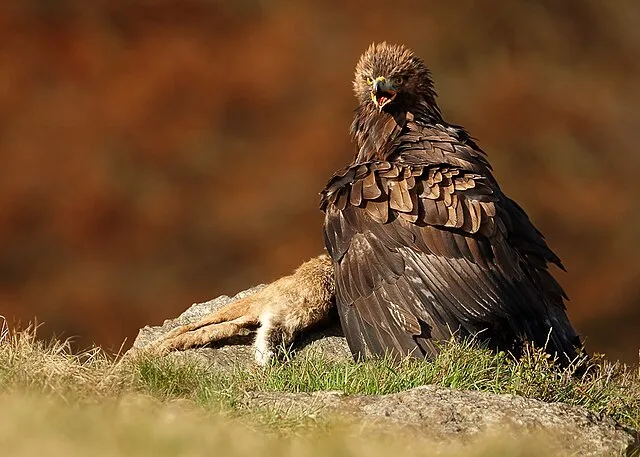
- Golden Eagle (Aquila chrysaetos): A symbol of the rugged West, the Golden Eagle is a resident of remote mountains and canyons. It prefers to hunt large mammals like jackrabbits and ground squirrels. In Idaho, it’s a constant sight against the basalt cliffs, often identified by its immense size and the distinct golden wash on the nape of its neck.
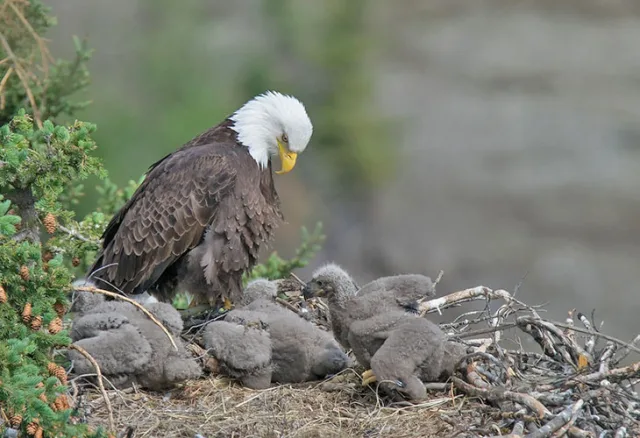
- Bald Eagle (Haliaeetus leucocephalus): While often found near humans, the Bald Eagle congregates in massive numbers during the winter along open waters. Lake Coeur d'Alene, for instance, becomes a major wintering ground as eagles feast on spawning Kokanee salmon, offering breathtaking viewing opportunities from November to February.

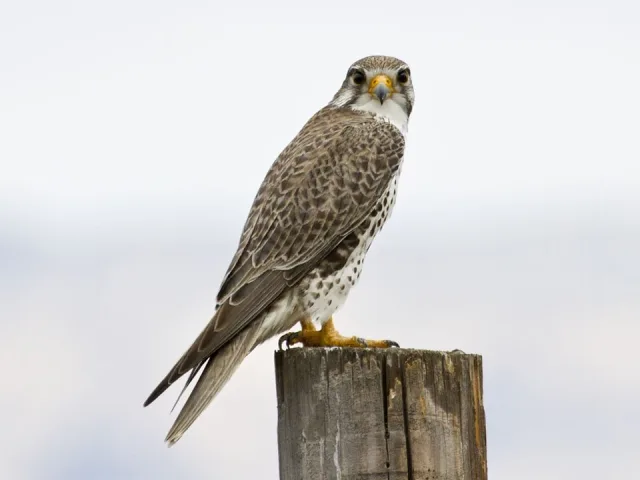
Bald Eagle - Prairie Falcon (Falco mexicanus): This species is an icon of the Snake River Canyon. No other location in the world has a higher nesting density of Prairie Falcons. They are fast, aggressive hunters of the desert, specializing in ground squirrels and small birds, using the canyon cliffs for their nest ledges.

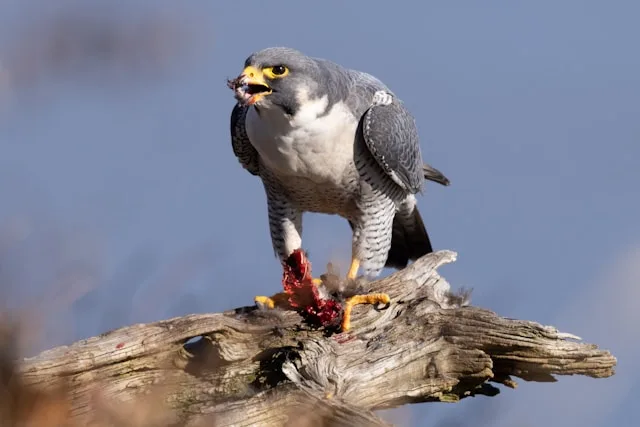
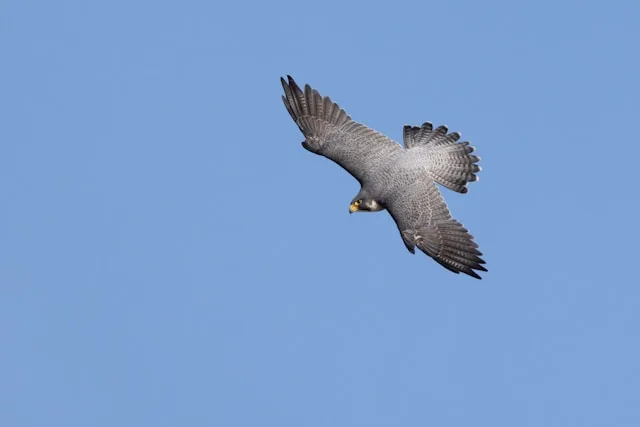
Prairie Falcon - Peregrine Falcon (Falco peregrinus): Famously the fastest animal on Earth, the Peregrine was brought back from the brink of extinction largely through the pioneering work of The Peregrine Fund, which is headquartered in Boise. They nest on high cliffs and even on man-made ledges in cities, demonstrating a remarkable resilience.

Peregrine Falcon

Hawks of the Plains and Forests
The Buteos (broad-winged, soaring hawks) and Accipiters (slender, maneuverable forest hawks) are the workhorses of Idaho’s raptor population.
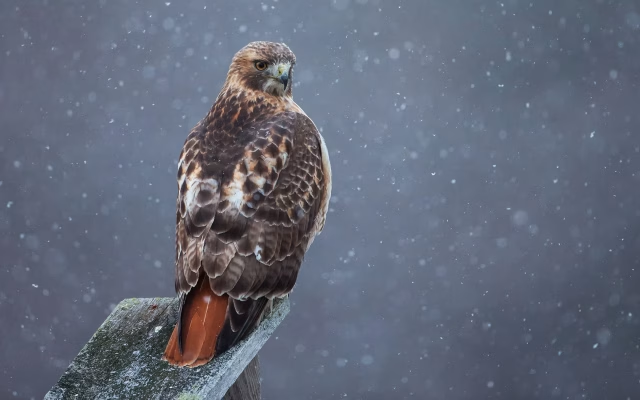
- Red-tailed Hawk (Buteo jamaicensis): Ubiquitous across North America, the Red-tail is arguably Idaho’s most common large hawk. Easily spotted perched on utility poles and fence posts, they are formidable rodent hunters, identifiable by the rusty-red flash of the tail on adults. Idaho is also a fantastic place to observe the varied western color morphs of this species.

Red-tailed Hawk - Swainson’s Hawk (Buteo swainsoni): A true migrant, the Swainson's Hawk travels from Idaho all the way to Argentina, one of the longest migrations of any American raptor. They arrive in the spring to nest in the open plains, where they feed primarily on large insects and rodents. They are often seen gathering in large groups, known as "kettles," before their epic journey south.
Swainson's Hawk - Rough-legged Hawk (Buteo lagopus): This species is Idaho’s seasonal visitor, arriving from the Arctic tundra to spend the winter across the open Snake River Plain. They are distinctive for their feathered legs (a trait shared with the Golden Eagle) and their habit of hovering in the air while hunting.

Rough-legged Hawk - Cooper’s Hawk (Accipiter cooperii): A master of acrobatic flight, the Cooper's Hawk is often found in wooded areas and even suburban neighborhoods, where its short, rounded wings and long tail allow it to dart quickly through trees to ambush prey, primarily other birds.

Cooper's Hawk


The Ecological Gold Mine: Why Idaho is a Raptor Magnet
The sheer volume of raptors in Idaho, particularly in the southwest, is tied to a unique confluence of geography and biology, epitomized by the Morley Nelson Snake River Birds of Prey NCA.
1. The Canyon’s Abundance of Real Estate
The 81-mile stretch of the Snake River Canyon protected by the NCA is the central pillar of Idaho’s raptor fame. The deep basalt canyon walls, towering up to 700 feet, provide an inexhaustible supply of perfect nesting sites: ledges, crags, crevices, and caves. This abundance of secure, defensible, predator-proof "real estate" is the single most critical factor in attracting the world’s highest known nesting density of raptors. An estimated 800 pairs of hawks, eagles, and falcons nest in this relatively small area each spring.
2. The Abundant Food Source
A perfect nesting location is useless without a reliable food supply. The arid uplands above the Snake River rim are home to enormous populations of prey species, most notably the Townsend’s Ground Squirrel (Urocitellus townsendii). The sheer, concentrated density of these ground squirrels provides a spring and summer buffet for the breeding raptors, ensuring that parents can successfully feed their demanding clutches of chicks. This massive, dependable source of protein is the engine that drives the high nesting success.
3. The Power of Flight: Thermals and Updrafts
The deep, steep canyon walls and the vast, sun-baked desert plain create a system of natural air currents that is a dream for soaring birds.
- Thermal Updrafts: As the sun heats the desert floor, huge bubbles of warm air (thermals) rise. Raptors—especially the large, broad-winged Buteos and Eagles—ride these thermals effortlessly, gaining altitude without expending much energy, giving them an advantage when hunting.
- Slope Soaring: The wind hitting the sheer canyon walls is deflected upward, creating dynamic updrafts. Raptors launch from their cliffside nests and use these currents for “slope soaring,” allowing them to glide and patrol the canyon rim for hours on a minimal energy budget.
This combination of perfect nesting sites, a concentrated food source, and energy-saving flight conditions makes the NCA a five-star hotel for raptors.
A Birder's Itinerary: Prime Viewing Locations

For anyone hoping to see this aerial armada, Idaho provides numerous accessible viewing areas.
- Morley Nelson Snake River Birds of Prey NCA: This is the must-see destination.
- Dedication Point Overlook: A spectacular location on the canyon rim that provides a 400-foot-high vantage point to watch raptors soar and hunt below. The peak season for nesting activity and viewing is from mid-March through June, when the young are fledging.
- Swan Falls Dam: Located deeper in the canyon, this area offers different perspectives and a chance to see both Golden and Bald Eagles.
- World Center for Birds of Prey (Boise): While not a wild setting, this is the headquarters of The Peregrine Fund and an essential stop. Visitors can see many species up close, including captive-bred raptors from around the world, and learn about the conservation efforts that saved species like the Peregrine Falcon.
- Lucky Peak (Near Boise): This is a critical point on the major raptor migration corridor. In the fall, particularly, birders can witness a thrilling procession of migrating hawks and falcons as they use the thermals to gain altitude before crossing the Snake River Plain.

Prairie Falcon - Lake Coeur d’Alene (North Idaho): For a pure spectacle of the national bird, the southern end of the lake becomes a Bald Eagle hotspot in the winter months (late November through February) as they follow the spawning salmon.
In Idaho, the raptor is more than just a bird—it is a cornerstone of the wild landscape. The state's commitment to protecting the unique ecology of its desert and mountain habitats has preserved one of the world's great natural spectacles, offering birders a rare and intimate glimpse into the high-stakes drama of the airborne sovereign.
