
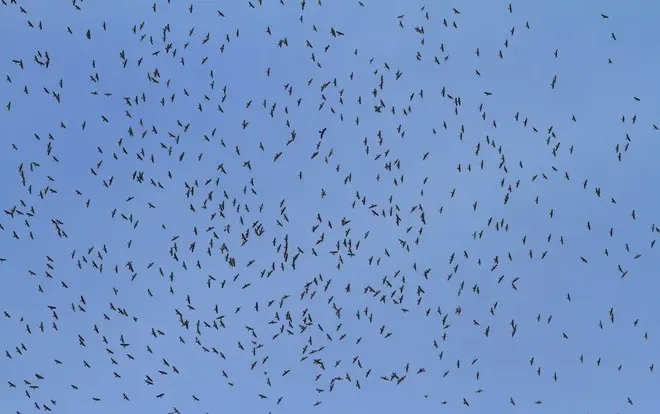
The autumn skies over the United States are host to one of nature's most spectacular and awe-inspiring phenomena: the hawk migration. While individual raptors are impressive, it is the gathering of hundreds, sometimes thousands, of these majestic birds into swirling columns that truly captivates. These aerial congregations are known as kettles, and they are not merely a beautiful accident of nature but a sophisticated, energy-saving strategy employed by broad-winged raptors during their arduous fall journey south.
The Marvel of the Kettle: A Definition
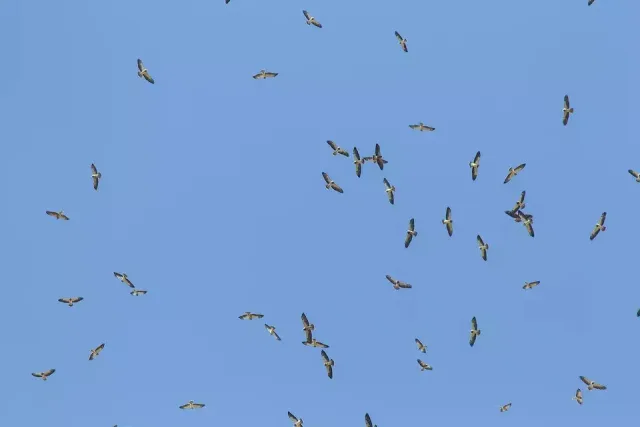
A "kettle" in birding terms refers to a group of raptors (most commonly hawks, but also sometimes vultures and eagles) soaring upwards together on rising columns of warm air, known as thermals. The birds appear to be "boiling" in a giant, invisible pot, hence the evocative name. Unlike songbirds, which often migrate in vast, spread-out flocks, many raptors rely on these thermals for efficient long-distance travel, and kettling is a visual manifestation of this strategy.
While different species kettle, it is the Broad-winged Hawk (Buteo platypterus) that is arguably the most famous and prolific kettler in the U.S., forming astounding concentrations that can number in the tens of thousands.

Why Kettle? The Science of Energy Conservation
The primary purpose of kettling is energy conservation. Migration is one of the most energetically demanding phases of a bird's life cycle. Flying hundreds or thousands of miles requires immense caloric expenditure. Kettling allows hawks to essentially "hitch a ride" and minimize the amount of flapping flight required.
Here's how it works:
- Thermals: As the sun heats the ground unevenly, pockets of warm air rise. These invisible columns of rising air are called thermals. They are most common over land, especially open areas that heat quickly, and typically form on clear, sunny days with light winds.
- Gaining Altitude: A hawk detects a thermal and enters it, spreading its broad wings to catch the rising air. As it circles within the thermal, it is lifted higher and higher with minimal effort. This is passive soaring, a highly efficient mode of flight.
- The "Boiling" Effect: As more hawks discover the same thermal, they join in, circling together to gain altitude. The circular motion keeps them within the rising air column, creating the visual effect of a kettle. The number of birds in a single kettle can vary from a handful to truly astounding numbers, sometimes numbering in the hundreds or even thousands for Broad-winged Hawks.
- "Peeling Off" and Gliding: Once a hawk reaches a sufficient altitude (sometimes thousands of feet), it "peels off" from the thermal and begins a long, straight glide in the direction of its migration. During this glide, it slowly loses altitude, conserving energy by not flapping its wings.
- Repeating the Cycle: The hawk will continue gliding until it encounters another thermal, where it will join a new kettle, regain altitude, and repeat the process. This "thermal hopping" strategy allows raptors to cover vast distances with remarkable efficiency.
The Advantage of Broad Wings
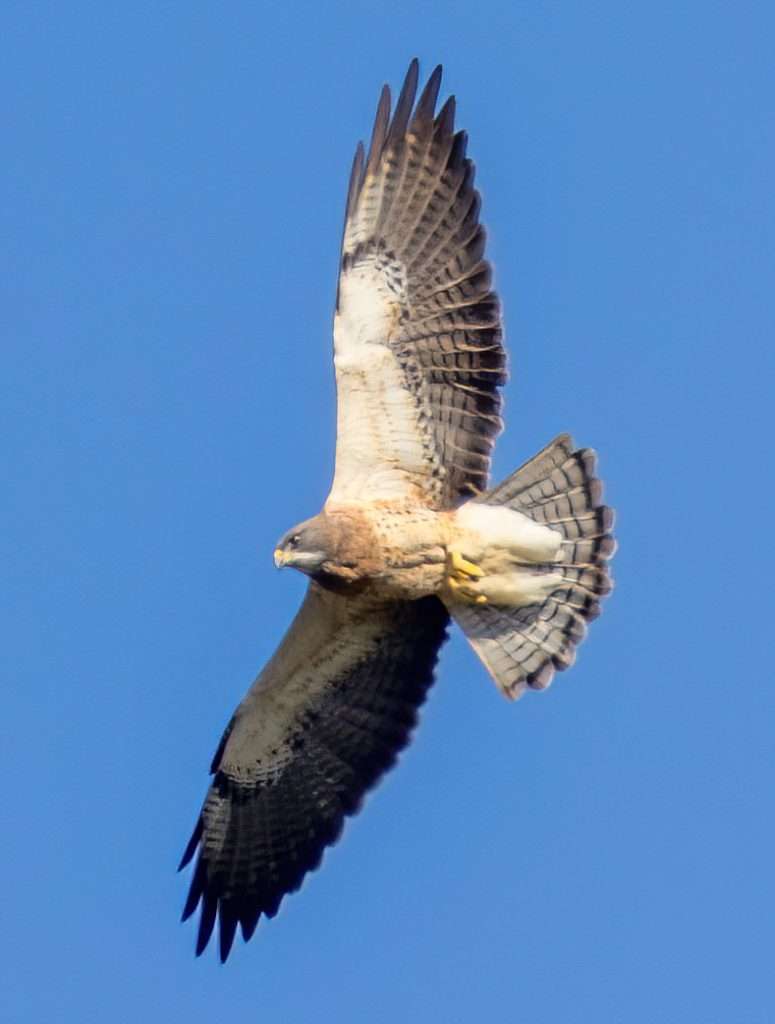
Not all raptors kettle equally. Species with broad wings and a relatively short tail – such as Broad-winged Hawks, Red-tailed Hawks, and Red-shouldered Hawks (all Buteo species) – are particularly adept at soaring on thermals. Their wing shape provides excellent lift and stability, making them energy-efficient gliders. In contrast, accipiters (like Cooper's Hawks and Sharp-shinned Hawks) have shorter, rounded wings and longer tails, built for agile pursuit through forests. While they can use thermals, they are less inclined to form massive kettles and often migrate with more active flapping flight.
When and Where to Witness the Spectacle in the U.S.
Fall migration is the prime time for kettles in the U.S., typically from late August through October, with peak numbers often occurring in mid-September for Broad-winged Hawks.
Several key geographical features in the U.S. act as natural funnels, concentrating migrating raptors and creating spectacular kettle-watching opportunities:
- Mountain Ridges: The Appalachian Mountains, in particular, provide an ideal conduit for migrating raptors. Hawks follow these ridges, using "ridge lift" (air currents deflected upwards by the mountains) in addition to thermals. Prominent hawk watching sites along the Appalachians include:
- Hawk Mountain Sanctuary, Pennsylvania: Often considered the birthplace of raptor conservation, Hawk Mountain offers incredible views of kettles, especially Broad-winged Hawks, as they funnel along the Kittatinny Ridge.
- Cape May, New Jersey: Situated at the tip of the Cape May Peninsula, this location funnels birds as they encounter the Atlantic Ocean, forcing them to concentrate before crossing or turning.
- Kestrel Haven Avian Migration Observatory, New York: Another key site in the Northeast.
- Washington Monument State Park, Maryland: Offers panoramic views of the Middletown Valley.
- Coastlines and Great Lakes: Large bodies of water do not generate thermals, and many raptors are reluctant to fly over vast stretches of open water. This causes them to "pile up" along coastlines or the shores of the Great Lakes, creating bottlenecks where kettles are frequently observed.
- Hawk Ridge Bird Observatory, Duluth, Minnesota: Located on a ridge overlooking Lake Superior, this site witnesses massive numbers of raptors, including immense Broad-winged Hawk kettles, as birds are funneled by the lake.
- Whitefish Point Bird Observatory, Michigan: On Lake Superior, another excellent location for observing migrating raptors.
- Braddock Bay Raptor Research, New York: Along Lake Ontario, a major concentration point.
- Inland Observatories: Even away from major geographical features, certain inland sites consistently produce impressive kettle sightings due to local thermal generation and migratory pathways.
- Raptor Research Project at Corpus Christi, Texas: One of the most significant raptor migration flyways in North America, with incredible counts of Broad-winged Hawks and Mississippi Kites.
- Dauphin Island, Alabama: A barrier island in the Gulf of Mexico that acts as a staging ground for many migrants.
The Magic of Witnessing a Kettle

To witness a true kettle is an unforgettable experience. Initially, you might spot a few speckles high in the sky. With binoculars, you realize these are hawks, circling lazily upwards. Then, as you scan, more appear – hundreds, then thousands, all moving in a synchronized, slow-motion ballet. The sheer volume of birds, often spread across a wide area of the sky, is breathtaking.
As a massive kettle gains altitude, individual birds will begin to "stream" out of it, becoming tiny dots gliding away to the south. The kettle disperses, only for another to form perhaps an hour later, or for new birds to join an existing thermal. This continuous cycle repeats throughout the peak migration days, especially after a cold front passes through, bringing clear skies and favorable northerly winds.
Conservation Through Kettles
The study of hawk migration, particularly through the counting of kettles at established observatories, provides invaluable data for raptor conservation. Long-term datasets reveal population trends, allowing scientists to identify species in decline and understand the impacts of environmental changes, habitat loss, and pesticide use. Citizen science plays a massive role, with thousands of volunteers across the U.S. dedicating countless hours to counting migrating raptors, contributing to a continental understanding of these magnificent birds.
The kettles are a testament to the interconnectedness of ecosystems and the incredible journeys undertaken by wildlife. They are a powerful reminder of the delicate balance of nature and the importance of preserving the vast landscapes and habitats that these magnificent travelers depend on, from their breeding grounds in the northern forests to their wintering grounds in Central and South America.
Wrapping Up
Hawk kettles are far more than just a pretty sight in the autumn sky. They represent a sophisticated and ancient migratory strategy, perfected over millennia, allowing broad-winged raptors to traverse continents with remarkable efficiency. For bird enthusiasts across the U.S., they are a celebrated seasonal phenomenon, drawing observers to vantage points where they can marvel at nature's grand design. To witness a sky alive with hundreds, or even thousands, of circling hawks is to glimpse the enduring power and beauty of the wild, and to feel a profound connection to the annual rhythm of life on Earth.
