
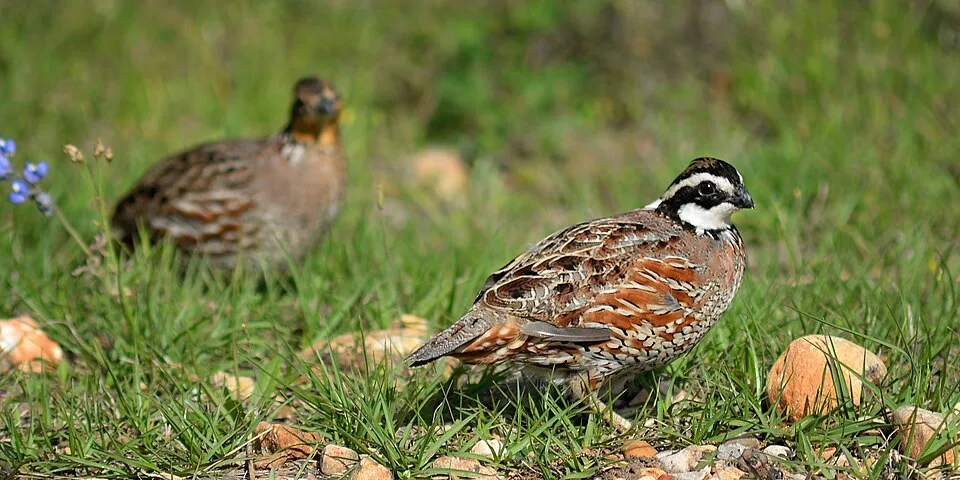
If there were an award for the "most charming" birds in the American landscape, the quails would win by a landslide. Known for their round bodies, scurrying gait, and—in many species—that iconic, bouncy head plume known as a topknot, quails are a favorite for birders and nature lovers alike.
Unlike the high-flying hawks or the long-distance migratory warblers, quails are residents of the ground. They are the quintessential "undergrowth" experts, and seeing them usually involves a bit of hide-and-seek.
In the U.S., we have six native species (and one widely introduced one). Let’s meet the cast of characters.
1. The Northern Bobwhite (Colinus virginianus)
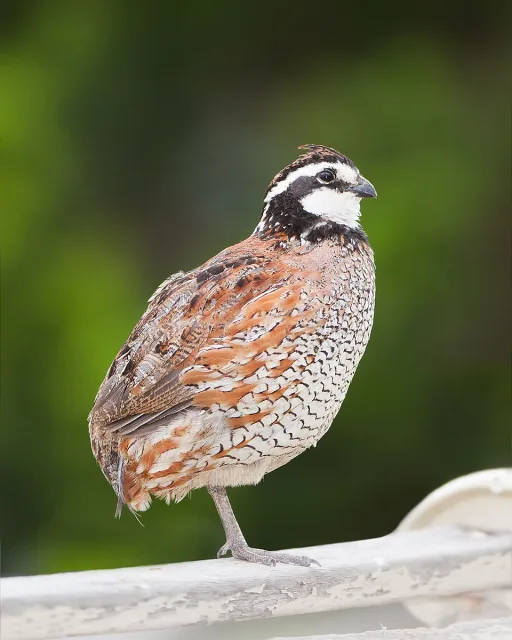
If you live in the East or the Midwest, this is likely the quail you know best. Named for its clear, whistling bob-white! call, this bird is a symbol of the American grasslands and open pine forests.
Appearance: Intricately patterned in brown, rufous, and black. Males have a striking white throat and eyebrow stripe; females have buffy/tan accents.
Where to find them: Eastern U.S. through the Great Plains.
The Vibe: They are the "gentle neighbors" of the bird world, often found in "coveys" (small groups) huddling together for warmth in the winter.
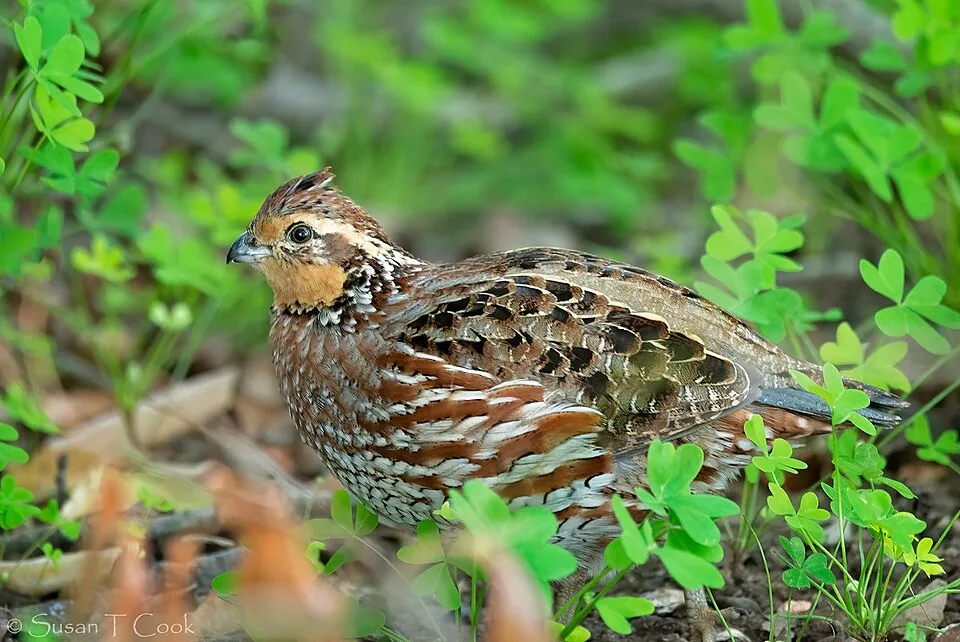
2. California Quail (Callipepla californica)

This is arguably the most famous quail in the world, thanks to its dapper appearance and its status as the state bird of California.
Appearance: A rich gray and brown body with a scaled belly. The crowning glory is the comma-shaped black plume that dangles over the forehead.
Where to find them: The Pacific Coast, from California up into British Columbia and inland to the Great Basin.
The Vibe: Highly social and surprisingly bold. You’ll often see them scurrying across suburban lawns or vineyard rows in large groups.

3. Gambel’s Quail (Callipepla gambelii)

Often confused with the California Quail, the Gambel’s is the desert-dwelling doppelgänger of the Southwest.
Appearance: Similar topknot to the California Quail, but look for a creamy-colored belly with a distinct black patch on the male. They lack the "scaled" look on the chest.
Where to find them: The Sonoran and Mohave Deserts (Arizona, New Mexico, Southern Nevada).
The Vibe: These birds are the "marathon runners" of the desert. They prefer to run through the cacti rather than fly, and they can survive in incredibly arid conditions.

4. Mountain Quail (Oreortyx pictus)

The "enigma" of the family. The Mountain Quail is larger, more secretive, and lives at higher elevations than its cousins.
Appearance: They possess a long, straight, needle-like plume (usually two feathers pressed together) that points straight up. Their flanks are beautifully barred with bold white stripes.
Where to find them: Steep, brushy slopes of the Cascades and Sierra Nevada.
The Vibe: Hard to find! They are shy birds that prefer thick cover. If you see one, consider yourself lucky.

5. Scaled Quail (Callipepla squamata)

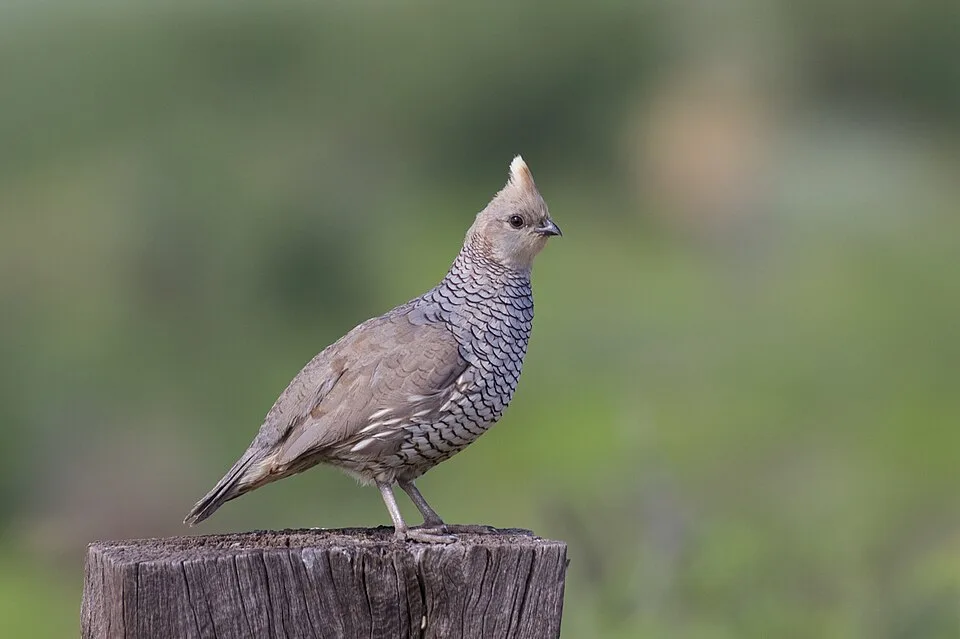
Commonly known as the "Blue Quail" or "Cotton-top," this bird is a master of camouflage in the high plains and desert scrub.
Appearance: Their feathers have dark edges that look like fish scales. Instead of a long plume, they have a short, tufted white crest that looks like a little cotton ball.
Where to find them: The arid grasslands of the Southwest (Texas, New Mexico, Colorado, Arizona).
The Vibe: Fast. Very fast. They would much rather outrun a predator—or a birder—than take to the air.
6. Montezuma Quail (Cyrtonyx montezumae)

Also known as the Mearns's Quail, this is the "holy grail" for many North American birders due to its incredible patterns and shy nature.
Appearance: The males look like they’ve been painted by a surrealist artist—bold black-and-white facial patterns and dark bellies covered in large white polka dots.
Where to find them: Mountainous oak-pine woodlands in Arizona, New Mexico, and Texas.
The Vibe: The "Crouching Tiger." When threatened, they don't run; they freeze. Their camouflage is so good they practically disappear into the grass.

Quail Behavior: The Covey Life
One of the most endearing things about quails is their social structure. Most species live in coveys—groups of 10 to 30 birds.
At night, these birds often form a "roosting circle." They sit in a tight ring with their tails pointing inward and their heads pointing out. This allows them to stay warm by sharing body heat and ensures that there is a pair of eyes looking in every direction to watch for predators like foxes or hawks.
Helping Our Quail Neighbors
Quail populations across the U.S. are facing challenges due to habitat loss and the "tidying up" of rural landscapes. They need "messy" areas—overgrown fence rows, thickets, and native bunchgrasses—to hide and nest.
How to be a Quail Ally:
Plant Native: Incorporate native shrubs and grasses in your yard to provide cover and seeds.
Create Brush Piles: If you have land, leaving a pile of fallen branches can provide a vital sanctuary for a local covey.
Mind the Mower: Avoid mowing large fields during the spring and summer nesting season.
Whether it’s the whistle of a Bobwhite or the scurrying topknot of a California Quail, these birds bring a unique energy to the American wild. Which of these seven species have you crossed off your list?
