

While many birders flock to the coast, those in search of true "Northwoods" magic head north to the White Mountains of New Hampshire. This rugged landscape—defined by granite peaks, crashing flumes, and dense "krummholz" (stunted, wind-blown trees)—is the southern stronghold for several specialist species that you’d normally have to travel to the Canadian tundra to find.

Birding the Whites isn't just about the species; it’s about the atmosphere. It’s the scent of balsam fir, the crisp mountain air, and the hauntingly beautiful songs that echo through the misty alpine forests.
1. The High-Altitude Specialist: Bicknell’s Thrush

If there is a "holy grail" of New Hampshire birding, it is the Bicknell’s Thrush. This secretive songbird has one of the most restricted breeding ranges in North America, nesting only in high-elevation fir forests (usually above 3,000 feet).
The Challenge: They are incredibly picky about their real estate, preferring the dense, impenetrable thickets of stunted spruce and balsam.
The Song: To hear their spiraling, ethereal flute-like song at dawn or dusk is a spiritual experience for many birders.
Where to find them: The auto road or hiking trails on Mount Washington and Cannon Mountain are prime spots.
2. The Ghost of the Forest: Canada Jay

Formerly known as the "Gray Jay" or "Whiskey Jack," these birds are the welcoming committee of the Boreal forest. Unlike most birds that fly away when you approach, Canada Jays are famously curious and may even glide down to see if you have any snacks (though you should never feed them!).
Hardiness: These birds are year-round residents. They actually begin nesting in late winter, often while several feet of snow are still on the ground, relying on food "caches" they’ve glued to tree branches with their sticky saliva.
Where to find them: Look for them at higher elevations along the Kancamagus Highway or the White Mountain National Forest trailheads.
3. The "Spruce" Specialists
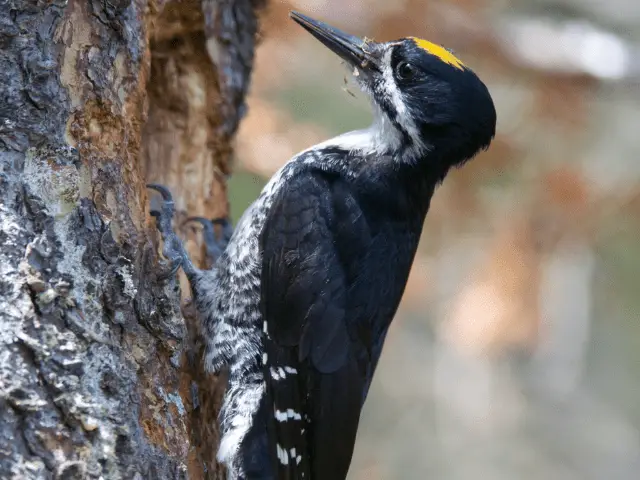
The dense coniferous forests of the North Country are home to two species that look like they were plucked straight from a boreal painting:
Spruce Grouse: Unlike the flighty Ruffed Grouse, the Spruce Grouse is often called the "Fool Hen" because it is incredibly tame. It will often sit perfectly still on a branch just a few feet away from you, trusting its impeccable camouflage.
Black-backed Woodpecker: A specialist of burned-over or dying forests. They have an unusual three-toed foot and a solid black back that allows them to blend in perfectly with charred tree trunks while they hunt for beetle larvae.
4. Boreal Chickadee: The Brown-Capped Cousin

Everyone knows the Black-capped Chickadee (the state bird of NH!), but in the high peaks, its cousin takes over. The Boreal Chickadee sports a smart brown cap and a raspier, slower "tsick-a-dee" call that sounds like a Black-capped with a bit of a cold. They are icons of the high-country spruce-fir zone.
Top Birding Locations in the Whites
| Location | Best For... | Elevation/Difficulty |
| Mount Washington Auto Road | Bicknell’s Thrush & American Pipit | Easy (Drive-up) |
| Pondicherry Wildlife Refuge | Boreal Chickadees & Migratory Waterfowl | Moderate (Flat hike) |
| Franconia Notch State Park | Peregrine Falcons & Winter Finch species | Variable |
| Trudeau Road (Bethlehem) | Spruce Grouse & Black-backed Woodpeckers | Easy (Walking) |
Essential Gear for the Whites
Layers: Even in July, the summit of Mount Washington can be freezing.
Insect Repellent: The "Black Fly" season (late May through June) is legendary. Be prepared!
Ear Training: In the dense spruce-fir forests, you will often hear a bird long before you see it. Use an app like Merlin to familiarize yourself with thrush and warbler songs before you go.
Conclusion
Birding the White Mountains is a reminder of New Hampshire’s wild heart. It’s a place where the species are tough, the terrain is vertical, and the rewards are profound. Whether you’re standing on a windswept ridge watching a Common Raven play in the thermals or spotting your first Bay-breasted Warbler in the pines, the Whites never disappoint.
What’s your favorite "High Peaks" bird? Have you ever braved the hike for a Bicknell’s Thrush? Share your stories below!
Avian Architecture: Understanding Bird Anatomy for Better Birdwatching
