

The Ozark Highlands of Missouri are more than just rolling hills and clear streams; they are an ancient, weathered landscape defined by a unique mosaic of habitats. Birding in this region offers a dynamic experience, transitioning from dense, shade-filled forests to sun-baked rock glades, all linked by the lifeblood of spring-fed rivers. This convergence of ecosystems—the oak-hickory forests, the riparian corridors, and the distinct dolomite glades—creates a biodiversity hotspot, particularly for breeding birds and migratory songbirds using the Central Flyway.
The Heart of the Ozarks: Oak-Hickory Forest
The majority of the Ozarks is covered by extensive oak-hickory forest, dominated by species like White Oak, Black Oak, and various hickories. These woodlands provide a crucial canopy and understory for a vast array of eastern species, many of which reach their highest regional abundance here.
The forest floor and mid-canopy are alive with activity, especially during the spring and summer breeding season. This habitat is particularly important for Neotropical migrants—songbirds that winter in Central and South America. Key species include:
Kentucky Warbler (Oporornis formosus): This species thrives in the dense, brushy understory of moist ravines and creek bottoms, often identified by its striking yellow "spectacles." The Ozark Highlands are estimated to support over 15% of the global breeding population for this bird.
Whip-poor-will (Antrostomus vociferus): A creature of the night, its repetitive, namesake call is the quintessential sound of a warm Ozark evening, nesting on the leaf litter of the open woods.
Summer Tanager (Piranga rubra): The brilliant all-red male is a highlight of the mid-to-high canopy, where it forages for insects, often targeting bees and wasps.
Red-headed Woodpecker (Melanerpes erythrocephalus): This distinctive bird, with its solid crimson head, prefers more open woodland areas where it can hawk insects from perches and store acorns in bark crevices.

Life Along the Rivers and Streams
Missouri's Ozarks are crisscrossed by internationally recognized scenic rivers like the Current, Jacks Fork, and Eleven Point. These riparian corridors introduce a layer of moisture and specialized habitat that contrasts sharply with the dry uplands. The presence of water attracts a completely different suite of species.
Birders floating or hiking along these waterways should look for:
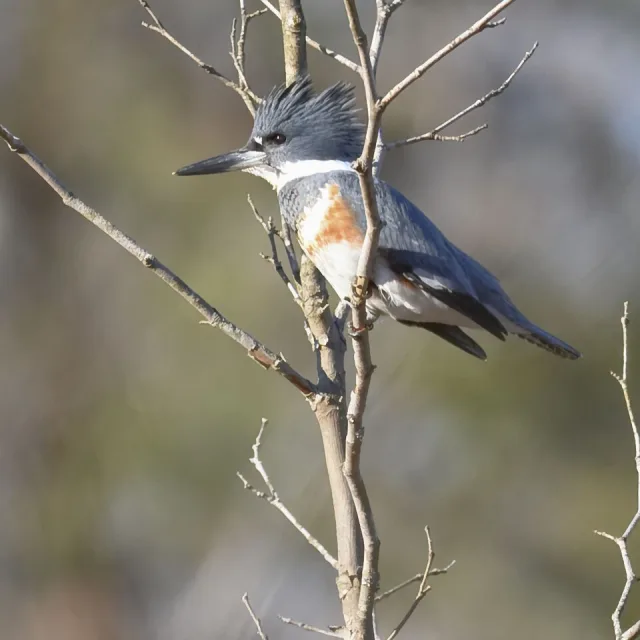
Belted Kingfisher (Megaceryle alcyon): Often seen perched on snags over the water or heard giving its rattling call while flying upriver.
Wood Duck (Aix sponsa): A common sight in quiet backwaters and sloughs, this spectacularly colored duck nests in tree cavities along the banks.
Red-shouldered Hawk (Buteo lineatus): More strongly associated with bottomland forests and wetlands than its upland relative, the Red-tailed Hawk, its distinct kee-aah call is a signature sound of the riverine woods.
Bald Eagle (Haliaeetus leucocephalus): While they nest year-round, late fall and winter bring large numbers of eagles to the unfrozen river areas to hunt fish, offering spectacular viewing opportunities.

Belted Kingfisher
The Micro-Deserts: Ozark Glades
Perhaps the most unique birding experience in the Ozarks comes from exploring the glades, often called "balds." These are rocky, desert-like openings on south- and west-facing slopes where thin soil and exposed bedrock (usually dolomite) prevent the growth of dense forest.
Glades are characterized by drought-tolerant plants like prickly pear cactus and native prairie grasses. This open, xeric (dry) environment attracts species more typical of the arid West or open prairies, creating a remarkable habitat intersection. Historically maintained by fire, conservation efforts now focus on removing encroaching Eastern Redcedar to restore these vital areas.
Key glade species to seek out include:
Yellow-breasted Chat (Icteria virens): The largest and most elusive warbler, found in the thick shrubby edges where the glade meets the forest. Its complex, often comical song is a giveaway.
Painted Bunting (Passerina ciris): Though typically a southern or western bird, the flamboyant male can be found nesting in the scrubby growth on glade edges, providing a dazzling spot of color.
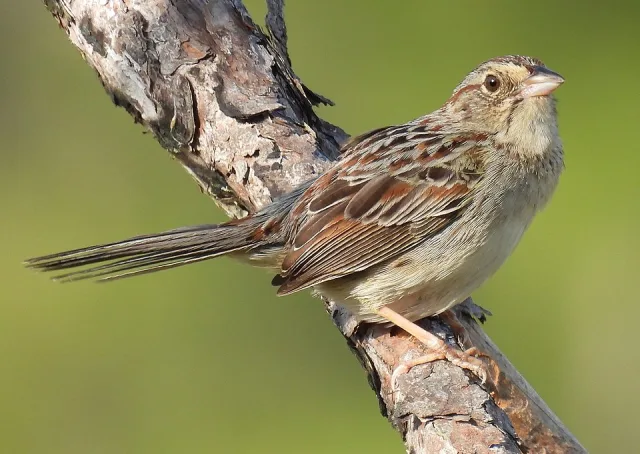
Bachman's Sparrow (Peucaea aestivalis): A secretive, high-priority conservation species that prefers the open, grassy understory of pine-oak savannas and glades.
Roadrunner (Geococcyx californianus): While rare in the northern Ozarks, the Greater Roadrunner is occasionally observed in the southwestern glades, showcasing the strong western influence on this habitat.

Bachman's Sparrow
Where to Go
To maximize your Ozark birding potential, focus on large contiguous tracts of protected land that encompass all three habitat types:
Ozark National Scenic Riverways (Current and Jacks Fork Rivers): Ideal for riparian and forest species.
Mark Twain National Forest: Offers vast tracts of oak-hickory forest and glade habitat.
Drury-Mincy Conservation Area or Hawn State Park: Excellent examples of restored glades and surrounding forest, perfect for observing the full suite of Ozark breeding birds.
The Ozark Highlands offer a fascinating study in environmental transition. By listening for the high-pitched song of the Yellow-breasted Chat in the glade and the deep hoot of a Barred Owl near the river, birders can truly appreciate the ecological complexity of this unique and ancient American landscape.
