
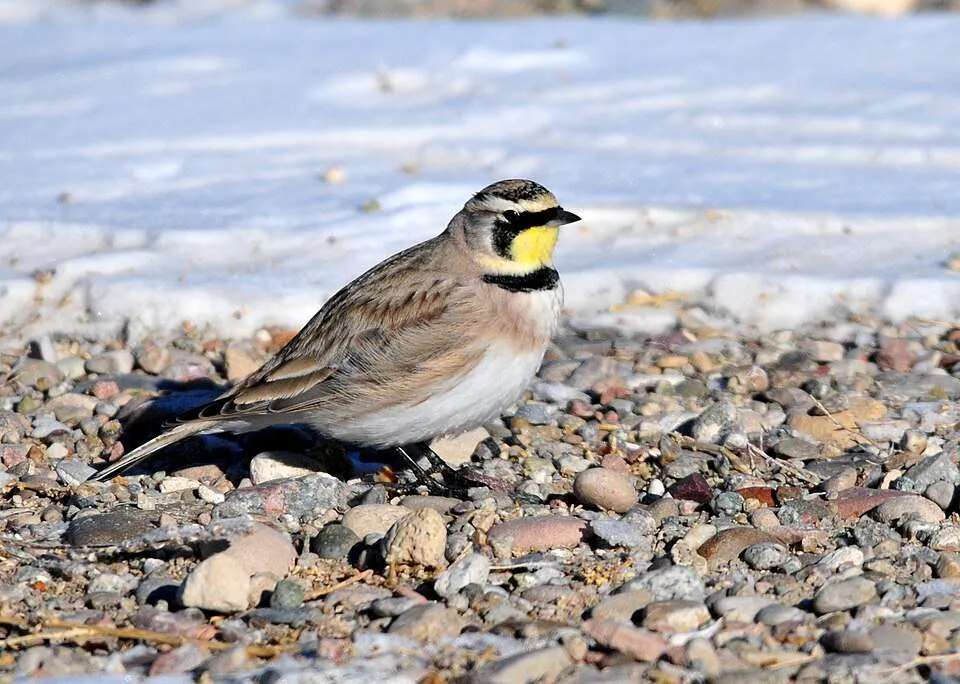
The American Birding Association (ABA) has officially named the Horned Lark (Eremophila alpestris) the 2026 Bird of the Year. While our friends across the Atlantic in the UK and Europe often refer to this species as the Shore Lark, here in the United States, it is celebrated as the only lark native to North America.
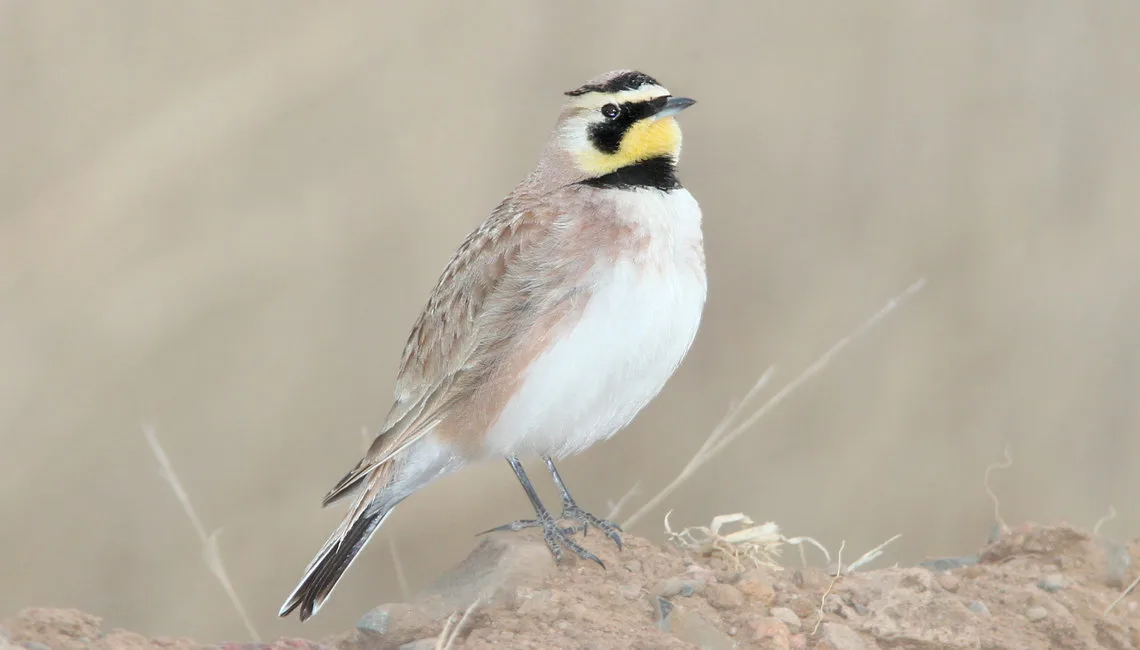
Whether you are a seasoned “lister” or a backyard enthusiast, this guide will provide everything you need to find, identify, and appreciate this dapper, ground-dwelling songbird during its celebratory year.
1. Why the "Shore Lark"? Understanding the Name
If you are searching for the "Shore Lark" in U.S. field guides, you’ll likely find it listed as the Horned Lark. The name "Shore Lark" is a legacy of European birding, where the species is primarily seen along coastal shorelines during the winter. In North America, however, this bird is a master of the interior, thriving in vast prairies, desert flats, and even high-alpine tundra.
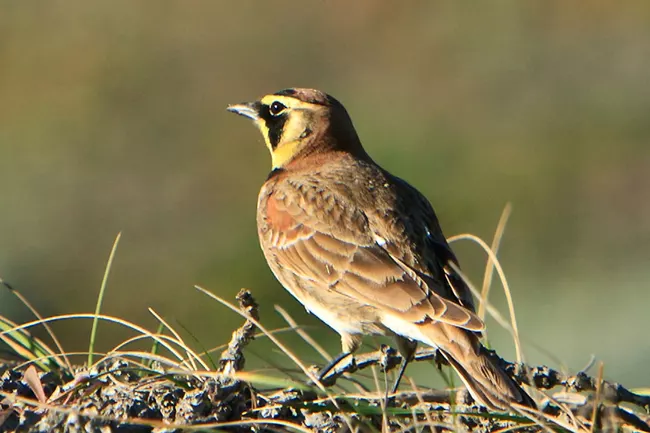
The "Horned" moniker comes from the two tiny tufts of black feathers on the male’s head, which can be raised to look like miniature horns during the breeding season.
2. Key Identification Marks
At a distance, a Horned Lark can look like a nondescript brown smudge on a dirt road. However, up close or through binoculars, they are one of the most strikingly patterned songbirds in the country.
Visual Field Marks
The Mask: A bold, "Zorro-like" black mask across the face and a distinct black crescent (the "breast plate") on the upper chest.
The Face: Look for a high-contrast face. Depending on the subspecies, the face and throat may be crisp white or a warm, lemony yellow.
The "Horns": Small, black feather tufts on the sides of the head. These are most prominent in males during spring and summer but can be difficult to see when flattened.
The Tail: In flight, the tail appears mostly black with narrow white outer feathers—a key distinction from the buffy tails of Pipits or Longspurs.

Behavior and Posture
Unlike many songbirds that hop, Horned Larks walk or run across the ground. They have a horizontal, low-slung posture. If you see a small bird flitting from a fence post to the grass and then running quickly through the stubble, you’re likely looking at a lark.
3. Where to Find Them in 2026
The Horned Lark is incredibly widespread, but they are specialists of wide-open spaces. You will almost never find them in a forest or a dense suburban garden.
Top Habitats
Agricultural Fields: In the Midwest and South, look for them in fallow corn or soybean fields, especially those with short stubble or bare dirt.
Airports and Golf Courses: These man-made "prairies" offer the short grass and clear sightlines the birds love.
Coastal Dunes: True to their "Shore Lark" name, they frequent the sandy upper beaches of the Atlantic and Pacific coasts during winter.
High Alpine Tundra: In the West, they breed above the treeline in the Rockies and Sierras.
Regional Hotspots for 2026
| Region | Best Time | Specific Locations |
| Northeast | Winter | Jones Beach (NY), Cape May (NJ), Salisbury Beach (MA) |
| Midwest | Year-round | Horicon Marsh (WI), rural farm roads in Iowa/Illinois |
| West | Summer | Mount Rainier (WA) alpine meadows, Pawnee National Grassland (CO) |
| South | Winter | Gulf Coast beaches, Texas Panhandle grasslands |
4. The Magic of the Flight Song

One of the most rewarding reasons to seek out the Horned Lark in 2026 is to witness its spectacular aerial display. To defend their territory, males perform a flight song that rivals the famous Skylark of Europe.
The male will climb steeply into the sky—sometimes reaching heights of 800 feet—until he is a mere speck. He then circles while delivering a high-pitched, tinkling song that sounds like tiny bells or glass breaking. After several minutes, he closes his wings and drops like a stone toward the earth, opening them at the last second for a graceful landing.
Pro Tip: Listen for a high-pitched tsee-titi or se-ee call. It is often the first sign that a flock is overhead before you actually see them.
5. Conservation Status: Why They Matter Now
The ABA chose the Horned Lark as the 2026 Bird of the Year for a reason. While they remain common, North American populations have declined by over 70% since 1970.
The main culprit is habitat loss. As native prairies are converted to intensive agriculture or housing developments, the "open room" these birds require is shrinking. By highlighting them this year, conservationists hope to bring attention to the importance of preserving grasslands and "waste" places like fallow fields and dunes.
6. Tips for Successful Spotting
Stay in the Car: On rural roads, Horned Larks are often less spooked by a vehicle than a person on foot. Use your car as a "mobile blind."
Look for the "Horned Lark Lean": When a flock is spooked, they often crouch low to the ground to blend in with the dirt. Wait a few minutes, and they will eventually stand back up to resume feeding.
Check the Edges: Look for them along the edges of dirt roads where they pick up grit for digestion.
Winter Flocks: In winter, Horned Larks often form "mega-flocks" with Lapland Longspurs and Snow Buntings. If you see a swirling cloud of birds over a snowy field, grab your scope!
Celebrating the Horned Lark (or Shore Lark) in 2026 is about more than just checking a box on a list. It’s about appreciating a bird that finds beauty in the barren, a singer that performs for the clouds, and a resilient survivor of our changing landscapes. Happy birding!
