
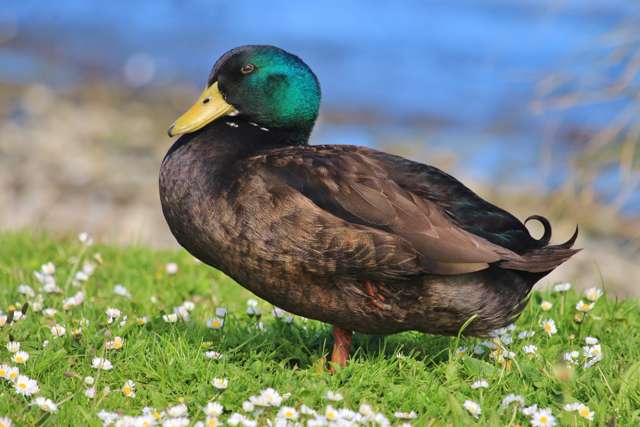
The Mallard (Anas platyrhynchos) is, without question, the most recognizable duck in the world. From the serene wilderness of a national park to the concrete pond of a suburban shopping center, the sight of the male’s brilliant iridescent green head and the female’s mottled brown plumage is a constant feature of nearly every wetland ecosystem in the Northern Hemisphere. In the United States, the Mallard holds a cultural and ecological status unmatched by any other waterfowl, serving as the blueprint for countless domestic duck breeds and the quintessential example of an adaptable, successful wild species. While it is native to North America, its extraordinary success story is rooted in its inherent flexibility, its relationship with agriculture, and its widespread human introduction, making it a truly global citizen of the bird world.
Identification: The Drake and the Hen
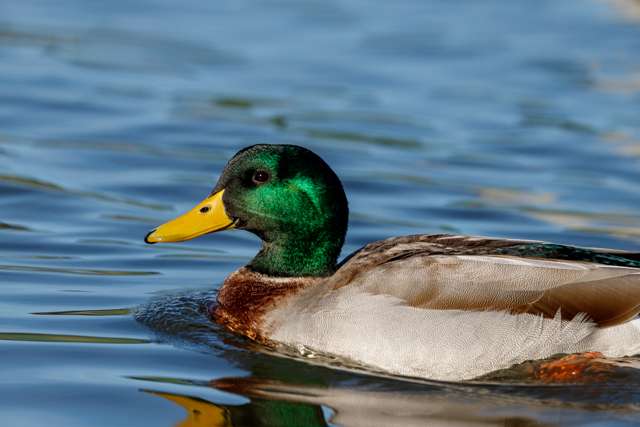
The Mallard exhibits strong sexual dimorphism, meaning the male and female have distinctly different appearances, especially during the breeding season.
The Male (Drake)
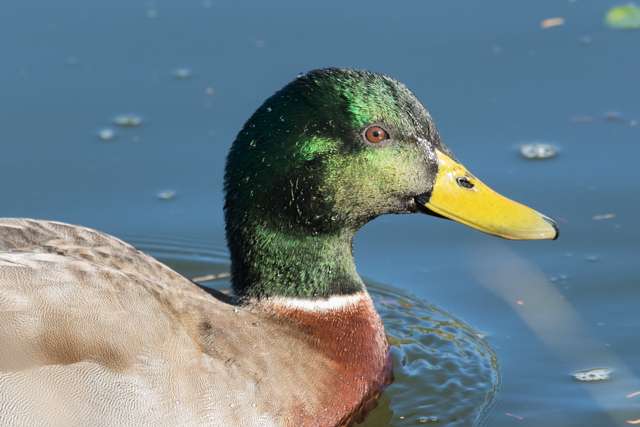
The drake is renowned for its dazzling display plumage. It features a bright, shimmering green head and neck, a distinct white neck-ring separating the head from a chestnut-brown breast. Its flanks and belly are a pale grayish-white, and its back is primarily gray-brown. The tail has striking black curled feathers, known as the "drake curl." A key field mark for both sexes is the speculum, a patch of iridescent blue-purple feathers visible on the secondary wing feathers, bordered by white bars.
The Female (Hen)
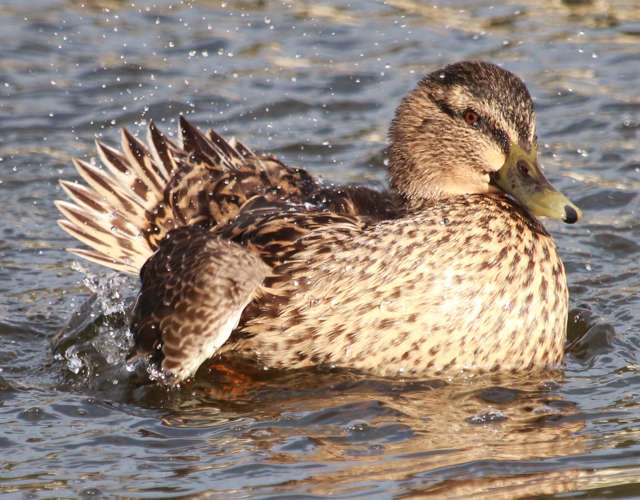
The hen is a master of camouflage, dressed in mottled buff and dark brown patterns. This cryptic coloration is essential for blending into the grasses and reeds while incubating her nest. She lacks the colorful head and breast of the male but retains the bright blue speculum, providing a reliable identification cue in flight. Both sexes share the distinguishing yellowish-orange legs and a dull yellow-to-olive bill.
Diet and Behavior: The Dabbler’s Lifestyle
The Mallard is the archetypal dabbling duck, a group that feeds primarily by tipping its body forward in the water, grazing on submerged vegetation and invertebrate life near the surface, rather than diving entirely beneath the water.
Dietary Flexibility: This is a major key to the Mallard's success. It is a true omnivore. Its diet includes everything from seeds, aquatic vegetation, and pond weeds to insects, worms, small fish, mollusks, and crustaceans. In human-dominated areas, this extends to foraging on waste grain in farm fields and accepting handouts (though often unhealthy ones) in parks.
Habitat Flexibility: Mallards are not picky about where they live, provided there is shallow water. They thrive in natural wetlands, slow rivers, and marshes, but are equally at home in urban stormwater ponds, drainage ditches, and even temporary puddles, adapting readily to environments from sea level to high mountain lakes.
The North American Range

The Mallard is native to the temperate and subtropical regions of North America, Europe, Asia, and North Africa. In the United States, it is a resident breeder across much of the northern half of the country, and its population swells in the southern states during the winter as migratory birds arrive from Canada.
The U.S. population is divided into two broad groups:
Migratory Birds: Those that breed in the Prairies and Boreal regions of Canada and the northern US, traveling hundreds or thousands of miles along the Mississippi and Pacific Flyways to winter in the southern states, coastal areas, and Mexico.
Resident Birds: Non-migratory populations that have become permanently established in urban and suburban areas, particularly in parks and reservoirs, where year-round food sources and a lack of predation support their sedentary lifestyle.
The Global Success Story: Why the Mallard Conquered the World

The ubiquity of the Mallard globally is a result of a synergy between its biological prowess and human intervention.
1. Biological Superiority
Adaptability and Diet: As noted, their willingness to eat almost anything and nest almost anywhere means they can exploit marginal habitats that specialized waterfowl species cannot.
High Reproductive Rate: Mallards typically have a large clutch size (8 to 13 eggs) and can successfully raise a brood even in crowded, predator-rich environments.
Hybridization: The Mallard has a powerful genetic makeup that allows it to successfully hybridize with almost any other Anas species, including American Black Ducks, Mottled Ducks, and domestic breeds. This ability to interbreed dilutes the gene pool of other species, often leading to a gradual dominance of the Mallard genotype in a region.
2. The Human Factor: Introduction and Domestication

The Mallard's most significant vector of global expansion is its role as the ancestor of almost all domestic duck breeds (except the Muscovy Duck).
Domestic Stock: Domesticated Mallards were carried across the globe by settlers and farmers for meat and eggs. Many of these domestic ducks, particularly those poorly contained, escaped and became feral, quickly establishing wild populations. Feral Mallards often retain the wild type's hardiness, while also being highly comfortable around people.
Game Bird Stocking: In many areas where the Mallard was not native (such as parts of South America, Australia, and New Zealand), it was intentionally introduced by hunters and conservation groups to establish populations for sport hunting. These released birds quickly outcompeted native species.
Urban Coexistence: The Mallard is extremely tolerant of human activity and noise. In urban parks, feeding programs (whether formal or informal) provide reliable winter survival, eliminating the need for energy-intensive migration and allowing resident flocks to flourish even outside their traditional climate zones.
Ecological Impact and Concerns
While successful, the Mallard's global dominance raises ecological concerns:
Genetic Pollution: In the United States, extensive interbreeding with native species, particularly the American Black Duck and the Mottled Duck, is a major conservation concern. This genetic swamping threatens the integrity and long-term survival of the pure, less-adaptable native species.
Competition and Aggression: In areas where it has been introduced, the Mallard outcompetes native waterfowl for nesting sites and food resources. The males can be aggressive during the breeding season, sometimes displacing smaller, less numerous native ducks.
Urban Overpopulation: Non-migratory urban flocks can become locally overpopulated, leading to water quality issues in small ponds due to excessive droppings and the spread of pathogens.
Despite these issues, the Mallard remains one of North America’s great ecological achievements. Its ability to navigate the challenges of the modern landscape—from vast wilderness to densely populated cities—confirms its status as a remarkable, if sometimes problematic, example of nature's adaptability.
Beyond Binoculars: Innovative Ways to Bird Watch in the Digital Age
