
The United States is home to a rich diversity of the Picidae family, which includes true woodpeckers, flickers, and sapsuckers. There are 22 regularly breeding species (and one almost certainly extinct species) found across the country, each uniquely adapted to its specific habitat, from the humid eastern forests to the dry western deserts and the vast northern conifer belts.
This guide profiles all native woodpeckers encountered in the U.S., categorized by their primary group.
I. True Woodpeckers (Spotted & Barred)
This is the largest group, characterized by a mix of black, white, and often red markings, and includes some of the most common backyard birds.
The Common Duo (Found Nearly Nationwide)
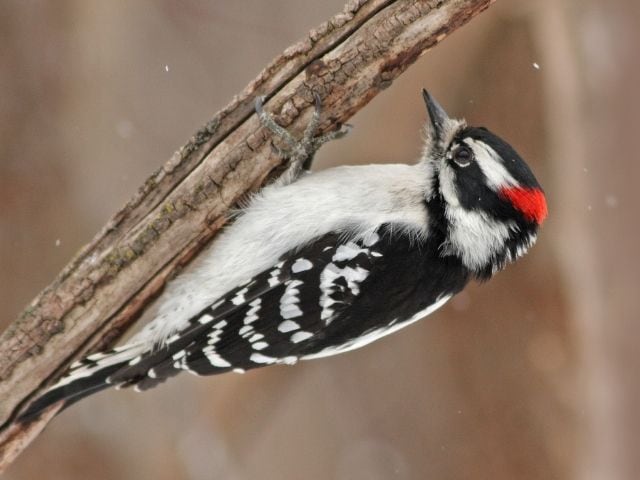
- Downy Woodpecker (Dryobates pubescens): The smallest woodpecker in North America, roughly the size of a sparrow. It's identifiable by its short, stubby bill (shorter than the depth of its head) and a white stripe down its back. Males have a red patch on the back of the head. It's a frequent visitor to suet feeders in suburban areas.

Downy Woodpecker - Hairy Woodpecker (Dryobates villosus): A look-alike to the Downy, but significantly larger (closer to a robin's size) with a long, prominent bill (equal to or longer than the depth of its head). It prefers mature, extensive forests and is less common in small urban woodlots.

Hairy Woodpecker A Birder’s Guide to Distinguishing Hairy and Downy Woodpeckers

The Eastern Classics
- Red-bellied Woodpecker (Melanerpes carolinus): Found throughout the Eastern U.S. Despite the name, the faint reddish wash on its belly is hard to see; it's more easily identified by the fine black-and-white barring on its back and the bright red crown (male) or nape (female). It has expanded its range northward in recent decades.

- Red-headed Woodpecker (Melanerpes erythrocephalus): Unmistakable with its entirely crimson-red head and a bold, contrasting plumage of black and white patches (black back, white rump, black tail, and large white secondary wing patches). It is one of the few woodpeckers that caches food, storing acorns and insects in crevices.

Red-headed Woodpecker

The Western Specialists
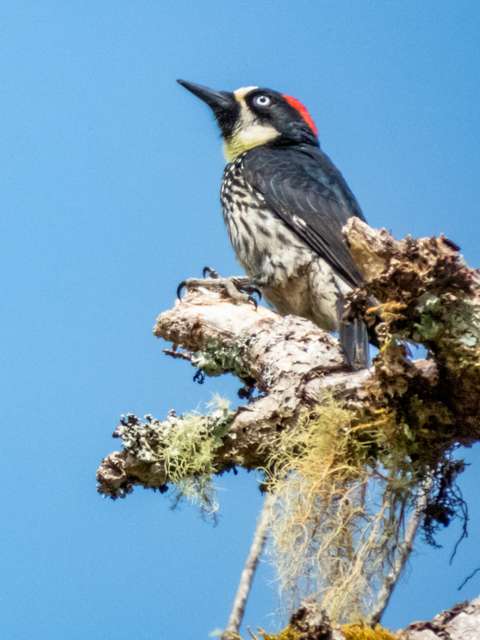
- Acorn Woodpecker (Melanerpes formicivorus): A highly social bird of oak and pine-oak woodlands in the West. Its clown-like face—black, white, and a red cap—is distinctive. These birds live in family groups and are famous for creating "granary trees," drilling thousands of holes to store acorns.

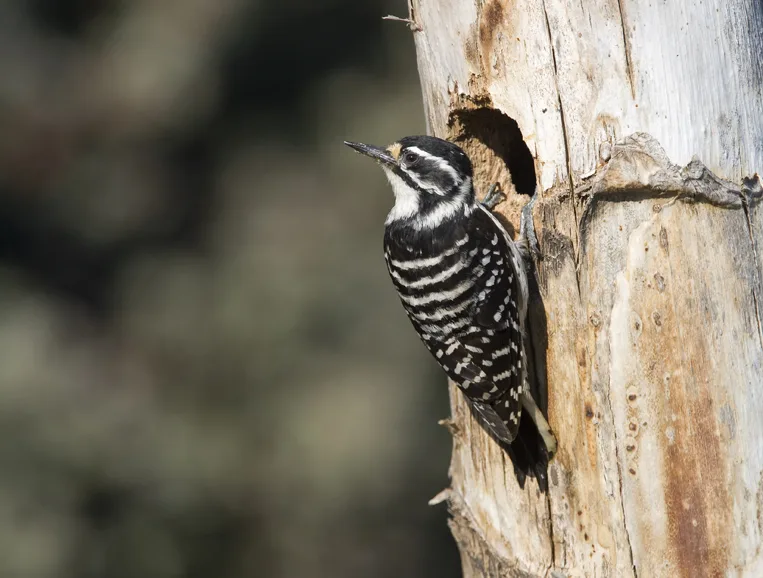
Acorn Woodpecker - Nuttall's Woodpecker (Leuconotopicus nuttallii): Restricted primarily to California’s oak and sycamore woodlands. It looks similar to the Downy and Hairy but is distinguished by heavier black barring on its back and flanks.

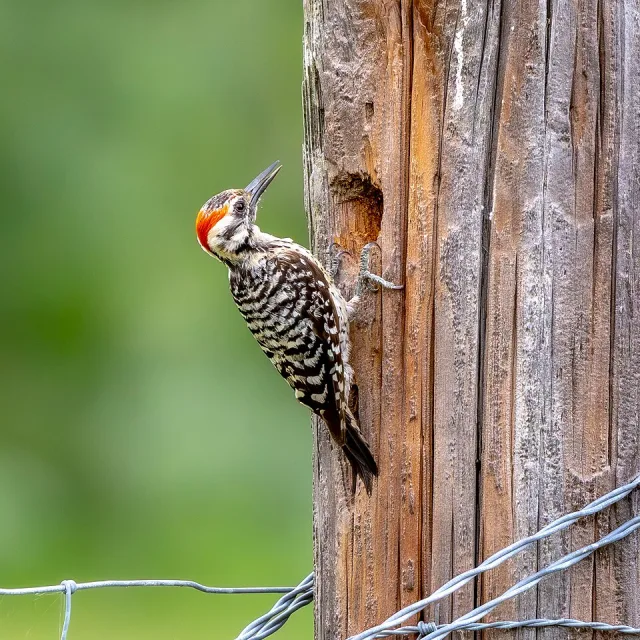
Nuttall's Woodpecker - Ladder-backed Woodpecker (Picoides scalaris): Found in the deserts and arid scrub of the Southwest. Its back features a clean, ladder-like pattern of black and white bars, extending to the tail. It is a common species of dry habitats, including mesquite and saguaro cacti.
Ladder-backed Woodpecker - Arizona Woodpecker (Leuconotopicus arizonae): A range-restricted species found in the sky islands of southeastern Arizona and southwestern New Mexico. It is unique among its spotted relatives for having a largely brown-and-white striped head and spotted underparts, lacking the bold black and white.

Arizona Woodpecker


The Northern and Western Conifer Woodpeckers
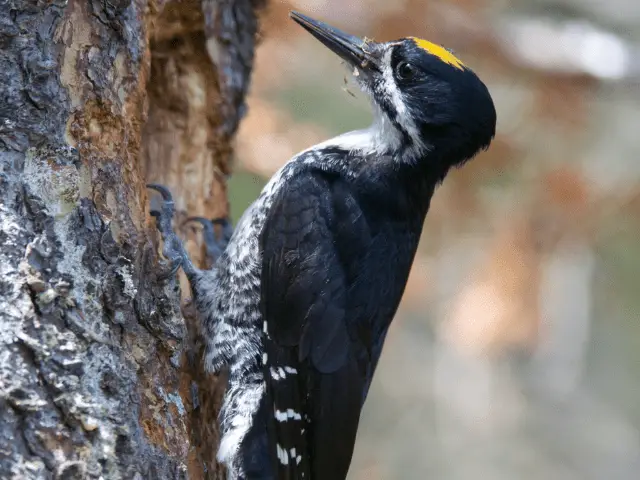
- Black-backed Woodpecker (Picoides arcticus): A specialist of boreal and burned coniferous forests across the northern U.S. and the mountainous West. It has a striking, unbarred solid black back, which provides excellent camouflage against burned tree trunks. Males have a yellow crown patch.
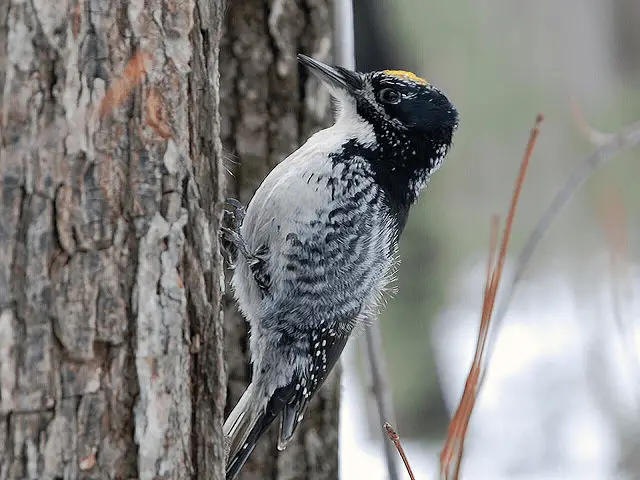
Black-backed Woodpecker - American Three-toed Woodpecker (Picoides dorsalis): Found in high-altitude spruce and fir forests in the Rocky Mountains and northern conifer areas. It is the only woodpecker besides the Black-backed to have three toes (instead of the usual four), and its back is barred with black and white. Males have a yellow crown patch.
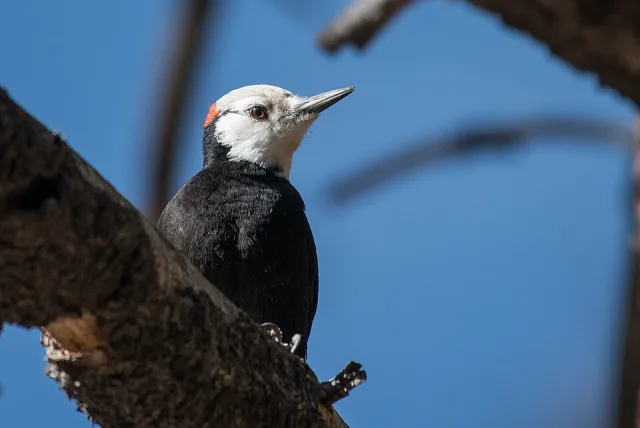
American Three-toed Woodpecker - White-headed Woodpecker (Dryobates albolarvatus): Endemic to the pine forests of the mountainous West, particularly the Sierra Nevada and Cascade ranges. It is easily identified by its unique solid white head and white throat, contrasting with a black body.
II. Sapsuckers (Genus Sphyrapicus)
Sapsuckers are specialized woodpeckers that feed on tree sap. They drill neat, horizontal or vertical rows of shallow holes (called "sap wells") and return later to lick up the oozing sap and any insects caught in it.
- Yellow-bellied Sapsucker (Sphyrapicus varius): The only sapsucker in the East, breeding in the Northeast and migrating south for winter. It has a white stripe extending below the eye, a black bib, and a red cap and throat (male). Its feeding activities can sometimes cause damage to ornamental trees.

- Red-naped Sapsucker (Sphyrapicus nuchalis): Found in the Rocky Mountains and Great Basin. It looks very similar to the Yellow-bellied, but with a characteristic red patch on the nape (back of the neck).

Red-naped Sapsucker - Red-breasted Sapsucker (Sphyrapicus ruber): A western species, primarily along the Pacific Coast. It is distinct with its head and breast entirely washed in crimson-red, obscuring the typical black and white markings.

Red-Breasted Sapsucker - Williamson's Sapsucker (Sphyrapicus thyroideus): A visually distinctive sapsucker of western coniferous forests. The sexes look drastically different (sexual dimorphism): the male is black with a white stripe and a yellow belly, while the female has fine black and white barring on the back (a "ladder-back" pattern).

Williamson's Sapsucker


III. Flickers (Genus Colaptes)
Flickers are unique among woodpeckers for spending a significant amount of time foraging on the ground for ants and beetles.
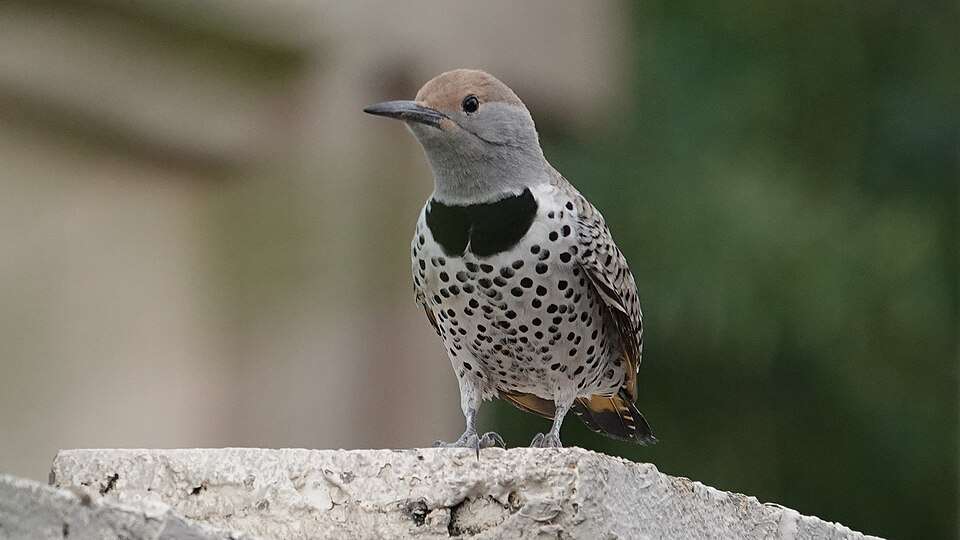
- Northern Flicker (Colaptes auratus): One of the most widespread and common woodpeckers, found across most of North America. It is a large, brown, spotted bird with a black crescent on its chest and a conspicuous white rump patch visible in flight. It has two main forms:
- Yellow-shafted Flicker (East): Has yellow underwings and undertail feathers, and a red nape patch. Males have a black mustache stripe.
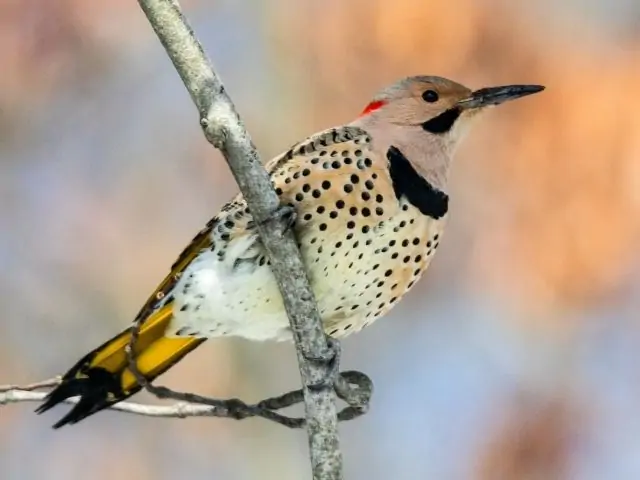
- Red-shafted Flicker (West): Has red underwings and undertail feathers, and lacks the nape patch. Males have a red mustache stripe.

- Gilded Flicker (Colaptes chrysoides): A desert specialist found in the Sonoran and Mojave Deserts. It is genetically close to the Northern Flicker but lives exclusively in association with saguaro and cardón cacti, where it excavates its nest cavities. It has yellow underwings and an overall paler appearance.

Gilded Flicker
IV. The Large and the Endangered
The Giants
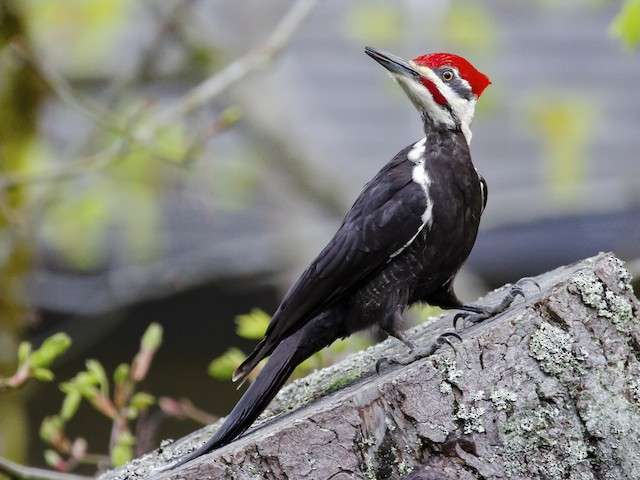
- Pileated Woodpecker (Dryocopus pileatus): The largest extant (living) woodpecker in the U.S. (crow-sized). It is unmistakable with its massive size, jet-black body, white "racing stripes" on the face and neck, and a prominent, flaming red triangular crest. It excavates large, rectangular or oblong holes in trees to find carpenter ants.
Pileated Woodpecker
The Range-Restricted and Vulnerable
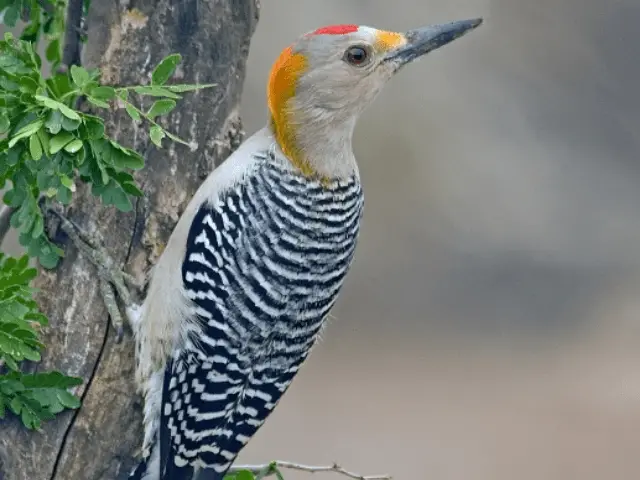
- Golden-fronted Woodpecker (Melanerpes aurifrons): Primarily a species of Central Texas and southwestern Oklahoma. Similar to the Red-bellied Woodpecker, but the male has a yellow-orange wash above the bill and a golden nape.
Golden-fronted Woodpecker - Lewis's Woodpecker (Melanerpes lewis): A western species, unique for its iridescent green-black back and a pinkish-red belly and chest. Unlike other woodpeckers, it rarely drills, instead specializing in catching insects in the air (flycatching) or gleaning from tree surfaces.

Lewis's Woodpecker - Red-cockaded Woodpecker (Dryobates borealis): A small, endangered species of the southeastern U.S., historically tied to old-growth Longleaf Pine forests. It is one of the few species that excavates its nest cavity in living pine trees, creating "resin wells" around the hole to deter predators (snakes). Males have a tiny, almost invisible red 'cockade' (feather tuft) behind the eye.


The Extinct (Likely)
- Ivory-billed Woodpecker (Campephilus principalis): Once the largest woodpecker in North America, this species of the southeastern old-growth bottomland hardwood swamps has been classified as extinct by the U.S. Fish and Wildlife Service, although unconfirmed sightings still occasionally generate controversy and hopeful searches.

Adaptations of the Woodpecker Family
Woodpeckers possess remarkable physiological adaptations that allow them to relentlessly pound wood without suffering brain damage:
- Chisel-like Bill: A thick, strong bill that tapers to a chisel tip, allowing for efficient wood excavation.
- Shock Absorption: A small brain with tight packing and a specialized bone structure between the bill and the skull that acts as a dampener.
- Zygodactyl Feet: Two toes face forward and two face backward, providing a secure, vice-like grip on vertical tree trunks.
- Stiff Tail Feathers: Short, stiff tail feathers that act as a prop or tripod, providing support when drilling.
- Barbed Tongue: An incredibly long, barbed tongue that can extend far past the beak, coated in sticky saliva, perfect for snagging deep-burrowing insect larvae.
Do Woodpeckers Migrate: Understanding Their Seasonal Movements
