
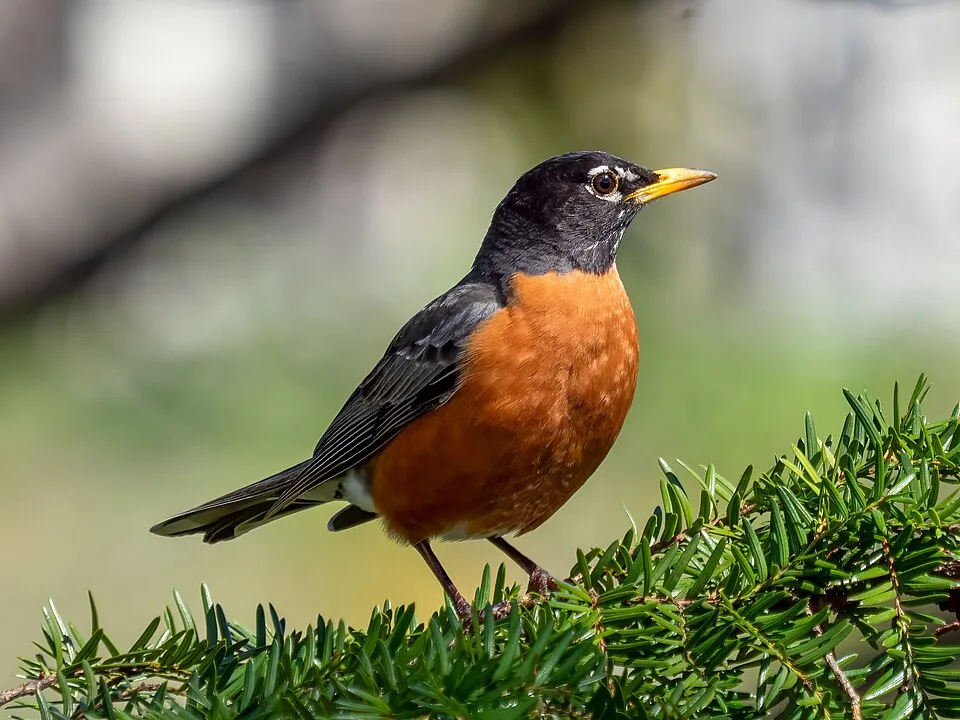
Few birds are as universally recognized and beloved across North America as the American Robin (Turdus migratorius). With its cheerful "cheerily, cheer up, cheerily, cheer up" song echoing at dawn, its distinctive reddish-orange breast, and its familiar sight hopping across lawns, the American Robin is a true icon of suburbia, parks, and wild spaces alike. It is often hailed as the herald of spring, a symbol of renewed life after winter's chill, yet its story is far more complex than just a warm-weather visitor. This adaptable thrush is a master of survival, thriving from the Arctic tundra to urban centers, a testament to its resilience and opportunistic nature.
A Familiar Face: Identification and Description
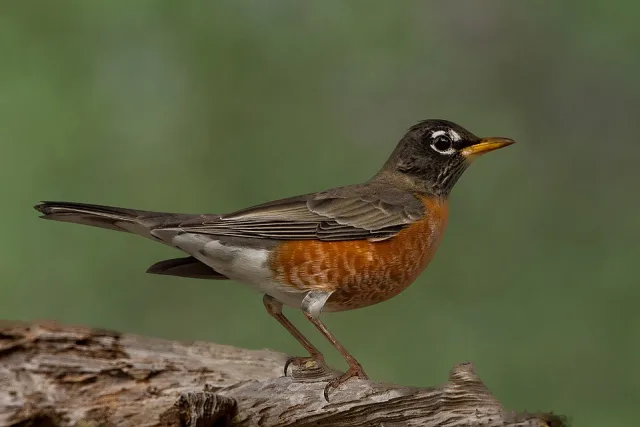
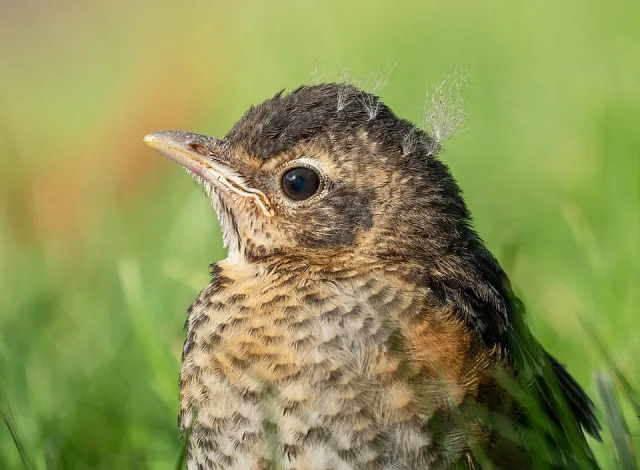
The American Robin is a medium-sized songbird, typically measuring 9-11 inches (23-28 cm) in length with a wingspan of 12-16 inches (30-40 cm). Its most striking feature is the brick-red to rufous-orange breast and belly, which contrasts sharply with its dark grey to blackish head and back. The throat is streaked with white and dark lines, and it has a noticeable broken white eye-ring. The bill is strong, yellowish, and often tipped with black. Females generally have duller plumage than males, with a lighter grey head and a less vibrant orange breast. Juveniles are mottled brown with a spotted breast and belly, gradually acquiring the adult plumage as they mature.
Robins are easily identified by their upright posture and their distinctive foraging style: they run a few steps, stop abruptly, cock their head to listen for earthworms or insects, and then strike quickly with their bill.
A Voice of the Dawn: Song and Calls
The song of the American Robin is one of the most recognizable sounds of spring and summer mornings. It's a rich, caroling melody of whistled phrases, often described as "cheerily, cheer up, cheerily, cheer up, cheer up." Males are particularly vocal at dawn and dusk, establishing territories and attracting mates.
Beyond their song, robins have a repertoire of calls:
- A sharp, alarm "tseep" or "peek" given when disturbed or when a predator is near.
- A rapid series of "tut-tut-tut" notes, often heard when a robin is agitated.
- A soft, whispered "seee" contact call used between foraging birds.
The Omnivore's Advantage: Diet and Foraging
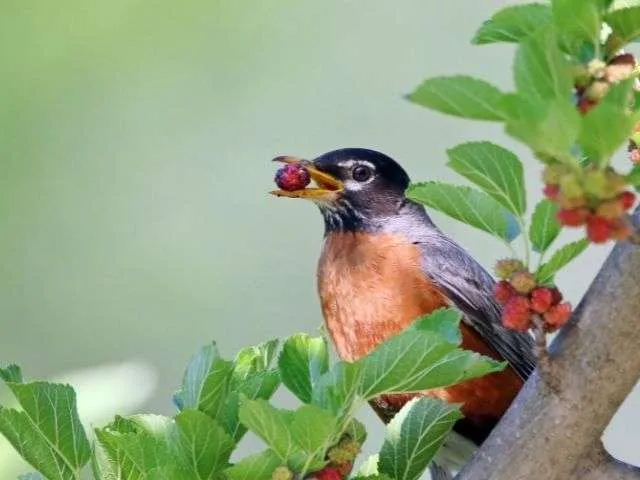
The American Robin is an opportunistic omnivore, a key factor in its widespread success. Its diet shifts seasonally and geographically:
- Invertebrates: Earthworms are perhaps their most famous prey, especially after rain or in damp soil. They also consume a wide variety of other insects, grubs, caterpillars, and spiders, particularly during the breeding season when protein is essential for growing chicks.
- Fruits and Berries: As the summer progresses and into the fall and winter, robins switch to a diet rich in fruits and berries. They consume wild and cultivated berries such as cherries, blueberries, hawthorn, dogwood, sumac, and poison ivy berries. This frugivorous diet allows them to survive colder months when invertebrates are scarce.
Their varied diet enables them to exploit different food sources depending on availability, contributing to their adaptability in diverse habitats.
From Forest to Lawn: Habitat
The American Robin is incredibly adaptable regarding habitat. Originally a bird of open woodlands, forest edges, and clearings, it readily moved into human-modified landscapes. Today, you can find robins in:
- Urban and Suburban Areas: Lawns, parks, gardens, and golf courses, where short grass provides ideal foraging for earthworms and scattered trees offer nesting sites.
- Rural Areas: Farms, orchards, and hedgerows.
- Wildlands: Open forests, clearcuts, mountains, and even tundra regions in the far north.
They prefer areas with a mix of open ground for foraging and trees or shrubs for nesting and perching.
A North American Native: Range and Migration
The American Robin boasts one of the most extensive breeding ranges of any North American bird.
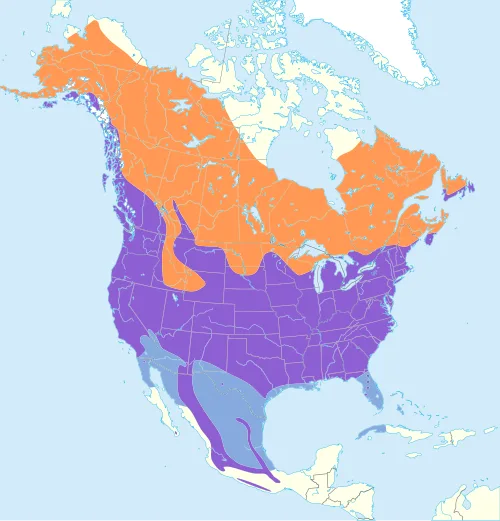
Breeding Range:
The American Robin breeds across virtually all of Canada, Alaska, and the continental United States, extending south into central Mexico. They are absent only from the extreme arid deserts of the Southwest and some parts of the far north where the climate is too harsh or food sources too limited. Their ubiquitous presence makes them one of the most familiar birds across the continent.
Wintering Range:
Despite their reputation as spring harbingers, American Robins are not entirely migratory. Their migratory patterns are complex and vary geographically:
- Northern Populations: Robins that breed in Canada and the northern U.S. are generally migratory, moving south to the southern United States, Mexico, and Central America for the winter. They travel in large flocks, often numbering in the hundreds or thousands, moving systematically through fruit-rich areas.
- Southern and Central Populations: Robins breeding in the central and southern U.S. may be partially migratory or even resident. Many individuals remain in their breeding territories year-round, especially if food (like fruit-bearing trees) is abundant. These resident birds may shift from lawns to woodlands or shrublands during the winter to access these fruit resources.
- Irruptive Movements: In some years, even northern populations may stay further north than usual if a mild winter and ample food supplies allow. Conversely, harsh winters can push them further south.
Therefore, while seeing a robin in your backyard after a long winter often signals spring, it's also possible that some robins may have been there all along, simply shifting their behavior and habitat preferences during the colder months.
A Cycle of Life: Breeding and Nesting
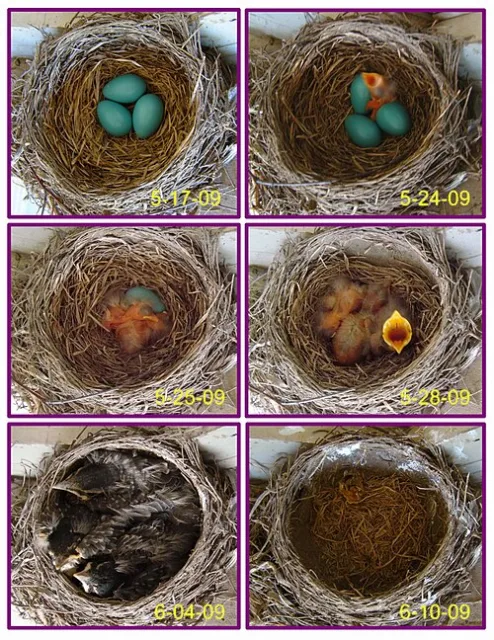
American Robins typically raise two to three broods per year, sometimes even four, a testament to their reproductive success.
- Nesting: The female constructs a sturdy, cup-shaped nest, usually in a fork of a tree or shrub, but also on ledges, eaves, or even hanging baskets. The nest is built from mud, reinforced with grass and twigs, and lined with fine grasses.
- Eggs and Young: She lays 3-5 smooth, sky-blue eggs, famously known as "robin's egg blue." The female incubates the eggs for about 12-14 days. Both parents feed the altricial (helpless) chicks, which fledge about 13-16 days after hatching.
- Post-Fledging: Even after leaving the nest, the young birds remain dependent on their parents for several weeks, learning to forage and navigate their world. The female often begins a new nest while the male continues to care for the recently fledged young.
Conservation Status
The American Robin is currently listed as a species of Least Concern by the IUCN. Its populations are stable and widespread, largely due to its adaptability to human-altered landscapes. However, like all birds, they face local threats from pesticide use (which reduces their insect food source and can poison them directly), habitat loss, and predation by domestic cats. Despite these challenges, the robin's remarkable ability to thrive alongside humans ensures its continued presence in our backyards and wild spaces.
Wrapping Up
The American Robin is more than just a common backyard bird; it's a testament to nature's resilience and adaptability. Its vibrant plumage, melodious song, and familiar presence weave it into the fabric of the North American experience. Whether it's probing for worms on a dew-kissed lawn or flocking through berry bushes in the depths of winter, the American Robin reminds us that beauty and life can thrive even in the most familiar of places, always ready to serenade us with its cheerful song.
