
The United States is home to approximately 14 regularly occurring species of pigeons and doves, all belonging to the family Columbidae. While the term "pigeon" generally refers to larger species and "dove" to smaller ones, the terms are not scientifically distinct, as both are members of the same family. The species can be broadly divided into widespread natives, regional specialties, and introduced (non-native) species.
Widespread and Common Species
These are the most likely members of the Columbidae family to be encountered across the U.S.
1. Mourning Dove (Zenaida macroura)

- Status & Range: Native, extremely abundant, and found year-round across the entire continental U.S.
- Identification: A slender, medium-sized, grayish-brown dove with a long, tapered, pointed tail. It has small black spots on its wings and a mournful, soft, cooing call (often mistaken for an owl). It is a popular game bird.
2. White-winged Dove (Zenaida asiatica)

- Status & Range: Native to the Southwest, its range has expanded dramatically north and east, now commonly found in Texas, Arizona, and the Southeast, including Florida.
- Identification: Larger and stockier than the Mourning Dove. It's easily identified by the conspicuous white stripe along the edge of the wing, which is prominent in flight. It has a rounded tail and a unique, harsh, "who-cooks-for-you" sounding call.
3. Rock Pigeon (Columba livia)
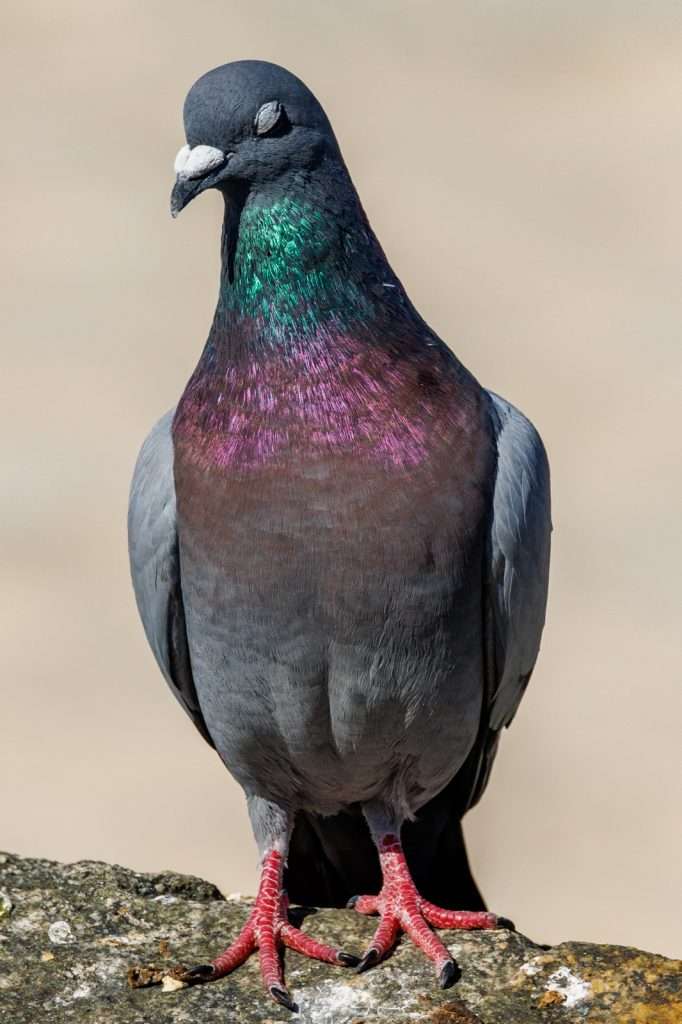
- Status & Range: Non-native (introduced), found virtually worldwide in cities and agricultural areas. Also known as the Feral Pigeon or Rock Dove.
- Identification: The classic "city pigeon." Highly variable in color due to domestication, ranging from white, brown, or gray, but the wild-type coloration is gray with an iridescent neck, a white rump, and two prominent black wing bars.
4. Eurasian Collared-Dove (Streptopelia decaocto)

- Status & Range: Non-native (introduced), expanding rapidly across the U.S. since establishing populations in Florida in the 1980s.
- Identification: A large, pale, grayish-buff dove, noticeably larger than the Mourning Dove. Its key field mark is the thin, black half-collar (nuchal collar) on the back of the neck. It has a relatively long, squared tail with a white tip.
Southern & Regional Specialties (Native)
These species have restricted ranges, typically confined to the warmest regions of the U.S., particularly the Southwest and the extreme Southeast.
The Pigeons
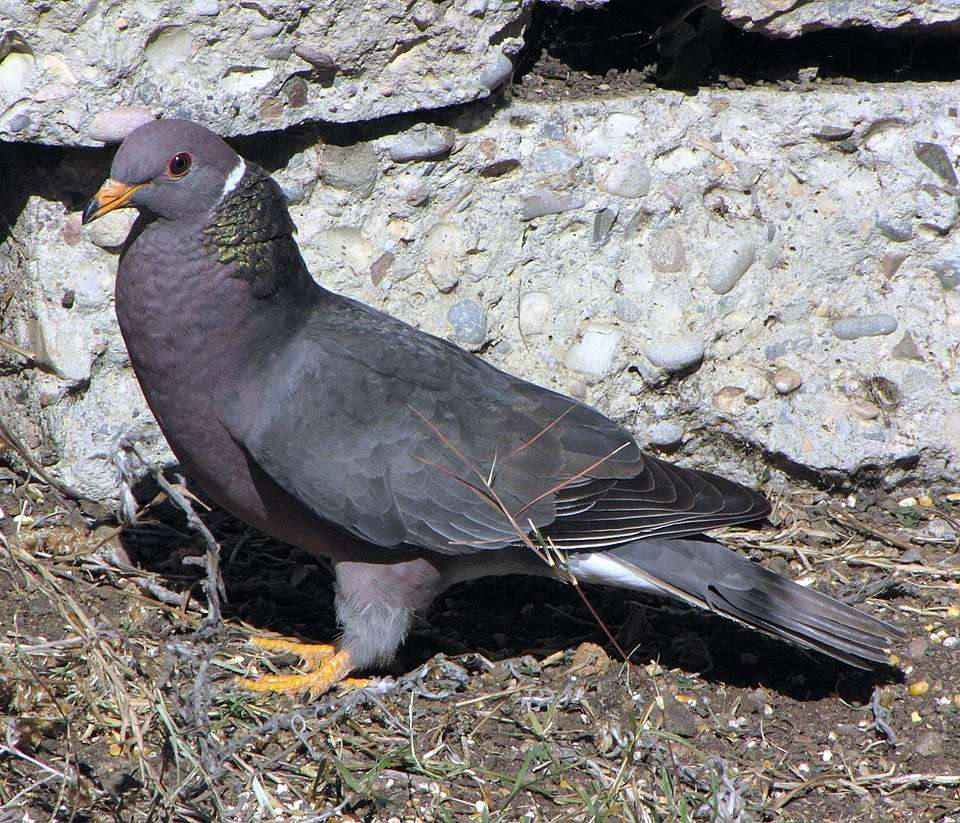
- Band-tailed Pigeon (Patagioenas fasciata): The only native pigeon in the U.S., with two distinct populations: one in the mountains of the West Coast and one in the Southwest. It is a large, forest-dwelling pigeon, distinguished by a pale band across the tip of the tail and a white crescent on the nape of the neck.

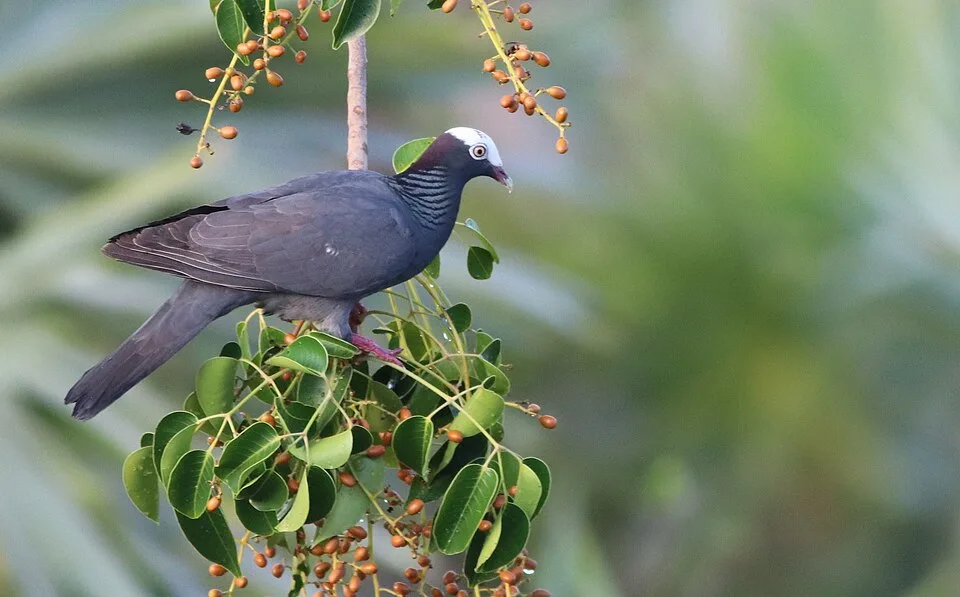
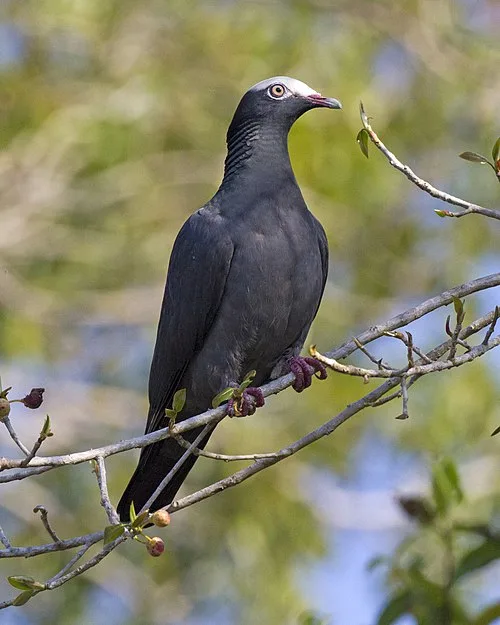
Band-tailed Pigeon - White-crowned Pigeon (Patagioenas leucocephala): Limited to the extreme southern Florida keys and Everglades. A dark, slate-gray pigeon with a highly contrasting bright white cap on its head, seen in mangrove forests and tropical hammocks.

White-crowned Pigeon https://lovethebirds.com/montana-best-bird-watching-locations/
- Red-billed Pigeon (Patagioenas flavirostris): Confined to the dense riparian woodlands of the Rio Grande Valley in southern Texas. It is a large, dark, purplish-gray pigeon with a namesake red bill.

The Ground-Doves and Allies
- Inca Dove (Columbina inca): Found in the Southwest, from Texas to Arizona. A small, slender dove with a scaly appearance to its plumage. It has a very long, white-edged tail. They are known to form "pyramid roosts," piling atop one another for warmth in cold weather.

Inca Dove - Common Ground-Dove (Columbina passerina): The smallest dove in the U.S. (sparrow-sized), found in the Southeast and Southwest. It is pale grayish-brown with small black spots on the wing and a very short tail. A key feature is the noticeable rufous flash in its wings during flight.


White-tipped Dove (Leptotila verreauxi): Found in the dense brush and thickets of the lower Rio Grande Valley in Texas and occasionally in Arizona. It is a chunky, medium-sized, pale dove with a broad, white tip on its tail that is visible when the tail is fanned.

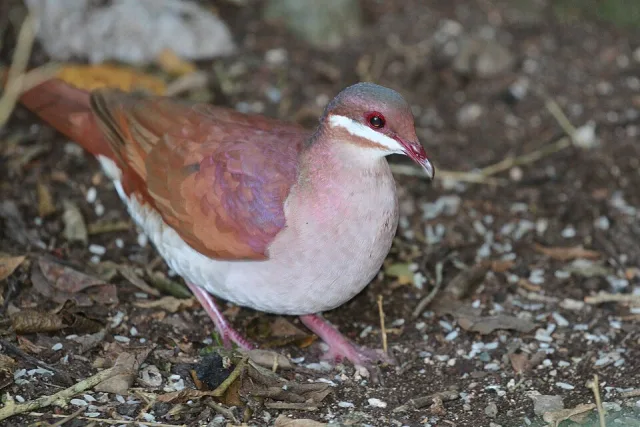
- Key West Quail-Dove (Geotrygon chrysia): A shy, terrestrial dove with a striking head pattern. It is an extremely rare vagrant to southern Florida, primarily residing in the West Indies.

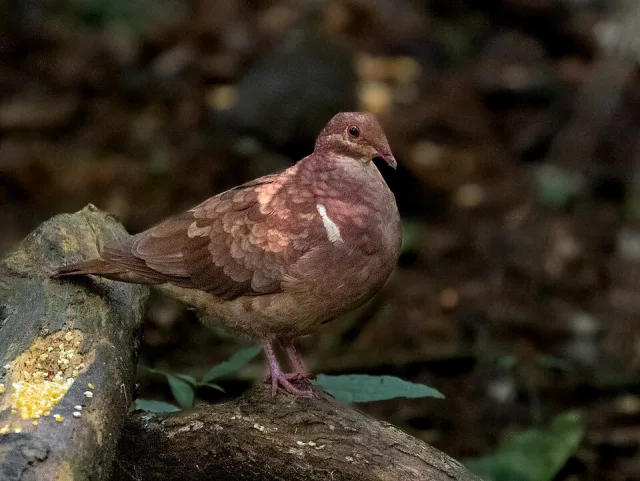
Key West Quail-Dove - Ruddy Quail-Dove (Geotrygon montana): Another terrestrial, forest-dwelling dove, very rarely recorded in the U.S., with the occasional sighting in southern Florida or Texas.
Accidental and Extinct Species
A few other species, such as the Ruddy Ground-Dove (Columbina talpacoti), the Spotted Dove (Spilopelia chinensis), and the Zenaida Dove (Zenaida aurita), have been recorded in the U.S., but they are not considered established breeders and are typically extremely rare, temporary visitors (vagrants) from Mexico, the Caribbean, or from domestic escapes.
Extinct Species
The Passenger Pigeon (Ectopistes migratorius) was formerly the most abundant bird in North America, numbering in the billions. Native to the Eastern U.S., it was hunted to extinction by the early 20th century, with the last known individual dying in 1914. Its extinction serves as a cautionary tale of human impact on wildlife.
Unique Adaptations
The pigeons and doves of the U.S. share several unique traits that define their family:
- Crop Milk: Both sexes produce a nutritious, fat-rich secretion called crop milk from the lining of their crop to feed their young (squabs). This is a unique adaptation shared only with flamingos and male Emperor Penguins.
- Head-Bobbing: They are known for their distinctive, rhythmic head-bobbing motion while walking, which helps them stabilize their vision and perceive depth.
- Water Consumption: Unlike most birds that "scoop" and then tilt their heads back to swallow, pigeons and doves are able to suck water through their bill like a straw.
