

The California coast is a legendary birding destination, a vibrant, narrow corridor that hosts everything from arctic migrants to subtropical vagrants. While spotting a Western Gull or a Brown Pelican is easy, the true challenge—the one that defines an experienced California birder—is locating the species that are either critically rare, fiercely secretive, or clinging to the last remnants of disappearing habitat.
From the largest flying bird in North America to a tiny marsh dweller that prefers to be heard, not seen, here is a guide to tracking down the toughest feathered residents and visitors of the Golden State's coastline.
1. The Apex Challenge: California Condor (Gymnogyps californianus)
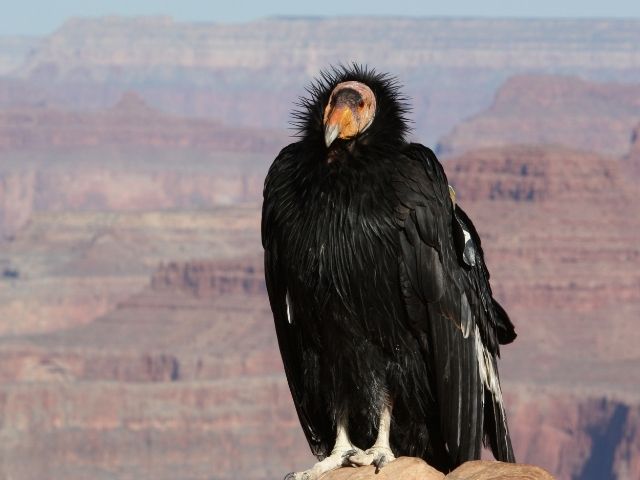
With a wingspan of up to 9.5 feet (3 meters), the California Condor is impossible to mistake for anything else once it's spotted. Yet, despite its size, the Condor remains a challenging bird to locate consistently due to its vast foraging range and critically endangered status. The entire wild population is a triumph of conservation, painstakingly brought back from a low of just 22 birds in the 1980s.
The Condor Hunt
Behavior: Condors are carrion eaters and are masters of flight, soaring for hours on thermal updrafts without flapping. They can travel over 100 miles in a day in search of food.
Best Location: Big Sur Coastline: The mountains and cliffs of Big Sur offer arguably the best viewing opportunities in the world. Key stretches of Highway 1, particularly around Julia Pfeiffer Burns State Park and Andrew Molera State Park, are excellent viewing spots.
Tip: Look for them soaring above the canyons and ridges, especially on sunny, breezy days when the thermal lift is strong. Morning or late afternoon is often best.
Alternative Location: Pinnacles National Park: An inland location, but still part of the central coast condor range. Look for birds roosting in the High Peaks area or gliding along the ridge lines, especially in the mornings before the heat of the day.
The Tag System: Every free-flying Condor is fitted with a brightly colored, numbered wing tag. Bring a scope or high-powered binoculars to read the tag, and you can report your sighting to groups like the Ventana Wildlife Society to track the individual bird.
2. The Elusive Phantom: Black Rail (Laterallus jamaicensis)
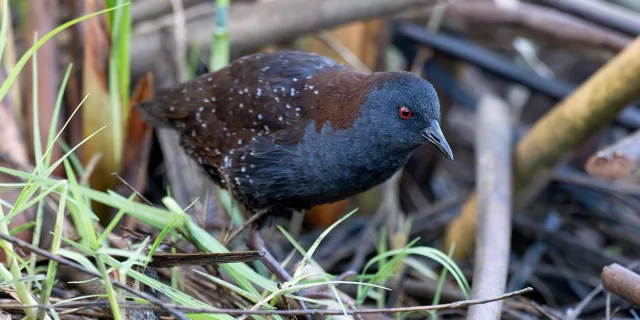
While the Condor is tough because of its rarity and range, the Black Rail is tough because of its behavior. This bird is famously tiny, incredibly secretive, and lives in dense marsh vegetation where it spends most of its time running along the ground rather than flying.
The Rail Retrieval
Appearance: This is a tiny, dark gray-black marshbird, about the size of a sparrow, with a red eye and a small black bill. Its back and flanks are finely speckled with white.
Habitat: The Black Rail is restricted to the upper (higher elevation) reaches of tidal salt marshes or dense, shallow freshwater marshes—places dominated by thick stands of pickleweed or bulrush.
Detection by Voice: You are far more likely to hear a Black Rail than see one. The male's distinctive call, often transcribed as a sharp "kick-ee-kerr" or "kic-kic-kerr", is most frequently given at dawn, dusk, or at night, especially during the breeding season (spring).
Best Locations:
San Francisco Bay Area: Remaining populations are found in the marshes of the northern San Pablo Bay estuary and Suisun Marsh.
Morro Bay: A small population persists in the salt marsh habitats here.
The Tidal Strategy: The best visual chance comes during the absolute highest tides of the year (known as 'king tides'). These extreme water levels temporarily flood the lower marsh areas, forcing the rails to retreat and seek refuge on the highest ground, occasionally causing them to dash across a small patch of open ground. Never attempt to flush a rail by entering its habitat, as this is illegal and extremely harmful to the bird.
3. The Habitat Specialist: Coastal California Gnatcatcher (Polioptila californica californica)
This small songbird is tough to find not because of rarity across its whole range, but because its presence is tied to a specific, highly threatened habitat: coastal sage scrub (CSS). Much of this habitat in Southern California has been lost to urban development, making the Gnatcatcher a federally threatened subspecies and a crucial indicator of coastal ecosystem health.
The Gnatcatcher Gambit
Appearance & Behavior: The California Gnatcatcher is a tiny, long-tailed, mostly blue-gray bird known for constantly flicking its tail. The male gets a small black cap during the breeding season. It hops actively through the dense, waist-high coastal sage scrub vegetation.
The Defining Call: The easiest way to find this bird is to listen for its distinctive, cat-like "zeeeeer, zeeeeer" call.
Habitat: Look exclusively for coastal sage scrub, a community of drought-deciduous plants characterized by species like California sagebrush, California buckwheat, and various salvias.
Best Locations (Southern California only):
San Diego County: This is the core of its U.S. range. Look in preserved areas like the San Diego National Wildlife Refuge and Sweetwater Marsh National Wildlife Refuge.
Orange County: Sites within the Laguna Coast Wilderness Park or the few remaining undeveloped canyons often host small populations.
Note: Birding for the Gnatcatcher requires staying on designated trails to avoid trampling the fragile and legally protected CSS habitat.
4. The Deep-Water Diver: Craveri's Murrelet (Synthliboramphus craveri)

Most tough coastal birds are land-based, but Craveri's Murrelet is a highly pelagic species, meaning it spends almost all its time far out at sea. Finding it requires a different strategy: a boat trip.
The Pelagic Pursuit
Appearance: A small, chunky, black-and-white seabird similar to a diminutive auk, but with an all-dark bill. It is easily confused with the very similar (and slightly more common) Xantus's Murrelet, making definitive identification a challenge in itself.
Habitat & Season: They nest in colonies off the islands of Baja California, Mexico, but during the late summer and early fall (August to October), they disperse northward and can be found feeding offshore of Southern and Central California.
Finding Them: This bird is rarely seen from shore. To find a Craveri’s Murrelet, you must join an organized pelagic birding trip.
Departure Points: Look for charters departing from ports like Monterey, Santa Barbara, or San Diego. These trips take dedicated birders dozens of miles offshore to the shelf edge where the deep-water currents bring up nutrient-rich water.
Tip: Scan the water near patches of feeding shearwaters or other auks. They are fast, nervous flyers that often flush from the boat.
5. The Nocturnal Survivor: Western Screech-Owl (Megascops kennicottii)

While not strictly coastal in its range, finding the Western Screech-Owl in a coastal canyon or urban woodlot is a classic, difficult birding feat. The Pacific subspecies is a tough challenge because it is strictly nocturnal and masters the art of camouflage.
The Owl Oracle
Appearance: A small, stocky owl with prominent ear tufts. It's often gray-brown and perfectly blends with the bark of coastal oak and sycamore trees.
Detection by Voice: Like the Rail, the Screech-Owl is best found by ear. Its call is a gentle, accelerating series of low hoots, like a bouncing ball, or a double hoot: hoo-hoo.
Location Strategy:
Time: Look and listen at dusk or before dawn—the times when they are most vocal.
Habitat: Focus on stands of dense, old-growth coastal oak woodlands or riparian (streamside) canyons that offer natural cavities for nesting and roosting.
The Daytime Stakeout: A very careful birder might locate one in the daylight by spotting its roosting cavity (often a hole in an old oak or a palm tree) or by noticing the mobbing behavior of small songbirds (like titmice or Bushtits) that have spotted the resting owl.
Essential Gear for the Toughest Birds
To successfully hunt these "Code 3" and "Code 4" rarity birds, you need more than just good luck:
High-Power Binoculars (10x42 minimum): Crucial for scanning vast condor-range canyons and the open ocean.
Spotting Scope: Absolutely mandatory for reading condor tags, identifying pelagic birds miles out, and confirming the subtle field marks of a distant rail.
Local Knowledge: Check recent sightings on the eBird platform. Local knowledge, often gleaned from county bird club newsletters or listservs, is invaluable for finding the ever-shifting locations of rare coastal residents.
Finding these exceptional birds is about patience, respect for their fragile habitats, and mastering the art of the birding stakeout. They are the true gems of the California coast, demanding effort but rewarding the dedicated birder with unparalleled moments of wildlife discovery.
