

With its dazzling white plumage, statuesque poise, and commanding presence, the Great Egret (Ardea alba) is an instantly recognizable figure of the world's wetlands. This large, elegant wader is not merely a beautiful bird; it is a global traveler, a masterful hunter, and, critically, a living emblem of how dedicated conservation efforts can bring a species back from the brink of extinction. Its journey from near-annihilation by plume hunters to a species of "Least Concern" is one of the most inspiring success stories in modern ornithology.
Physical Grandeur and Distinguishing Features
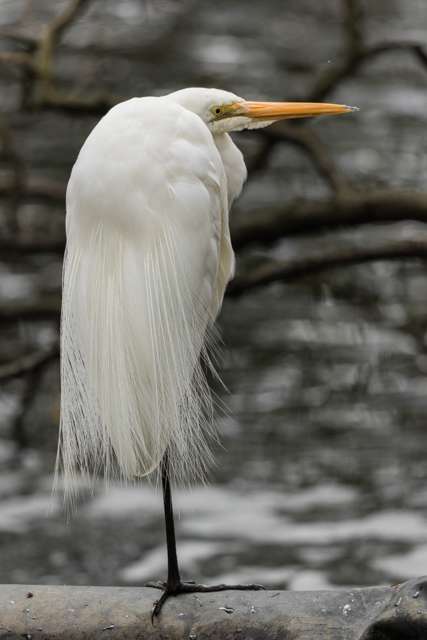
The Great Egret is a bird of impressive dimensions, often standing about one meter (39 inches) tall with a formidable wingspan reaching up to 5.5 feet. Its most striking feature is its entirely snow-white plumage, which gives it an air of purity and elegance. Unlike the smaller Snowy Egret, the Great Egret possesses a long, dagger-like yellow bill and uniformly black legs and feet.
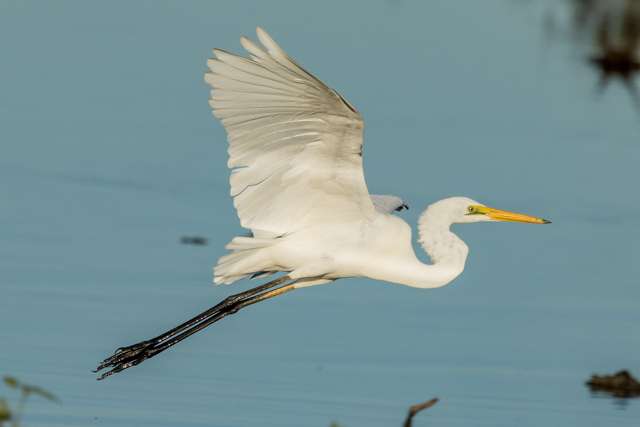
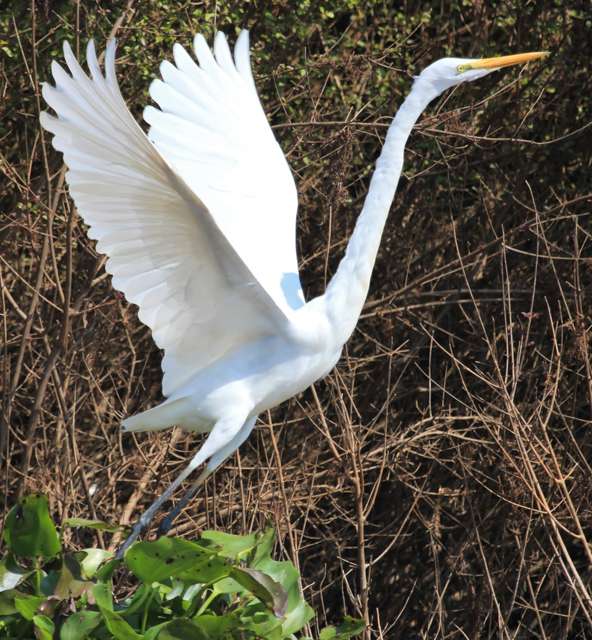
Its appearance changes subtly but significantly during the breeding season. The bill may transition to a more intense orange-yellow or even have a reddish tinge, and a patch of skin on the face, called the lores, turns a vivid neon green. Most dramatically, it grows a stunning cascade of long, delicate ornamental plumes, known as aigrettes, on its back. These were the very feathers that made the bird a target for the fashion industry in the late 19th and early 20th centuries. Males and females are similar in appearance, though males are generally slightly larger. In flight, the egret’s long neck is tucked back into a distinct 'S' shape, a characteristic that differentiates herons and egrets from storks and cranes, which fly with their necks extended.
A Global Resident of Wetlands
The Great Egret boasts an extraordinarily wide distribution, occurring globally across temperate and tropical regions. It is found in the Americas, Africa, Europe, and Asia, broken down into four recognized subspecies. This widespread range is a testament to its adaptability, but its presence is almost universally tied to wetland habitats.
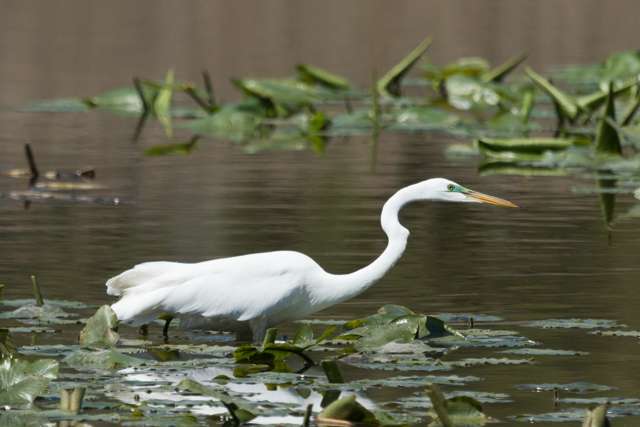
The egret makes its home in freshwater, brackish, and marine environments. This includes tidal marshes, estuaries, swamps, floodplains, lakes, ponds, and even flooded farm fields. This preference for shallow water is directly related to its specialized feeding strategy. While some populations in the southern parts of its range are year-round residents, those in the north are medium-distance migrants, flying south in small flocks for the winter. These migrations are vital to the species' life cycle, allowing it to exploit seasonal food abundance and move to warmer climes when northern waters freeze.
Master Hunter and Diet
The Great Egret is a skilled, solitary predator, primarily feeding in shallow water. Its hunting technique is one of patient, deliberate precision, a classic example of "stand-and-wait" foraging. The bird will wade slowly, often standing motionless for extended periods, using its remarkable height and keen eyesight to scan the water for prey. When an unsuspecting fish, amphibian, or invertebrate moves within striking distance, the egret's long neck uncoils with startling speed, delivering a powerful, deadly jab of its sharp bill.
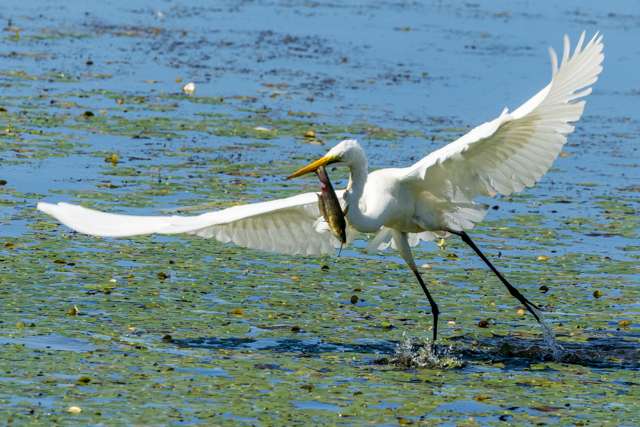
The egret's diet is chiefly composed of small fish, but it is an opportunistic carnivore and will consume virtually any small animal it can catch. This includes frogs, salamanders, snakes, aquatic insects, crustaceans, and small mammals like mice and moles when foraging in grassy fields. Its flexible diet contributes significantly to its wide-ranging success. Interestingly, the Great Egret is known to be aggressive, sometimes even engaging in kleptoparasitism, stealing food from smaller heron and egret species.
Reproduction and Colony Life
Great Egrets are seasonally monogamous, forming pair bonds that last for a single breeding season. They are highly social during reproduction, nesting in large, noisy, mixed-species colonies called rookeries, often alongside other herons, ibises, and cormorants. The male initiates the courtship by selecting a nesting territory and engaging in elaborate display rituals. These displays feature calling, neck stretching, and, most notably, raising the magnificent ornamental back plumes to impress potential mates.
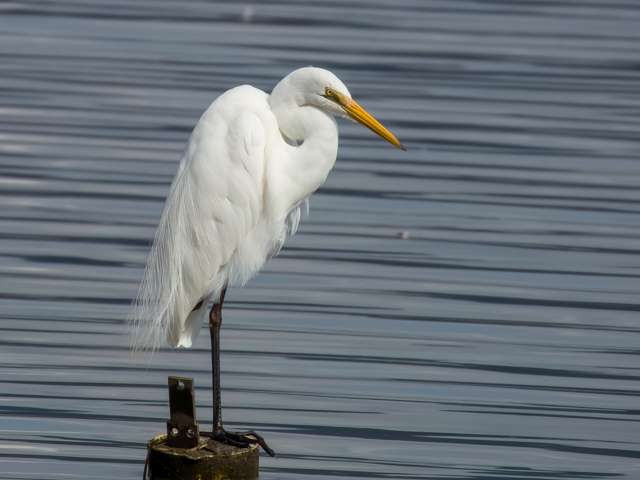
The nest is a flimsy platform built of sticks and twigs, typically placed high up in the canopy of a tree or shrub, often over water for protection from ground predators like raccoons. The female lays a clutch of three to five pale blue-green eggs. Both parents share the duties of incubation for about 23-26 days and subsequently feed the nestlings by regurgitation. Hatchlings are covered in white down and are semi-altricial (mostly helpless).
A harsh reality of the egret nest is a phenomenon known as siblicide. Due to competition for food, which can be scarce, the older, stronger chicks may aggressively attack and even stab their younger, weaker siblings, ensuring only the fittest, or the largest, survive when resources are limited. The young fledge—become capable of flight—about six to seven weeks after hatching.
The Plume Trade and Conservation Triumph
The story of the Great Egret is irrevocably tied to the history of the conservation movement. In the late 19th and early 20th centuries, the bird was hunted relentlessly for its prized breeding plumes, the "aigrettes," which were highly sought after to adorn women's hats. This mass slaughter drove the species to the brink of extinction across North America and Europe.
The horrific spectacle of wading bird colonies being decimated—with parent birds killed and their young left to starve—galvanized public outcry. This outrage spurred the creation of some of the first organized conservation groups, most famously the National Audubon Society, which adopted the Great Egret as its symbol.
The resulting protective legislation, including the Lacey Act of 1900 and the Migratory Bird Treaty Act of 1918, effectively banned the trade in bird plumes, allowing egret populations to gradually recover. This turnaround is a towering achievement, demonstrating the power of legal protection and grassroots advocacy. Today, the Great Egret's population is stable, and it is listed as Least Concern on the IUCN Red List.
Modern Challenges and Conclusion
While the Great Egret's numbers have rebounded impressively, it is not without modern threats. As a bird so intrinsically tied to aquatic environments, it remains highly vulnerable to wetland loss and degradation from human development, drainage, and pollution from industrial or agricultural runoff. Pesticides and contaminants that accumulate in its aquatic prey pose a silent but persistent danger.
Despite these challenges, the Great Egret remains a charismatic and enduring symbol. Its striking appearance, the patient intensity of its hunting, and the grace of its powerful, measured flight over the water make it one of the most treasured sights in any wetland. The species serves as a constant, beautiful reminder that with vigilance and a commitment to conservation, even a bird once nearly lost to history can thrive in the modern world, a true "great" of the avian kingdom.
The Sovereign of the Shallows: Profiling the Great Blue Heron
