
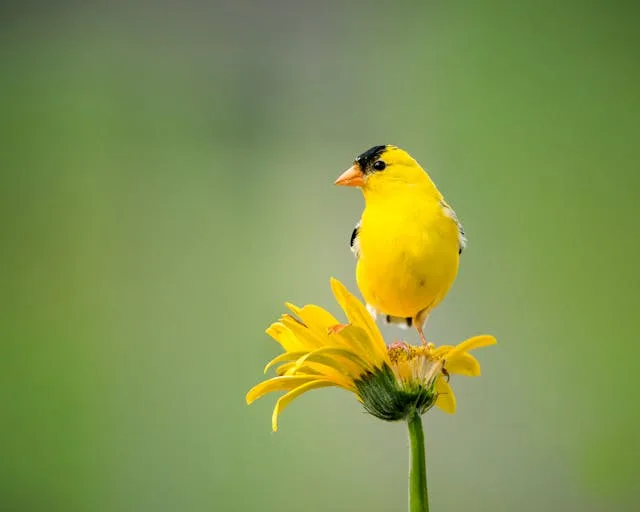
The American Goldfinch (Spinus tristis), often affectionately nicknamed the "wild canary," is one of North America's most recognizable and cherished songbirds. Its vibrant, sunny disposition and acrobatic antics on thistle heads make it a delightful fixture of backyard feeders and weedy fields across the continent. More than just a flash of brilliant yellow, the goldfinch boasts a fascinating life history centered around a nearly exclusive vegetarian diet, dictating its unique timing for breeding and migration.
Appearance and the Double Molt
The American Goldfinch is a small finch, roughly sparrow-sized, with a short, conical bill perfect for crushing seeds and a short, notched tail. However, its most notable feature is its striking plumage, which undergoes a dramatic transformation twice a year—a feature unique among North American finches.
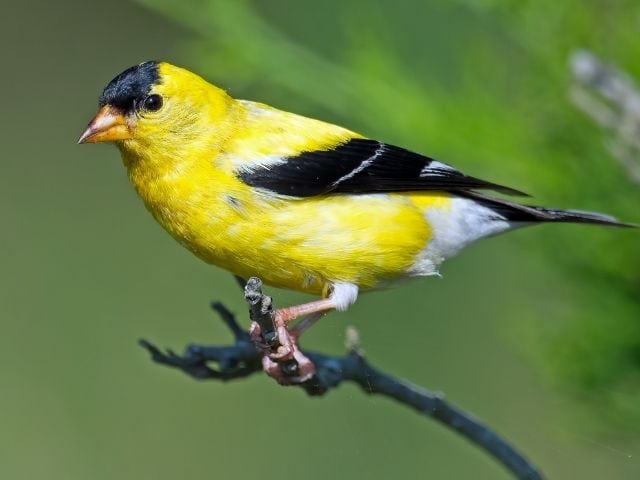
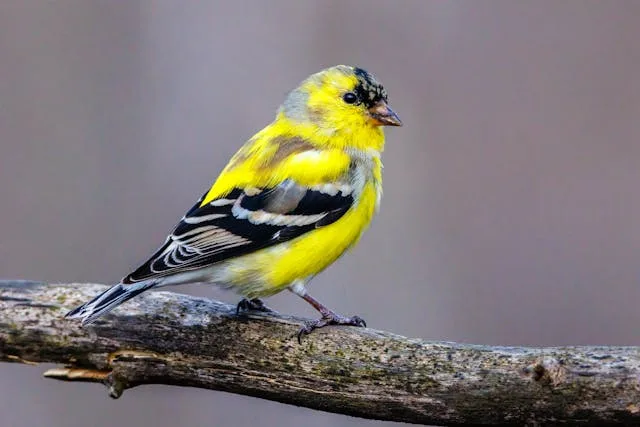
The male in his breeding plumage (spring and early summer) is a spectacular sight: a brilliant, lemon-yellow body with a contrasting jet-black cap, wings, and tail. The wings are further marked by bold white wing bars and white patches at the base of the tail. The female, even in summer, is a much duller, olive-yellow color above and pale yellow below, with blackish wings and two pale wing bars.
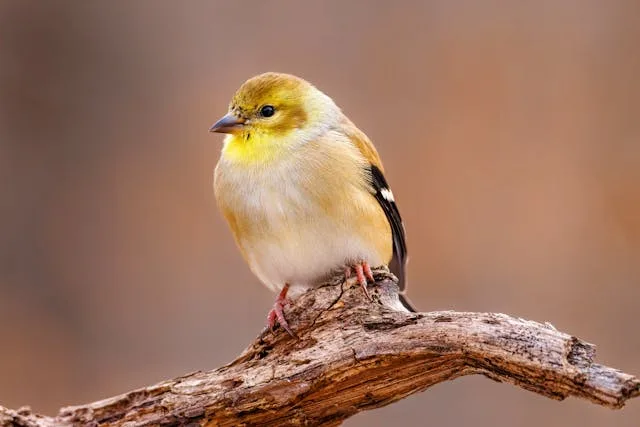
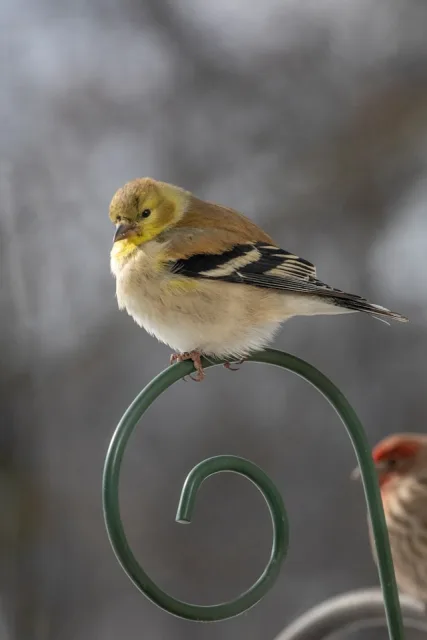
In a rare avian feat, the goldfinch undergoes a complete molt in late summer, followed by a partial molt in early spring. The spring molt sees both sexes transform into their breeding attire, giving the male his dazzling yellow. In winter plumage, both males and females become a drab, unstreaked brown or gray-brown, with the male typically retaining only a subtle yellow tinge on his face and shoulders. This camouflage helps them blend into the muted winter landscape.
Habitat, Range, and the "Potato-Chip" Flight
The American Goldfinch is widespread, breeding across much of the contiguous United States and southern Canada. Its preferred habitat consists of open, weedy fields, floodplains, orchards, roadsides, and suburban gardens—any area that provides a ready supply of the flowering plants that produce its staple food. They are often found in areas abundant with thistles, sunflowers, and asters.
Goldfinches are highly social and are rarely seen alone outside of the nesting phase. They often travel in small flocks, exhibiting a distinctive bouncing, undulating flight pattern. This flight style is so characteristic that they are often identified by their musical, four-syllable flight call, which is famously transcribed as sounding like "po-ta-to-chip" or per-chick-o-ree.
They are considered short-distance migrants. While some individuals remain year-round in the middle latitudes of the US, northern populations migrate south in the fall, largely following the availability of their food source. Their migration seems to be triggered less by day length and more by falling temperatures and seed scarcity, with birds generally moving south to regions where average minimum winter temperatures don't drop below approximately zero.
A Dedicated Granivore: The Seed Specialists
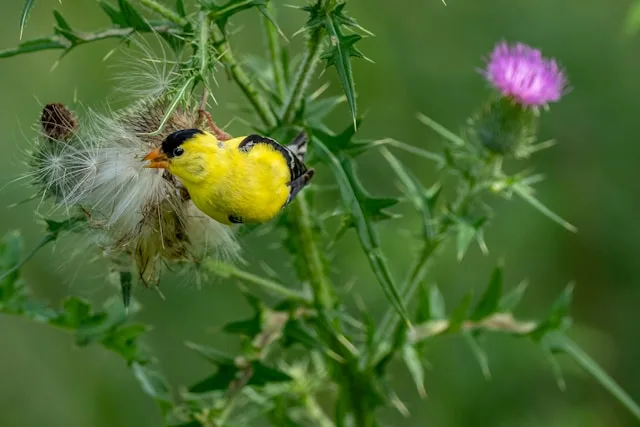
The goldfinch is one of the strictest granivores (seed-eaters) in the North American bird world. Seeds make up over 99% of its adult diet, with a distinct preference for the composite family of plants (Asteraceae), which includes thistle, dandelion, sunflower, and aster. This dietary choice is so critical that it dictates one of the most unusual aspects of their entire life cycle: their late breeding season.
The goldfinch's specialized, conical bill is perfectly adapted for husking small, fibrous seeds. They are highly acrobatic feeders, often clinging upside-down to seed heads or stems to reach the seeds, a feat few other birds can manage.
This reliance on seeds extends to their young. Unlike most songbirds, which feed their fast-growing nestlings protein-rich insects, goldfinches feed their chicks an almost exclusively regurgitated seed paste. This high-fat, high-carbohydrate, but low-protein diet is the key to their unique nesting schedule.
The Late Bloomers: Nesting and Reproduction

The American Goldfinch is the latest-nesting songbird in North America, with breeding activity typically not beginning until late June or July and extending into September. This delay is a direct adaptation to ensure that the timing of hatching coincides with the peak availability of ripened thistle and milkweed seeds, which also provide the soft, fibrous thistle down used as a primary material for the nest lining.
The female alone constructs the nest, a marvel of avian engineering. It is a tightly woven, deep cup of plant fibers, roots, and spider silk, often lined with thistle down. The nest is so compact and well-built that it is an old natural history anecdote that it can hold water. She usually places it in a deciduous shrub or sapling, often between 10 and 30 feet above the ground.
She lays a clutch of two to seven pale bluish-white eggs, which she incubates alone for about 12–14 days, with the male dutifully bringing her food. Once the young hatch, the female feeds them regurgitated seeds brought by the male. As the chicks mature, the male gradually takes over the majority of the feeding, often attending to the fledglings for several weeks after they leave the nest.
The goldfinch's seed-only diet makes their nest virtually "cowbird-proof." While the parasitic Brown-headed Cowbird will occasionally lay an egg in a goldfinch nest, the cowbird chick inevitably dies within a few days because it cannot survive on the low-protein, seed-only diet provided by its goldfinch hosts.
Conservation Status and Human Interaction
The American Goldfinch is an abundant species, with an estimated global population in the tens of millions. Its status is currently listed as Least Concern on the IUCN Red List. Paradoxically, human activity has largely benefited the goldfinch. Deforestation and agricultural practices have created the open, weedy, early-successional habitats where thistles and other seed-bearing plants flourish.
In addition, the goldfinch is a regular and enthusiastic visitor to backyard bird feeders, especially those offering nyjer (thistle) seed or sunflower chips. This human-provided food source, especially in winter, helps to bolster their survival rates and allows bird lovers to enjoy their lively presence year-round.
Despite its current stability, the goldfinch is not entirely without threats. Like all birds, it faces risks from pesticide use (which can contaminate seeds), collisions with windows, and predation by domestic cats. However, its adaptability, broad range, and specialized diet have allowed it to thrive in the modern landscape. The American Goldfinch remains a perennial favorite, its cheerful, golden flash bringing a touch of summer vibrancy to even the bleakest winter day.
