
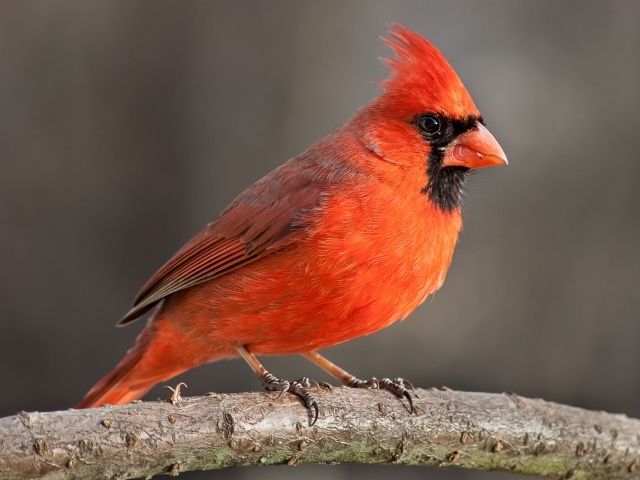
The sight of a male Northern Cardinal—a flash of brilliant crimson against a winter landscape, or a vibrant streak across a summer lawn—is one of the most iconic and uplifting experiences in North American birdwatching. Known scientifically as Cardinalis cardinalis, this species is not just a beautiful spectacle, but a master of adaptation, a devoted mate, and a constant, vocal presence in the eastern and central regions of the continent. Unlike many migratory songbirds, the cardinal remains in its territory year-round, making it a familiar and beloved fixture of backyards and woodlands alike.
Visual Identity: The Study in Scarlet and Fawn
The Northern Cardinal is a mid-sized songbird, typically measuring between 8 and 9 inches in length with a wingspan of up to 12 inches, putting it slightly smaller than a common American Robin. Its most defining physical trait, beyond the color, is the prominent, peaked crest that can be dramatically raised when the bird is alert or agitated, or flattened against the head when it is relaxed or resting. Both sexes possess a stout, cone-shaped, and powerful bill, perfectly adapted for cracking seeds; this bill is a bright coral-red or orange-red color, providing a striking counterpoint to the facial plumage.

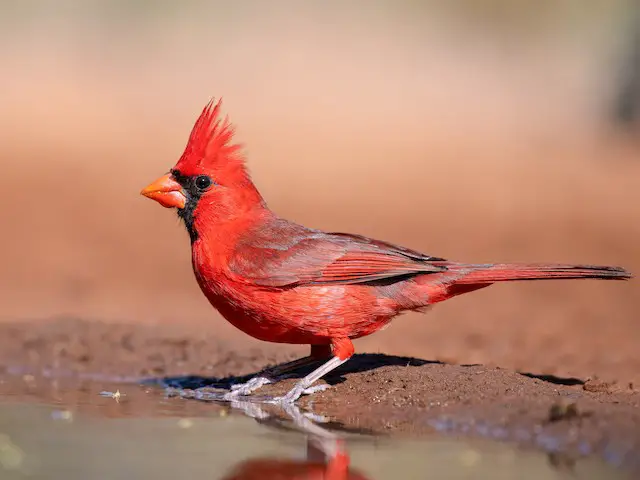
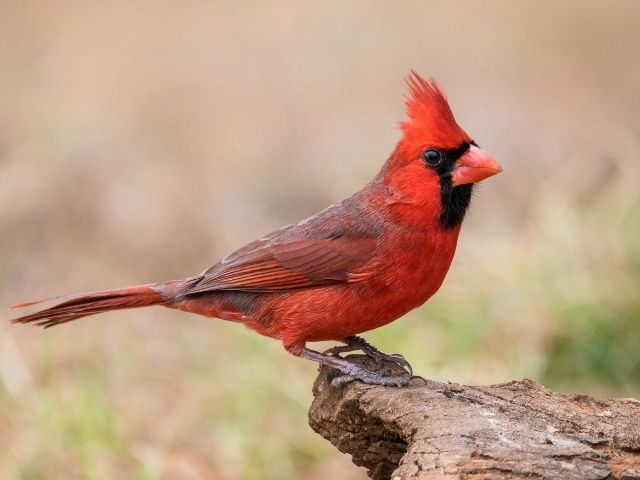
The species exhibits remarkable sexual dimorphism, meaning the male and female look distinctly different. The male is the famous "redbird." He is a brilliant, dazzling crimson from crest to tail, deepening to a more muted reddish-brown on the wings and back. His face is accented by a sharp, contrasting black mask that surrounds his bill and eyes, extending down onto the upper chest. This intensity of color serves a clear purpose: attracting a mate and proclaiming his health and dominance to rivals.
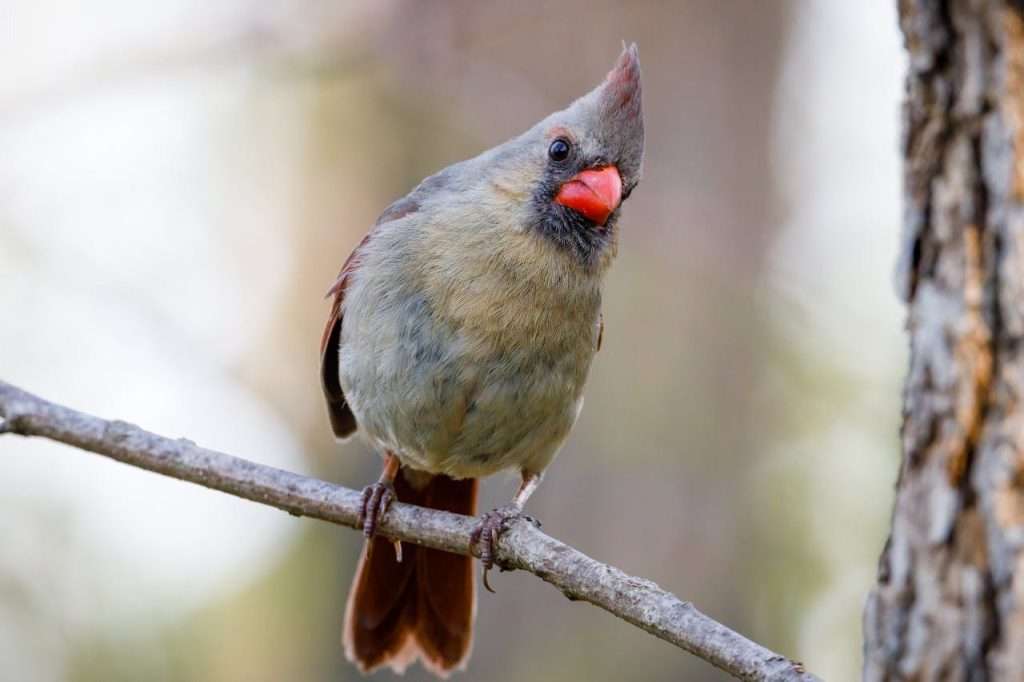
The female, conversely, wears a subdued but equally elegant palette. Her body is predominantly a fawn or grayish-brown, providing excellent camouflage while nesting. However, she is not without color; she displays warm reddish tinges on her crest, wings, and tail feathers, offering subtle flashes of her mate’s brilliance. Her face mask is present, but less defined and typically grayish-black. This differential coloring is crucial for the survival of the species, as the female’s camouflage protects her and her clutch from predators during the vulnerable incubation period.
The male’s striking scarlet plumage is a direct result of his diet. The red color is derived from carotenoid pigments found in the seeds and fruits he consumes, such as wild grapes and dogwood berries. These carotenoids are metabolized and deposited into the developing feathers during the molting process. A male’s brightness is thus an honest advertisement of his foraging success and overall health—the richer the red, the more attractive he is to a prospective female.
Vocal Acrobatics and Territorial Displays
The Northern Cardinal is one of the few species of North American songbirds in which both the male and the female sing. While the male sings to establish and vigorously defend his nesting territory against other males, the female's song has a unique function: communication with her mate, particularly from the nest. When sitting on eggs, the female will sing softly to signal the male to bring her food. Mated pairs often sing duets, an act believed to reinforce their bond. Their vocalizations are characterized by clear, loud, whistling phrases, which can vary regionally but are often transcribed as "cheer, cheer, cheer, what, what, what, what," or the distinct "purdy, purdy, purdy" call.
Beyond their beautiful song, cardinals are known for their distinctive alarm call: a sharp, metallic chip note, given when predators are near the nest or when a perceived threat, such as an intruder, is present. During the breeding season, males are fiercely territorial and may engage in aggressive displays, even attacking their own reflections in windows or car mirrors, perceiving the mirrored image as a rival male vying for territory.
Ecology, Diet, and Foraging Habits
As granivores (seed-eaters), the Northern Cardinal’s diet consists primarily of seeds, grains, and wild fruits, which make up nearly 90% of their adult food intake. Their heavy, powerful bill is a specialized tool for cracking the hard shells of various seeds, including sunflower seeds (a particular favorite at bird feeders), buckwheat, corn, and those from grasses and sedges.
However, cardinals are omnivores and readily supplement their diet with insects and snails, especially during the spring and summer. More importantly, while adult cardinals primarily consume plant matter, the rapidly growing nestlings require a protein-rich diet, and thus the parents feed their young almost exclusively on invertebrates, including beetles, crickets, caterpillars, and spiders.

The cardinal is a habitual ground-forager, typically hopping through low shrubs, bushes, or on the ground beneath feeders. Due to their preference for thickets and dense cover, they are often observed feeding on platforms or large hopper feeders rather than clinging to thin perches like smaller birds. By eating a wide array of seeds and fruits, cardinals play a significant, if unintentional, role in seed dispersal across their habitat.
The Intricacies of Courtship and Nesting
The reproductive life of the Northern Cardinal is characterized by a strong, enduring bond. Cardinals are largely monogamous, with pairs often remaining together year-round and sometimes mating for successive breeding seasons or even for life.
The courtship process is one of the most heartwarming displays in the avian world, centered on a ritual called mate-feeding. The male finds a seed or berry and approaches the female, gently presenting the food to her beak-to-beak, mimicking a kiss. This act serves not only to strengthen the pair bond but also to demonstrate the male's prowess as a provider, assuring the female that he will be capable of feeding her while she is incubating and later, helping to feed the young.
Nesting typically begins in early spring, often yielding two to three broods per season. The female is the primary architect of the nest, which is an open, cup-shaped structure built using four distinct layers: coarse outer twigs, followed by a mat of leaves, then lined with pliable grapevine bark, rootlets, and fine grass. She prefers to hide the nest in dense, protective foliage—shrubs, vine tangles, or low saplings—usually placed between 3 and 10 feet above the ground, making the camouflaged female essential to the nest's survival.
She typically lays between two and five grayish-white or greenish-white eggs speckled with brown. The female performs most of the incubation, which lasts about 11 to 13 days, while the male diligently brings her food. Once the young hatch, both parents share the duty of feeding the nestlings insects. The young are altricial—hatched naked and helpless—and will fledge, or leave the nest, about 7 to 13 days after hatching. The male often takes primary responsibility for feeding the fledglings while the female prepares the nest for the next brood.
Habitat and a Thriving Population

The ancestral habitat of the Northern Cardinal was the dense shrubbery and edges of forests, but this adaptable bird has flourished in the wake of human settlement. Today, they are abundant in parks, suburban backyards, cultivated lands, and overgrown fields—anywhere that provides the dense, protective cover necessary for nesting and roosting, combined with access to ground-level foraging.
The cardinal is a rare example of a native species that has significantly expanded its range over the last century, moving northward into New England and southeastern Canada and westward across the Great Plains. Experts attribute this expansion primarily to the rise of bird-friendly suburban landscaping, which provides ideal shrub cover, and the widespread use of bird feeders, which ensures a consistent, high-energy food source during harsh northern winters. Consequently, the cardinal's population is stable and increasing, earning it a "Least Concern" status from conservation organizations.
Symbolism and Cultural Significance
The name "Cardinal" itself is a nod to the bird's resemblance to the brilliant red robes worn by the cardinals of the Roman Catholic Church. This vibrant hue, especially pronounced against a snowy white backdrop, has ingrained the bird into the cultural fabric of North America, particularly as a symbol of the winter holiday season.
Culturally, the Northern Cardinal holds an elevated status: it is the official state bird of a remarkable seven U.S. states (Illinois, Indiana, Kentucky, North Carolina, Ohio, Virginia, and West Virginia), the most of any single species. Spiritually, the cardinal is often viewed as a messenger of vitality, passion, and good fortune. In many folk beliefs, the appearance of a cardinal is taken as a sign or message from a loved one who has passed away, solidifying its place as a cherished symbol of hope and remembrance throughout the year.
The Northern Cardinal is an enduring symbol of resilience and devotion. Its striking colors, melodious song, and steadfast presence offer a welcome assurance of life and warmth, making it arguably the most recognized and beloved avian resident across its expansive range.
