
Montana, the "Big Sky Country," is a realm defined by immense, sweeping landscapes where the horizon seems to stretch into eternity. Far from being uniform, this vastness encompasses a rich mosaic of habitats, from towering Rocky Mountain peaks to arid sagebrush plains. For the birder, this geographical diversity translates into a spectacular avian journey, with the state's grasslands, wetlands, and the raptors that patrol them forming the cornerstone of the experience.
The Enduring Majesty of the Grasslands
Eastern Montana is the heart of the state’s prairie ecosystem, part of the immense Northern Great Plains. These native mixed-grass and short-grass prairies, largely untouched by the plow, represent a vital stronghold for species whose populations have plummeted elsewhere. Birding here is an exercise in patience and keen observation, often focusing on the subtle beauty and intricate songs of the "little brown birds" (LBBs) of the prairie.
Key grassland specialties include the Sprague's Pipit and the Chestnut-collared Longspur, both known for their breathtaking "skylarking" display flights, where they ascend high above the grass to deliver their intricate songs before parachuting back down. The endangered Ferruginous Hawk also finds one of its best remaining breeding grounds here, often nesting on isolated rock outcroppings or man-made structures near its prey colonies of prairie dogs and ground squirrels.

Further highlights include the Long-billed Curlew, whose plaintive, bubbling calls define the spring air, and the quirky Burrowing Owl, which famously makes its home in abandoned prairie dog burrows. Visiting the Northern Great Plains is not just about ticking off species; it's about connecting with one of North America's most threatened and ecologically critical landscapes.
Wetlands: Oases on the Prairie
In a semi-arid landscape like the Montana prairie, water is life, and the state’s numerous wetlands—from the vast National Wildlife Refuges (NWRs) to countless prairie potholes—act as critical oases. These areas become a frenzy of activity during the breeding season and provide indispensable rest stops along the major flyways.
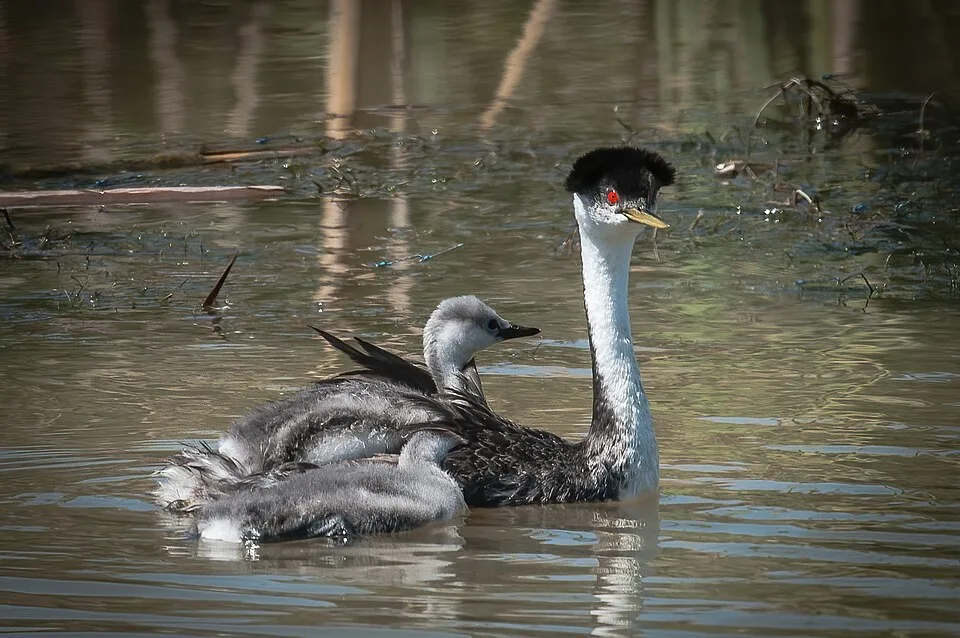
Hotspots like Bowdoin National Wildlife Refuge and Benton Lake NWR are essential to the spectacle. Here, the shallow waters host immense colonies of American White Pelicans and a dizzying array of nesting waterfowl. Birders can expect to find brightly-colored Cinnamon Teal, the striking Canvasback, and various grebes, including the beautiful Western Grebe performing its dramatic, synchronized courtship dance on the water.
Shorebirds are also a major draw. The contrast of brilliant white and deep black defines the Black-necked Stilt, while the American Avocet uses its elegantly up-curved bill to sweep the shallows. These wetlands, often surrounded by short-grass prairie, demonstrate Montana's unique ability to merge two distinct biomes, creating rich and complex birding opportunities.

The Skies Belong to the Raptors
No birding profile of Montana is complete without celebrating its magnificent birds of prey. The state’s immense, open airspace and diverse topography create prime habitat for over 30 raptor species.
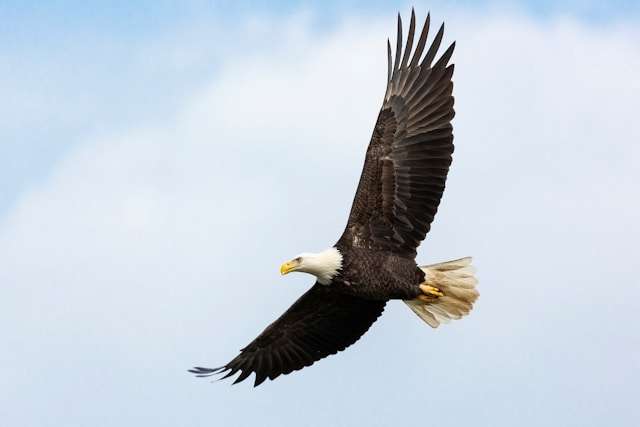
Eagles reign supreme. The Bald Eagle is a common sight near major waterways like the Missouri and Clark Fork Rivers, especially in winter when they congregate to hunt fish. The even more widespread Golden Eagle, a true symbol of the West, is found soaring over the mountains and vast plains, patrolling for large prey.
Montana’s prairies are a buteo stronghold. The Red-tailed Hawk, arguably the state's most common raptor, is seen perched ubiquitously on fenceposts, but it is the annual migration that offers the grandest spectacle. Sites along the Rocky Mountain Front, particularly near Roger's Pass, form a famous "raptor highway" where thousands of raptors, including Golden Eagles and Swainson’s Hawks, funnel south using thermal air currents during the fall.
The Swainson's Hawk is a characteristic summer breeder of the grasslands, migrating an astonishing distance each year to winter in Argentina. Along with the Northern Harrier, seen gracefully flying low over the marshes and fields with its wings held in a distinct V-shape, these species dominate the daylight hunt over the open country. For those who brave the cold, winter brings the majestic, Arctic-breeding Rough-legged Hawk and the occasional ghostly white Snowy Owl to the southern plains.

Montana’s wide-open skies truly allow the birder to appreciate these aerial predators in their element. The state offers an unparalleled chance to witness the intimate relationship between habitat and avian life, where the vast grasslands and life-giving wetlands sustain the majestic raptors soaring high above the Big Sky.
