
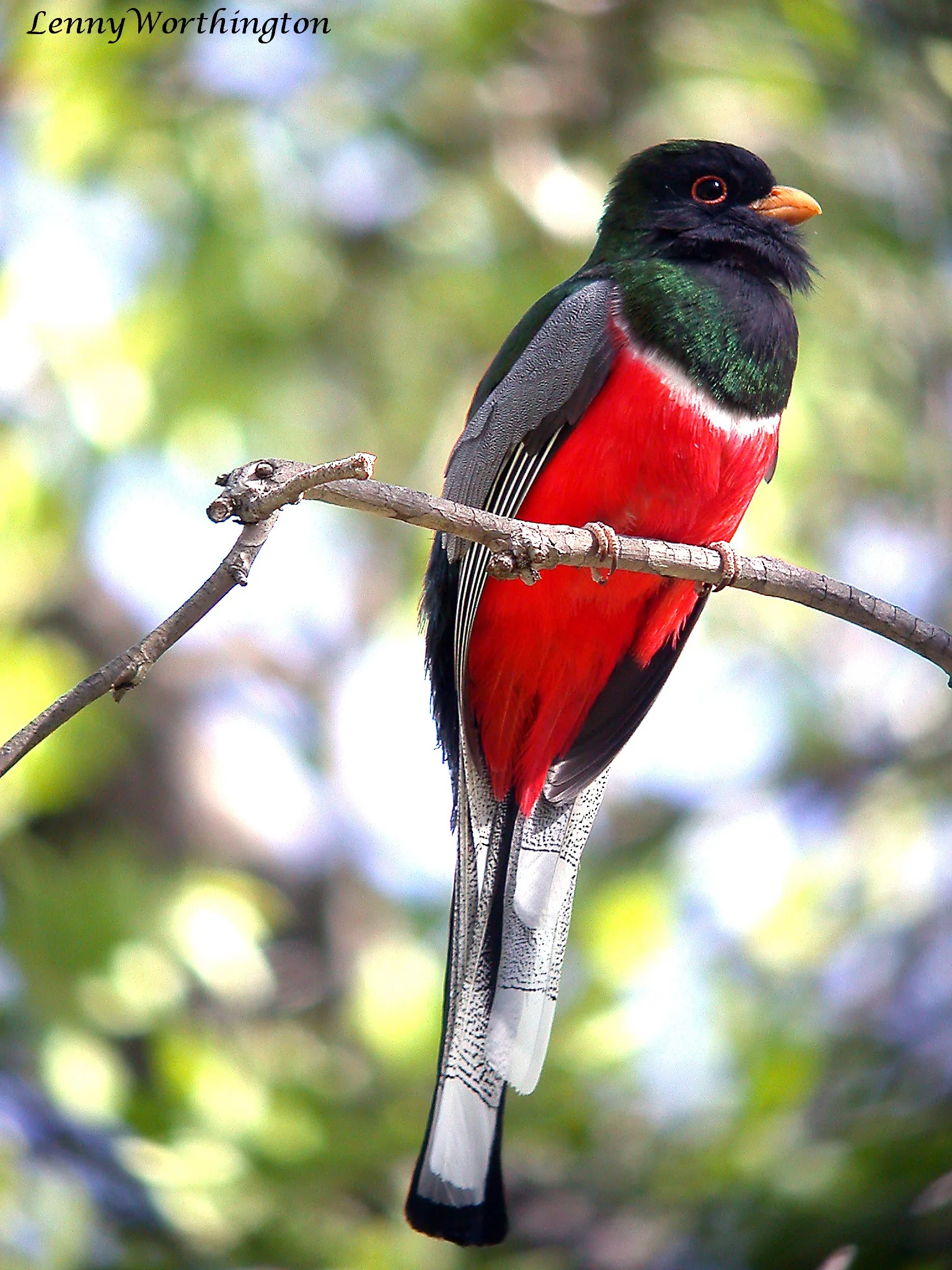
Arizona, often envisioned as a land of arid desert and towering saguaros, holds a surprising ecological secret in its southeastern corner: the Sky Islands. These isolated mountain ranges—ecological 'islands' surrounded by a 'sea' of lower elevation desert—harbor unique ecosystems that share more in common with Mexico’s Sierra Madre Occidental than with the rest of the American West. It is here, nestled in the riparian canyons of the Santa Rita, Huachuca, and Chiricahua Mountains, that birders seek one of North America's most visually stunning and sought-after avian residents: the Elegant Trogon (Trogon elegans).
For many, spotting the Elegant Trogon is the highlight of an Arizona birding pilgrimage. Its presence epitomizes the dramatic biodiversity of the region, drawing birders from around the globe, particularly to the famed hotspots of Patagonia-Sonoita Creek Preserve and Madera Canyon.
The Jewel of the Sky Islands: Understanding the Trogon
The Elegant Trogon, previously known as the Coppery-tailed Trogon, is a medium-sized bird belonging to the Trogon family (Trogonidae), a group of brilliantly colored birds found primarily in the tropics. Its vibrant plumage and distinctive behavior set it apart from nearly all other North American birds.
Identification and Plumage
The male Elegant Trogon is undeniably spectacular. He exhibits a metallic green back and chest, a clean white chest band, and a contrasting rosy-red belly. His most distinctive features are his large, dark eye, framed by a delicate white arc behind it, and his long, squared-off tail, which is coppery-bronze on the upper side and patterned with black and white beneath.

The female is much less flamboyant but equally beautiful, featuring a duller, earthy gray-brown head and back, and a more subdued red on the belly. Both sexes share a thick, pale yellow bill that hints at their fruit-eating habits.
Behavior and Ecology
Trogons are primarily sally-gleaners, meaning they sit motionless on a perch until they spot flying insects or ripe fruit, at which point they launch themselves out, grab the item, and return to the same or a nearby perch. They have a characteristic upright posture and tend to remain stationary for long periods, often allowing patient birders excellent views.
Unlike many tropical birds that are constantly moving, the Trogon's stillness can make it difficult to locate, requiring observers to first listen for its unique call.
The Call: The Key to Discovery
The most reliable way to find an Elegant Trogon is to listen for the male’s unmistakable territorial call: a series of low-pitched, deep, resonant notes that sound like "co-ah, co-ah, co-ah," often repeated rhythmically. This mournful, throaty call carries well through the quiet canyons and riparian woodlands, serving as a beacon for searching birders.
The Trogon’s Range: Why Arizona?

The Elegant Trogon is primarily a resident of Mexico and Central America, only reaching the southern U.S. at the very northern tip of its range. Arizona’s Sky Islands provide the essential, highly specialized habitat the bird requires.
Habitat Requirements
Trogons require riparian woodland—forests growing immediately adjacent to rivers or permanent streams—characterized by tall, mature trees such as sycamores, cottonwoods, and various oaks. This habitat provides several necessities:
Moisture and Coolness: The proximity to water creates a cooler, more humid microclimate that buffers the birds from the extreme desert heat.
Food Supply: The streams support a rich insect life, and the mature trees provide a steady supply of fruit and cover.
Nesting Sites: Trogons are cavity nesters, relying on existing natural hollows or old nest holes excavated by large woodpeckers (like the Acorn Woodpecker) in mature trees, particularly the large, often hollowed-out Arizona Sycamore.
Arizona's populations are considered summer residents, arriving from Mexico in April and May to breed, and generally departing southward in late September or early October.

Premier Trogon Hotspots
Two areas in southeastern Arizona are legendary among birders for their consistent, reliable Trogon sightings, both located in the Santa Rita Mountains.
1. Madera Canyon (Santa Rita Mountains)
Perhaps the most famous Trogon location, Madera Canyon is a classic Sky Island canyon located just south of Tucson. The canyon rises dramatically in elevation, offering diverse habitats, but the key Trogon habitat is along the main creek bed.
Location: The area around the Santa Rita Lodge and the Whitehouse Canyon Trailhead is the most frequent sighting zone. The large Arizona Sycamores along the permanent creek are often riddled with nesting cavities and provide high perches for calling males.
Strategy: Birders often start at dawn, walking the trails slowly and listening intently for the distinctive co-ah call echoing through the canyon. The abundance of water also attracts other southwestern specialties, including Painted Redstarts, Sulphur-bellied Flycatchers, and several species of hummingbirds.
2. Patagonia-Sonoita Creek Preserve
Located further east, near the small town of Patagonia, this Nature Conservancy preserve protects one of the last remaining extensive cottonwood-willow riparian forests in Arizona. This habitat is vital for many migratory species, including the Trogon.
Location: The trail system follows the lush Sonoita Creek, which has a year-round flow. The dense canopy here provides shade and cover, making it feel distinctly unlike the nearby open grasslands.
Strategy: While the Trogon is less reliable here than in Madera, the preserve is celebrated for its incredible variety of other specialty birds, including the Thick-billed Kingbird and Gray Hawk, ensuring a rewarding birding experience regardless of the Trogon's cooperation. The preserve also offers excellent opportunities for observing the Trogon during the migration periods.
The Challenge of Conservation
The fate of the Elegant Trogon in the United States is inextricably linked to the protection of its fragile riparian habitat. These areas constitute less than 1% of the land area in Arizona but support over 80% of the state's vertebrate species.
Water Scarcity: Riparian areas are heavily impacted by human water use, including pumping for agriculture and development, which can lower the water table and dry up the crucial streams that maintain the mature sycamore forests.
Climate Change: Increased frequency and intensity of drought pose a direct threat to the Trogon’s primary food sources (insects and fruit) and the overall health of its nesting trees.
The effort to see the Elegant Trogon is a powerful reminder that the most beautiful, iconic species often rely on the most vulnerable habitats. By visiting and supporting preserves like those in Madera Canyon and Patagonia, birders contribute directly to the conservation of these Sky Islands—a conservation effort that is essential if the resonant co-ah call is to continue defining the spring and summer soundtrack of southeastern Arizona.
