
When we think of swans, our minds often drift to fairy tales, Tchaikovsky’s Swan Lake, or the manicured ponds of European estates. But here in the United States, swans are much more than just symbols of royalty or romance. They are some of the heaviest, hardiest, and most striking migratory birds on the continent.
From the frozen tundra of Alaska to the sun-drenched parks of Hawaii, the story of the American swan is one of near-extinction, triumphant recovery, and the occasional case of mistaken identity. Whether you are a dedicated birder or a weekend hiker, understanding these "heavyweights of the sky" adds a layer of wonder to any lakeside visit.
1. The Trumpeter Swan: The Comeback King

The Trumpeter Swan (Cygnus buccinator) is the undisputed heavyweight champion of North American waterfowl. Boasting a wingspan that can exceed seven feet and weighing up to 30 pounds, it is the largest bird native to North America.
In the early 20th century, the Trumpeter was on the brink of vanishing forever. Hunted for their skin (used for powder puffs) and their feathers (highly prized for pens), their population plummeted to fewer than 70 known individuals in the wild by the 1930s. Thanks to aggressive conservation efforts and the Migratory Bird Treaty Act, they have staged a legendary comeback.

Where to see them: Today, they are a common sight in Alaska (where the majority of the population breeds), as well as the Pacific Northwest, the Rockies, and the Upper Midwest.
The Sound: True to their name, they don't hiss or honk like geese; they emit a deep, resonant "oh-OH" that sounds remarkably like a French horn.
Identification: Look for a completely black bill that forms a "V" shape with the forehead. Unlike other species, Trumpeters rarely have yellow markings near their eyes.
2. The Tundra Swan: The Long-Distance Voyager
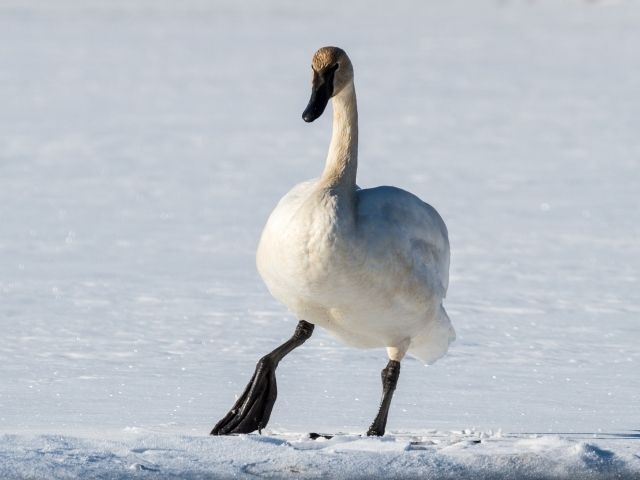
If the Trumpeter is the "giant," the Tundra Swan (Cygnus columbianus) is the "traveler." Formerly known as the Whistling Swan, these birds are slightly smaller and more streamlined than their Trumpeter cousins.
Tundra Swans are the ultimate North American nomads. They breed in the remote Arctic wilderness of Alaska and northern Canada during the summer.
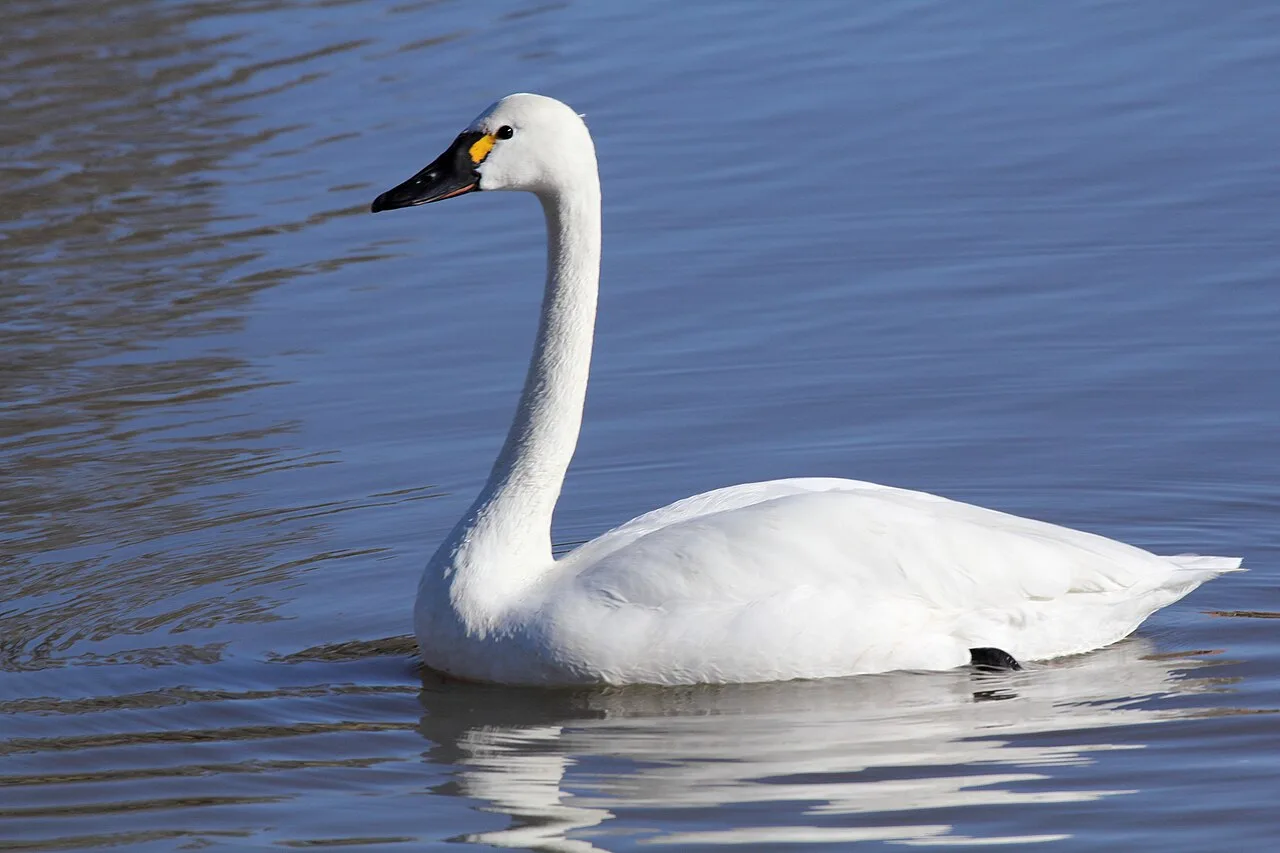
As winter approaches, they embark on an epic transcontinental journey, splitting into two distinct groups:
The Eastern Population: Wintering along the Atlantic coast, particularly in the Chesapeake Bay and North Carolina.
The Western Population: Wintering in California’s Central Valley and the Pacific Northwest.
Identification: Tundra Swans usually have a small, distinctive yellow spot (a "lore") on the black skin just in front of the eye. Their bills are slightly more concave than the straight-sloped bill of the Trumpeter.
Behavior: They are highly social and are often seen in massive flocks, sometimes numbering in the thousands, creating a white blanket over flooded agricultural fields.
3. The Mute Swan: The Beautiful Intruder

If you see a swan in a suburban park in the Northeast or the Great Lakes region, there is a high probability it is a Mute Swan (Cygnus olor). With its classic "S" curved neck and orange bill, it is the quintessential image of a swan—but there’s a catch: it isn’t native.
Imported from Europe in the late 1800s to decorate estates and city parks, Mute Swans escaped and established wild populations. While beautiful, they are considered an invasive species in many states. They are notoriously territorial and aggressive, often driving away native waterfowl and destroying aquatic vegetation that other species depend on for food.

Identification: Look for the bright orange bill with a prominent black knob at the base. Unlike our native swans, which hold their necks straight, Mute Swans almost always hold their necks in a graceful curve.
4. Hawaii’s Accidental Tourists
You might not associate "Aloha" with swans, but Hawaii has its own unique relationship with these birds. Hawaii has no native swan species; however, it is a famous spot for "vagrants."
Occasionally, a Tundra Swan or even a Whooper Swan (from Asia) will get blown off course during migration and end up in the Hawaiian Islands. These "accidental tourists" usually find refuge in the Hanalei National Wildlife Refuge on Kauai or the Kealia Pond on Maui.
Additionally, because of Hawaii’s tropical climate, some private botanical gardens and resorts have introduced Black Swans (native to Australia) and Mute Swans. While they aren't part of the natural ecosystem, they have become a staple of the islands' luxury landscapes.

5. Identifying the "Big Three" at a Glance
Identifying swans can be tricky, especially since they are often seen at a distance. Use this quick reference guide:
| Feature | Trumpeter Swan | Tundra Swan | Mute Swan |
| Bill Color | Solid Black | Black (usually w/ yellow spot) | Orange with Black Knob |
| Neck Shape | Straight (like a "1") | Straight | Curved (like an "S") |
| Voice | Deep, Trumpet-like | High-pitched, Whooping | Mostly silent (Hisses) |
| Status | Native (Recovering) | Native (Stable) | Invasive |
6. The Siberian Visitor: Whooper Swans
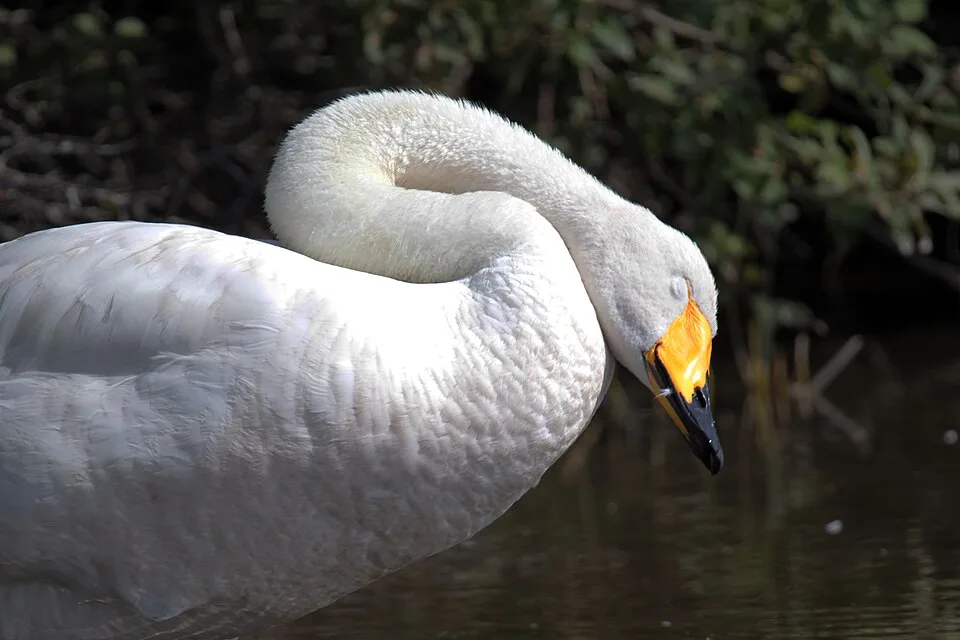
The Whooper Swan is the national bird of Finland and a staple of European and Asian wetlands. However, they are also a regular, albeit rare, presence in Western Alaska.
The Aleutian Islands: Small numbers of Whooper Swans from Siberia cross the Bering Sea to winter in the Aleutian and Pribilof Islands. In these remote, windswept volcanic outposts, they are a consistent winter resident.
The "Vagrant" Trail: Occasionally, individual Whoopers get caught in strong weather systems and are blown further east or south. Birders have recorded rare sightings along the Pacific Coast, reaching as far down as Washington, Oregon, and even California.
The Atlantic Side: On the opposite coast, Whooper Swans from the Icelandic population sometimes appear in the Northeast, with sightings in Newfoundland and New England. These are often "bonafide" wild vagrants following the same migration paths as Tundra Swans.

Identification: The "Yellow-Wedge" Bill
At a distance, a Whooper Swan looks almost identical to a Trumpeter or Tundra Swan. However, if you are lucky enough to get them in your scope, the bill tells the whole story.
The Yellow Wedge: Unlike the Tundra Swan, which usually has just a small yellow "lore" (spot) near the eye, the Whooper Swan has an extensive patch of bright yellow that covers at least half of the bill. This yellow patch forms a sharp, forward-pointing wedge or "V" shape.
Size and Stance: They are massive—roughly the same size as a Trumpeter Swan. They carry their necks very straight and erect, lacking the "S" curve of the Mute Swan.
The Voice: Their call is a loud, ringing "whoop-whoop," more musical and high-pitched than the deep, brassy honk of the Trumpeter.
7. Why Swans Matter
Swans are more than just pretty faces. They are vital indicators of wetland health. Because they rely on submerged aquatic vegetation, a thriving swan population usually means the water is clean and the ecosystem is balanced.
In the US, we are currently at a crossroads. While the Trumpeter Swan's recovery is a triumph of the Endangered Species Act philosophy, habitat loss due to urban development and lead poisoning (from ingesting spent lead shot or fishing sinkers) remains a threat.
How You Can Help
Skip the Bread: Feeding swans bread is harmful; it lacks nutrition and can cause "Angel Wing," a deformity that prevents them from flying.
Use Non-Lead Tackle: Switching to tungsten or steel fishing weights prevents lead poisoning in diving birds.
Give Them Space: During nesting season, swans are incredibly protective. Keeping a distance of at least 100 feet ensures the parents don't abandon their cygnets (babies).
Whether you’re watching a Tundra Swan glide over a frozen Alaskan pond or spotting a Trumpeter in the mist of a Yellowstone morning, these birds connect us to the wilder parts of our continent. They remind us that with a little bit of protection and a lot of respect, even the most fragile species can return to reclaim their throne on the water.
