
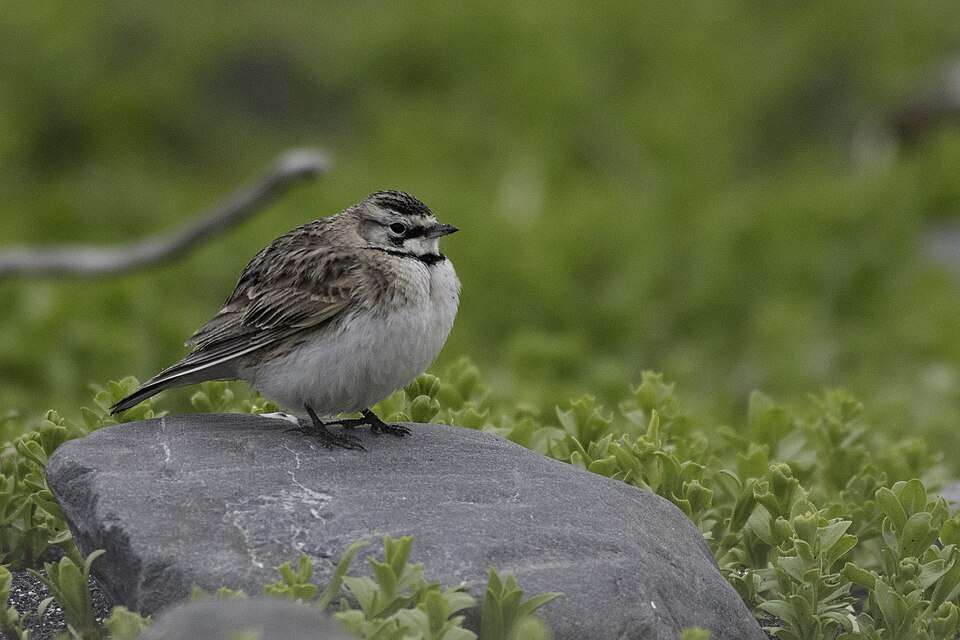
The American Birding Association (ABA) has officially crowned the Horned Lark (Eremophila alpestris) as the 2026 Bird of the Year. This annual tradition, which began in 2011, serves as a rallying point for birders across North America, focusing conservation efforts and community attention on a single species that embodies a specific narrative of the American landscape.
For 2026, the selection of the Horned Lark represents a celebration of the "hidden beauty" of our open spaces—from high-altitude tundras to the sweeping Great Plains.
The 2026 Competition: Why the Horned Lark?

Each year, the ABA selects a species based on its conservation status, its visibility to the birding community, and its ability to represent a broader ecological story. The competition for 2026 was particularly stiff, with several fan favorites in the running:
The Northern Pintail: Representing the beauty of our wetlands.
The Black-capped Chickadee: A nod to the beloved backyard residents of the North.
The Burrowing Owl: Highlighting the fragility of grassland ecosystems.
The Horned Lark ultimately took the title because it is a "global citizen." It is the only member of the true lark family (Alaudidae) native to North America, and it serves as a critical indicator of the health of our grasslands and agricultural fields—habitats that are currently under significant environmental pressure.
Describing the "Little Devil" of the Plains

To the casual observer, a Horned Lark on the ground might look like a simple, dusty brown bird. However, once you view them through binoculars, they are revealed to be one of the most intricately patterned songbirds on the continent.
The "Horns": The most iconic feature is the pair of tiny, black feather tufts on the head. These aren't actual horns, of course, but specialized feathers that the male can erect during courtship or territorial displays, giving him a slightly "devilish" or feline appearance.
The Mask: They sport a striking yellow or white face with a bold black mask and a broad black "bib" across the chest.
The Behavior: These are strictly ground-dwelling birds. You will rarely, if ever, see a Horned Lark in a tree. They walk or run across the ground (they don't hop) and are famous for their high-altitude flight songs, where the male soars so high he becomes a mere speck in the sky while singing a tinkling, melodic song.
Why the "Shore Lark"?

If you pick up a birding guide in the United Kingdom or look through historical records from the 19th century, you won't find many references to a "Horned Lark." Instead, you will see it listed as the Shore Lark.
The reason for this name is primarily geographic and historical:
1. The European Perspective
In Europe and the British Isles, the Horned Lark is primarily a winter visitor. During the cold months, these birds migrate away from their Arctic breeding grounds and settle along the coastal salt marshes, shingle beaches, and dunes. Because Europeans almost exclusively saw them along the coastline, "Shore Lark" became the logical descriptive name.
2. Regional Habitat Differences
While North American populations are found across the vast interior plains and deserts (making "Horned Lark" a more accurate general name), the populations in Northern Europe are much more restricted to coastal habitats during the time humans were most likely to observe them.
3. Taxonomic History
"Shore Lark" was the official English name used by early ornithologists who followed the British naming conventions. As American ornithology branched off and recognized that the vast majority of the continent's population lived thousands of miles from the nearest shore, the name was officially changed in U.S. checklists to reflect its most distinctive physical feature—the "horns."
Observing the 2026 Winner
As we celebrate the Horned Lark this year, keep an eye out for them in "waste places"—fallow farm fields, short-grass prairies, and even the edges of airport runways. They are a reminder that even in the most seemingly barren landscapes, there is a master of the air wearing a tiny crown of feathers, waiting to be noticed.
