

Rhode Island, often called the “Ocean State,” holds a disproportionate amount of ecological importance within its small borders, particularly along the coast of Narragansett Bay. This vast estuary, which carves deeply into the state, is fringed by a vital network of salt marshes, tidal creeks, and mudflats. These habitats form the backbone of the coastal ecosystem, providing essential services from flood control to water purification. For ornithologists and bird lovers, however, their greatest value lies in serving as a critical refuge, nursery, and refueling station for a specialized group of avian residents: the coastal marsh birds.
These species are uniquely adapted to the harsh, dynamic environment of the salt marsh, tolerating daily cycles of inundation, highly saline water, and soft, nutrient-rich substrates. The health of the Narragansett Bay marsh system is directly linked to the survival of these specialized birds, many of which are experiencing population declines elsewhere.
The Sparrows of the Saltmarsh
No group of birds is more intrinsically tied to the Atlantic saltmarsh than the sparrows. Two species, in particular, exemplify the specialization required to survive here.
The Saltmarsh Sparrow (Ammodramus caudacutus)
Perhaps the most iconic and imperiled resident of the Bay’s marshes is the Saltmarsh Sparrow. This small, secretive bird is considered a species of high conservation concern due to its remarkably tight association with this single habitat.

The Saltmarsh Sparrow's life cycle is a race against the tide. Unlike most sparrows, which build nests in upland vegetation, this species constructs its nest on the ground, woven into the dense Spartina (saltmarsh grass) just above the high-tide line. They are genetically programmed to breed within a tight window—around the two-week lunar cycle between exceptionally high spring tides. A rising sea level is devastating to the species because a single, slightly higher-than-average tide can destroy an entire brood, submerging nests and drowning chicks. Its population is projected to decline steeply, putting it at high risk of extinction within this century if sea level rise continues unchecked. Narragansett Bay marshes, such as those near Sachuest Point and the Great Swamp, provide some of the last remaining high-quality breeding grounds.
The Seaside Sparrow (Ammodramus maritimus)
The Seaside Sparrow shares the Saltmarsh Sparrow's habitat but occupies slightly different niches. It is a larger, darker bird, often seen perched slightly higher on marsh vegetation, singing its buzzy, unmelodious song.

While the Seaside Sparrow also nests in the saltmarsh, its nests are typically placed higher and are more robustly woven into the taller Spartina alterniflora. This slight difference in nesting preference makes it slightly less vulnerable to the highest tides than its close cousin. Seaside Sparrows are less secretive and can often be seen skulking along the edges of tidal creeks, foraging for small insects and invertebrates. They are a good indicator of a healthy, mature marsh ecosystem within the Bay area.
Waders and Shorebirds of the Tidal Zone
While sparrows inhabit the interior of the marsh, other species patrol the mudflats and shallow tidal creeks that dissect the system, utilizing the daily exposure of invertebrate-rich substrate.
The Clapper Rail (Rallus crepitans)
A master of stealth, the Clapper Rail is a medium-sized, brownish-gray bird that uses its laterally compressed body to slip through the dense marsh grass with ease. They are more often heard than seen, betraying their presence with loud, clattering calls that echo across the marsh—hence the name "Clapper."
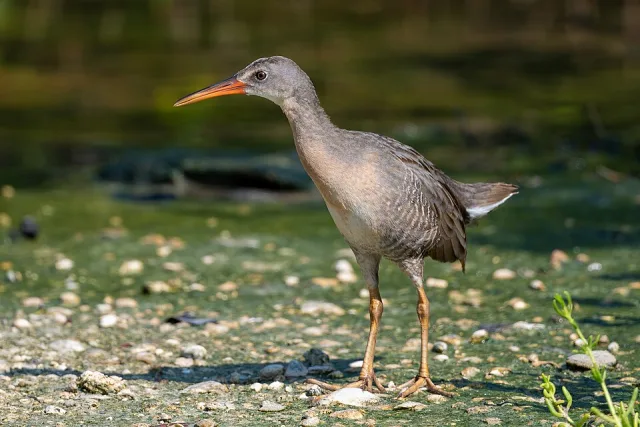
Clapper Rails are year-round residents in the Bay's southern marshes, where they forage heavily for fiddler crabs, shrimp, and small fish. They are true coastal specialists, their behavior and diet being completely reliant on the tidal flows that bring food and cover. Their nests are substantial platforms built right into the marsh grass, often with a slight canopy woven over the top for concealment.
The Willet (Tringa semipalmata)
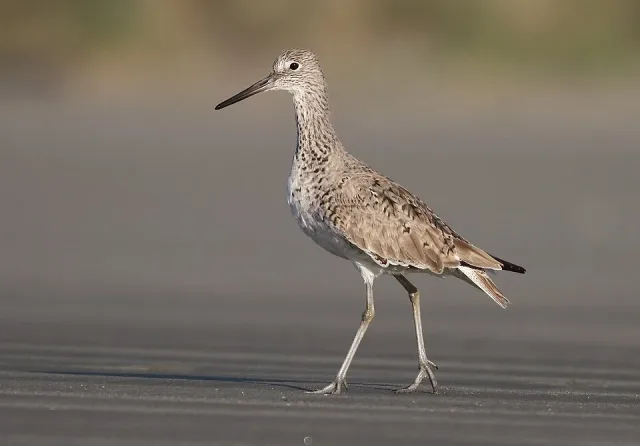
The Willet is a large, gray shorebird that is a common sight in the marshes and on the adjacent mudflats during the breeding season. Although rather drab while standing, the Willet becomes instantly recognizable in flight, flashing a broad, striking black-and-white wing pattern that serves as a highly visible warning or territorial display.
Willet populations in Rhode Island belong to the eastern subspecies, which primarily breeds in coastal marshes. They are highly territorial, aggressively defending their nesting areas on the high marsh by performing noisy, aerial displays. Their long bills are perfectly suited for probing the soft mud and sand of the Bay’s flats for worms and small crustaceans.
Conservation Challenges in a Small State
The marshes of Narragansett Bay, despite their protected status in many areas, face immense pressure. The integrity of the habitat for these specialized birds is threatened by several factors:
Coastal Development: The pressure to develop waterfront properties fragments the remaining marsh areas.
Invasive Species: The common reed, Phragmites australis, out-competes the native Spartina grasses, creating monocultures that are ecologically poor for nesting sparrows and rails.
Climate Change: Sea level rise is the single greatest threat. As the water level rises, the marsh platform is submerged more frequently. If the marsh cannot migrate upland (a process known as "marsh migration") because it is blocked by human infrastructure (like seawalls and roads, known as coastal squeeze), the habitat will eventually drown, taking the Saltmarsh Sparrow and other low-nesting specialists with it.
The long-term conservation of Rhode Island's coastal marsh birds relies on aggressive management of invasive species and, most critically, preserving and expanding the upland buffer zones necessary to allow the marshes of Narragansett Bay to migrate inland as the sea rises.
