

To the uninitiated, bird migration is an autumn event tied to crisp October air and turning leaves. But experienced North American birders know a secret: southbound migration begins in mid-to-late summer.
Long before autumn foliage peaks, millions of songbirds are quietly departing their northern breeding grounds. Shorebirds kick off the push as early as July, and by August, wood-warblers (Parulidae) begin trickling through suburban parks, backyard woodlots, and coastal thickets across the United States.
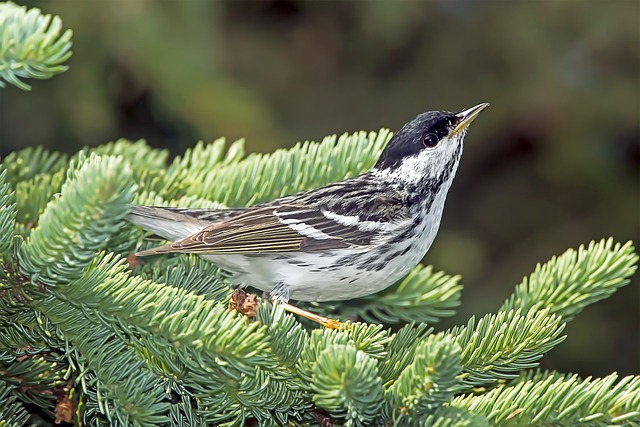
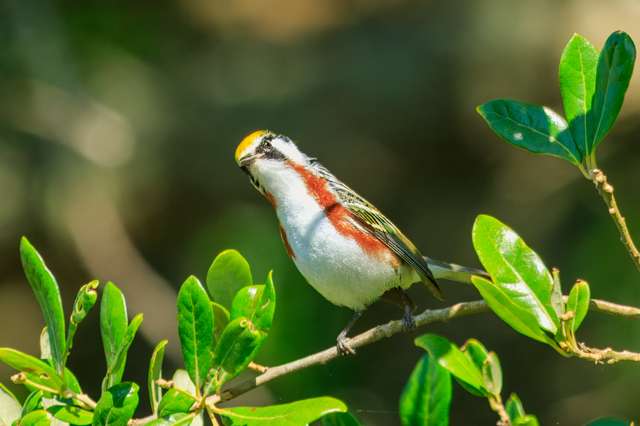
However, fall birding presents a notorious identification challenge. The brilliant breeding plumages of spring—the striking black cap of a male Blackpoll Warbler or the jet-black throat of a Chestnut-sided Warbler—have vanished. In their place are muted olive-greens, dull yellows, and streaky grays, worn by molting adults and newly fledged juveniles. Welcome to the season of the "Confusing Fall Warbler."
Why Do Birds Migrate So Early?
It seems counterintuitive to see birds moving south when summer heat is still in full swing, but several biological drivers trigger this early departure:
Post-Breeding Adult Movement: Once nesting duties conclude, adult birds have no structural reason to remain on their breeding territory. Male shorebirds often leave first, followed by females, leaving juveniles to fatten up and navigate south on their own weeks later.
Food Availability & Molt Schedules: Insect populations in northern boreal forests peak early. Many species begin moving south to track emerging fruit crops or relocate to resource-rich stopover sites where they can undergo a complete or partial prealternate molt.
Flight Route Distance: Neotropical migrants traveling to South America—like the Blackpoll Warbler, which completes a nonstop 3-day flight over the Atlantic Ocean—require weeks of intense feeding (hyperphagia) to double their body weight before embarking.
Decoding "Confusing Fall Warblers"
When brilliant spring color vanishes, relying solely on plumage patches can lead to frustration. To identify fall warblers accurately, shift your focus to structural field marks, diagnostic tail patterns, and forage behaviors.
1. Look at Feet & Legs (The Blackpoll vs. Bay-breasted Puzzle)
In spring, the Blackpoll Warbler and Bay-breasted Warbler look entirely distinct. In fall, both turn a similar dull greenish-yellow with faint breast streaking and double wing bars.
Blackpoll Warbler: Look closely at the feet. Fall Blackpolls retain distinct yellowish to orange feet that contrast with darker legs.
Bay-breasted Warbler: Displays dark feet, often accompanied by a subtle buff or warm bay wash on the flanks.
2. Check Structural Indicators & Undertail Coverts
Chestnut-sided Warbler: In autumn, this species loses its bold chestnut flanks and black facial mask, adopting a bright lime-green back and a smooth gray face. The key field mark is its pure white underparts and bright white eye-ring, combined with a habitual "tail-cocked" posture similar to a wren.
Yellow-rumped Warbler ("Myrtle"): One of the last warblers to pass through, maintaining its bright yellow rump patch ("butter butt"), white throat, and yellow flank spots even when the rest of its body turns drab brown-gray.

3. Diagnostic Identification Breakdown
| Species | Fall Plumage Appearance | Key Diagnostic Field Mark | Behavioral Trait |
| Blackpoll Warbler | Dull yellow-green, light breast streaks | Yellowish/orange feet, white undertail coverts | Forages deliberately in outer canopy |
| Bay-breasted Warbler | Unstreaked olive-green, buffy flanks | Blackish/dark feet, warm-washed flanks | Sluggish mover in mid-canopy |
| Chestnut-sided Warbler | Lime-green back, unstreaked gray belly | Bold white eye-ring, white wing bars | Cocks tail upward while feeding |
| Pine Warbler | Variable dull olive-yellow, thick bill | Unstreaked back, heavy dark legs, white wing bars | Creeps on heavy pine branches |
| Magnolia Warbler | Yellow breast with faint streaking necklace | Distinctive tail pattern: white band across mid-tail with black tip | Active gleaner on underside of leaves |
Field Techniques for Finding Early Migrants
Because early migrants don't sing with the same frequency or intensity as they do in May, finding them requires adjusting your field tactics.
Follow the "Chickadee Express"
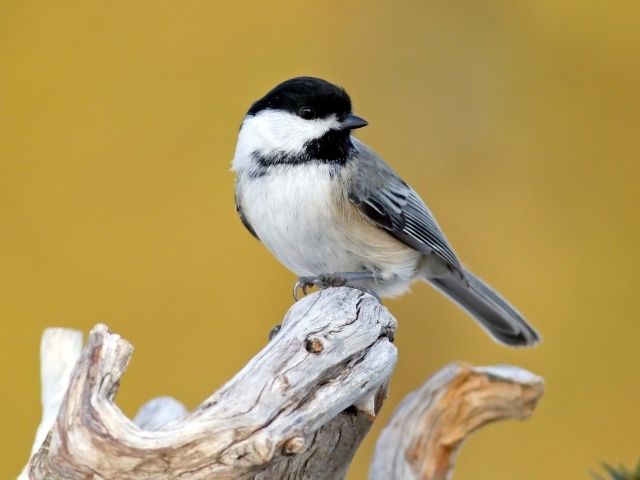
Local resident species—such as Black-capped or Carolina Chickadees, Tufted Titmice, and White-breasted Nuthatches—form the core of mixed-species foraging flocks. Migrating warblers, vireos, and flycatchers listen for the contact calls of these resident birds to locate safe foraging areas and alarm calls for predators. When birding in late summer, if you find a noisy group of chickadees, stop and scan the surrounding leaves carefully; migrating warblers are likely tagging along.
Target Native Berry Patches
While warblers are primarily insectivorous, many species switch to a diet rich in lipids and carbohydrates during fall migration to build energy reserves. Focus your optics on native fruiting shrubs and trees, including:
Dogwood (Cornus spp.)
Elderberry (Sambucus spp.)
Spicebush (Lindera benzoin)
Serviceberry / Juneberry (Amelanchier spp.)
Practice "Pishing" & Soft Call Note Identification
When feeding in dense late-summer foliage, warblers use short, high-pitched contact calls ("chip" notes) to stay in touch with the flock. Learning to recognize basic chip notes—or using soft "pishing" sounds to draw inquisitive birds out from deep cover—will drastically increase your detection rate on overcast August mornings.
Gear Up for the Season Ahead
Early fall migration offers some of the most rewarding birding of the year. The weather is pleasant, parks are quiet, and every flock of chickadees holds the potential for a rare north-woods migrant making its way south. Pack your optics, study foot colors and tail patterns, and hit your local trails to catch the front edge of North America's great autumn journey.
