

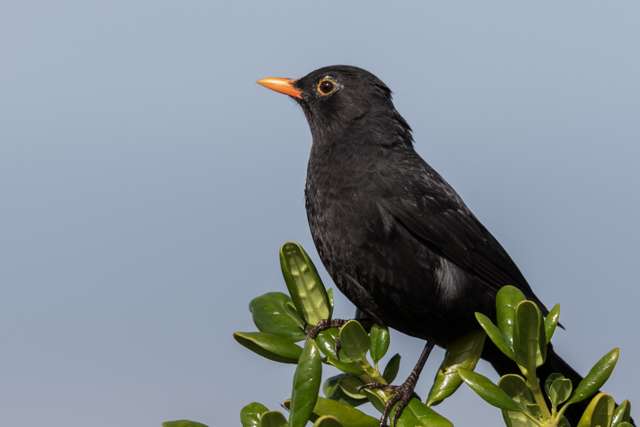
The name "Blackbird" often causes confusion among bird enthusiasts, particularly those traveling between continents. In Europe, the common term refers to a single species: the Eurasian Blackbird (Turdus merula), a sleek, solid black thrush with a bright yellow bill. However, in the United States and the Americas, the term refers to an entirely different group of birds—the Icterids (family Icteridae).
This North American family is a diverse and colorful assembly that includes true blackbirds, grackles, orioles, cowbirds, and meadowlarks. These birds are not thrushes like their Eurasian namesake; they are structurally, behaviorally, and genetically distinct. The blackbirds of the U.S. are defined by their sharp, conical bills (ideal for probing and seed-eating), their highly social, often enormous flocks, and the males' propensity for dramatic, often iridescent, plumage that goes far beyond simple black.
This article focuses on the key species within the Icteridae family that define the American blackbird experience, from the agricultural pest to the marshland jewel.
The True Blackbirds: Jewels of the Marsh and Field
The birds most commonly associated with the name "blackbird" in the U.S. belong to the Agelaius and Euphagus genera, and they offer some of the most spectacular, yet common, sights in American wetlands.
1. The Red-winged Blackbird (Agelaius phoeniceus)
The Red-winged Blackbird is arguably the most recognizable and widespread blackbird in North America. Its presence is synonymous with spring and the sound of marshlands.
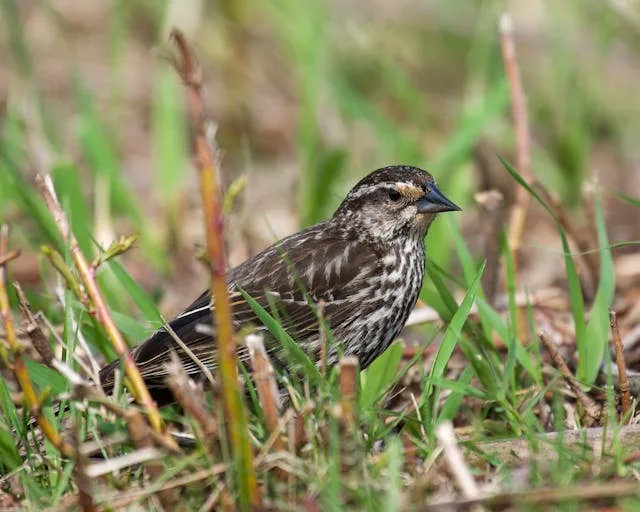
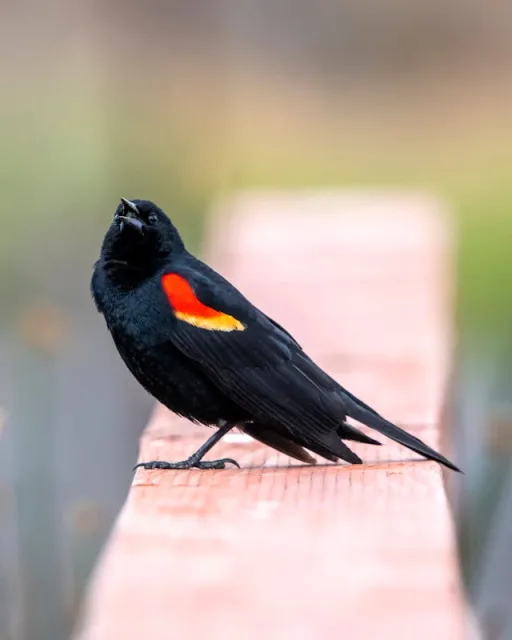
- Appearance: The male is jet black, but his most dazzling feature is the epaulet—a patch of bright scarlet-red feathers outlined in yellow on the bend of each wing. These colors are usually hidden under the scapular feathers but are explosively displayed during territorial disputes and courtship flights. Females, in stark contrast, are cryptically colored, appearing streaky brown, often confused with large sparrows.
- Behavior and Ecology: Red-wings are intensely territorial during the breeding season, with males fiercely defending their patch of reeds or cattails. They are highly polygynous, with a single male often mating with up to a dozen females. In the non-breeding season, they form immense, mixed-species flocks—sometimes numbering in the millions—that move across the countryside to feed on seeds and grain.
- Distribution: Found virtually everywhere in the U.S. near water, swamps, or damp fields. Their distinctive, gurgling “konk-a-reee” song is one of the continent's most familiar spring sounds.
2. The Yellow-headed Blackbird (Xanthocephalus xanthocephalus)
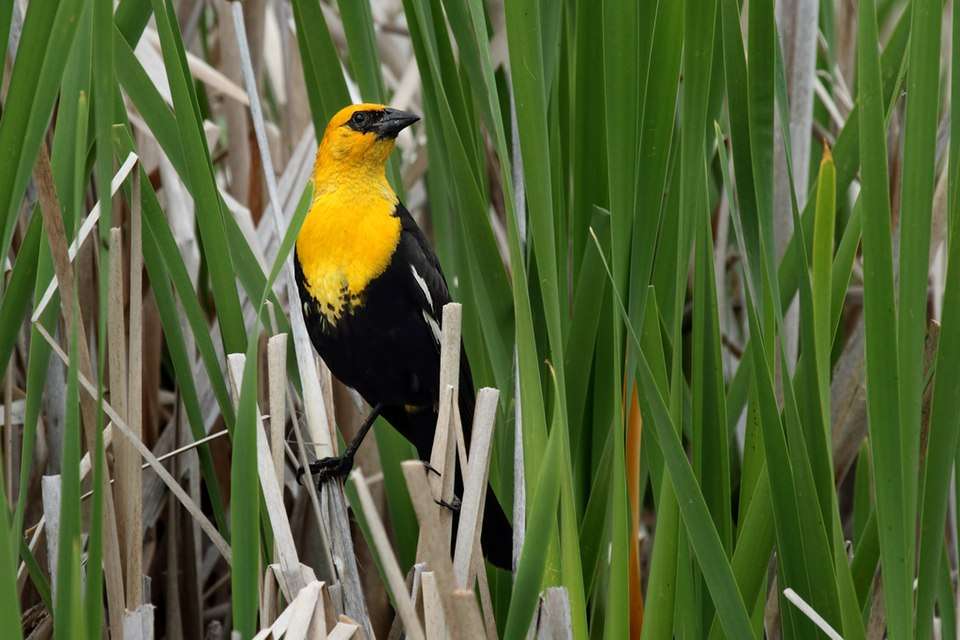
A striking and specialized species, the Yellow-headed Blackbird is primarily found in the western and central states, confined to large, deep freshwater marshes.
- Appearance: The male is a dramatic sight: a black body with a striking yellow head and chest. A large white patch on the wing is visible in flight. The females are less brilliant, with a duller yellow wash on the throat and breast.
- Behavior and Ecology: They are highly specialized marsh birds that breed in dense colonies among cattails. Their song is notoriously harsh and raspy, often described as a strangled sound. They compete intensely with Red-winged Blackbirds, often displacing them from preferred breeding sites due to their aggressive nature.
- Distribution: Breeds from the western Great Lakes westward, migrating south to Mexico and the southwestern U.S. in winter.
3. Brewer's Blackbird (Euphagus cyanocephalus) and Rusty Blackbird (Euphagus carolinus)
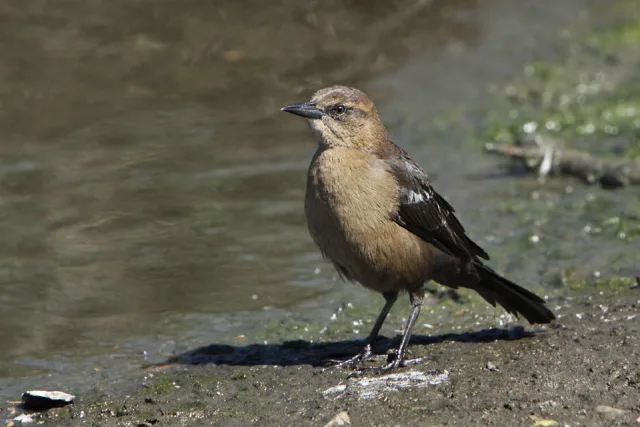
These two species are often grouped together and represent the "glossy" blackbirds.
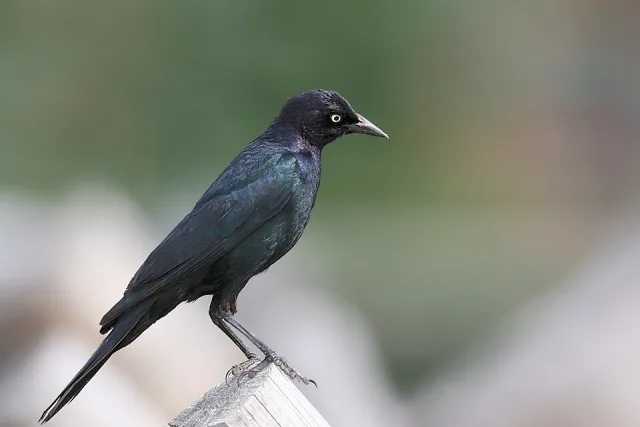
- Brewer's Blackbird: Widespread across the western U.S., the male is a sleek, black bird with an intense, iridescent sheen that shows purple on the head and blue-green on the body. They are common in open areas, often seen foraging on lawns and in parking lots, demonstrating a high tolerance for human activity.

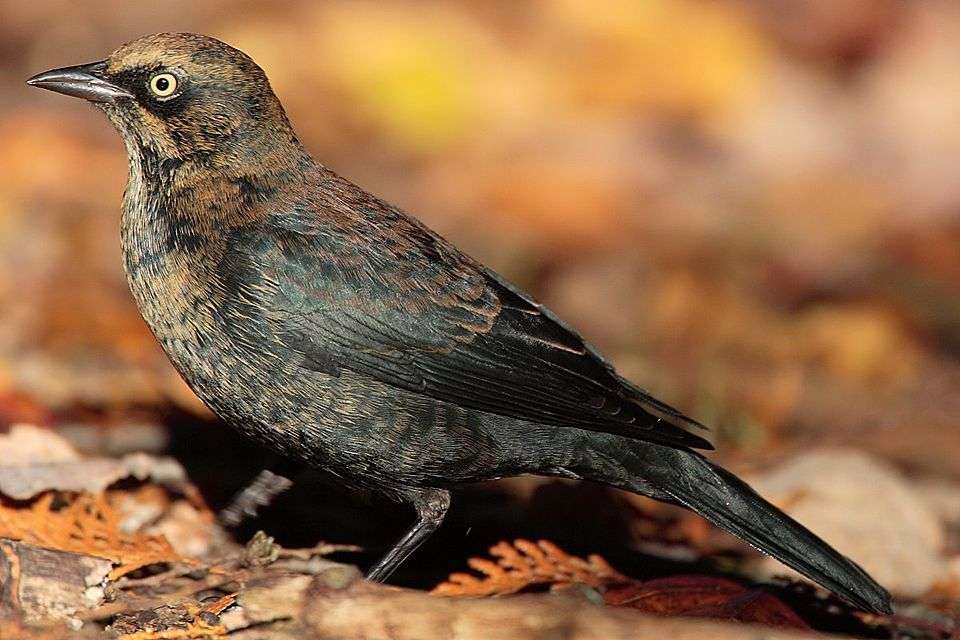
Brewer's Blackbird - Rusty Blackbird: Named for the rusty-brown edges on its black feathers during the winter, giving it a dull, patchy appearance. The male transforms to a glossy, unblemished black in summer. Critically, the Rusty Blackbird is one of the most rapidly declining bird species in North America, with populations plummeting due to habitat loss in its boreal breeding grounds. Birders are urged to report sightings of this vulnerable species.
Rusty Blackbird
The Grackles: Long Tails and Bold Personalities
Grackles are large, long-tailed blackbirds known for their dramatic iridescence and boisterous, often aggressive, social habits.
4. The Common Grackle (Quiscalus quiscula)

The Common Grackle is a familiar fixture of suburban parks, agricultural fields, and city centers across the eastern two-thirds of the U.S.
- Appearance: A large, slender blackbird with a distinct long, keel-shaped tail. The male's head is a stunning spectacle of iridescent purple, blue, and green, contrasting with a bronze-hued body. Their eyes are a piercing, bright yellow.
- Behavior and Ecology: Grackles are highly intelligent and opportunistic feeders, known for their raucous, creaking, unmusical songs. They are notorious for raiding bird feeders and stealing food from smaller birds. They often form communal roosts in towns during winter, creating noisy, large groups that sometimes number in the thousands.
5. The Great-tailed Grackle (Quiscalus mexicanus)
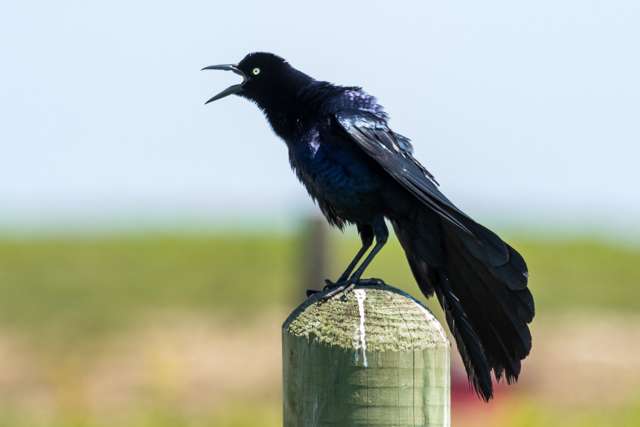
This magnificent, large species has dramatically expanded its range northward and eastward from the Southwest over the last century, thriving in urban and suburban environments.
- Appearance: The male is immense, often exceeding 18 inches in length, with an impossibly long, boat-shaped tail that it holds vertically for display. The plumage is black with a deep, glossy blue-violet iridescence.
- Behavior and Ecology: They are extremely vocal and highly adaptable, dominating bird feeders and displaying an assertive intelligence. Their expansion is one of the most remarkable examples of avian range expansion in recent U.S. history, likely aided by irrigation and urban development.
The Outliers: Cowbirds and Orioles
Two other genera belong to the Icteridae family, though their appearance and behavior differ significantly from the true blackbirds and grackles.
Brown-headed Cowbird (Molothrus ater)
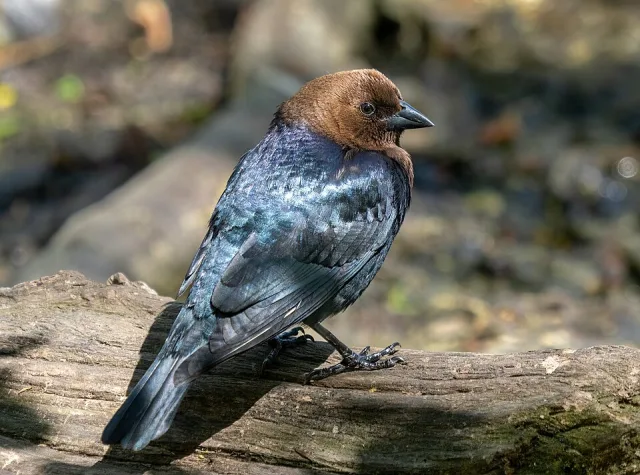
The Brown-headed Cowbird is the odd-one-out among the blackbirds, infamous for its brood parasitism.
- Appearance: The male is a glossy black with a distinct brown head. The female is a uniform, dull gray-brown.
- Behavior and Ecology: Cowbirds do not build nests. The female lays her eggs in the nests of other species (known as "hosts"), often displacing or destroying the host's eggs. The cowbird chick, being larger, often out-competes the host's young for food. This behavior, developed on the Great Plains alongside migrating bison herds, is detrimental to many smaller songbirds, especially endangered species like the Kirtland's Warbler.
- Distribution: Widespread across the entire continental U.S.
The Orioles and Meadowlarks
While not blackbirds, the colorful Orioles (Icterus) and the grassland Meadowlarks (Sturnella) complete the Icterid family portrait in the U.S.
- Orioles: Known for their striking orange and yellow plumage, such as the Baltimore and Bullock's Orioles.
- Meadowlarks: Recognized by their yellow breasts and black V-shaped necklaces, such as the Eastern and Western Meadowlarks, which are beloved for their clear, flute-like songs in open grasslands.
Conclusion: A Family of Distinction
The blackbirds of the USA—the Icterids—are a highly successful, adaptable, and diverse avian family. They represent a distinct evolutionary path from the Eurasian Blackbird, characterized by their striking structural colors, complex social systems (from colossal flocks to brood parasitism), and incredible adaptability to every American habitat, from the arid western plains to the eastern urban centers. Observing this family—from the flash of the Red-wing’s scarlet epaulet to the sheer bulk of the Great-tailed Grackle—is to observe the rich tapestry of American birdlife at its most powerful and dramatic.
