

In the rolling landscapes of south-central Kentucky, there is a sound that transcends the ordinary rustle of leaves or the gentle lap of lake water. It is a haunting, rattling bugle—a primeval cry that feels as though it belongs to another era of Earth’s history. This is the call of the Sandhill Crane, one of North America’s tallest and oldest avian species, and there are few places in the Bluegrass State better suited to witness their grandeur than the Barren River Lake State Resort Park and its surrounding wetlands.
For many Kentuckians, the arrival of these birds is a landmark event. While they are world-famous for their massive congregations along the Platte River in Nebraska, the "Eastern Population" of Sandhill Cranes has found a vital sanctuary in Kentucky’s wetlands. Here, the cranes aren't just passing through; they are part of a delicate ecological dance that has captivated birdwatchers and nature lovers for decades.

A Living Fossil in Our Backyard
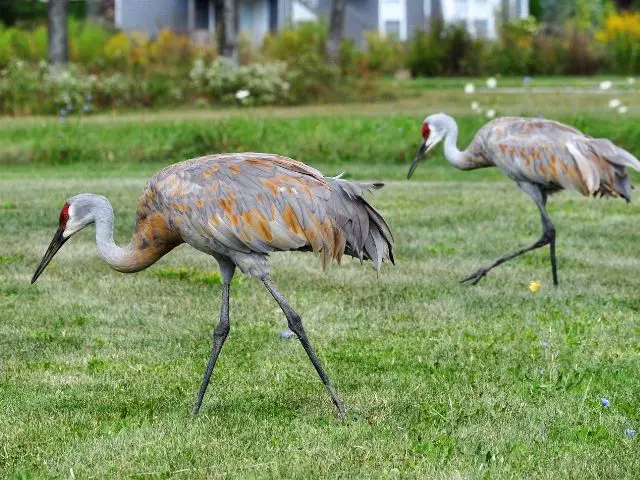
To see a Sandhill Crane is to look back in time. Fossil records of these birds date back over 2.5 million years, making them one of the oldest living bird species on the planet. Standing nearly four feet tall with a wingspan that can reach almost seven feet, they are impossible to miss.
Their plumage is a sophisticated slate gray, often stained with a rusty ochre from the iron-rich mud they probe for food. But their most striking feature is the vibrant crimson patch on their forehead—a crown of bare red skin that stands in sharp contrast to their white cheeks and long, dagger-like bills.

The "Crane Dance"
If you are lucky enough to witness a group of cranes in the wetlands surrounding Barren River, you might catch a "dance." These birds are famous for their elaborate social displays. They stretch their wings, pump their heads, bow, and leap into the air with surprising grace for their size. While these dances are often associated with courtship and mating for life, cranes of all ages dance throughout the year to relieve stress, strengthen social bonds, and simply communicate within the flock.
Why Barren River? The Geography of a Sanctuary
Barren River Lake is a 10,000-acre reservoir that serves as a centerpiece for the region's wildlife. However, it isn't just the open water that attracts the cranes; it’s the mosaic of habitats that surround it.
Sandhill Cranes are "edge" dwellers. They require:
Shallow Wetlands: For roosting at night, where the water protects them from land-based predators like coyotes.
Open Fields: For foraging during the day.
Mudflats: Created when the lake levels are drawn down, providing the perfect "dance floors" and probing grounds for tubers and insects.
The Barren River Lake State Resort Park provides the perfect vantage point for this. The park’s Peninsula Trail and various overlooks allow visitors to scan the horizon without disturbing the birds. The nearby Brigadoon State Nature Preserve also offers a quiet, forested backdrop where the cranes' bugling calls echo with startling clarity.
The Sound of the Wild: The Anatomy of a Bugle

If you can’t see the cranes, you will almost certainly hear them. The Sandhill Crane’s call is unique because of its elongated trachea. Their windpipe coils into their sternum, acting like a French horn to amplify their voice. This allows their rattling "gar-oo-ooo" to be heard from miles away, often long before the birds themselves appear as tiny V-shaped specks in the sky.
"The Sandhill’s call is the voice of the Pleistocene. It is a sound that reminds us that the wilderness is not a place we visit, but a rhythm we once belonged to."
Protecting the Flyway: Conservation in Kentucky
The presence of these birds in Kentucky is a testament to successful conservation. In the early 20th century, Sandhill Cranes were nearly extirpated from the eastern United States due to habitat loss and unregulated hunting. Today, thanks to the protection of wetlands and careful management by the Kentucky Department of Fish and Wildlife Resources, the Eastern Population is thriving.
Conservation efforts at Barren River include:
Water Level Management: Coordinating with the Army Corps of Engineers to maintain mudflats that serve as roosting sites.
Agricultural Partnerships: Encouraging local farmers to leave "waste grain" (corn and winter wheat) in the fields, which provides the high-energy fuel cranes need for their long-distance flights.
Public Education: The annual "Crane Days" at the state park (typically held in early winter) provide guided tours and expert talks to help the public understand the importance of these visitors.

Tips for Your "Crane Expedition"
If you are planning a trip to Barren River to see the cranes, a little preparation goes a long way. These birds are wary and have excellent eyesight.
Bring the "Big Glass": While you can see them with the naked eye, a good pair of binoculars or a spotting scope is essential to see the detail of their red crowns and social interactions.
Keep Your Distance: If the birds stop foraging and all heads go up at once (the "sentinel" position), you are too close. Use your car as a "blind" if you are viewing them near roadside fields; birds are often less spooked by a vehicle than a walking human.
Timing is Everything: The best viewing times are usually dawn and dusk. At sunrise, the flocks take off from their water roosts in a deafening, spectacular "fly-out" to find food. At sunset, they return in smaller groups, parachuting down into the shallows.
Dress in Layers: Kentucky wetlands can be breezy and damp. Even if the sun is out, the wind off the lake can be biting.
Beyond the Birds: A Weekend at Barren River
While the cranes are the stars of the show, the Barren River area offers plenty for the all-around nature enthusiast.
Mammoth Cave National Park: Only about 30-40 minutes away, you can go from the heights of birdwatching to the depths of the world’s longest cave system.
Boating and Fishing: The lake is renowned for its crappie and bass fishing.
The Lodge: The Louie B. Nunn Lodge at the state park offers comfortable rooms and a dining room with massive windows, so you can keep an eye on the lake even while you eat.
A Call to Preserve
The Sandhill Cranes at Barren River are a reminder of the persistence of life. They have survived ice ages and the expansion of the modern world, returning year after year to the same mudflats and marshes. By visiting these areas and supporting Kentucky’s state parks and nature preserves, we ensure that the rattling bugle of the crane remains a permanent part of the American soundtrack.
Next time you find yourself near West Lafayette or Southern Kentucky, take a detour toward the water. Listen for that ancient, rattling cry. When you finally see them—gray ghosts silhouetted against a sunset—you’ll understand why they are so fiercely protected and so deeply loved.
