
Magee Marsh Wildlife Area, situated on the southern shore of Lake Erie in Oak Harbor, Ohio, stands as one of North America’s premier birding destinations. Spanning roughly 2,000 acres of marshland and beach ridge habitat, this wildlife sanctuary serves as a vital refueling stop for migrating songbirds before they cross Lake Erie each spring. What makes Magee Marsh uniquely famous—beyond its staggering avian diversity—is its commitment to accessible infrastructure, allowing birders using wheelchairs, scooters, or other mobility aids to experience close-up wildlife observations.

Accessible Infrastructure Features
The centerpiece of Magee Marsh is its famous 0.7-mile elevated wooden boardwalk. Designed with universal access principles, the trail weaves through a patch of swamp forest, offering a level, step-free birding route.
Smooth Boardwalk Surface: The wooden boardwalk features a continuous flat profile without step transitions or steep inclines, minimizing trip hazards and creating a smooth ride for manual and electric wheelchairs alike.
Wide Passing Bays & Turning Radiuses: The pathway is wide enough to accommodate two passing mobility devices simultaneously, preventing bottlenecks during high-traffic migration events. Spacious cutouts along the route provide dedicated turnarounds and resting spots.
Low-Profile Sightlines: Safety kick-rails along the edges protect wheels from slipping off while maintaining unobstructed, low-angle sightlines, allowing seated observers to scan the understory without barrier obstruction.
Eye-Level Viewing Canopy: Because the boardwalk is elevated above the wet forest floor, birds foraging in the lower mid-story canopy naturally land at chest and eye level relative to a seated observer, eliminating the need to strain upward.
On-Site Parking & Facilities: Located directly at the trailhead, the paved parking lots provide designated van-accessible spaces. Additional accessible amenities—including smooth ramps, wide doorways, and accessible restrooms—are available at the adjacent Sportsmen’s Migratory Bird Center and public restroom stations.
Birding Experience & Key Species
Magee Marsh is widely referred to as the "Warbler Capital of the World," attracting thousands of visitors every spring—particularly during The Biggest Week in American Birding festival in early May. During peak migration, northbound songbirds pile up along the lake's southern shoreline to feed on emerging insects, resulting in exceptionally dense bird concentrations at close range. Over 35 species of warblers have been recorded along the boardwalk alone.
1. Mid-Story & Understory Specialists
These species spend most of their time foraging at chest-to-eye level along the boardwalk, making them ideal targets for close-up viewing:
Yellow Warbler (Setophaga petechia): Extremely common, resident breeders in the marsh. Males are bright lemon-yellow with reddish-brown breast streaks and a sweet, fast song ("sweet-sweet-sweet, I'm so sweet").
Prothonotary Warbler (Protonotaria citrea): A wetland specialist nicknamed the "Golden Swamp Warbler." Males feature brilliant golden-yellow heads and slate-blue wings. They nest directly in tree cavities along the flooded boardwalk sections.
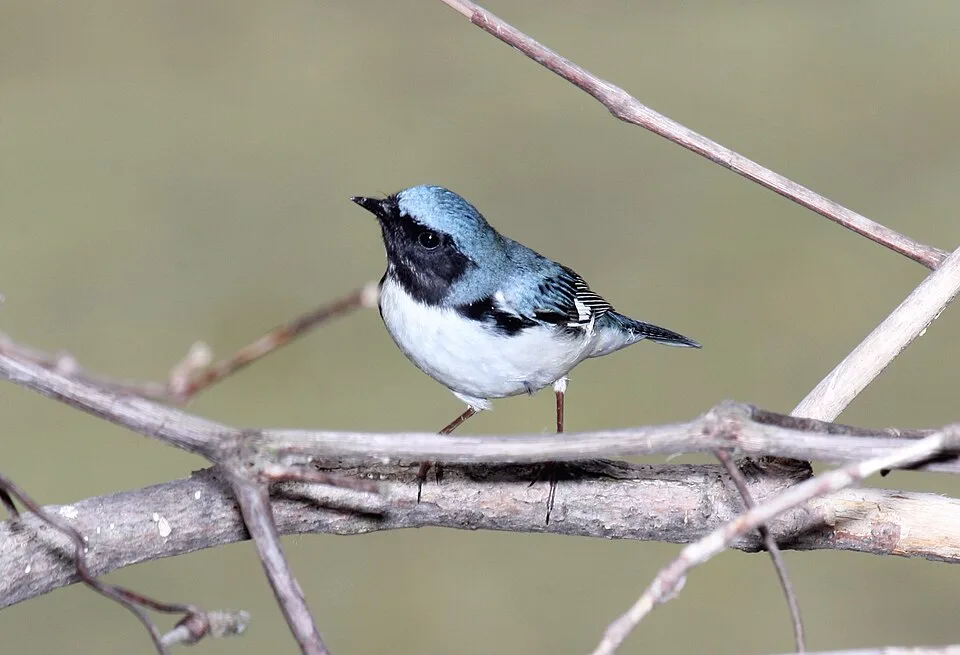
Black-throated Blue Warbler (Setophaga caerulescens): Easily identified by the male’s clean slate-blue back, crisp black face/flanks, white belly, and distinctive white wing square. They tend to stay low in the understory brush.
Chestnut-sided Warbler (Setophaga pensylvanica): Bright and active with a yellow cap, crisp white cheeks, a black eye stripe, and deep chestnut-colored flanks.
Magnolia Warbler (Setophaga magnolia): Featuring a bold black face mask, yellow breast with heavy black streaks, and a distinctive white band across the middle of the underside of the tail.
2. Mid-Canopy & Branch Gleaners
Often seen actively flitting through the middle branches of cottonwoods and willows:
Yellow-rumped Warbler (Setophaga coronata): Usually the earliest warbler to arrive in spring in massive numbers. Easily spotted by their slate-grey and black patterning with bright yellow patches on the crown, flanks, and rump (often called "Butterbutts").
American Redstart (Setophaga ruticilla): Highly energetic "flashing" warbler. Jet-black males display bright orange patches on the wings, tail, and sides, which they fan out to startle insects.
Blackburnian Warbler (Setophaga fusca): Famous for the male's intense, glowing flame-orange throat and face, contrasted against black and white body striping.
Bay-breasted Warbler (Setophaga castanea): A larger warbler sporting a rich chestnut cap, throat, and flanks, with a distinctive creamy-buff patch on the side of the neck.
Cape May Warbler (Setophaga tigrina): Displays tiger-like black streaking across a bright yellow breast, paired with chestnut-orange cheek patches.

3. Trunk & Ground Foragers
Look along fallen logs, wet soil, or up tree trunks along the boardwalk edges:
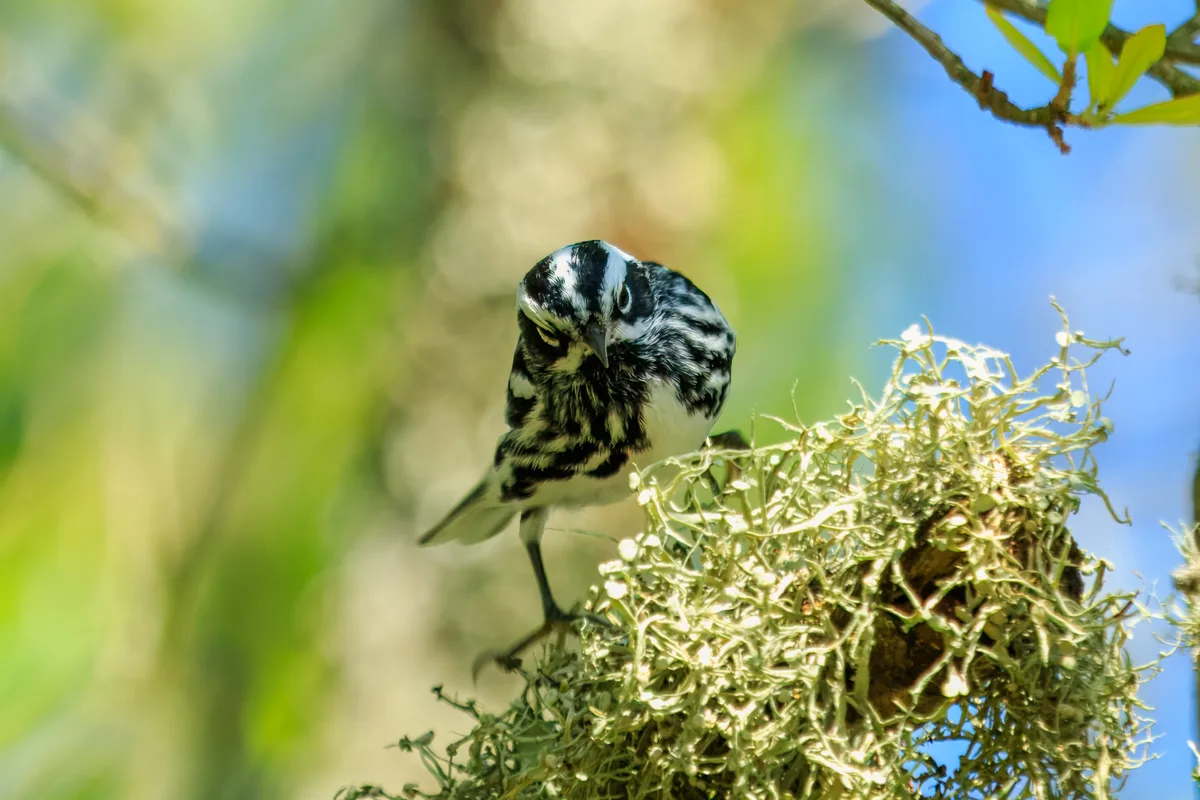
Black-and-white Warbler (Mniotilta varia): Acts more like a nuthatch or creeper, actively spiraling up and down large tree trunks and main branches probing for hidden insects. Boldly striped in black and white.
Palm Warbler (Setophaga palmarum): Recognizable by its rusty cap, yellow underparts, and constant, repetitive tail-wagging while foraging low in brush or along the ground.
Ovenbird (Seiurus aurocapilla): A ground-dwelling warbler that resembles a small thrush, featuring an olive back, heavily spotted white breast, and an orange crown stripe bordered by black.
Northern Waterthrush (Parkesia noveboracensis): Found in damp, flooded spots along the boardwalk. Brown above with a creamy, dark-streaked underside, a prominent pale eyestripe, and a characteristic tail-bobbing motion.
4. High Canopy Foragers
Typically found high in the upper branches, rewarding observers with patience:
Black-throated Green Warbler (Setophaga virens): Shows a bright yellow face, black throat/chest, and an olive-green back, singing a recognizable "zee-zee-zee-zoo-zee" song from the upper foliage.
Northern Parula (Setophaga americana): One of the smallest warblers, boasting a bluish-grey back with a yellow patch, a yellow breast with a reddish-brown chest band, and bold white eye-arcs.
Tennessee Warbler (Leiothlypis peregrina): Plain olive-green with a grey crown and crisp white eyestripe, extremely active in the high canopy picking insects off leaf tips.

Practical Visiting Tips for Accessible Birding
Timing Your Visit: Mid-May brings peak songbird diversity and density. Visiting early in the morning right at dawn provides optimal lighting, lower crowd density on the boardwalk, and high bird activity.
Optics Setup: Due to how close the birds forage relative to the elevated boardwalk, high-magnification spotting scopes are rarely necessary. Close-focusing binoculars (8x or 10x) or wide-angle photography lenses are recommended.
Weather & Surface Care: While the boardwalk is engineered for smooth travel, spring rain can make wooden surfaces damp; anti-slip tires or wheel covers can assist with traction on wet wood.
