
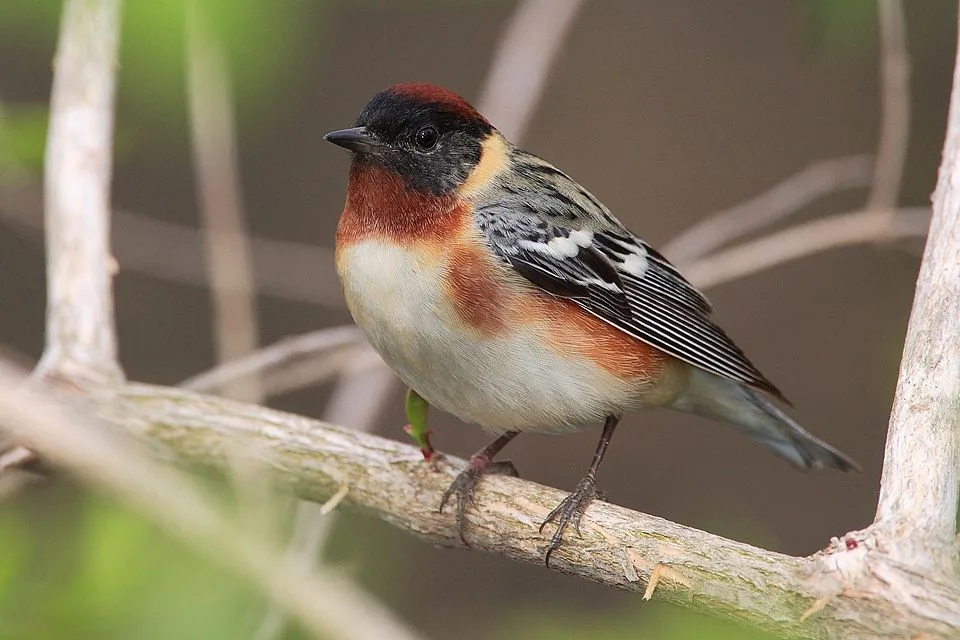
Along the southern shore of Lake Erie, where the flat plains of Ohio meet the expansive water, lies a piece of protected wetland habitat that draws naturalists from across the globe. This is Magee Marsh Wildlife Area, and during a brief, spectacular window in spring, it earns its popular title: "The Warbler Capital of the World."
Magee Marsh and the adjacent Ottawa National Wildlife Refuge Complex are not just local treasures; they form a critical bottleneck in the North American migratory flyway. This ecological phenomenon, driven by geography and weather, transforms this relatively small patch of woods into a vibrant, flashing, and singing spectacle unmatched anywhere else on the continent.
The Geography of Concentration: The Lake Erie Effect
The reason Magee Marsh is so critical is purely geographical. Lake Erie, the shallowest of the Great Lakes, acts as an insurmountable barrier for tiny, neotropical songbirds heading north from their wintering grounds in Central and South America.
As migrants like warblers, vireos, and thrushes cross the Midwest, they aim for the northern side of the lake to continue their journey to the vast breeding grounds of the Canadian Boreal forests. However, when they arrive at the Ohio shore, they encounter the massive body of cold water. These small birds are reluctant, or physically unable, to fly a long distance over the lake, especially after an exhausting flight across the open lands to the south.
Consequently, any available woodland on the southern coast becomes a vital staging ground. Magee Marsh, with its dense willow and cottonwood thickets, its low-lying swamps, and its rich insect life, offers the last, best opportunity to rest and refuel before attempting the final crossing. This is known as the "Lake Erie Funnel Effect," causing an immense concentration of migrating birds in a small area.

The Spring Spectacle: The May Migration
The peak season for the Magee Marsh phenomenon is typically the first three weeks of May. During this period, birders from every state and many countries descend upon the area, often waiting for a "fallout.
A fallout is a sudden, dramatic influx of birds caused by adverse weather conditions. If migrants arrive at the southern edge of Lake Erie late at night and encounter a cold front, strong north winds, or heavy rain, they are forced to drop immediately to the nearest available cover. When this happens at Magee Marsh, the trees can be literally dripping with color.
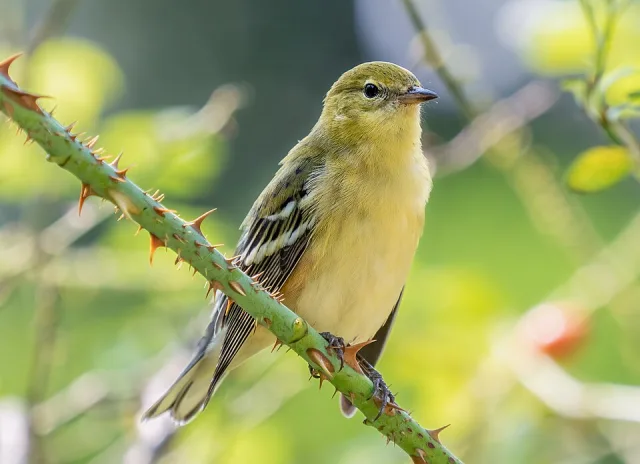
The primary attraction is the immense diversity of wood warblers. Of the nearly 40 species of warblers that occur in the United States, observers at Magee Marsh can reliably see over 30 species in a single season. The density is staggering; a single tree might hold half a dozen species at once, often at eye-level.
Key warbler species seen here include:
Cape May Warbler: Known for its striking chestnut cheek patches.
Blackburnian Warbler: Famous for its flaming orange throat and breast.
Bay-breasted Warbler: Often present in high numbers during heavy migration years.
Kirtland's Warbler (Setophaga kirtlandii): One of the rarest and most sought-after North American songbirds, which occasionally stops at Magee on its way to its extremely restricted breeding grounds in Michigan.
The Famous Boardwalk
The centerpiece of the Magee Marsh experience is its 2,000-foot-long, universally accessible wooden boardwalk.
This structure is a brilliant piece of ecological design. It allows visitors to walk directly into the heart of the swamp forest habitat without disturbing the sensitive wetlands or the foraging birds. Because the warblers are tired and focused on feeding, and because the canopy in these low woods is close to the walkway, birders are often treated to intimate, close-up views of species that usually remain high in the treetops.
The boardwalk experience is more than just bird identification; it is a profound immersion into the energy and beauty of the natural world, shared among thousands of like-minded enthusiasts who travel here annually for this pilgrimage.

Beyond the Warblers: A Broader Ecosystem
While the warblers dominate the headlines, the importance of Magee Marsh and the broader Western Lake Erie Marshes (WLEM) ecosystem extends far beyond the migrant songbirds.
Shorebirds and Waders: The marsh pools and mudflats attract wading birds like Great Egrets and Glossy Ibis, along with various sandpipers and plovers.
Waterfowl: The open marsh areas serve as vital breeding and resting grounds for various ducks and geese, including Wood Ducks and Mallards.
Raptors: The entire complex supports a significant population of bald eagles. Ohio has seen a remarkable recovery of the Bald Eagle (Haliaeetus leucocephalus), and multiple pairs nest within the refuge boundaries, providing constant sightings for visitors.
The success of Magee Marsh is the result of dedicated conservation efforts, demonstrating the power of preserving key stopover habitat. For the tens of thousands of birders who visit each spring, the area is not just a birding hot spot, but a living, pulsating reminder of the incredible journey undertaken by these tiny travelers and the essential role that protected lands play in securing their future.
