
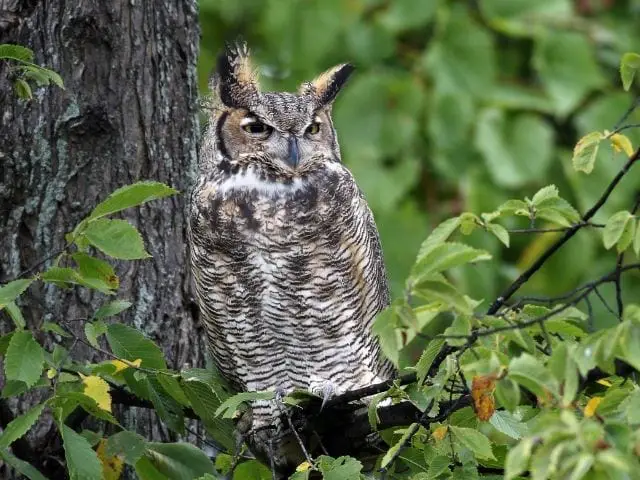
The Great Horned Owl (Bubo virginianus) is one of North America’s most iconic and formidable raptors. With piercing yellow eyes, distinctive feathered ear tufts, and a hooting call that echoes through forests and fields, the Great Horned Owl has long captured the human imagination. Revered by Indigenous cultures, feared by smaller animals, and admired by birders, this nocturnal predator plays a crucial role in the ecosystems it inhabits.
Appearance and Identification
At first glance, the Great Horned Owl appears both majestic and intimidating. Measuring 18 to 25 inches in length and boasting a wingspan of up to 5 feet, it is one of the largest owls in the Americas. Its most recognizable features include its large, forward-facing eyes and the tufts of feathers on its head, which resemble horns—hence the name. These “horns” are not ears, but are thought to aid in camouflage and possibly communication.
The plumage of the Great Horned Owl is mottled with brown, gray, and white, providing excellent camouflage against tree bark and foliage. A white patch on the throat stands out when the bird is hooting, puffing out during vocalizations. Its powerful talons and heavily feathered legs give it a fearsome look that is well-deserved—it can exert a crushing force of over 300 pounds per square inch with its grip.
Range and Habitat
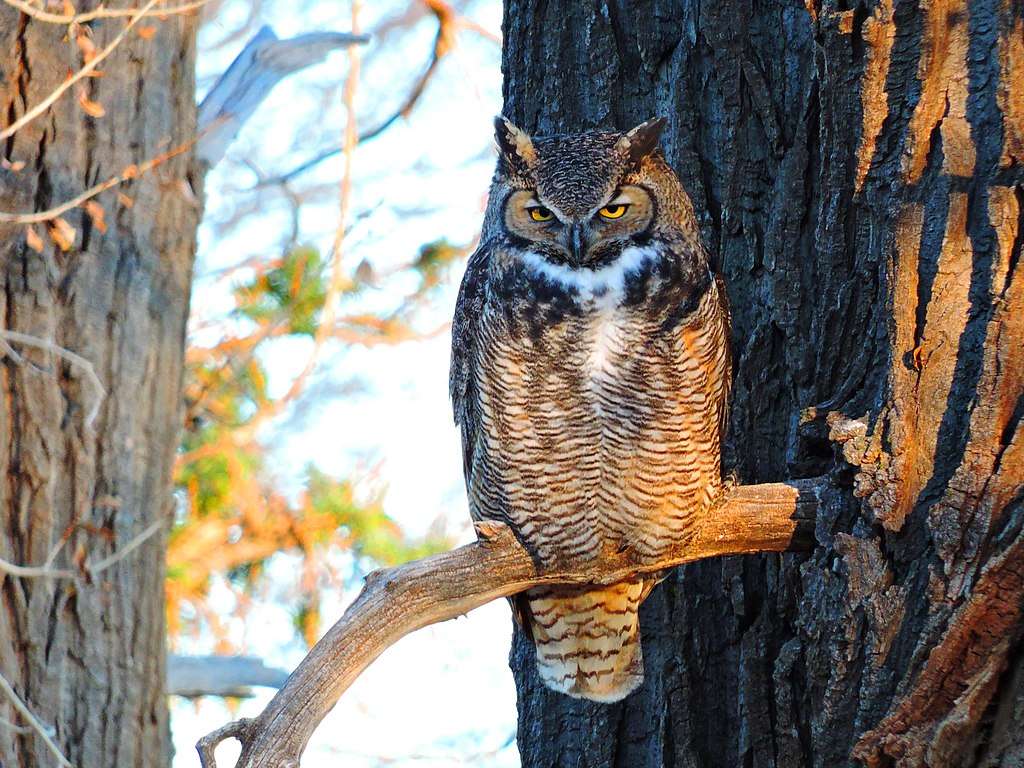
Few birds have a range as expansive as the Great Horned Owl. It is found from the Arctic treeline in North America to the southern tip of South America, occupying an impressive variety of habitats. From dense forests and deserts to city parks and farmland, this owl thrives wherever it can find prey and a suitable nesting site.
Unlike many species that are sensitive to human presence, the Great Horned Owl has shown remarkable adaptability. It has been spotted nesting in suburban backyards, industrial zones, and even near airports. As long as there are tall trees or structures for roosting and a steady food supply, the owl can make a home.
Behavior and Hunting Tactics
The Great Horned Owl is a solitary and highly territorial bird. It is primarily nocturnal, using its exceptional night vision and acute hearing to hunt in complete darkness. Its feathers are specially adapted for silent flight, allowing it to swoop down on prey without making a sound.
Diet-wise, the Great Horned Owl is a generalist predator, eating a wider range of animals than perhaps any other North American raptor. It preys on mammals like rabbits, skunks, and rodents; birds such as ducks and hawks; reptiles, amphibians, and even insects. Incredibly, it’s one of the few predators that regularly hunts skunks, apparently unbothered by their potent chemical defenses.
The owl’s hunting strategy is often one of patience. It will perch silently, scanning the landscape with its keen senses, waiting for the perfect moment to strike. Once it locks onto prey, it descends rapidly and uses its massive talons to deliver a swift, lethal blow.

Reproduction and Life Cycle
The courtship season for Great Horned Owls begins in late fall to early winter, one of the earliest of any bird species in North America. The male initiates courtship with a series of hoots, and if a female responds, the pair may exchange calls and engage in aerial displays.
Rather than building their own nests, Great Horned Owls often take over abandoned nests built by other large birds like hawks, crows, or herons. Sometimes they nest in tree hollows, cliff ledges, or even man-made structures.
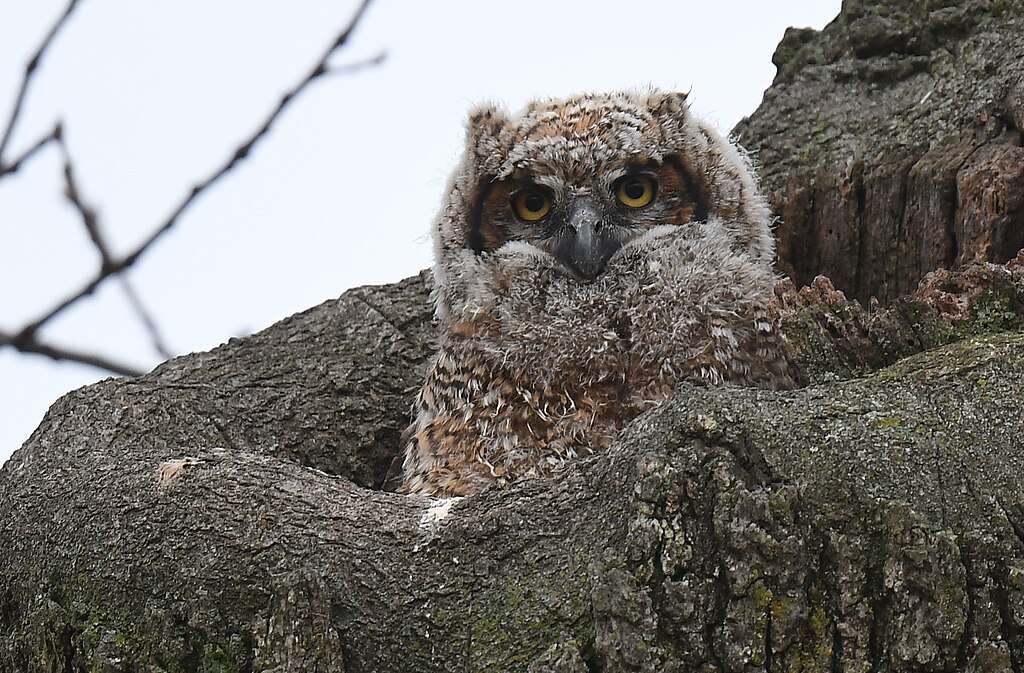
The female typically lays 1 to 4 eggs, which she incubates for about 30 to 35 days while the male provides food. Once hatched, the young owlets are covered in white down and are helpless, relying entirely on their parents for food and protection. They begin branching—leaving the nest to climb around on nearby branches—at around 6 weeks old and may start flying shortly after.
Juveniles will stay with the parents through the summer, gradually learning to hunt and fend for themselves. By autumn, they are usually driven off to find their own territories.
Communication and Vocalization
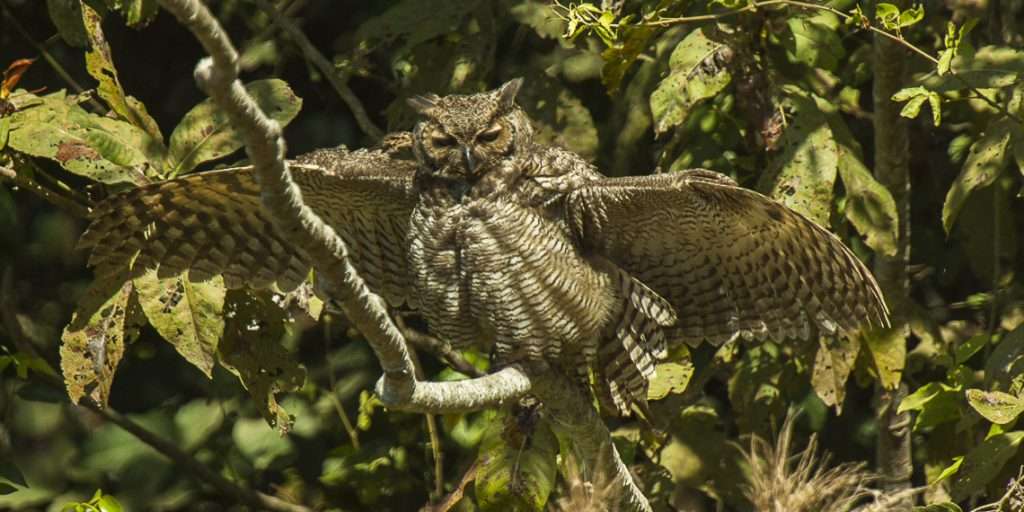
Perhaps the most famous characteristic of the Great Horned Owl is its deep, resonant hoot. The classic “hoo-hoo hooooo hoo-hoo” can carry for miles and is often heard at dawn and dusk. These vocalizations serve to establish territory and communicate with mates.
Owls also hiss, screech, and clack their beaks when threatened. Owlets produce high-pitched begging calls that are surprisingly loud and can sometimes be heard from considerable distances.
Cultural Significance
The Great Horned Owl has held symbolic meaning in various cultures. In many Native American traditions, owls are seen as messengers or omens. For some, the owl is a guardian spirit; for others, it is a harbinger of death or misfortune. In Western cultures, owls are often associated with wisdom, mystery, and the supernatural.
The owl's haunting presence and ghostlike flight have inspired countless myths and stories. It has been featured in literature, film, and folklore as both a wise counselor and a shadowy predator.
Conservation Status
Despite habitat changes and human encroachment, the Great Horned Owl is not considered endangered. Its population is stable and widespread, in large part due to its adaptability. It is protected under the Migratory Bird Treaty Act in the United States, which prohibits killing, capturing, or selling owls without a permit.
However, like many birds of prey, it faces threats from rodenticides, which can poison the owl indirectly when it consumes tainted prey. Collisions with vehicles, electrocution from power lines, and illegal shootings also pose risks. Public education and wildlife rehabilitation efforts help mitigate some of these dangers.
The Role of the Great Horned Owl in Ecosystems
As an apex nocturnal predator, the Great Horned Owl plays a vital role in controlling the populations of rodents and other small animals. This helps maintain ecological balance and can even benefit farmers by reducing crop-damaging pests. Its wide dietary range allows it to fill ecological niches left by other predators, making it a keystone species in many areas.
Moreover, by occupying abandoned nests and reusing them year after year, Great Horned Owls also help promote ecological continuity in bird communities.
Wrapping Up
The Great Horned Owl is a master of survival—stealthy, strong, and supremely adaptable. Its haunting call, powerful presence, and vital ecological role make it a standout figure in North American wildlife. Whether silhouetted against a full moon or glimpsed in the shadows of an old barn, the Great Horned Owl continues to inspire awe, curiosity, and respect.
For those lucky enough to hear its booming hoot on a cold winter’s night, the message is clear: nature is still wild, and the Great Horned Owl remains its vigilant sentinel.
