

Wisconsin, with its diverse landscapes ranging from the dense Northwoods to the rolling farmlands and urban green spaces, provides a rich habitat for a variety of fascinating bird species.
Among the most charismatic and easily identifiable are the woodpeckers, those industrious architects of the forest. Their rhythmic drumming, distinctive calls, and often vibrant plumage make them a joy for any birdwatcher, amateur or seasoned, to encounter.
This comprehensive guide will delve into the various woodpecker species found in Wisconsin, offering insights into their identification, behaviors, and crucially, where to increase your chances of spotting these captivating birds.
Wisconsin Woodpeckers
Wisconsin is home to a robust population of seven commonly observed woodpecker species, each with unique characteristics and preferred habitats. Understanding these nuances is key to successful woodpecker spotting.
1. Downy Woodpecker (Dryobates pubescens)
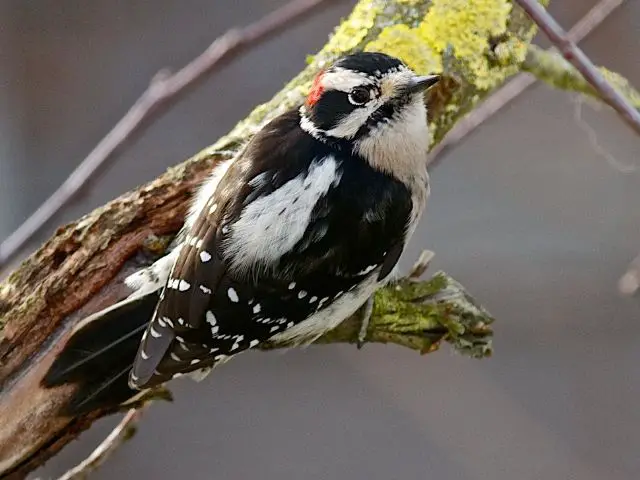
The smallest and most widespread woodpecker in North America, the Downy Woodpecker is a familiar sight across Wisconsin. Its diminutive size (around 5.5-7 inches), black and white checkered back, and white belly make it easily recognizable. Males sport a small red patch on the back of their head, a distinguishing feature from the females. Downy Woodpeckers are incredibly adaptable, found in virtually every wooded habitat, from mature forests to suburban parks and backyard feeders. Their small size allows them to forage on thinner branches and even tall weeds.
- Identification: Smallest woodpecker, black and white striped head, white back stripe, checkered wings. Males have a red nape patch.
- Sounds: A soft "pik" call and a rapid, soft drumming.
- Where to Find Them: Ubiquitous! Look for them in deciduous and mixed forests, parks, suburban yards, and even along wooded riverbanks. They are frequent visitors to suet feeders.
2. Hairy Woodpecker (Dryobates villosus)
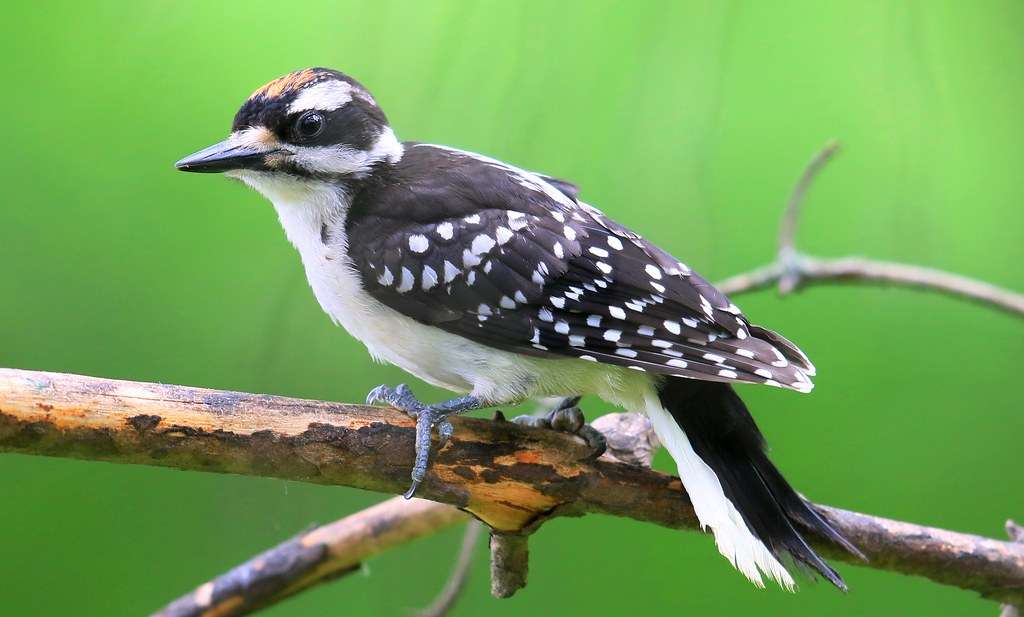
Often confused with the Downy due to similar plumage, the Hairy Woodpecker is noticeably larger (8-10 inches) with a longer, stouter bill. Think of it as a supersized Downy. The key to differentiation lies in their proportions; the Hairy’s bill is roughly the same length as its head, whereas the Downy’s bill is noticeably shorter. Like the Downy, males have a red patch on the back of their head. Hairy Woodpeckers prefer more mature forests and can be a bit shyer than their smaller counterparts.
- Identification: Larger than the Downy, with a proportionally longer bill. Similar black and white plumage. Males have a red nape patch.
- Sounds: A sharper, more emphatic "peek" call and a louder, more sustained drum than the Downy.
- Where to Find Them: Mature deciduous and coniferous forests, larger parks, and less disturbed wooded areas. They also visit suet feeders.
3. Northern Flicker (Colaptes auratus)
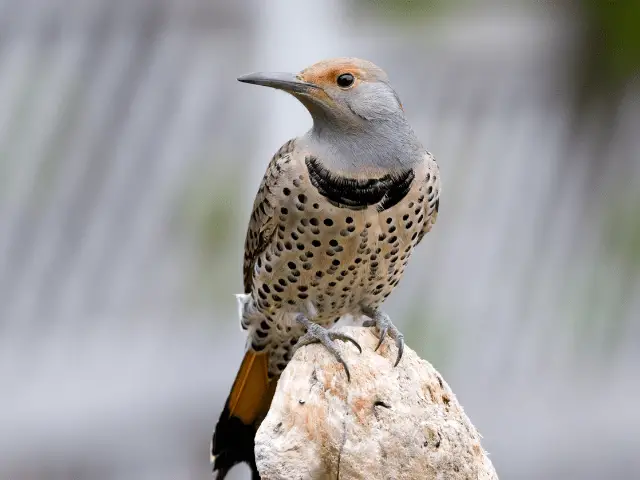
The Northern Flicker stands out as a unique woodpecker with its brown, barred back, spotted belly, and distinctive white rump patch visible in flight. Wisconsin hosts the "Yellow-shafted" subspecies, identifiable by the bright yellow undersides of its wings and tail feathers, and a red crescent on the nape of its neck (in both sexes). Males also sport a black "mustache" (malar stripe). Unlike most woodpeckers, flickers spend a significant amount of time foraging on the ground, probing for ants and other insects with their slightly curved bills.
- Identification: Brown back with black barring, spotted white belly, prominent white rump patch. Yellow underwings and tail. Males have a black mustache.
- Sounds: A loud, rapid "wicka-wicka-wicka" call and a long, rolling drum.
- Where to Find Them: Open woodlands, parklands, suburban areas with scattered trees, orchards, and even golf courses. Look for them foraging on lawns.
4. Red-bellied Woodpecker (Melanerpes carolinus)
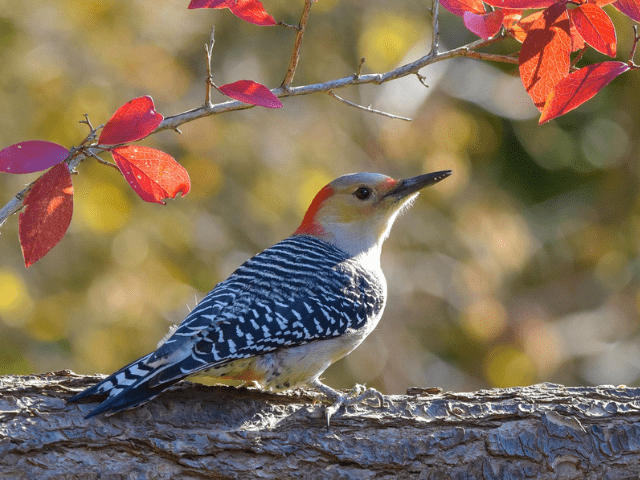
Despite its name, the "red belly" on this woodpecker is often subtle and difficult to see in the field, sometimes appearing as a faint reddish wash on the lower belly. What is prominent is its striking black and white ladder-patterned back and a bright red cap extending from the forehead to the nape in males, and just on the nape in females. These birds have expanded their range northward in recent decades and are now a common sight throughout much of Wisconsin, especially in mature deciduous forests.
- Identification: Ladder-patterned black and white back, pale belly, and a vibrant red cap (full in males, nape only in females).
- Sounds: A distinctive, rolling "churr-churr-churr" call and a short, rapid drum.
- Where to Find Them: Mature deciduous and mixed forests, particularly those with large, old trees. They are regular visitors to suet and peanut feeders.
5. Red-headed Woodpecker (Melanerpes erythrocephalus)
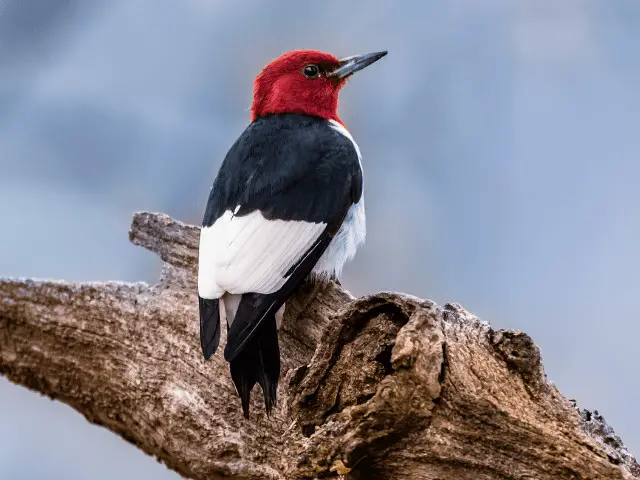
A truly unmistakable bird, the Red-headed Woodpecker is a stunning avian jewel with its entirely crimson-red head, neck, and throat, contrasting sharply with its brilliant white belly and large patches of white on its black wings. Juveniles have a brownish-gray head that gradually turns red. These magnificent birds prefer open woodlands with scattered dead trees, often found near oak savannas, river bottoms, and even golf courses. Their populations have declined in some areas, making a sighting a special event.
- Identification: Entirely red head, neck, and throat. White belly. Large white patches on black wings.
- Sounds: A harsh, scratchy "tchur-tchur" call and a short, powerful drum.
- Where to Find Them: Open woodlands, oak savannas, floodplains, orchards, and areas with dead or dying trees. Keep an eye out in areas with mature oak trees.
6. Pileated Woodpecker (Dryocopus pileatus)
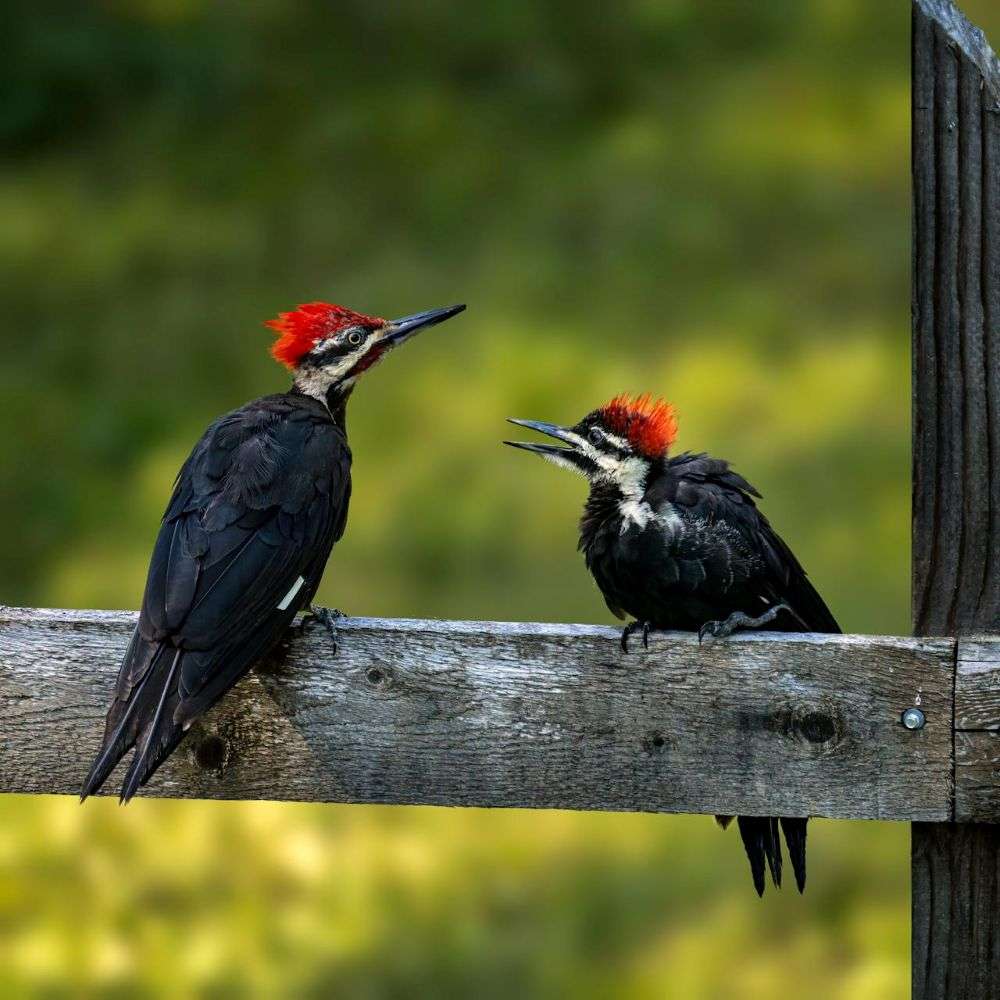
The largest woodpecker in North America, the Pileated Woodpecker is an impressive sight, resembling a prehistoric bird with its crow-sized body, black plumage, and prominent red crest. Both sexes have a striking red crest, but males also sport a red "mustache" (malar stripe). Their powerful, rectangular-shaped holes in trees are a clear sign of their presence. Their booming calls resonate through the forest, a wild sound that evokes the deep woods.
- Identification: Large, crow-sized. Black body with a prominent red crest. White stripes on the face and neck. Males have a red malar stripe.
- Sounds: A loud, far-carrying "kuk-kuk-kuk-kuk" call, often described as a maniacal laugh, and a powerful, deep drum.
- Where to Find Them: Mature deciduous and coniferous forests, particularly those with large, old trees and snags. Less disturbed, extensive woodlands are prime locations.
7. Yellow-bellied Sapsucker (Sphyrapicus varius)

The Yellow-bellied Sapsucker is unique among Wisconsin's woodpeckers for its specialized feeding strategy. It drills neat rows of small, shallow holes (sap wells) into tree bark to feed on the flowing sap and any insects that become trapped in it. These birds have a mottled black and white back, a white stripe behind the eye, and a prominent red forehead (in males) and chin (in males, black in females). As their name suggests, they have a yellowish wash on their belly, though this can be subtle. They are migratory and most commonly seen in Wisconsin during the breeding season.
- Identification: Mottled black and white back, white stripe behind the eye. Red forehead (males) and chin (males, black in females). Subtle yellow belly wash.
- Sounds: A distinctive "mewing" call and an irregular, often hesitant drum.
- Where to Find Them: Deciduous and mixed forests, particularly those with birch, maple, and fruit trees. Look for trees with rows of neatly drilled sap wells.
Rare and Uncommon Species
t's also worth noting that Wisconsin is home to a couple of other woodpecker species that are less commonly observed or have more restricted ranges:
- Black-backed Woodpecker: This species is typically found in the northern parts of Wisconsin, particularly in coniferous forests, especially those that have experienced recent fires. They are generally considered year-round residents within their specific habitat.
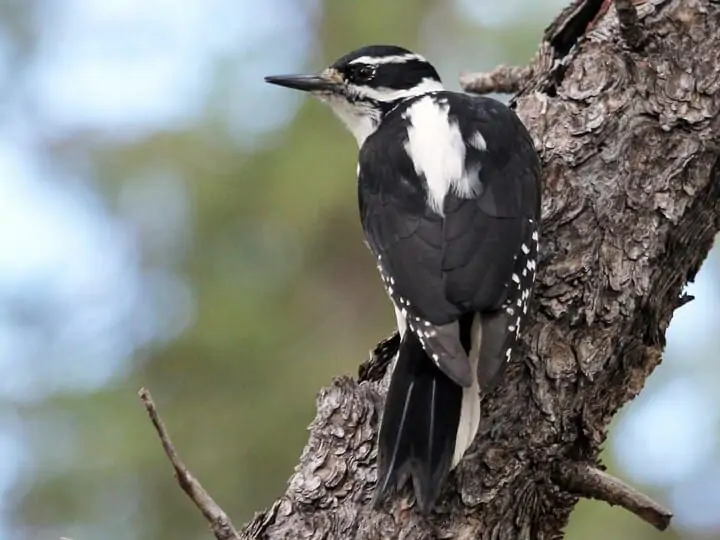
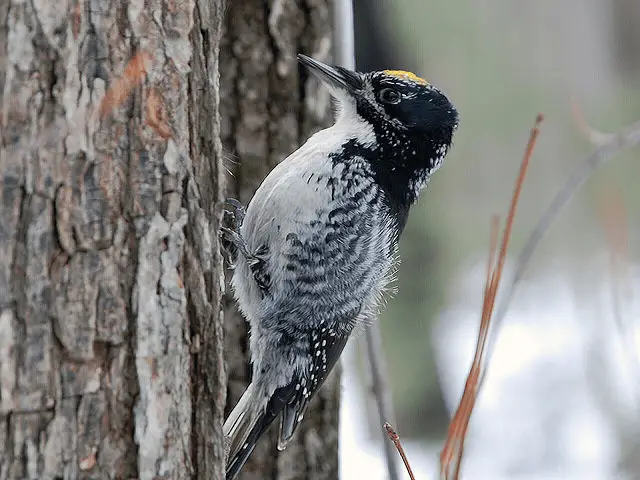
- American Three-toed Woodpecker: Similar to the Black-backed Woodpecker, this species is rare and restricted to specific northern coniferous forests, primarily in areas with spruce, fir, and pine. They are also considered year-round residents within their limited range.
Where to Find Wisconsin Woodpeckers: Top Locations
While many woodpeckers can be found in your backyard, certain locations offer exceptional opportunities for observing these fascinating birds.
- State Parks and Forests: Wisconsin's extensive network of state parks and forests, such as those in the Chequamegon-Nicolet National Forest, Potawatomi State Park, and Kettle Moraine State Forest, provide diverse habitats for all species. Look for areas with mature trees, dead snags, and varied undergrowth.
- County Parks and Local Nature Preserves: Many local parks and nature preserves throughout the state offer excellent birding opportunities. Check with your local natural resources department or Audubon chapter for recommendations.
- Backyards and Urban Green Spaces: Even in urban areas, you can attract woodpeckers by providing suet feeders, particularly during the colder months. Planting native trees and shrubs also creates a more inviting habitat.
- Riparian Areas (River and Stream Banks): Wooded areas along rivers and streams often have a rich insect population and mature trees, making them prime habitat for many woodpecker species, including Northern Flickers and Red-bellied Woodpeckers.
- Oak Savannas: For the elusive Red-headed Woodpecker, seek out remnant oak savannas, which are characterized by scattered mature oak trees and open grassy understories.
- Winter Months: Winter can be an excellent time for woodpecker observation as deciduous trees lose their leaves, making birds easier to spot. Many species also become more reliant on feeders during this time.
Other Locations
Necedah National Wildlife Refuge
Since red-headed woodpeckers inhabit burnt forests and restored savannah vegetation, they like this refuge. It's a diverse ecosystem with hardwood forests, oak savannas, and shrub swamps.
Goose Pond Sanctuary
It's one of the few places to see the Pileated Woodpecker, which this sanctuary added to its list of birds in 2017.
Pleasant Valley Conservancy State Natural Area
Its lush oak savannah is home to the Red-headed Woodpeckers.
Rush River Delta SNA
You'll find Red-headed Woodpeckers in this area's floodplain forest.
Nicolet National Forest
It's a rich ecosystem with lakes, swamps, and bogs that invite a range of species.
Wyalusing State Park
It's a nesting ground for birds, so you may spot the Pileated Woodpecker looking for dead hardwoods in which to build nests.
Tips for Woodpecker Watching
- Listen: Woodpeckers are often heard before they are seen. Learn their distinctive calls and drumming patterns.
- Look for Tree Damage: Fresh wood chips at the base of a tree, rectangular holes (Pileated), or neat rows of sap wells (Yellow-bellied Sapsucker) are all indicators of woodpecker presence.
- Be Patient and Still: Woodpeckers can be shy. Find a comfortable spot, remain still, and let them come to you.
- Use Binoculars: Binoculars are essential for detailed identification and observing their fascinating behaviors.
- Provide Suet: Suet feeders are a magnet for many woodpecker species, especially Downy, Hairy, and Red-bellied Woodpeckers.
- Consider a Field Guide: A good field guide specific to North American birds will be invaluable for identification.
Frequently Asked Questions
What Kind Of Woodpeckers Are In Wisconsin?
We have identified the seven most common woodpecker species in Wisconsin. However, it's important to clarify which ones are year-round residents and which are migratory:
Year-Round Residents in Wisconsin:
- Downy Woodpecker: Definitely a permanent resident.
- Hairy Woodpecker: Also a permanent resident.
- Red-bellied Woodpecker: This species has expanded its range northward and is now a common year-round resident throughout much of Wisconsin.
- Pileated Woodpecker: A large, impressive bird that remains in Wisconsin all year.
Migratory or Partial Migratory in Wisconsin:
- Northern Flicker: While some individuals may overwinter in southern Wisconsin, the Northern Flicker is generally considered a partial migrant, with many moving south for the colder months. You're more likely to see them during the breeding season (spring and summer).
- Red-headed Woodpecker: This species is a partial or irregular migrant. While some may stay in Wisconsin year-round, especially in areas with abundant nut crops, many will migrate south for the winter. Their presence in winter can be quite variable from year to year.
- Yellow-bellied Sapsucker: This is largely a migratory species in Wisconsin, present primarily during the breeding season (spring and summer). While a few might be seen in southern Wisconsin during mild winters, they generally move south.
Here's how to identify their rare species:
Can You Shoot Woodpeckers In Wisconsin?
No, it's illegal to shoot these birds even if they're giving you sleepless nights with their drumming. The 1918 Federal Migratory Bird Treaty Act prohibits even capturing them unless you have a federal permit. The U.S. Fish and Wildlife Service authorizes activities involving migratory birds, so that's where you can get a permit.
