

The sight of a brilliant yellow bird is an instant burst of joy, evoking warmth, sunshine, and vitality. From the deep gold of a canary to the lemon hue of a warbler, yellow is one of the most common and conspicuous colors in the avian world. Unlike the complex structural trickery that creates blues and greens, a bird's yellow plumage is usually achieved through the magic of pigment—specifically, fat-soluble compounds called carotenoids.
The Science of Yellow: Carotenoids and the Color of Diet
The yellow, orange, and red colors found in most birds are the direct result of their diet. Birds are incapable of producing carotenoids themselves, meaning these vibrant pigments must be consumed through the food they eat, such as fruits, seeds, nectar, and invertebrates.
How Carotenoids Work:
- Ingestion: The bird consumes food rich in carotenoids (e.g., lutein, zeaxanthin, -carotene).
- Absorption and Transport: The pigments are absorbed through the gut and transported via the bloodstream.
- Deposition: During feather growth, the pigments are deposited into the keratin structure of the feather barbs. The hue and intensity of the resulting yellow depend on two main factors:
- The Carotenoid Type: Different carotenoids produce slightly different hues, from pale yellow to deep orange.
- The Bird's Metabolism: Some birds can chemically modify (metabolize) the carotenoids they consume, creating entirely new pigments called ketocarotenoids. A classic example is the American Goldfinch, which eats seeds containing relatively dull yellow carotenoids but converts them into the bright, lemon-yellow pigments seen in its stunning breeding plumage.
The Role of Health and Signaling
Because the yellow coloration is directly linked to diet and a bird's ability to efficiently absorb and metabolize these pigments, it serves as an honest signal of health and vigor. A bright, deeply saturated yellow often indicates a male bird that has successfully foraged for high-quality food, is free of parasites, and possesses a robust immune system. Females use this intensity of color to select the fittest mates. This concept is central to avian sexual selection, where brilliant color provides an evolutionary advantage.
Top 10 Avian Gold: The World's Yellowest Birds
These ten species represent the pinnacle of yellow coloration, showcasing the brilliance that carotenoid pigments and metabolism can achieve across diverse avian families.
1. American Goldfinch (Spinus tristis)
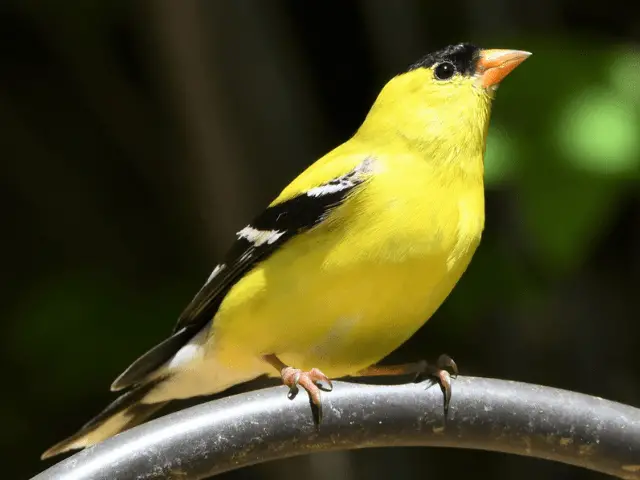
The quintessential yellow bird of North America, the male American Goldfinch in breeding plumage is unforgettable.
- Plumage and Description: The male is a striking, deep lemon-yellow across its entire body, sharply contrasted by a solid black cap, black wings, and a black tail with white patches. This brilliant yellow is achieved by metabolizing carotenoids found in thistle and other seeds. Females are a duller olive-yellow.
- Habitat: Found in weedy fields, floodplains, cultivated lands, and suburban gardens across the United States and southern Canada.
- Behavior: Uniquely among songbirds, they are late nesters, breeding only in mid-to-late summer when thistle, their primary food source, is abundant. They are known for their undulating, bouncy flight and cheerful "per-chick-o-ree" call.
2. Yellow Canary (Serinus canaria)
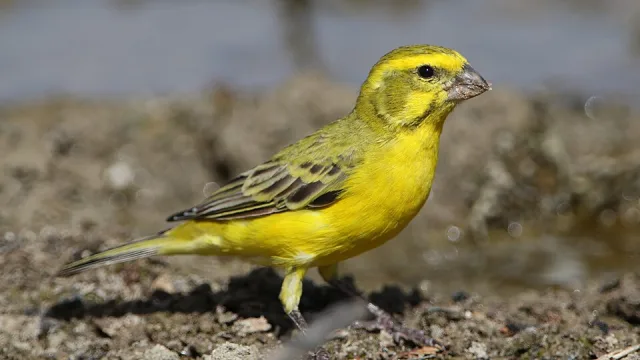
Perhaps the most famous yellow bird, the wild Canary is the ancestor of the common domesticated bird, revered worldwide for its color and song.
- Plumage and Description: The wild type, native to the Macaronesian islands, is a relatively modest greenish-yellow. However, the domestic forms have been selectively bred for centuries to produce the intense, uniform butter-yellow or canary yellow that is universally recognized.
- Habitat: The wild population prefers semi-open areas, orchards, laurel forests, and gardens in the Canary Islands, Azores, and Madeira.
- Behavior: Highly social birds known for their long, complex, and melodious songs. They are often kept as cage birds, a practice dating back to the 17th century.
3. Golden Oriole (Oriolus oriolus)
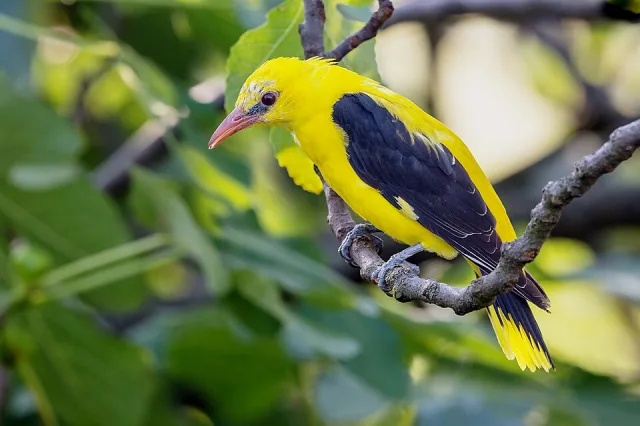
A beautiful, migratory songbird found across Europe, Asia, and Africa, often heard before it is seen high in the canopy.
- Plumage and Description: The male is a brilliant, glowing golden-yellow with sharply contrasting black wings and a black tail. The female is a duller, greener shade of yellow. Their plumage allows them to blend surprisingly well with the dappled sunlight and yellowing leaves of their forest habitat.
- Habitat: Prefers open broad-leaved woodlands, orchards, and riverine forests throughout its extensive breeding range across Eurasia.
- Behavior: Known for its fluid, fluting, and unmistakable whistling song. They are tree-dwelling, mainly feeding on insects, caterpillars, and fruits high in the foliage.
4. Yellow Warbler (Setophaga petechia)
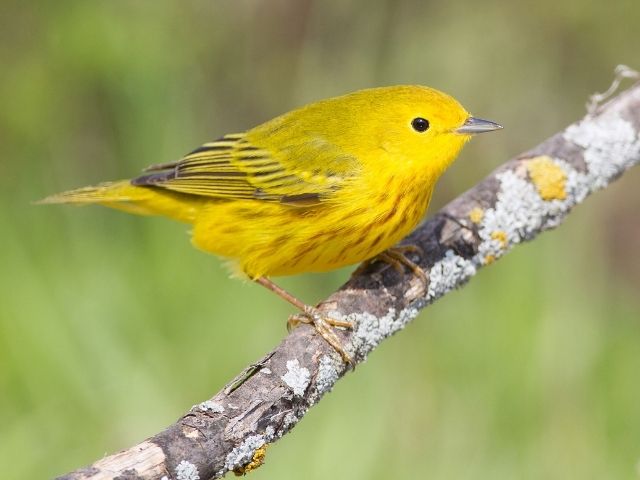
One of the most widespread and purely yellow New World warblers.
- Plumage and Description: This small bird is a nearly complete wash of bright, uniform yellow, often described as a lemon-yellow. Males are distinguished by fine chestnut-red streaks on their breast and flanks, which add a touch of contrast to the overall yellow.
- Habitat: Found in shrubby habitats, swamps, riverbanks, and willow thickets across most of North America during the summer breeding season.
- Behavior: They build a compact, deep cup nest, often parasitized by the Brown-headed Cowbird. The Yellow Warbler is unique in its strategy of sometimes building a new nest cup directly over the old one to bury the unwanted cowbird egg.
5. Saffron Finch (Sicalis flaveola)
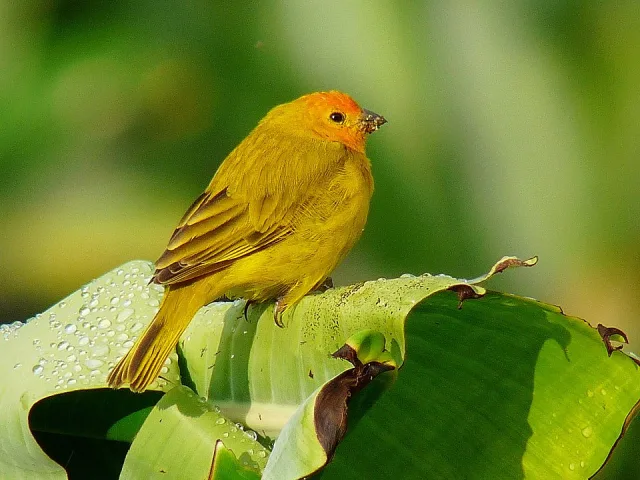
A vibrant and common South American bird that has been introduced to several other regions.
- Plumage and Description: The male is an intense, fiery saffron yellow or orange-yellow across its head and underparts, deepening in color on the crown and face. This color is more saturated and warmer than the lemon-yellow of the Goldfinch.
- Habitat: Highly adaptable, found in open or semi-open areas, including grasslands, savannas, pastures, and urban parks across much of South America.
- Behavior: Known for its strong, pleasant song and for being a secondary cavity nester, often taking over abandoned nests of other birds. They are popular cage birds in some regions due to their song and color.
6. Black-and-yellow Tanager (Chrysothlypis chrysomelas)
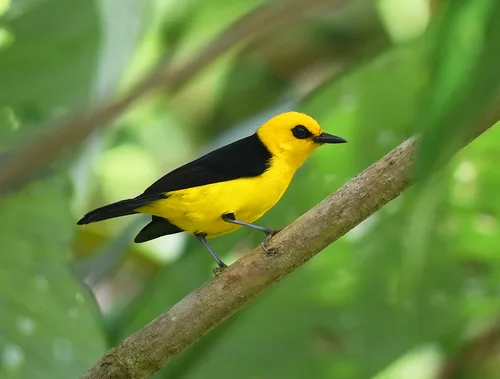
A diminutive and strikingly patterned passerine of Central and South America.
- Plumage and Description: The male boasts a vivid black and yellow pattern: a black mantle, wings, and tail sharply contrasted by a bright yellow head, rump, and underparts. This species perfectly illustrates the dramatic effect of pairing an intense yellow hue with glossy black plumage. Females are a more subdued olive-green and yellow.
- Habitat: Favors the canopy of wet forests and tall second-growth areas along the Caribbean and Pacific slopes of Costa Rica, Panama, and Colombia.
- Behavior: Sociable tanagers, often seen foraging in small groups or as part of larger mixed-species feeding flocks for insects, spiders, and small fruits.
7. Hooded Oriole (Icterus cucullatus)
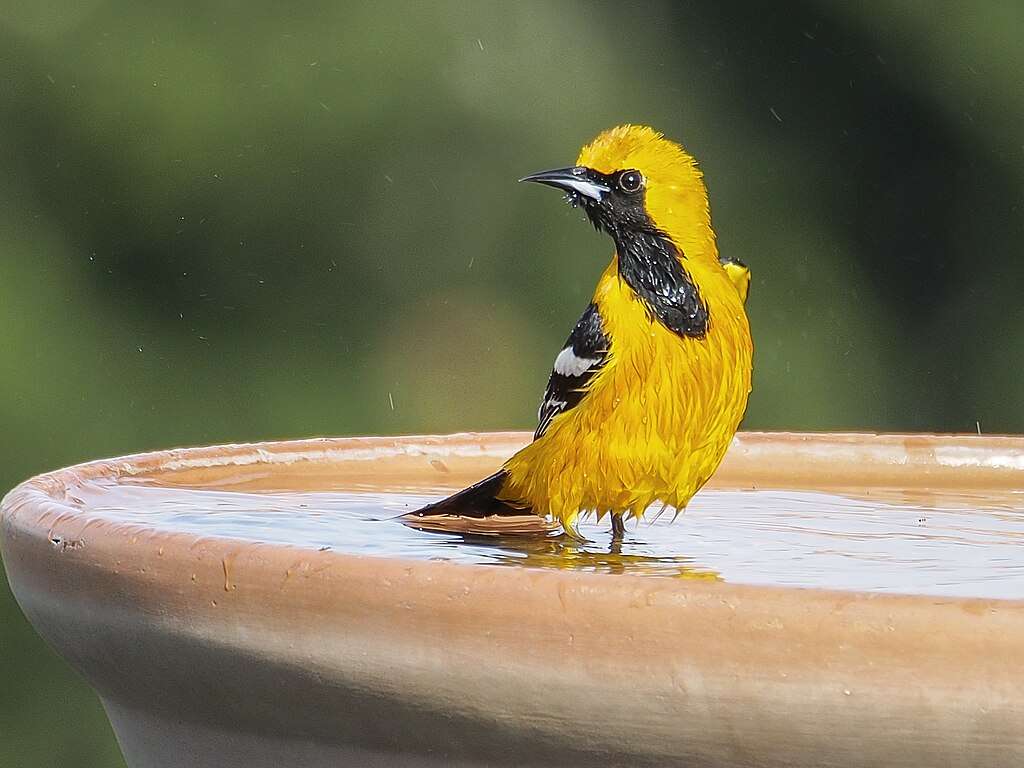
A striking species of oriole found in the southwestern United States and Mexico.
- Plumage and Description: The male is characterized by a bright rich orange-yellow on its head (forming the "hood"), chest, and belly. This brilliant color provides a dramatic contrast with the black throat, lores, and wings. The intensity of the yellow can vary, sometimes leaning toward deep orange.
- Habitat: Prefers palm groves, sycamore canyons, and riparian areas, often nesting in palm trees or large cottonwoods.
- Behavior: Known for building a distinctive, woven, pendulous nest that is often suspended from the underside of a large palm leaf. They are migratory, arriving in the U.S. during the spring and heading south for the winter.
8. Prothonotary Warbler (Protonotaria citrea)
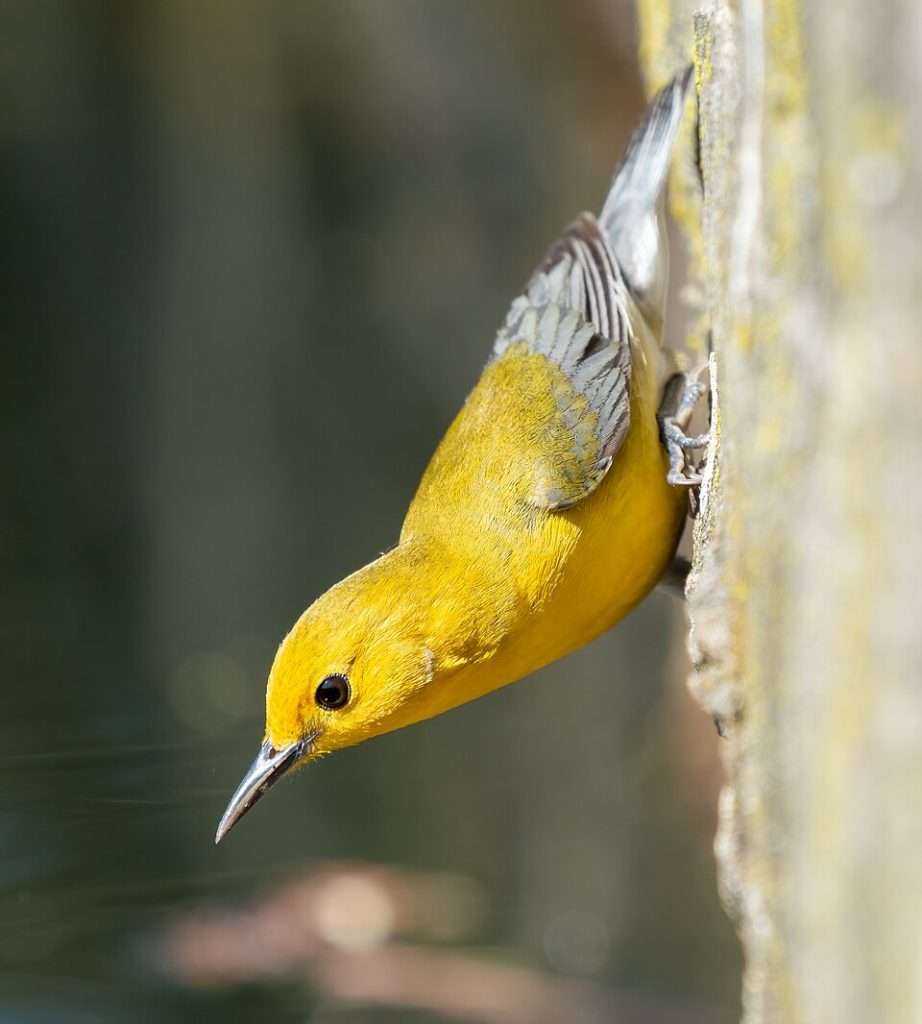
Often called the "Golden Swamp Warbler," it is a true jewel of North American wetlands.
- Plumage and Description: The male is almost entirely a brilliant, rich golden-yellow to orange-yellow on its head, neck, and breast. This fiery color contrasts beautifully with its olive-green back and blue-gray wings. Its name refers to the golden robes worn by papal clerks, or prothonotaries.
- Habitat: The only eastern New World warbler to nest in tree cavities, it is strongly tied to wooded swamps, flooded bottomland forests, and areas near slow-moving water.
- Behavior: They forage actively in the dark, swampy understory, and their bright color makes them look like a golden flashlight in the dim light.
9. Wilson's Warbler (Cardellina pusilla)
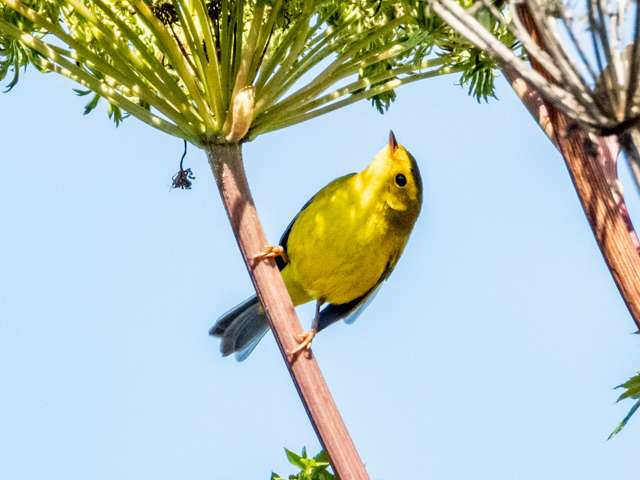
A tiny, energetic warbler known for its pure yellow underparts and contrasting cap.
- Plumage and Description: This small bird is a bright, clear yellow below and yellowish-olive above. The male is easily identified by its distinctive, neat jet-black cap set against its yellow face, giving it a dapper appearance. Females have a duller, smaller, or absent black cap.
- Habitat: Breeds in dense shrubbery, often near streams, in mountain meadows, and thickets across Canada and the western U.S., migrating to Central America.
- Behavior: An active, tireless forager that moves rapidly through shrubs and foliage, often flicking its tail nervously as it searches for insects.
10. Yellow-tufted Honeyeater (Lichenostomus melanops)
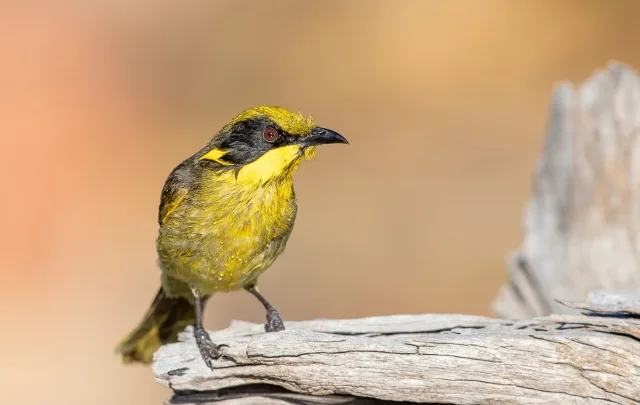
An endemic Australian honeyeater, recognizable by its distinctive facial markings.
- Plumage and Description: This honeyeater is primarily an olive-brown with a yellowish-grey body, but its standout features are its vibrant, elongated bright yellow ear tufts and sides of the throat, set against a striking black face mask. A rare, critically endangered subspecies, the Helmeted Honeyeater, is a more vivid expression of this pattern.
- Habitat: Found in open dry forests and woodlands dominated by eucalypts, often near water, across eastern and south-eastern Australia.
- Behavior: A gregarious bird that feeds on nectar, insects, and sugary manna. It is known to breed in colonies or "neighborhoods" of adjacent territories.
The yellow birds of the world are living proof that you are what you eat. Their brilliant colors are not random; they are a direct, biological consequence of a successful diet, showcasing the fascinating link between foraging, metabolism, and the dazzling beauty of avian plumage.
