
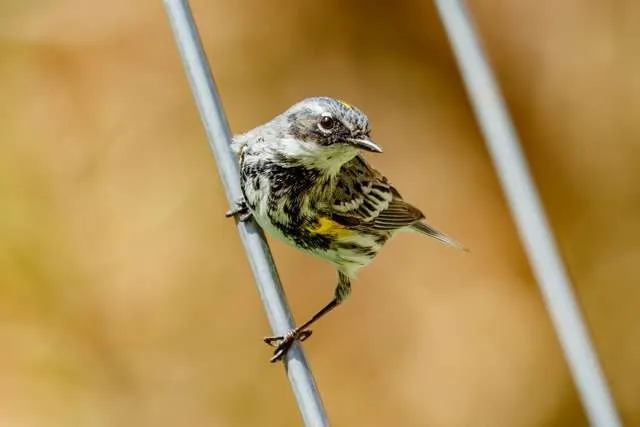
The Yellow-rumped Warbler (Setophaga coronata) is not just one of the most widespread and abundant warblers in North America; it is a true symbol of avian adaptability. For many birders, this active, gray-and-yellow dynamo—affectionately nicknamed the "Butter-Butt" for the bright splash of yellow at the base of its tail—serves as the gateway species to the notoriously difficult family of Parulidae. Its massive population, hardy nature, and year-round presence across much of the contiguous U.S. make it an outlier among its delicate, insect-dependent cousins.
Its dominance across the North American continent is a biological success story rooted in a unique evolutionary trait: a digestive system unlike that of almost any other warbler. While most warblers are strictly insectivores, forcing them to make long, energy-sapping migrations to the tropics every autumn, the Yellow-rumped Warbler has evolved the ability to consume and digest the waxy coatings on certain high-energy berries, allowing it to winter much farther north than any other member of its family.
A Tale of Two Birds: Myrtle and Audubon’s Subspecies
The Yellow-rumped Warbler’s complex history is encapsulated in its two primary subspecies groups found across the United States. For decades, they were considered separate species before being lumped into one in 1973 due to extensive hybridization in the Canadian Rockies. Today, they remain distinct and recognizable regional forms:
The Myrtle Warbler (S. c. coronata)
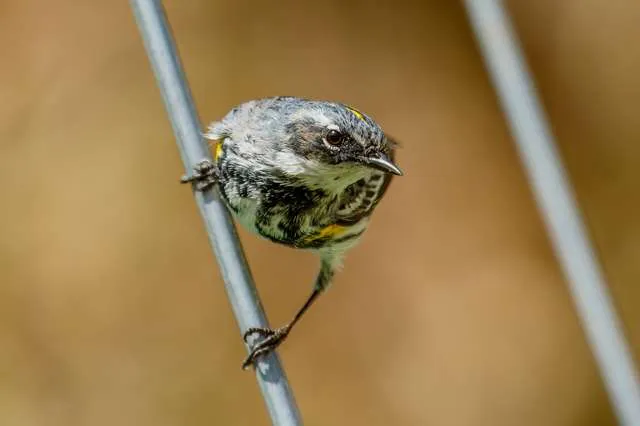
The Myrtle Warbler is the subspecies that dominates the eastern and northern regions of the continent. Its range stretches from Alaska across the vast Canadian boreal forest and south into the northeastern U.S. and the Appalachian Mountains. Its name comes from its dietary reliance on the berries of the Bayberry and Wax Myrtle shrubs (Myrica genus), which are plentiful along the eastern coast. This critical food source is what allows Myrtle Warblers to overwinter in coastal areas as far north as New England and well into the Southeastern United States.
Key Identification Marks (Breeding Male):
- A white throat that curves up behind a dark cheek patch.
- A streaked slate-blue back.
- Conspicuous flashes of white in the tail feathers.
- The essential yellow patches on the rump, crown, and sides of the breast.
In non-breeding plumage (the duller colors seen during winter and fall migration), the Myrtle Warbler maintains its white throat and prominent white crescent shape behind the dark ear patch, making it distinguishable from its western counterpart.
The Audubon’s Warbler (S. c. auduboni)
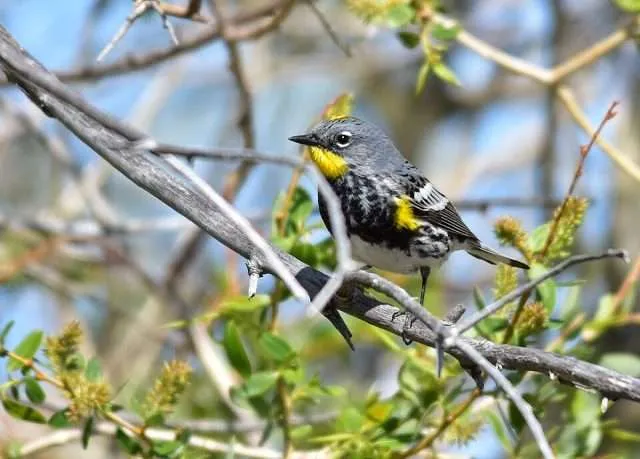
The Audubon's Warbler is the form found across the western half of the U.S., breeding in the coniferous and mixed forests of the Rocky Mountains, the Pacific Northwest, and down into the high-elevation zones of the Southwest.
Key Identification Marks (Breeding Male):
- A diagnostic bright yellow throat patch.
- A darker face without the prominent white eyestripe seen on the Myrtle.
- Generally less streaking on the breast and a grayer, less bluish back.
In the vast interbreeding zone that stretches through parts of the northern Rockies and Pacific Northwest, birders encounter intergrades—individuals showing a mix of the two subspecies’ traits, such as a pale yellow throat or an intermediate face pattern, serving as a living lesson in evolution and taxonomy.
Habitat and Range: A Bird for All Seasons
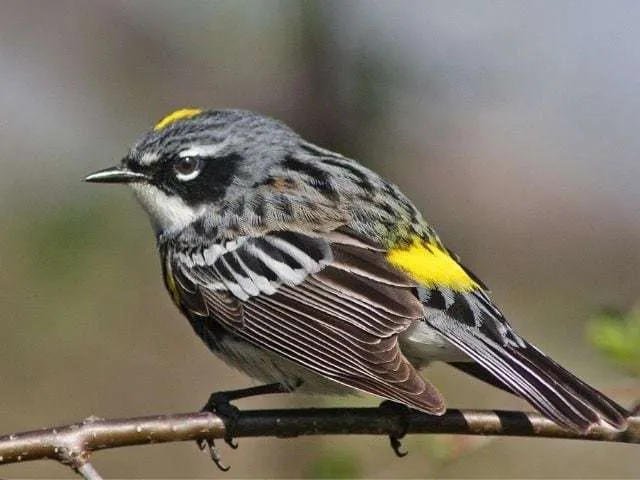
The Yellow-rumped Warbler's breeding and wintering habitats are as diverse as the American landscape itself, testament to its generalist nature.
Breeding Grounds
During the breeding season, which lasts from late spring through mid-summer, the Yellow-rump is primarily a bird of coniferous forests. In the East, this means spruce, fir, and hemlock-dominated boreal and mixed woodlands, often at higher elevations in the Appalachian chain. In the West, they favor forests of Douglas-fir, pine, and juniper, especially in mountainous terrain up to 10,000 feet or more.
The female builds a tidy, cup-shaped nest, usually placed on a horizontal branch of a conifer, often near the trunk or in a dense fork. The nest is a woven blend of twigs, rootlets, and grass, lined with softer materials like hair and feathers. Clutch sizes typically range from four to five eggs, and pairs often raise two broods in a season, contributing to the species' overall high numbers.
Migration and Winter Quarters
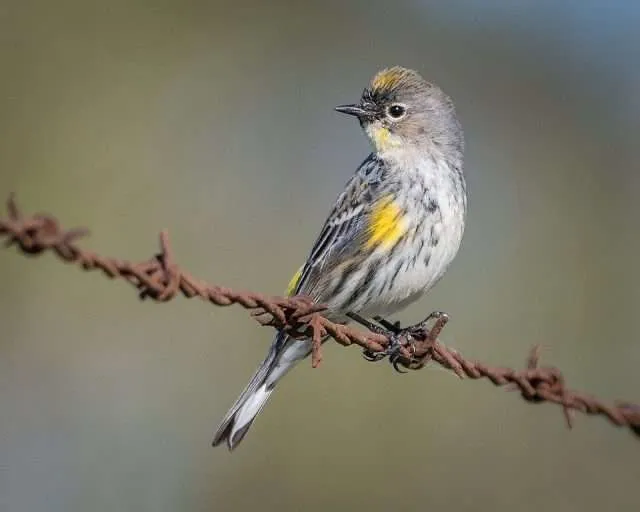
The Yellow-rumped Warbler is famous for being one of the earliest spring arrivals and one of the latest fall departures among North American warblers. This abbreviated migration is a direct result of its flexible diet.
In winter, the species fans out across the southern and coastal U.S., Mexico, and the Caribbean. Crucially, they abandon the dense conifers for more open, shrubby habitats, including:
- Coastal Dunes and Thickets: Especially where Bayberry and Wax Myrtle grow (Eastern U.S.).
- Open Pine and Pine-Oak Woodlands: Common across the Southeast and Southwest.
- Parks and Residential Areas: They often forage in backyards, showing little shyness compared to other warblers.
- Streamside Woodlands: Offering cover and access to small water bodies.
They are the most abundant and reliably seen warbler in the U.S. during the non-breeding season, often forming large, noisy, foraging flocks, sometimes numbering in the hundreds.
The Evolutionary Edge: Diet and Foraging Prowess
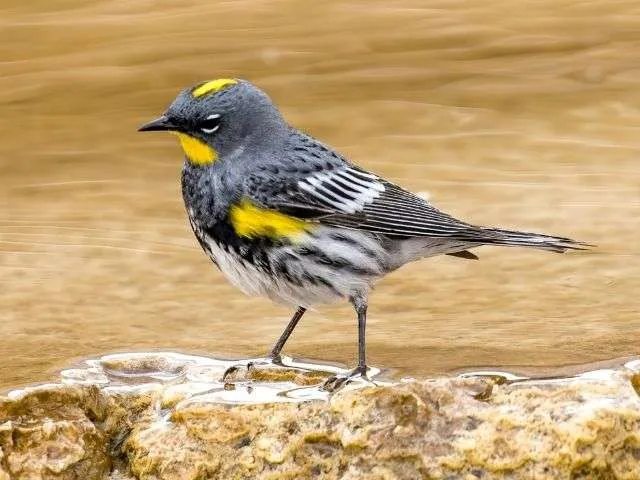
The true key to the Yellow-rumped Warbler's success lies in its unique omnivorous diet and versatile foraging strategies.
The Power of the Berry
While their summer diet is typical of warblers—a feast of insects and arthropods like caterpillars, beetles, spiders, and midges—their winter diet is anything but. The Yellow-rumped Warbler is the only warbler capable of digesting the complex waxy coating found on the berries of plants like Bayberry, Wax Myrtle, Juniper, and even Poison Ivy.
This remarkable ability is attributed to a high concentration of bile salts in their digestive system, which emulsify the waxes, allowing the birds to unlock the significant energy content within the fruit. This physiological advantage liberates them from the strict constraints of the insect supply, granting them access to food sources that are readily available in temperate North America throughout the colder months.
A Master of Foraging Techniques
The Yellow-rumped Warbler employs a diverse toolbox of foraging behaviors, earning it the scientific name Setophaga coronata, which translates roughly to "crowned moth-eater."
- Gleaning: Like most warblers, they actively pick insects and spiders from leaves and needles.
- Fly-catching (or "Sallying"): They frequently perch on exposed branches and dart out in short, acrobatic flights to snatch flying insects from the air, a technique more typical of a flycatcher.
- Hover-gleaning: They occasionally hover briefly in mid-air to pick prey from the undersides of leaves or tree bark.
- Ground Foraging: Particularly in winter, they will hop around on the ground, searching for fallen seeds and berries.
- Water Skimming: They have even been observed skimming the surface of the ocean or rivers to catch insects or small crustaceans.
This flexibility allows the species to exploit food resources across all levels of the forest structure, from the canopy to the ground, and across highly varied habitats.
Conservation Status and The Butter-Butt’s Legacy
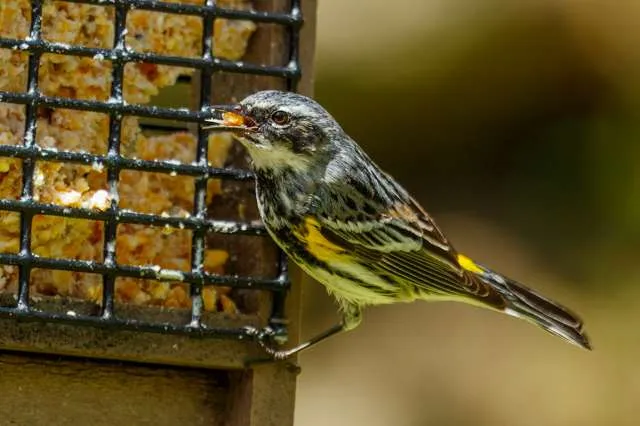
Unlike many migratory bird species in decline, the Yellow-rumped Warbler's population is considered stable or increasing across much of its range, and it is currently listed as a species of Least Concern by the IUCN (International Union for Conservation of Nature). Its adaptability, generalized diet, and ability to thrive in a variety of environments—including secondary growth and urban parkland—have insulated it from the widespread habitat specialization issues that plague other warblers.
However, even the most abundant warbler is not immune to the threats facing all migratory birds in the U.S.:
- Window and Building Collisions: Their massive population and migration patterns expose millions of individuals to deadly collisions with glass and tall structures, especially in major flyway cities.
- Pesticide Use: Although they can switch to berries, their reliance on insect protein during the crucial breeding season makes them vulnerable to widespread pesticide application, which reduces the food available for their young.
- Climate Change: Changes to the timing of insect emergence (phenology) in the boreal forests could create a "mismatch" with the warbler's nesting period, potentially impacting breeding success.
The Yellow-rumped Warbler, especially the hardy Myrtle subspecies that braves northern U.S. winters, is a testament to the power of evolutionary adaptation. For millions of Americans, it is the first warbler they learn to identify in their park or backyard, a familiar splash of yellow that bridges the seasons and connects the vast, diverse landscapes of the continent.
Read on for beginner bird watching.
