
If you see a bird that looks like a flying lemon, you’re looking at a direct link between the bird’s appetite and its appearance. While blue is a trick of the light, yellow is a pure, chemical "thank you" to the plants the bird has been eating.
From the high-contrast "Gold" of a Finch to the soft "Butter" of a Warbler, yellow is the color of energy and health.
The Chemistry: Carotenoids at Work
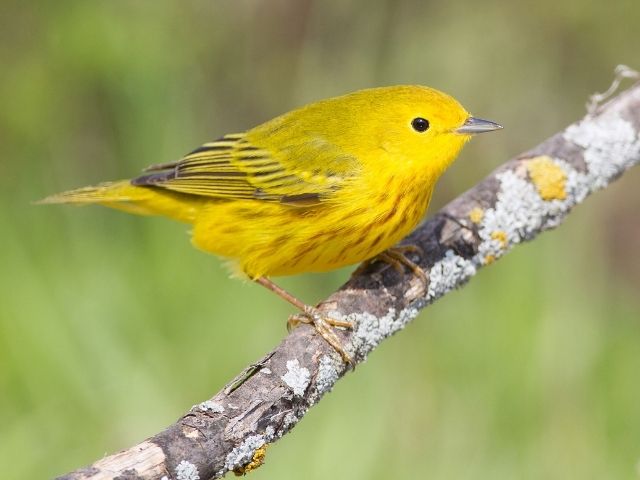
Just like red feathers, yellow feathers are powered by carotenoids. These organic pigments are produced by plants, algae, and fungi.
When a bird eats a yellow seed, a dandelion, or a caterpillar that has been munching on green leaves (which are full of hidden yellow pigments), its body absorbs those chemicals. The bird then transports the pigments through its bloodstream and deposits them into the "follicle" where a new feather is growing.
Lutein and Zeaxanthin: These are the two most common yellow pigments found in bird feathers. They are the same antioxidants that make egg yolks yellow and help keep human eyes healthy!
The Parrot Rule (Again): Parrots remain the outliers. They don't use plant-based carotenoids; they grow their yellow feathers using their own unique psittacofulvin pigments.
Can Diet Change the Color?
Absolutely. Because yellow is diet-dependent, it is a "plastic" color.
If a yellow bird goes through a period of food scarcity while it is molting (growing new feathers), those feathers might come in looking pale, "washed out," or even white. In some cases, if a yellow bird accidentally eats a diet high in red carotenoids (like certain invasive berries), its yellow feathers can actually take on an orange or brassy tint.
Why Be Yellow?
In the bird world, yellow isn't just pretty—it’s a performance review.
Honest Signaling: Much like red, a vibrant yellow coat tells potential mates: "I am an expert at finding food and I don't have any parasites stealing my nutrients." A dull yellow bird is often a less desirable mate.
High Visibility: In the shadowy "green-light" environment of a forest canopy, yellow is one of the most visible colors. It helps birds keep track of their flock-mates or rivals.
Countershading: Many birds have yellow bellies and darker backs. When a predator looks up from below, the yellow belly blends into the bright, sun-drenched sky above.
Do Birds See "Yellow" Differently?
Because birds see into the Ultraviolet (UV) spectrum, a yellow feather isn't just one flat color.
Yellow pigments are often paired with a feather structure that reflects UV light. To our eyes, a male American Goldfinch looks like a solid block of yellow. To another Goldfinch, he may have complex UV patterns on his breast and wings that indicate his age, social status, and genetic strength.
Does Skin Color Affect the Shade?
Nope.
The yellow pigment is packed into the transparent keratin of the feather. By the time the light hits the feather and bounces back to your eye, it has been "filtered" by the pigment so thoroughly that the skin color underneath—whether pink, blue, or black—is completely hidden.
American Icons of Yellow
If you want to catch some rays, look for these North American sun-seekers:
| Bird | Shade of Yellow | Where to Find Them |
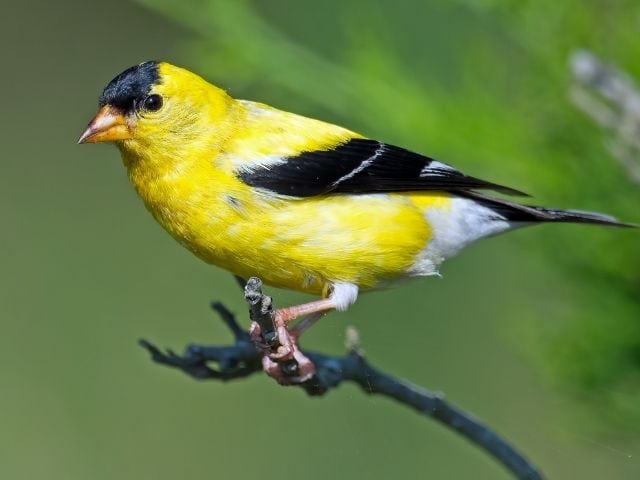
| American Goldfinch | Electric Lemon | Gardens and fields (Nationwide) |
| Yellow Warbler | Goldenrod with red streaks | Willows and wet thickets |
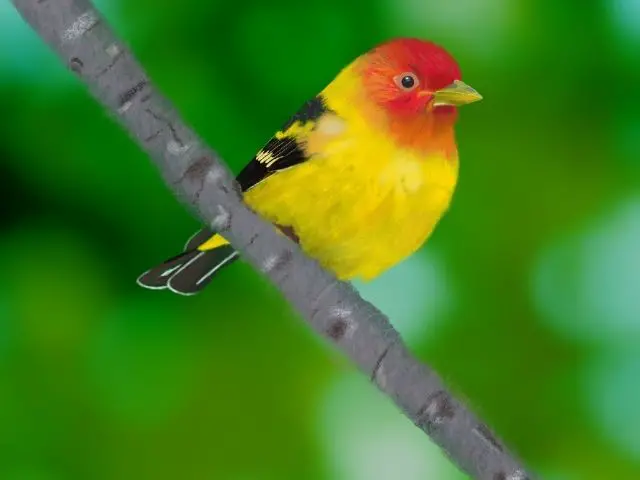
| Western Tanager | Bright Safety-Vest Yellow | Western pine forests |
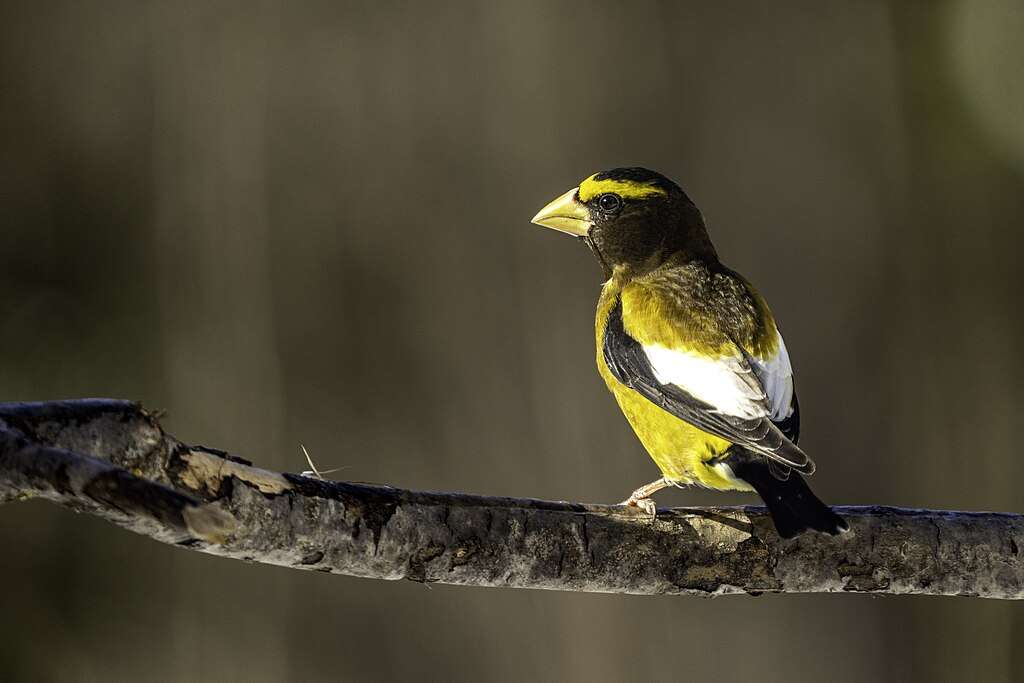
| Evening Grosbeak | Mustard or "Dull" Gold | Northern forests and feeders |
The "Winter Fade"
Many yellow birds are "seasonal suns." The American Goldfinch, for example, is famous for its bright yellow summer suit. But in the winter, it molts into a dull, brownish-olive. Why? Because being a bright yellow target in a brown winter landscape is a great way to get eaten. They trade their "mating suit" for "camo" until the spring sun returns!
