
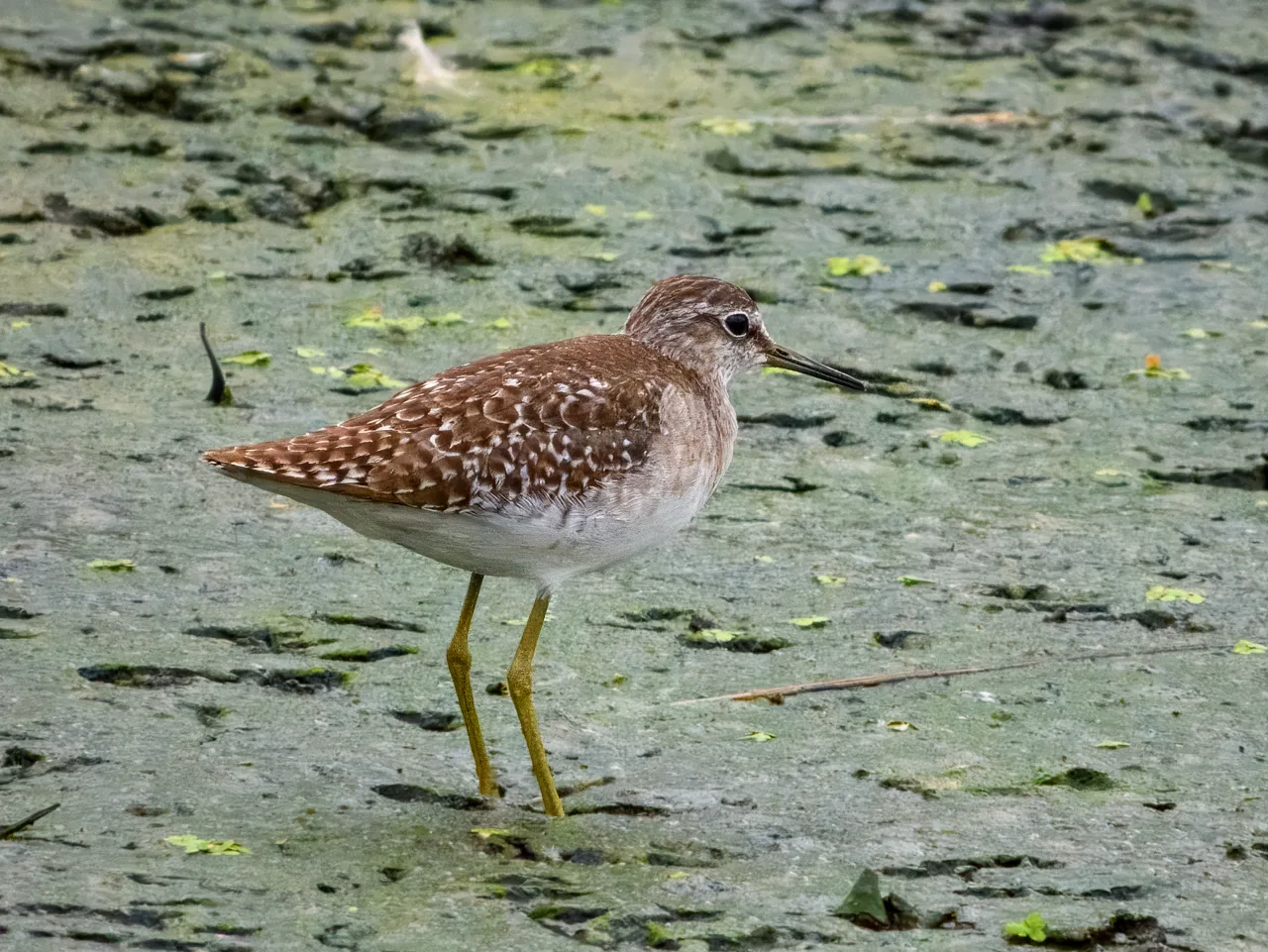
If you’re a birder in the United States, spotting a Wood Sandpiper (Tringa glareola) is a bit like finding a winning lottery ticket in your binoculars. While this elegant shorebird is one of the most common sights across the marshes of Europe and Asia, in the U.S., it remains an elusive "mega-rarity" that sends birding listservs into a frenzy.
Here is what you need to know about this globetrotting traveler.
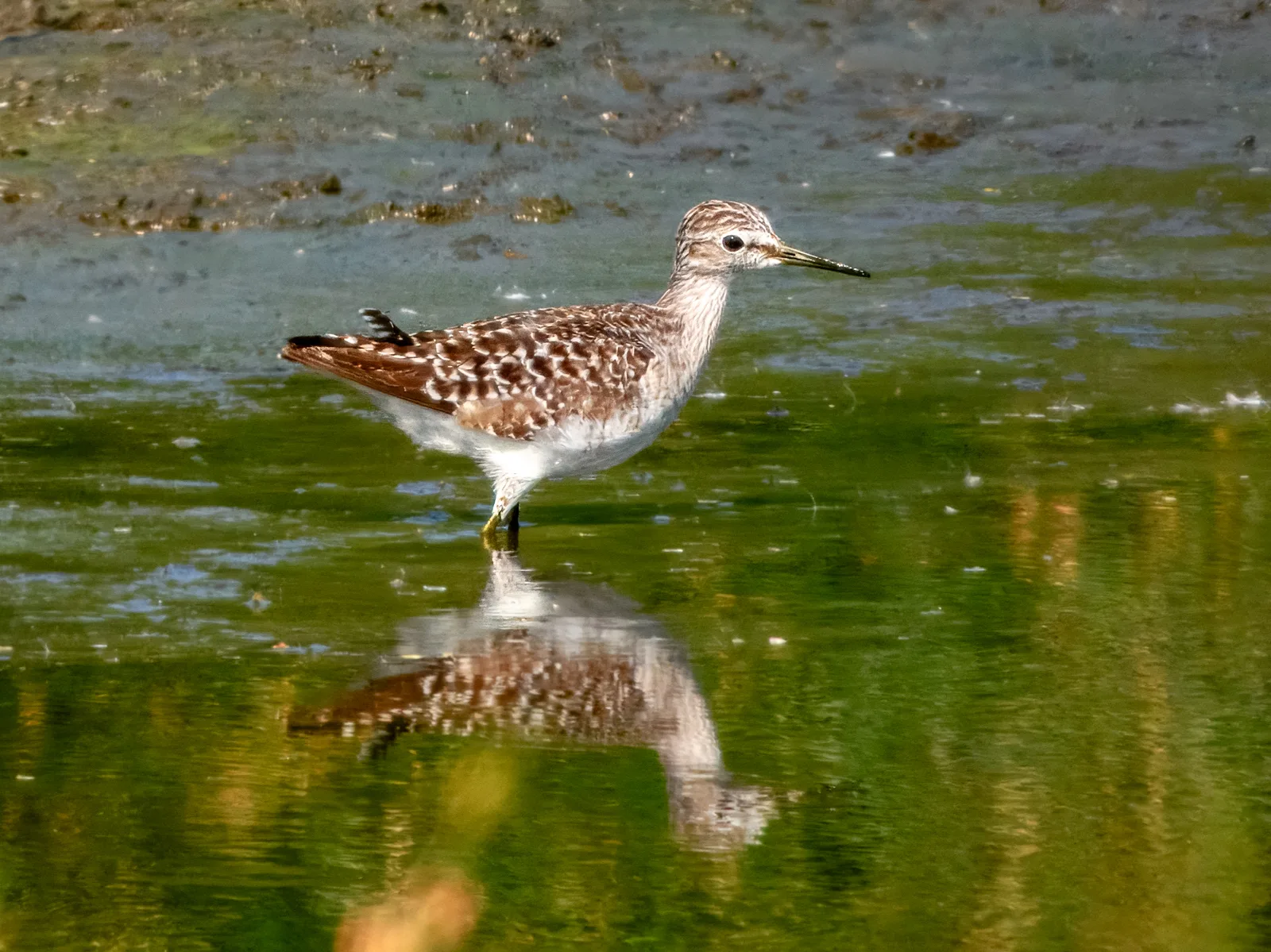
A Master of the Marsh: Description
The Wood Sandpiper is a medium-sized, graceful wader, often described as a more delicate version of our familiar Lesser Yellowlegs.
Appearance: It has a finely speckled brown back, a clean white belly, and a very prominent pale "eyebrow" (supercilium) that extends well behind the eye.
Legs: True to its "shanks" family, it sports long, yellowish to olive-green legs.
In Flight: Look for a square white rump patch and a tail with fine black bars. Unlike the Solitary Sandpiper, which has a dark center to its tail, the Wood Sandpiper's tail appears mostly white from a distance.
Global Range and Migration
The Wood Sandpiper is a true "Palearctic" species. Its home turf spans from the Scottish Highlands across Scandinavia and Siberia.
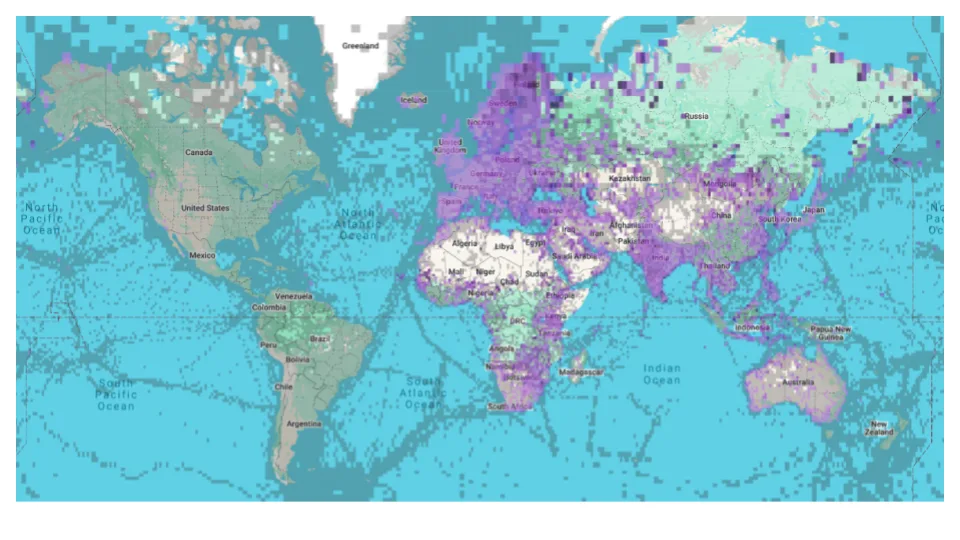
Breeding: They nest in subarctic wetlands, often in the damp transition zones between coniferous forests (taiga) and open tundra. Interestingly, they sometimes break the "shorebird rules" by nesting in abandoned tree nests left by other birds!
Migration: They are incredible long-distance athletes. Most populations fly south to spend the winter in tropical Africa, India, Southeast Asia, and even Australia.
Rare Sightings in the U.S.
So, how does a bird that breeds in Siberia and winters in Africa end up in the United States? Most U.S. records are the result of "vagrancy"—birds getting blown off course by heavy weather or simply having a bit of a navigational glitch.
1. The Alaska Regulars
In the Aleutian and Pribilof Islands of Alaska, the Wood Sandpiper isn't actually that rare. It is considered a regular spring and fall migrant in small numbers. In fact, they have even been known to nest on the outer Aleutian Islands, making Alaska the only place in the U.S. where they are "at home."
2. The Lower 48 Rarities
Outside of Alaska, sightings are legendary.
New York: The state has recorded them at least twice, including a famous winter sighting in Rye back in 1990.
Delaware: A bird in 2008 caused a massive "chase," drawing birders from all over the East Coast to Broadkill Road.
Louisiana: A notable sighting occurred in 1976, marking one of the first times the species was documented in the deep south of the U.S.
Alaskan Recent Sighting
10 Wood Sandpipers have been reported in May 2026 at Shemya Island in Alaska on this eBird checklist. This hotspot is one of the most remote and strategically significant birding locations in the United States. Located near the western tip of the Aleutian Islands, it is closer to Russia than it is to mainland Alaska.
This location is a legendary "vagrant trap" because its position in the Bering Sea makes it the first landfall for Asian species blown off course by storms or migrating along the East Asian-Australasian Flyway.
The island is small—only about 4 miles long and 2 miles wide—characterized by a rugged, treeless maritime tundra environment. The area is notorious for extreme weather, including persistent fog, high winds, and heavy rain, which often "grounds" migrating birds, forcing them to land on the island to rest.
While much of the island is developed with military infrastructure (is an active United States Air Force facility), it contains small freshwater ponds, wet tundra, and rocky shorelines that provide ideal foraging ground for shorebirds like the Wood Sandpiper. As indicated by the eBird name, the island is strictly restricted. It is not open to the general public or casual birdwatchers; typically, only military personnel, contractors, or researchers with specific clearance are permitted on-site.
Because the island is so far west, it sits on the "other side" of the 180th meridian, technically putting it in the Eastern Hemisphere, which explains why Eurasian species are recorded there with such regularity compared to the rest of North America.
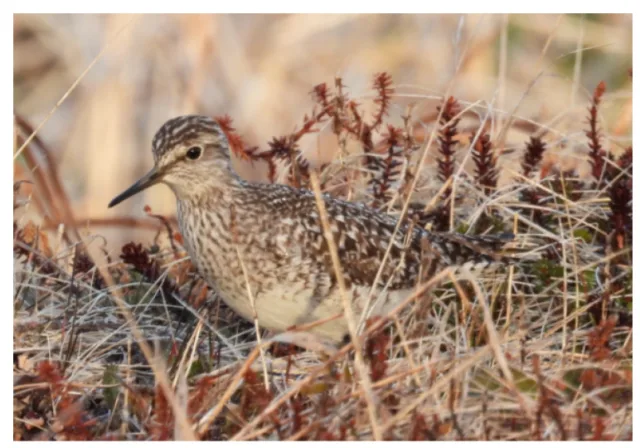
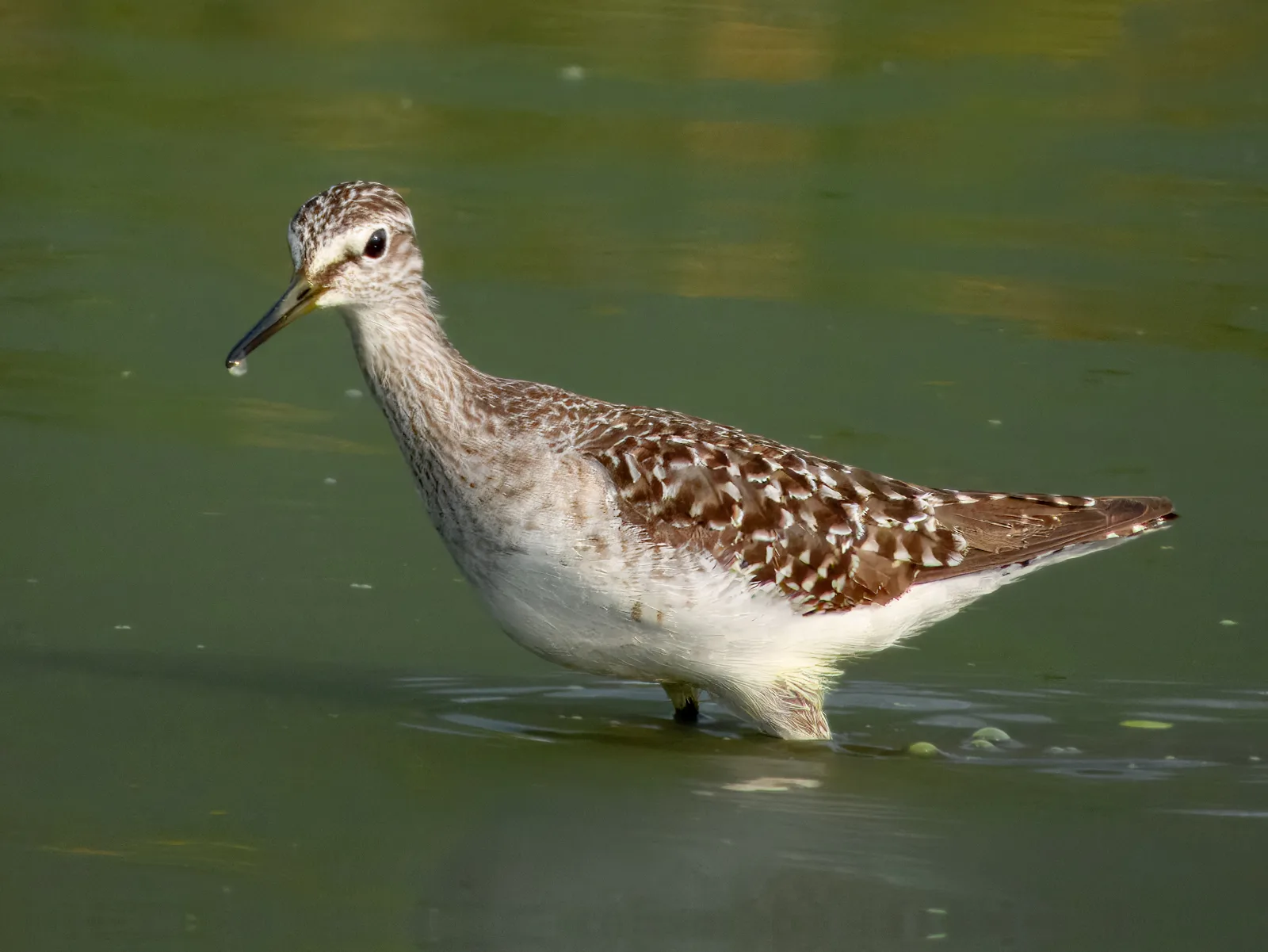
That is a fantastic shot, and it is definitely a Wood Sandpiper (Tringa glareola).
The identification markers in your photo are quite clear:
The "Eyebrow": Notice that very strong, pale supercilium. It’s much more prominent than what you’d see on a Solitary Sandpiper or a Lesser Yellowlegs.
Dorsal Patterning: The back has those crisp, heavy white "spangles" or spots against the darker brown feathers, which is a classic trait for this species.
Neck and Breast: You can see the fine, dense streaking on the neck that stops fairly abruptly at the white underparts.
Overall Structure: It has that dainty, slightly shorter-billed look compared to other Tringa shanks.
Finding one of these in the grass like this highlights exactly how they got their name—they are much more comfortable around shoreline vegetation and marshy edges than many other sandpipers.
Why It Matters
For U.S. birders, the Wood Sandpiper represents the vastness of the avian world. It’s a reminder that the birds in our local wetlands are part of a massive, global network. If you happen to see a "yellowlegs" with a particularly bold white eyebrow and a very speckled back, take a second look—you might just be looking at a traveler from the other side of the world.
