
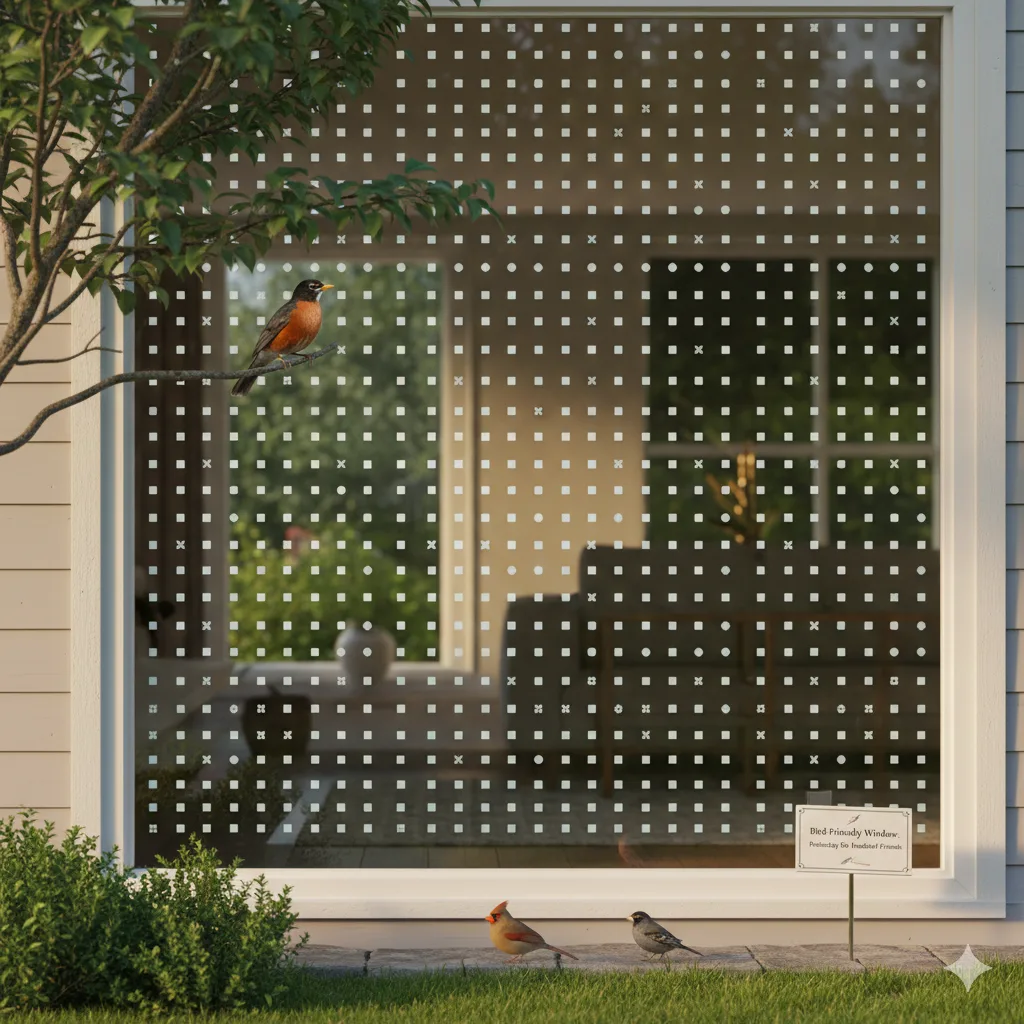
The skylines and suburbs of the United States are defined by glass, a material that offers humans stunning views and energy efficiency. To the continent's avian inhabitants, however, glass is a massive, invisible deathtrap. Bird collisions with windows are a leading source of direct human-caused bird mortality, accounting for a staggering toll that scientists estimate to be between 365 million and one billion bird fatalities annually in the U.S. alone. This problem isn't confined to shimmering skyscrapers; it is happening most often at everyday residential homes, low-rise office parks, and schools across the country.
The tragedy of window strikes lies in their preventability. By understanding why birds fly into glass and implementing simple, proven solutions, every American can become a crucial frontline defender in bird conservation. Check the bottom of the post to see our recommendations for collision prevention products.
Why the Glass Kills: A Fatal Optical Illusion
For a bird in flight, glass presents two deadly illusions:
Reflection: During the day, windows act as mirrors, reflecting the sky, trees, and landscape. A migrating warbler or a resident cardinal sees a continuation of its natural habitat—an open flight path, a welcoming tree—and flies directly toward the perceived refuge.
Transparency: When one window is positioned across from another, the glass creates a "through-house" effect. The bird perceives a clear, unobstructed tunnel of flight and attempts to fly straight through the building.
The vast majority of fatal collisions (around 44% to 56%) occur at low-rise buildings and detached residences. Contrary to common belief, the massive size of a skyscraper is less dangerous per window than the small windows of a home surrounded by dense, attractive vegetation and backyard feeders. Furthermore, studies indicate that many birds that strike a window and fly away seemingly unharmed often succumb to internal injuries later, meaning the true death toll is likely even higher than carcass counts suggest.
Low-Cost, High-Impact Prevention Tips for Homeowners
The key to preventing window strikes is simple: break up the reflection and the transparency. Glass must be made visually obvious to a bird, and the most crucial factor is the spacing of the markers.
The 2x4 Rule: Making Glass Visible
Birds, especially small songbirds, are agile and will attempt to fly through any perceived opening larger than their body. Conservation science has established the "golden rule" for spacing deterrents:
Vertical Markers: Must be spaced no more than 4 inches apart.
Horizontal Markers: Must be spaced no more than 2 inches apart.
Placement: All solutions must be applied to the exterior surface of the glass to interrupt the reflection before it starts.
Simple Solutions You Can Implement Today
UV Decals/Window Film: Products like Feather Friendly® use small, closely spaced dots that are visible to birds (who can see UV light) but minimally noticeable to humans.
Acopian BirdSavers (Zen Curtains): This effective, low-cost solution involves hanging parachute cord or lightweight outdoor rope vertically, spaced 4 inches apart, on the outside of the window. The gently swaying cords alert birds to the barrier.
Tempera Paint/Soap: Use non-toxic tempera paint or simple bar soap to create exterior vertical or horizontal stripe patterns. This is a fun, inexpensive DIY solution that is easily removed.
External Window Screens: Traditional insect screens are highly effective because they eliminate the deadly reflection. Leaving them on year-round on problematic windows is an excellent solution.
Feeder Placement: Reposition bird feeders and bird baths to be either within 3 feet of the window (which forces birds to slow down and approach at a non-fatal angle) or more than 30 feet away (giving them enough space to maneuver and avoid the house). The 3–10 foot zone is often the most dangerous.
Programs That Make a Difference: Bird-Safe Communities
While individual action is vital, the greatest systemic change comes from community-wide programs and policy shifts that mandate bird-safe design. Here are a couple of great examples of people making a change.
The Boise Bird-Safe Windows Initiative (Intermountain Bird Observatory)
While not a formal "Bird-Safe Schools" program, the Intermountain Bird Observatory (IBO) at Boise State University (BSU) in Idaho runs a highly impactful Bird-Safe Windows Initiative that combines research, student engagement, and practical mitigation.
Citizen Science Monitoring: Students and volunteers conduct regular surveys during spring and fall migration to identify which buildings and windows on campus have the highest collision rates. This data drives all mitigation efforts.
Interdisciplinary Action: The IBO partners with BSU's Graphic Design students to create unique, artistic, and scientifically effective vinyl window markers and awareness campaigns. This approach transforms a scientific problem into a hands-on learning experience for multiple disciplines.
Impact: The program uses grants and student labor to retrofit identified high-risk windows with visible patterns, directly saving lives and making the campus a safer stopover for migrating birds along the Intermountain Flyway.
Audubon’s Lights Out Programs
For nocturnal migrants—the vast majority of migratory species—the primary danger is artificial light. Cities across the U.S. participate in Lights Out initiatives (spearheaded by the National Audubon Society and local chapters) that encourage building managers to turn off non-essential exterior and interior lights in tall buildings, especially during peak migration periods in spring and fall. These programs prevent light pollution from disorienting birds and drawing them into deadly, lit urban canyons.
Bird-Friendly Building Legislation
The most potent solution is policy change. Cities like New York City and San Francisco have passed some of the most comprehensive bird-friendly building ordinances in the country. New York’s Local Law 15 (Int. 1482-2019) mandates that new construction and major alterations utilize bird-friendly materials (like patterned or fritted glass) on 90% of the façade up to 75 feet, setting a high standard for mitigating the threat.
The fight against window strikes is a direct measure of our commitment to coexisting with wildlife in the modern landscape. By adopting the 2x4 rule at home and supporting the community-driven research and policy advocacy exemplified by programs like the IBO's initiative, we can tear down the invisible walls and ensure safe passage for our nation’s birds.
Recommendations
1. Dot Pattern Decals and Tapes (The "2x4 Rule" Solution)
These products rely on the science-backed principle of placing a visual barrier every two inches horizontally and four inches vertically (the 2x4 rule). This breaks up the reflection into spaces too small for a bird to attempt flying through.
Feather Friendly® DIY Solutions
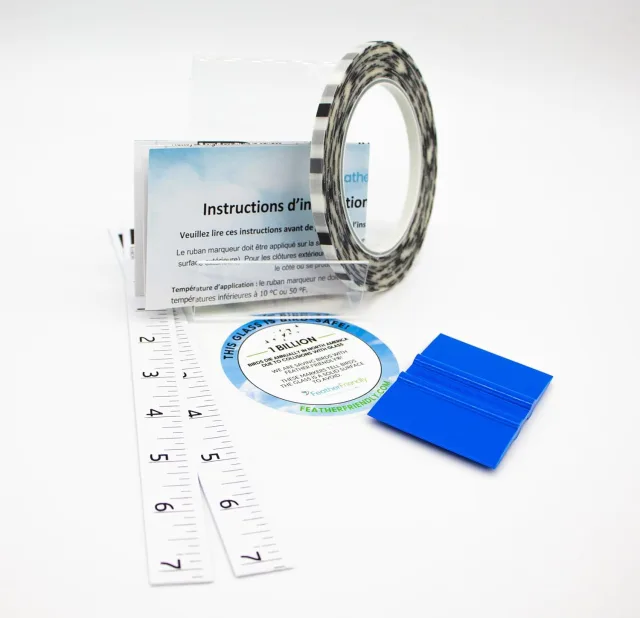
The Product: This is a roll of clear film containing small, white (or black) 1/4 inch markers already spaced 2 inches apart. You apply the tape grid to the exterior glass. It is highly effective and minimally noticeable to humans while being clearly visible to birds.
Key Feature: Tested and approved by the American Bird Conservancy (ABC) and ornithologists for efficacy.
UV Decals (WindowAlert)
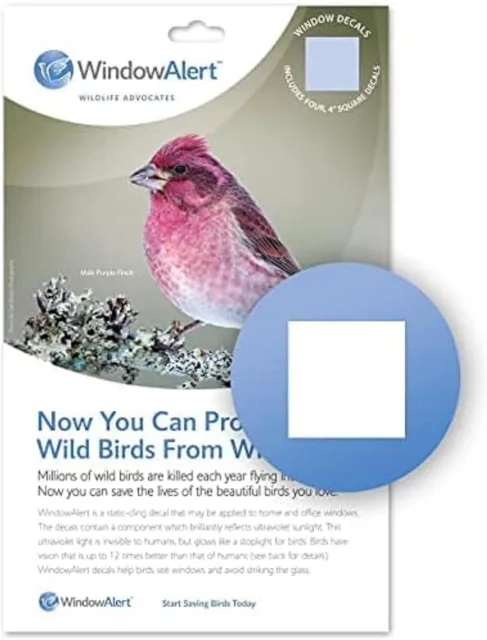
The Product: These decals utilize a reflective material that birds—who can see light in the ultraviolet spectrum—see as bright and opaque, while humans perceive them as translucent or slightly frosted. They must still be applied with the correct density (following the 2x4 rule) to be fully effective, which may mean buying multiple packs.
Key Feature: Designed to utilize avian eyesight for maximum deterrency. They also offer a liquid product that can be dabbed onto the glass to create closely spaced, UV-visible dots.
2. Specialty Films and Tapes
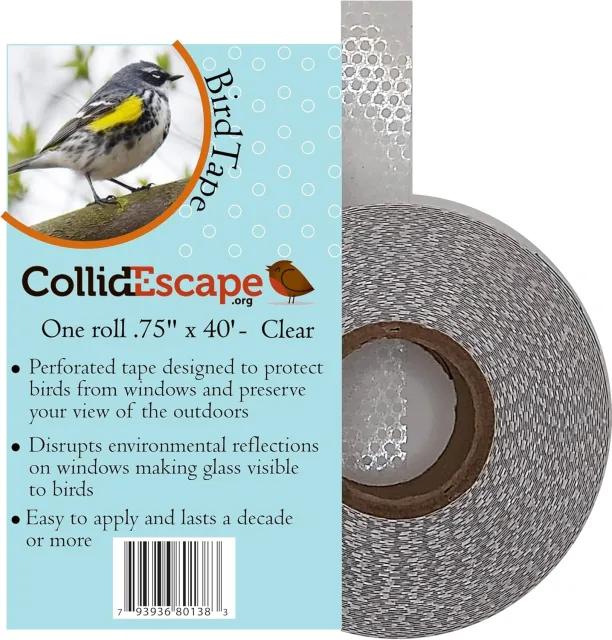
COLLIDESCAPE Spiderweb Clear BirdTape for Windows
The Product: This is simple, high-quality translucent tape that can be applied in horizontal or vertical lines. The critical factor is the application: you must apply the tape to the exterior glass with a maximum 2-inch vertical spacing or 4-inch horizontal spacing to be effective for smaller birds.
Essential Tips for Buying and Applying
To ensure you get the best "bang for your buck" and actual safety for the birds, follow the science-based rules:
Placement is Paramount: ALWAYS apply the chosen product to the exterior surface of the window. Anything applied inside is covered by the reflection on the outside and will not work.
Follow the 2x4 Rule: Any marking or barrier (decals, paint, tape) must be spaced no more than 2 inches apart in horizontal rows or 4 inches apart in vertical columns. If a product gives you fewer decals, you need to buy more and space them correctly.
Cover the Whole Window: Placing a single hawk silhouette or a few stickers in the corner is largely ineffective. You must cover the entire problem area to create an obvious barrier.
