

The differences between the two Willet subspecies—the Eastern and the Western—are fascinating and represent a classic example of allopatric speciation driven by habitat differences. Although they look similar in non-breeding plumage, their breeding behavior, morphology, and ecology are quite distinct.
Here is a comparison of the key differences between the Eastern Willet (Tringa semipalmata semipalmata) and the Western Willet (Tringa semipalmata inornata).
Subspecies Comparison: Eastern vs. Western Willet

| Feature | Eastern Willet (T. s. semipalmata) | Western Willet (T. s. inornata) |
| Primary Habitat (Breeding) | Coastal Salt Marshes and tidal flats. | Inland Prairie Wetlands and short-grass uplands. |
| Coloration (Breeding) | Darker, bolder overall plumage; heavier and more distinct barring/spotting on the chest and flanks. | Palerr, grayer overall plumage; lighter, finer streaking or barring on the chest. |
| Size | Generally shorter bill and shorter legs; slightly stockier build. | Generally longer bill and longer legs; more slender and elegant build. |
| Migration | Shorter migration; moves between the Atlantic/Gulf Coasts and nearby wintering areas. | Longer migration; travels from the Great Plains inland to the Atlantic, Gulf, or Pacific Coasts for winter. |
| Nesting | Nesting is typically done in the saltmarsh cordgrass (Spartina) just above the high-tide line. | Nests in dense upland grass near fresh or brackish prairie pools (sloughs). |
| Diet Focus | Heavily dependent on marine invertebrates like fiddler crabs and polychaete worms. | Focuses more on freshwater insects, grasshoppers, and small aquatic vertebrates. |
The Coastal Specialist: Eastern Willet
The Eastern Willet is a true bird of the sea. Its life cycle is inextricably tied to the salt marsh.
Morphology: Its slightly shorter legs and stouter build are adaptations for navigating the dense, sticky mud and thick cordgrass of coastal environments. The darker plumage offers better camouflage against the dark, organic mud and shadows of the marsh.
Vocalization: While both subspecies share the signature call, the Eastern Willet is often described as slightly more vocally aggressive in defending its territory and nest due to the higher concentration of predators and neighbors in the marsh.
Nesting: The birds must time their nesting perfectly to avoid the highest spring tides, placing their nests precariously in the tussocks of grass. The abundance of food means they are less reliant on long-distance flights for foraging during the breeding season.
The Inland Traveler: Western Willet
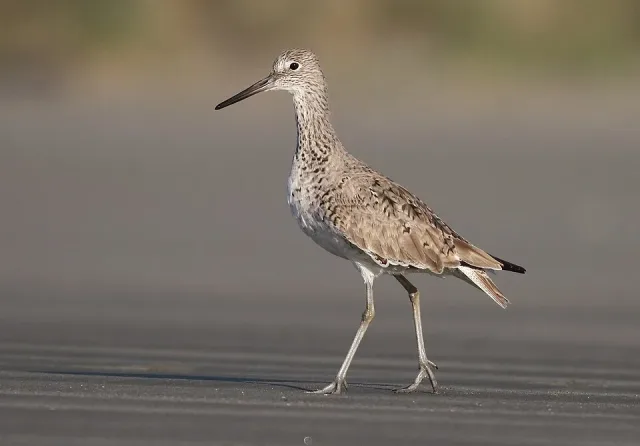
The Western Willet is the subspecies of vast, open spaces, adapting to the seasonal abundance of the North American prairies.
Morphology: The longer bill and legs of the Western Willet are advantageous for probing deeper into the saturated soils of prairie wetlands and for wading in the typically deeper waters of inland marshes. The paler plumage provides effective camouflage against the dry, sun-bleached grasses of the uplands and the pale mud of receding freshwater pools.
Migration Challenge: Because its breeding grounds (the prairies) are far removed from its wintering grounds (the coast), the Western Willet undertakes a massive transcontinental migration. This makes them a common sight at temporary inland stopover spots, like large reservoirs and flooded fields, during spring and fall.
Ecology: Their dependency on temporary prairie ponds means they are vulnerable to periods of prolonged drought, which can dramatically affect breeding success. This also makes them a key indicator species for the health of North America's rapidly declining prairie potholes.
The Evolutionary Split
The separation of these two populations is believed to have been driven by glacial cycles and subsequent adaptation to radically different environments. The key takeaway for birders is that when you see a Willet:
If you are on the Atlantic or Gulf Coast during the summer, you are seeing the darker, stockier Eastern Willet.
If you are inland on the Great Plains or Rocky Mountains during the summer, you are seeing the paler, more long-legged Western Willet.
If you are on the coast in the winter, the birds are mixed, and the subtle differences in bill and leg length may be the only way to try and distinguish them.
The Willet stands as a powerful reminder of how environmental pressures can drive evolutionary divergence, even within a single, widespread species.
