
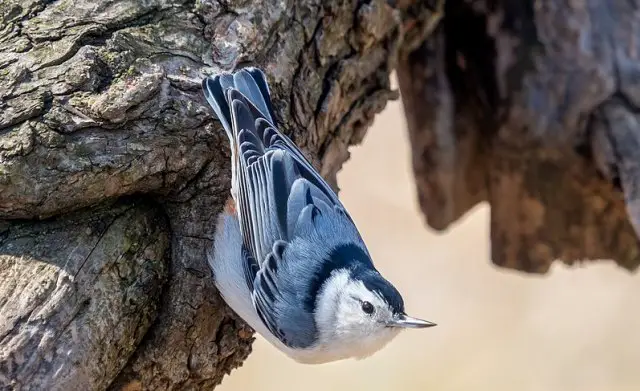
The White-breasted Nuthatch is a small bird that is found in wooded areas throughout North America. These birds are interesting creatures and are known for their acrobatic abilities.
This nuthatch is a small bird that is found in wooded areas throughout North America. These birds are interesting creatures and are known for their acrobatic abilities. They are also interesting because they often mate for life and share nesting and child-rearing responsibilities.
Keep reading to learn more about the secret life of the White-breasted Nuthatch!
The White-breasted Nuthatch is a small, unassuming bird
The White-breasted Nuthatch is a small, unassuming bird measuring in at only about five inches long. Despite its size, this bird has some impressive characteristics. For one, it climbs down trees head-first. Not only that, but it is also able to cling upside down and fly backwards, and even swing from one skewer to another like a gymnast on a high wire.
Nuthatches usually don’t fly more than a few hundred yards away from their nest, so they seek out the same food sources. They eat mostly insects and spiders, supplementing their diet with nuts, seeds, and berries. Nuthatches are able to nest in a wide variety of places and don’t need a lot of space; they often nest in cracks and cavities in all kinds of woods, including conifers and deciduous trees. They also build nests on the sides of buildings, making them a common sight in urban areas.
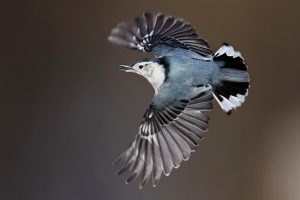
The Nuthatch Habits
When the White-breasted Nuthatch settles in a new area, their behavior is largely the same as when they stay in one place: they still prefer to find insects in the trunk of trees, they still cling to the sides of tree trunks, and they still crack nuts and seeds by wedging them into the bark. In some cases, they even dive into the cracks in the bark to find a hiding spot.
What’s really fascinating about them is that scientists have noticed that some White-breasted Nuthatches that migrate long distances seem to possess a heightened sense of awareness. They are able to remember food sources, recognize predators, and even recall how to find their way back to their original nesting sites after such a long journey. Truly, the secret life of the White-breasted Nuthatch is both mysterious and fascinating.
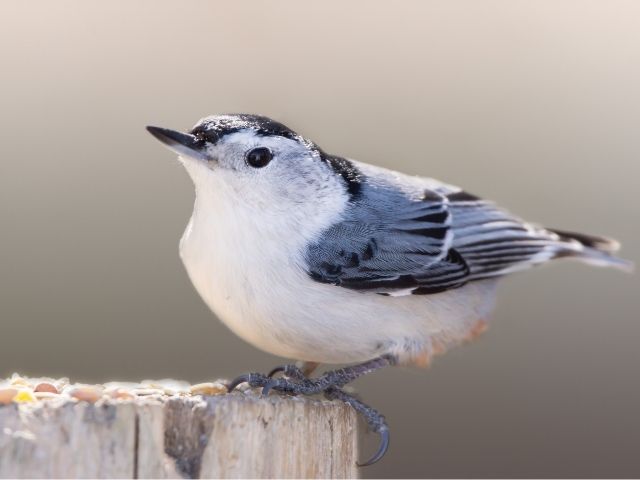
White-breasted Nuthatches are acrobatic climbers
The White-breasted Nuthatch is one of the most acrobatic climbers among birds. They are able to climb up, down, upside down and around the trees with ease. They also possess a long toes and sharp claws that help them grip on to tree trunks and branches.
Additionally, they often climb the trunks of trees in spirals – alternating sides as they move up and down. They even have the ability to descend tails first down a tree trunk and hang upside down, similar to a woodpecker.
Furthermore, they have the longest wingspan compared to their body size among North American songbirds so they can travel greater distances.
Clearly, White-breasted Nuthatches have an extraordinary climbing ability that is truly remarkable and fascinating.
Want to see more? Read all about the Yellow-rumped Warbler here.
They have incredible problem-solving skills
Apart from their impressive climbing abilities, White-breasted Nuthatches have incredible problem-solving skills that they use to pry food out of hiding places, such as in the bark of trees or crevices and behind leaves. You can watch them using sticks and grass to pry food out of hiding places.
These birds also have the skill to figure out the safest place to hide food in, usually by using their bills to probe the areas first. Furthermore, they store food in several places in order to remember the location of the hidden food better. With the help of their mental maps, these birds are able to quickly locate the food when required.
These birds are incredibly smart and possess great problem-solving skills which allows them to survive in the wild. They can use multiple strategies to find food and hide it for later use. They also use several other techniques such as cooperative foraging and mobbing predators in order to increase their chances of survival.
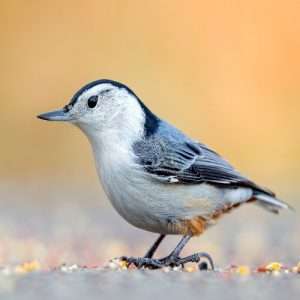
And they're very social creatures
White-breasted Nuthatches form close-knit families in the wild. They are social creatures, living in flocks and depending on each other when it comes to foraging for food and finding shelter for the winter. Apart from living in a group, these birds also mate for life and stay together for at least a few seasons.
Nuthatches are very vocal creatures and have distinctive calls and songs. They use these calls to communicate with each other, and they can even recognize their mates by their calls. To further strengthen the bond between them, they will engage in activities that require two people such a as feeding each other.
These birds are very interactive with each other and their behavior demonstrates how well-adjusted they are in the wild. They cooperate with each other and exhibit remarkable problem-solving abilities when dealing with difficult situations. They are indeed an adorable species to observe in their natural habitat.
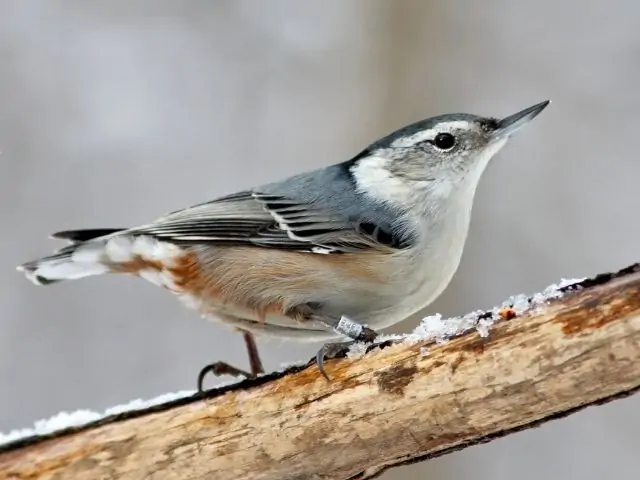
Wrapping up
White-breasted Nuthatches are a fascinating species, and studying them further can uncover many more fascinating behaviors. They demonstrate strong family dynamics, unique calling patterns, and problem-solving abilities that are undoubtedly worth further investigation.
The White-breasted Nuthatch lives in a wide range of habitats, including boreal conifer forests, deciduous and hardwood forests, and birch-dominated hillsides. With time, this bird has earned the reputation of being an important member of the birding community.
With so much to appreciate when it comes to the White-breasted Nuthatch, it will be exciting to learn more about them in the future. The species’ enigmatic lifestyle and impressive social interactions serve to further demonstrate the biodiversity of our world and the amazing animals living in it.
Frequently Asked Questions
Why are they called Nuthatches?
This species is named nuthatch because of their habit of caching food in crevices. They jam the food in tightly and then have to use their bill to dig them out again when it is time to eat.
What is the difference between a male and female White-breasted Nuthatch?
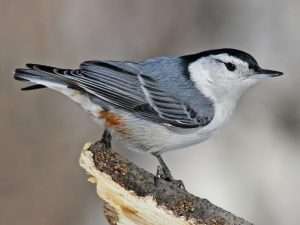
The male has a black crown, whereas the female's crown tends to be grayer.
What is the lifespan of a White-breasted Nuthatch?
These nuthatches have a short lifespan of only around 2 years.
Did you know birds have a 6th sense? Find out more in our article.
