
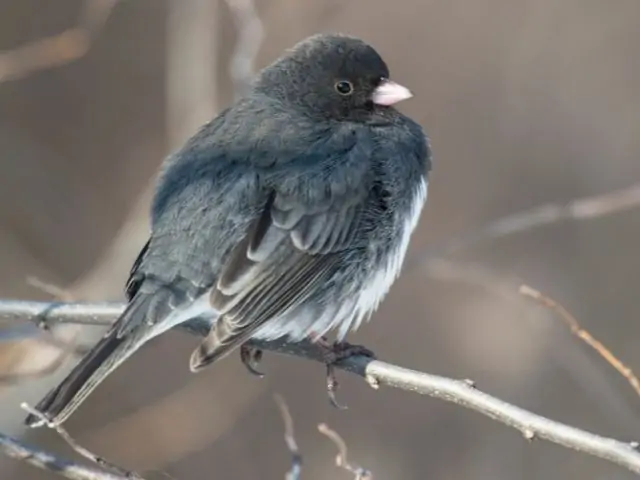
In the quiet of a winter morning, just as the sun begins to lighten the sky, a flock of small, dark birds descends upon a backyard. They hop busily on the ground beneath a bird feeder, their compact bodies and pale, conical bills a familiar sight to millions of Americans. These are the Dark-eyed Juncos (Junco hyemalis), a species so abundant and widespread they are often affectionately known as "snowbirds," their arrival in the U.S. coinciding with the first crisp hints of winter. Yet, despite their ubiquity, many people are unaware of the rich, diverse story behind these charming creatures, a story of subtle identity, remarkable migration, and a name rooted in a forgotten landscape.
The Junco's Name: A Rooted History
The name "junco" is not English in origin but comes from the Spanish word junco, which means "reed" or "rush." This, in turn, is derived from the Latin word iuncus, meaning the same. But why would a bird known for flitting about pine forests and suburban yards be named after a plant found in wetlands? The connection lies in the Old World.

While the Dark-eyed Junco is a North American species, the name was likely applied by early naturalists who were familiar with a European bunting or finch species that frequented marshy, reedy habitats. The name stuck, even though the New World juncos inhabit vastly different environments.
The scientific name, Junco hyemalis, further reinforces the bird's identity. Hyemalis is a Latin word meaning "of the winter," a perfectly fitting descriptor for a species that becomes a prominent and beloved winter resident across much of the United States. This dual etymology—a name from a reedy past and a descriptor for a snowy present—underscores the fascinating journey of this bird's identity.
A Tapestry of Appearance: The Many Faces of a Single Species
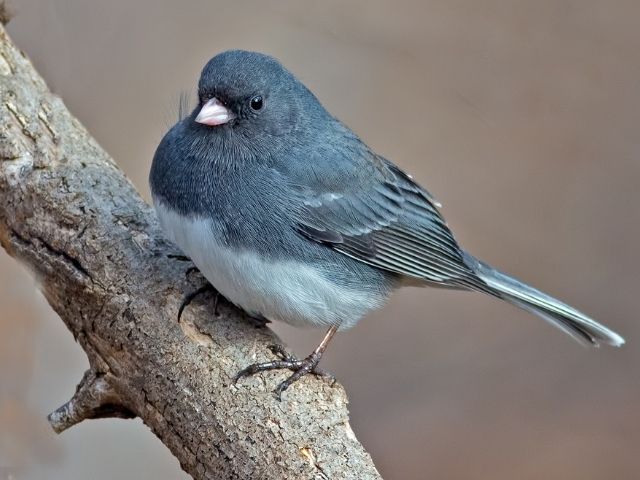
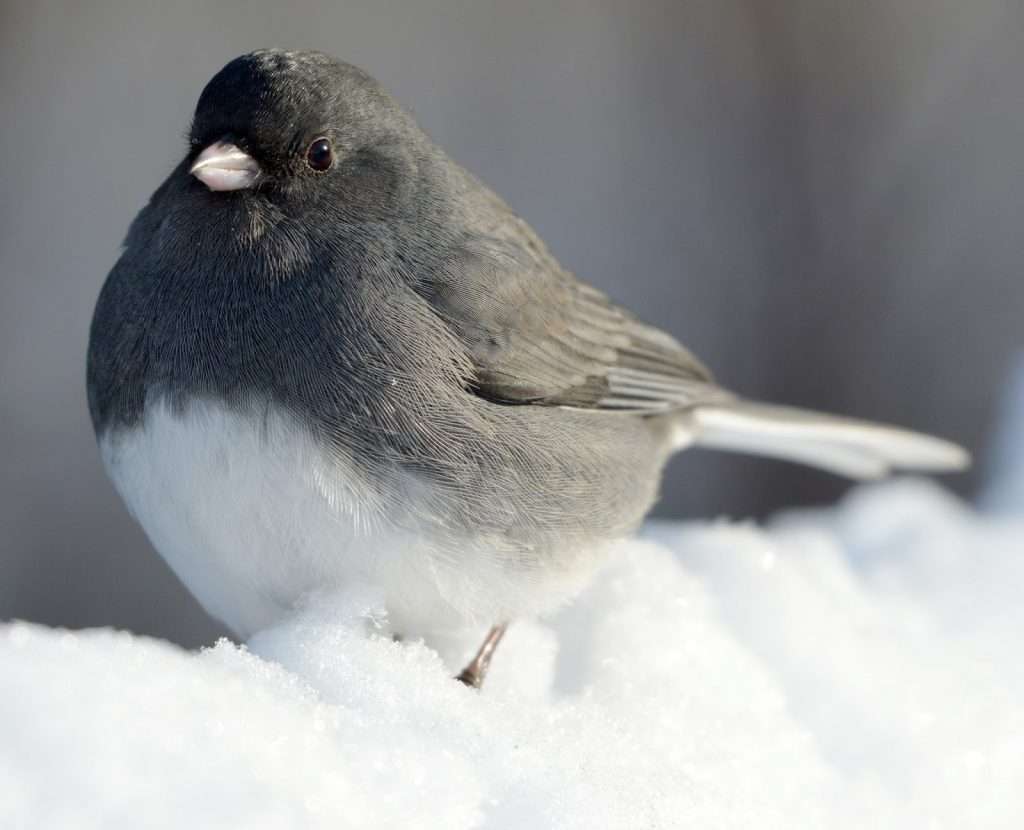
One of the most remarkable aspects of the Dark-eyed Junco is its incredible diversity in appearance. Once considered several different species, these birds are now grouped under a single taxonomic umbrella, a testament to their ability to adapt and form distinct geographic races. In the eastern United States, the Slate-colored Junco is the most common form. Males are a striking, uniform slate-gray on their head, back, and chest, with a contrasting white belly. Females and juveniles are often a paler, brownish-gray. These are the juncos that appear in large flocks across the Midwest and Eastern Seaboard, their somber plumage perfectly camouflaging them against the gray earth and bare branches of winter.
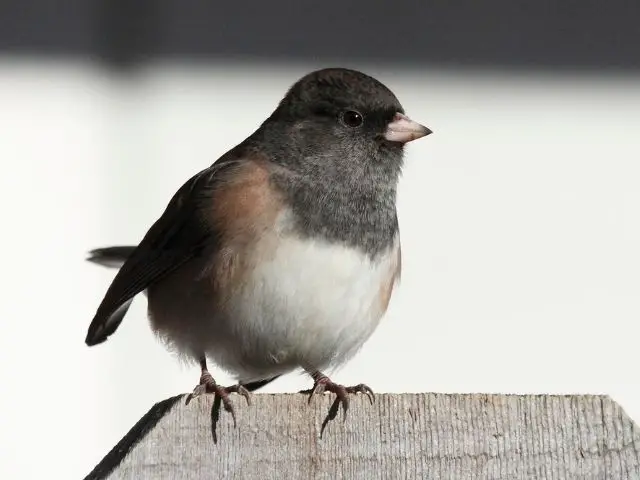
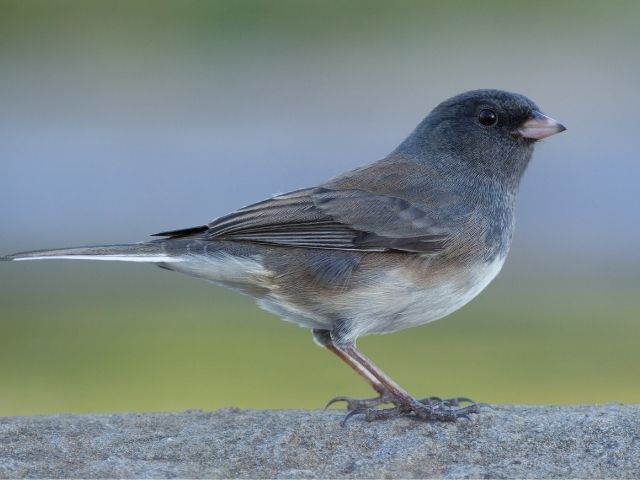
In the western half of the continent, the picture becomes more colorful. The Oregon Junco is a widespread and familiar form, easily identified by its distinct black or dark gray "hood" that contrasts sharply with a brown back and cinnamon-colored flanks. The Pink-sided Junco, found in the northern Rockies, is a pale, elegant version, with a light gray hood, pinkish-buff flanks, and a brownish back. High in the mountains, from the Great Basin to the central Rockies, resides the Gray-headed Junco, which boasts a deep reddish-brown back that pops against its otherwise uniform gray body. Finally, the White-winged Junco, a localized and paler form found primarily in the Black Hills, is notable for the two prominent white wing bars that set it apart from its brethren.
Despite these plumage differences, all Dark-eyed Juncos share a few key features: a short, pale, cone-shaped bill and, most distinctively, bright white outer tail feathers that flash like little signals when the bird takes flight. This "flashing" is a critical identification marker and a crucial part of the bird's social signaling.
Life on the Ground: Habitat, Behavior, and Diet
The Dark-eyed Junco is a master of the forest floor. While they breed in coniferous and mixed forests from Alaska and Canada down through the high-elevation mountains of the U.S., their true celebrity comes during the winter. As cold weather descends, they descend from the breeding grounds, fanning out across nearly the entire lower 48 states and northern Mexico. Here, they take up residence in a variety of habitats, from open woodlands and forest edges to parks, suburban neighborhoods, and urban backyards.
Their behavior is as predictable as their arrival. Juncos are primarily ground feeders, and their favorite foraging method involves a two-footed, backward-scratching hop. They perform this little "dance" to uncover seeds from beneath leaf litter and thin layers of snow. Their diet consists mainly of small seeds from grasses, weeds, and other plants. During the breeding season, they supplement this with a healthy dose of insects and other arthropods, which provide essential protein for their young. In winter, they become frequent visitors to bird feeders, preferring to pick up spilled millet and sunflower seed from the ground rather than perching on the feeder itself.
Juncos are also highly social birds, forming loose flocks of 10 to 25 individuals during the non-breeding season. Within these flocks, a clear hierarchy exists, with males typically dominating females and adults holding seniority over younger birds. This social structure helps maintain order at feeding sites, with more dominant birds having priority access to food. The flashing of their white tail feathers is a critical part of their communication, often used as a signal of alarm or to assert dominance.
The "Snowbird's" Song and Family Life
While known for their winter silence save for a soft "chip" call, the Dark-eyed Junco has a beautiful, if simple, song during the breeding season. It is a clear, ringing trill—a high-pitched, musical vibrato that lasts for several seconds. Often confused with the songs of Chipping Sparrows or Pine Warblers, the junco’s song is a harbinger of spring in its northern and mountainous breeding grounds.
Breeding season is when juncos retreat to the quiet solitude of forests and alpine meadows. The male establishes a territory with his song, and once a pair is formed, the female takes on the primary responsibility of nest building. The nest is a marvel of concealment, an open-cup structure woven from twigs, moss, and grasses, and lined with fine materials like hair and rootlets. It is almost always placed on the ground, cleverly hidden under a fallen log, at the base of a shrub, or tucked into a dense patch of weeds or ferns. The eggs, typically three to six, are a pale greenish or bluish-white, flecked with brown. The female incubates the eggs for about two weeks, and after they hatch, both parents work tirelessly to feed the nestlings, primarily with insects. The young fledge in about two weeks, and the parents may raise two or three broods in a single season.
A Common Bird, A Priceless Treasure
The Dark-eyed Junco is one of North America's most abundant bird species, with an estimated population in the hundreds of millions. For this reason, it is listed as a species of "Least Concern" by conservation organizations. However, like all birds, juncos face threats from habitat loss, especially on their breeding grounds, and from window collisions.
For many Americans, the junco represents more than just a common bird; it is a symbol of the changing seasons. The sight of these little "snowbirds" is a comforting sign that winter is on its way, bringing with it a sense of cozy resilience. They are a daily joy for backyard bird watchers, requiring little more than a clean space to scratch for seeds and a nearby bush for cover. Their understated beauty, from the sleek gray of the eastern birds to the warm colors of their western cousins, and their quiet determination in the face of winter make them a true gem of the North American avian landscape. Their simple presence is a reminder that even the most common things can hold a deep and fascinating story, waiting to be discovered just outside our window.
From little to large. Read here about the Snowy Owl.
