
The number of warbler species found in the United States, including those that breed, migrate through, or occur as vagrants (accidental visitors), is approximately 50–55 species belonging to the family Parulidae (New World Warblers).
These small, highly colorful, insect-eating birds are a staple of the spring and fall migration seasons, presenting one of the greatest identification challenges and rewards for birders across the continent. This article details the major groups and specific species, categorized by their primary geographic or behavioral niches.
The New World Warblers are one of the most species-rich families of North American birds. They are organized into several genera, reflecting their evolutionary relationships. The largest and most diverse group is the genus Setophaga.

I. The Setophaga Complex: Canopy and Color Specialists
This genus contains the largest number of species, known for their often vibrant plumage and tendency to forage high in the forest canopy.
| Species | Key Feature & Distribution | Status in U.S. |
| Yellow-rumped Warbler (S. coronata) | The most abundant and widespread warbler, known for its yellow rump ("butter-butt"). Can winter further north than most. | Widespread Breeder/Migrant/Winter Resident |
| Yellow Warbler (S. petechia) | Almost entirely yellow, with chestnut streaking on males. Common breeder in shrubby, riparian habitats. | Widespread Breeder/Migrant |
| American Redstart (S. ruticilla) | Bold black and orange (male) or gray and yellow (female) plumage, often fanned to "startle" insects into flight. | Widespread Breeder/Migrant |
| Black-throated Green Warbler (S. virens) | Yellow face with a black throat. Breeds in coniferous and mixed forests, often in the East. | Widespread Breeder/Migrant |
| Black-throated Blue Warbler (S. caerulescens) | Distinctive blue-gray back, black throat/sides (male), and a visible white spot on the wing. | Eastern Breeder/Migrant |
| Blackburnian Warbler (S. fusca) | Spectacular breeding male with a fiery orange-red throat and face, contrasting with black and white. | Eastern Breeder/Migrant |
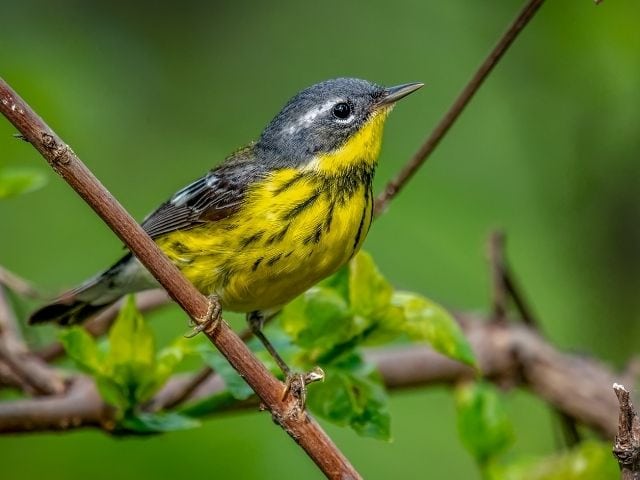
| Magnolia Warbler (S. magnolia) | Yellow underside with heavy black streaking forming a thick band across the breast. | Eastern Breeder/Migrant |
| Bay-breasted Warbler (S. castanea) | Breeding male has a diagnostic chestnut-colored crown, throat, and flanks. | Eastern Breeder/Migrant |
| Blackpoll Warbler (S. striata) | Prominent black cap (poll) on the breeding male, known for one of the longest bird migrations globally. | Eastern Breeder/Migrant |
| Chestnut-sided Warbler (S. pensylvanica) | White breast, yellow-green cap, and a distinct chestnut stripe along the flanks. | Eastern Breeder/Migrant |
| Cape May Warbler (S. tigrina) | Striped breast (like tiger stripes) and a rusty cheek patch. Nectar feeder during migration. | Eastern Migrant/Breeder (Boreal) |
| Northern Parula (S. americana) | Small, blue-gray bird with a distinctive broken eye-ring and a yellowish throat/chest band. | Eastern Breeder/Migrant |
| Cerulean Warbler (S. cerulea) | Sky-blue male with thin black streaks; prefers large, mature deciduous forests. Conservation concern. | Eastern Breeder/Migrant |
| Yellow-throated Warbler (S. dominica) | Distinctive yellow throat contrasting with black mask and streaked flanks. Found in sycamore and pine habitats. | Eastern Breeder/Migrant |
| Prairie Warbler (S. discolor) | Bright yellow with heavy black markings on the face (eye stripe and cheek). Prefers shrubby fields. | Eastern Breeder/Migrant |
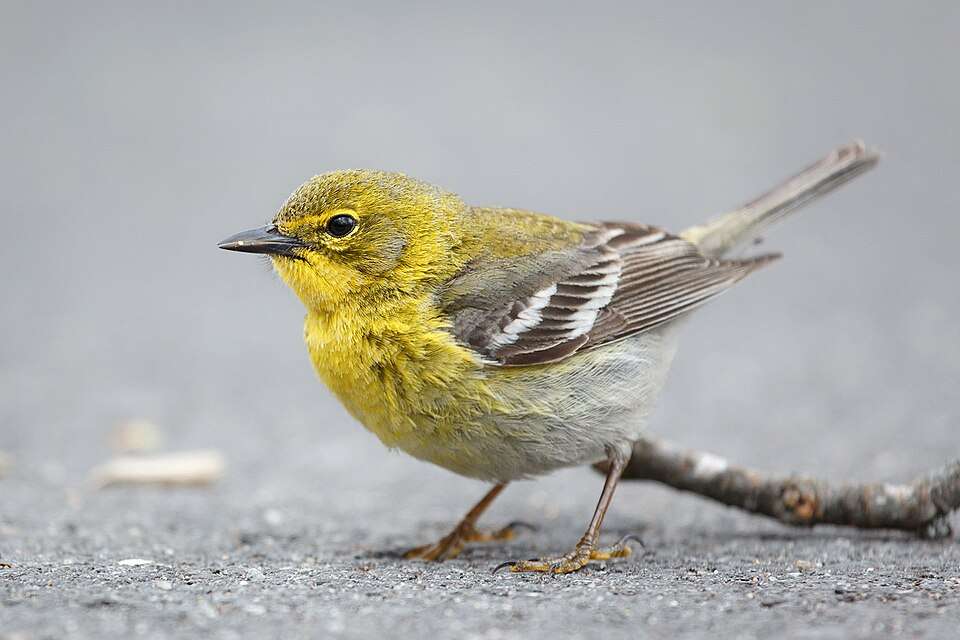
| Pine Warbler (S. pinus) | Yellowish-green and the only warbler that eats many seeds; strongly associated with pine forests. | Eastern Breeder/Resident |
| Palm Warbler (S. palmarum) | Drab brownish-yellow, known for its diagnostic, constant tail-wagging while foraging on the ground. | Widespread Migrant/Winter Resident |
| Black-throated Gray Warbler (S. nigrescens) | White underside, gray back, black throat, and a tiny yellow spot over the lores (eye). | Western Breeder/Migrant |
| Townsend's Warbler (S. townsendi) | Similar to the Black-throated Green but with a black ear patch and two distinct yellow patches. | Western Breeder/Migrant |
| Hermit Warbler (S. occidentalis) | Yellow head and throat contrasting with a black throat and gray back; breeds in Western coniferous forests. | Western Breeder/Migrant |
| Grace's Warbler (S. graciae) | Yellow throat and chest with faint streaks, gray back; specialized breeder in pines of the Southwest. | Southwestern Breeder/Migrant |
| Golden-cheeked Warbler (S. chrysoparia) | Endemic to Central Texas; black throat/crown with brilliant yellow cheek patches. Endangered. | Central Texas Breeder/Migrant |
| Kirtland's Warbler (S. kirtlandii) | Endangered species; restricted breeding to young Jack Pines in Michigan. Dull blue-gray with a yellow breast. | Rare Breeder/Migrant |
II. Waterthrushes, Ovenbird, and Creeper Specialists
This group contains birds with unique foraging behaviors that often make them seem unlike other warblers.

| Species | Key Feature & Distribution | Status in U.S. |
| Ovenbird (Seiurus aurocapilla) | Walks on the forest floor, constantly bobbing its head. Named for its dome-shaped nest on the ground. Has an orange crown stripe. | Widespread Breeder/Migrant |
| Northern Waterthrush (Parkesia noveboracensis) | Constantly teeters or bobs its entire body while walking along water edges. Dark streaking on yellow/white underside. | Widespread Breeder/Migrant |
| Louisiana Waterthrush (Parkesia motacilla) | Similar to Northern, but with a bold white supercilium (eyebrow) and cleaner white underside. Prefers fast-moving streams. | Eastern Breeder/Migrant |
| Black-and-white Warbler (Mniotilta varia) | Creeps along tree trunks and branches like a nuthatch; strongly striped black and white ("zebra warbler"). | Widespread Breeder/Migrant |
| Prothonotary Warbler (Protonotaria citrea) | Brilliant golden-yellow head and breast. The only warbler that is a cavity nester, often in swampy areas. | Eastern Breeder/Migrant |
| Worm-eating Warbler (Helmitheros vermivorum) | Dull olive color with distinct black stripes on a buff-colored head; forages among dead leaves and brush. | Eastern Breeder/Migrant |
| Swainson's Warbler (Limnothlypis swainsonii) | Plain, drab brown warbler with a rusty cap and a strong supercilium; elusive and found in dense cane thickets/swamps. | Southeastern Breeder/Migrant |

III. Ground and Shrub Foragers (The Leiothlypis and Geothlypis Groups)
These warblers generally spend more time foraging in the understory, shrubs, or on the ground, making them easier to spot at lower levels.
| Species | Key Feature & Distribution | Status in U.S. |
| Common Yellowthroat (Geothlypis trichas) | Yellow throat/breast with a striking black mask (male). Found low in dense, wet thickets. | Widespread Breeder/Migrant |
| Mourning Warbler (Geothlypis philadelphia) | Gray hood extending to the chest, yellow belly. Lacks an eye-ring (or has a faint one). Prefers dense scrub. | Eastern Migrant/Breeder (Boreal) |
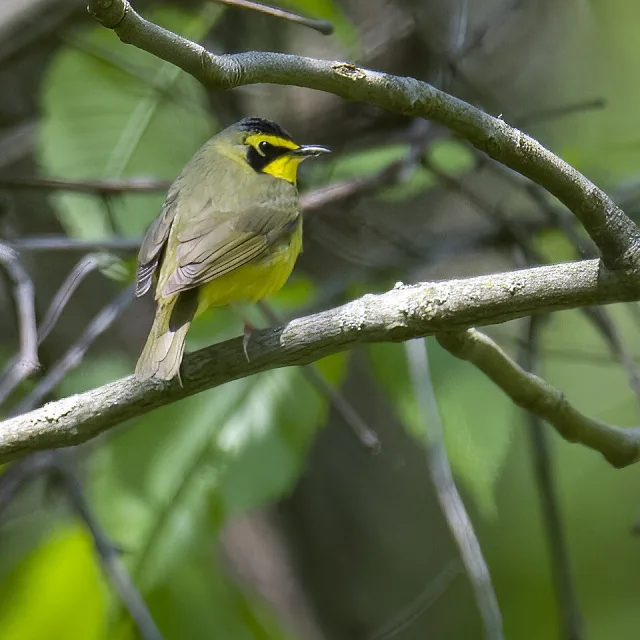
| Kentucky Warbler (Geothlypis formosa) | Bright yellow underside with a distinctive black "sideburns" or mask framing the eye. | Eastern Breeder/Migrant |
| MacGillivray's Warbler (Geothlypis tolmiei) | Similar to Mourning Warbler but has a conspicuous white eye-arc and breeds in Western shrubs. | Western Breeder/Migrant |
| Blue-winged Warbler (Vermivora cyanoptera) | Yellow head/breast with olive-green back and blue-gray wings featuring two white bars. | Eastern Breeder/Migrant |
| Golden-winged Warbler (Vermivora chrysoptera) | Gray back with yellow wing patches and a black mask/throat patch. Declining due to habitat loss and hybridization. | Eastern Breeder/Migrant |
| Tennessee Warbler (Leiothlypis peregrina) | Drab olive-green; known for its thick bill, long supercilium, and huge population swings linked to spruce budworm cycles. | Widespread Migrant/Breeder (Boreal) |
| Orange-crowned Warbler (Leiothlypis celata) | Drab and hard to identify; faint streaking and a sometimes visible (but often hidden) orange crown patch. | Widespread Breeder/Migrant |
| Nashville Warbler (Leiothlypis ruficapilla) | Bright yellow throat/breast, gray head, and a distinctive white eye-ring. | Widespread Breeder/Migrant |
| Virginia's Warbler (Leiothlypis virginiae) | Gray warbler of the Southwest mountains; has a conspicuous white eye-ring and a yellow patch on the breast. | Southwestern Breeder/Migrant |
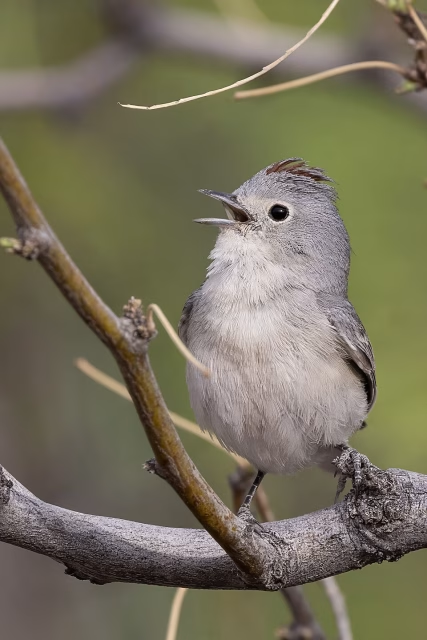
| Lucy's Warbler (Leiothlypis luciae) | The only warbler found in the Sonoran Desert; pale gray with a reddish crown and rump patch. Smallest U.S. warbler. | Southwestern Breeder/Migrant |
| Colima Warbler (Leiothlypis crissalis) | Restricted to the Chisos Mountains of Big Bend National Park, Texas, during breeding season. Gray-olive with a white eye-ring. | Rare Texas Breeder/Migrant |
IV. Redstarts and Western Cardellina

This small group includes species known for their frequent tail-fanning behavior and bright facial patterns.
| Species | Key Feature & Distribution | Status in U.S. |
| Hooded Warbler (Setophaga citrina) | Bright yellow with a clear black hood and throat (male). Flashes white outer tail feathers. | Eastern Breeder/Migrant |
| Wilson's Warbler (Cardellina pusilla) | Small, plain yellow bird with a prominent black cap (male); breeds in dense willow thickets. | Widespread Breeder/Migrant |
| Canada Warbler (Cardellina canadensis) | Gray back, yellow underside, and a diagnostic "necklace" of black streaks on the breast. | Eastern Breeder/Migrant |
| Red-faced Warbler (Cardellina rubrifrons) | Distinctive red face, throat, and breast with a black crown and neck. Breeds in high-elevation Western forests. | Southwestern Breeder/Migrant |
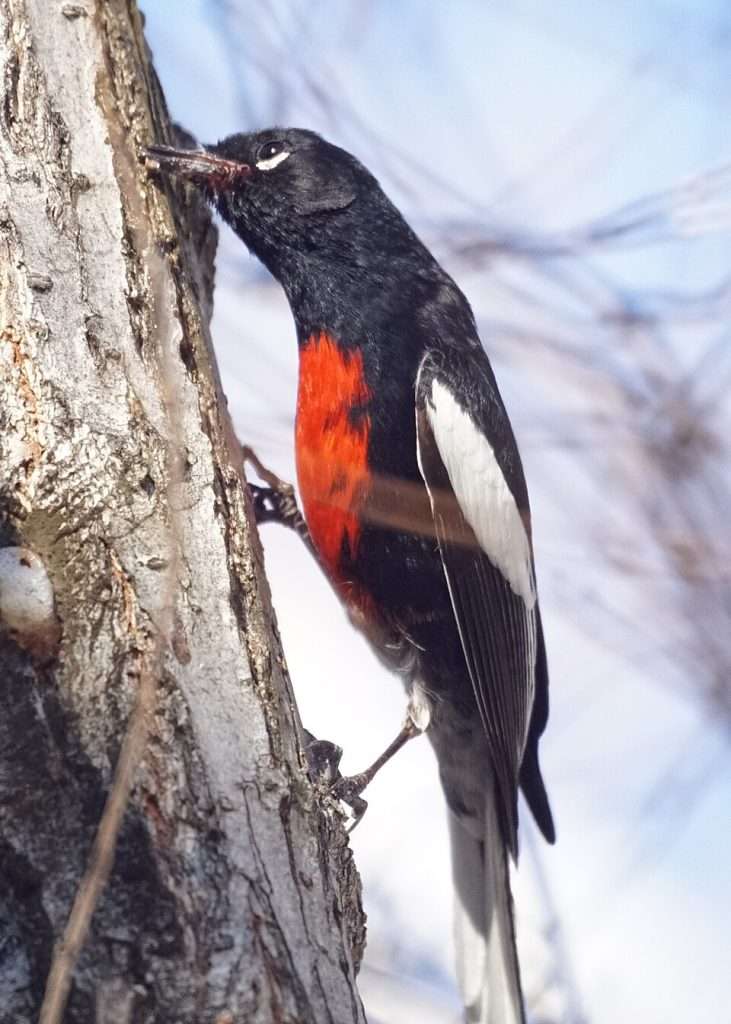
| Painted Redstart (Myioborus pictus) | Striking black and white with a bright red belly. Flicks its tail widely. Found in canyons and mountains of the Southwest. | Southwestern Breeder/Resident |
V. Rarities and Accidentals
Beyond the regularly occurring species, several warblers occasionally appear in the U.S. as vagrants, including:
- Fan-tailed Warbler (Euthlypis lachrymosa): Mexican species occasionally seen in Texas/Arizona.
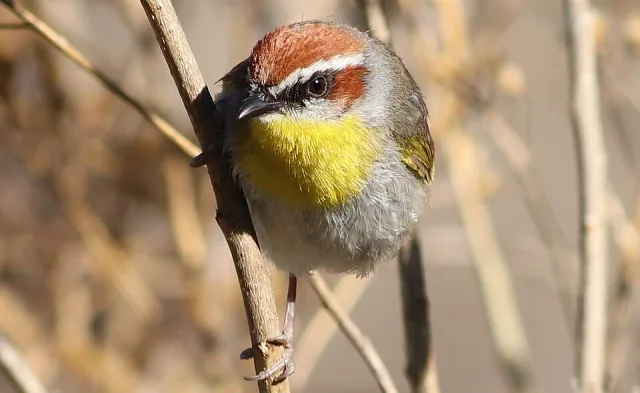
- Rufous-capped Warbler (Basileuterus rufifrons): Southwestern vagrant with a bright rusty cap.
- Gray-crowned Yellowthroat (Geothlypis poliocephala): Rare visitor to the southern border.
- Arctic Warbler (Phylloscopus borealis): Found in western Alaska, a classic Old World vagrant.
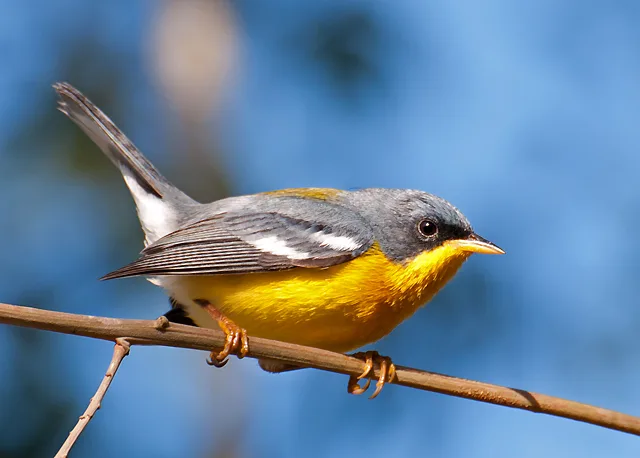
- Tropical Parula (Setophaga pitiayumi): Southern Texas resident/vagrant.
The annual spectacle of warbler migration, often called the "warbler neck" phenomenon (due to constant craning to view the high canopy), drives birders across the U.S. every spring. Their sheer diversity in color, song, and foraging strategy underscores the ecological richness of North America.
The Phoenix of the Pines: The Enduring Saga of the Kirtland's Warbler
