
Vireos (Vireo genus) are a distinct family of New World songbirds known for their relatively dull, olive-green or grayish plumage, stout, slightly hooked bills, and, most notably, their persistent and often deliberate, sing-song vocalizations. While they may resemble warblers, their heavier build and slower foraging style distinguish them. The United States offers a rich "Vireotopia," hosting over a dozen species across diverse habitats, from eastern hardwood forests to western canyons and southern scrublands.
The American Ornithological Society (AOS) currently recognizes 13 regularly occurring species in the US, plus a few rare vagrants from the tropics. They can be broadly categorized into groups based on their identifying features, such as eye-rings, wing bars, and head patterns.
1. The Common and Widespread Vireos (The Easterners)
These species are foundational to the soundscape of eastern and central North American summers.
| Species | Key Identification Marks | US Range & Habitat |
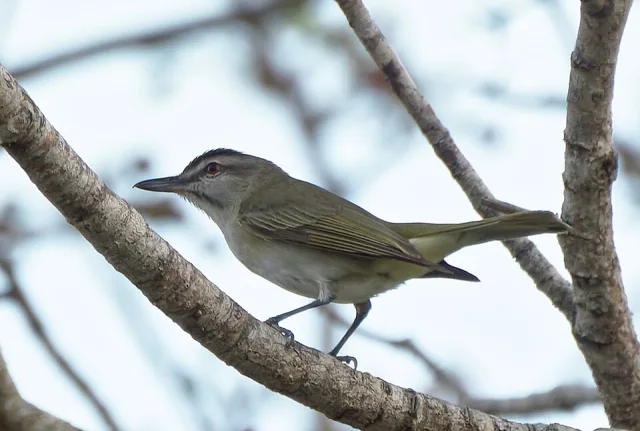
| Red-eyed Vireo (V. olivaceus) | Red iris (in adults), pale eyebrow contrasting with a dark line through the eye and a gray cap; no wing bars. | Most Common Eastern Bird. Breeds across nearly all deciduous forests of the East and into the West, favoring the high canopy. |
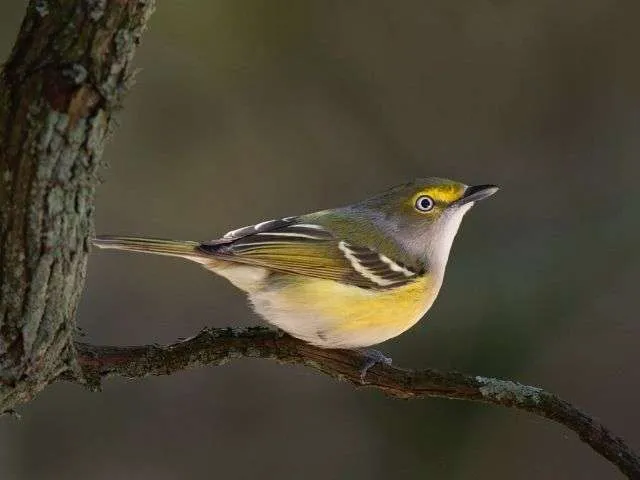
| White-eyed Vireo (V. griseus) | Bright white iris (yellow in juveniles), yellow "spectacles," and two prominent yellow-white wing bars. | Breeds in dense, low-level thickets and scrub, primarily throughout the southeastern and central US. |
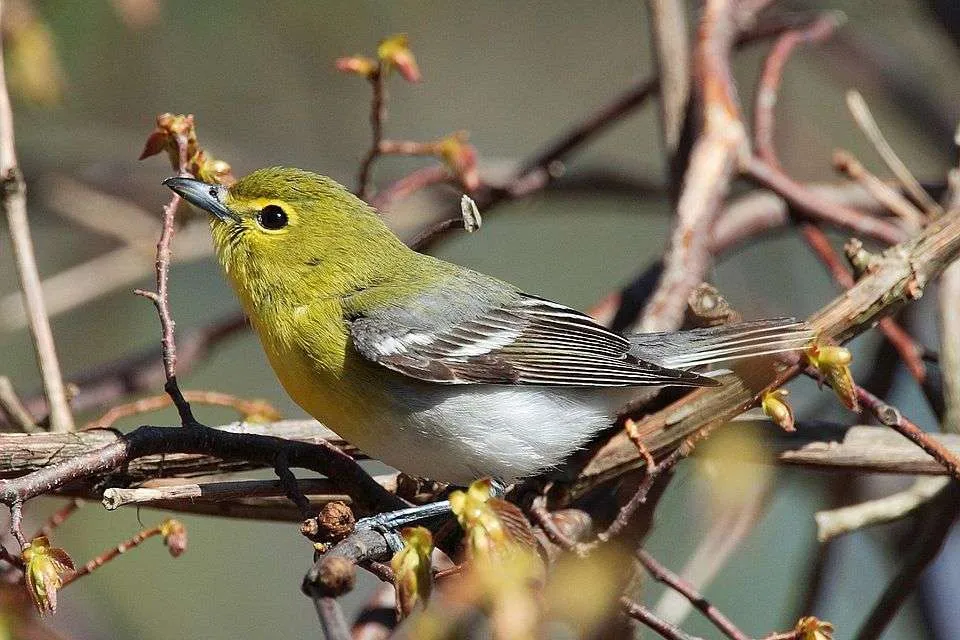
| Yellow-throated Vireo (V. flavifrons) | Bright yellow throat and breast; large yellow "spectacles" around the eye; two bold white wing bars; olive back. | Breeds in mature, open deciduous and mixed woods, often near water, throughout the eastern US. |
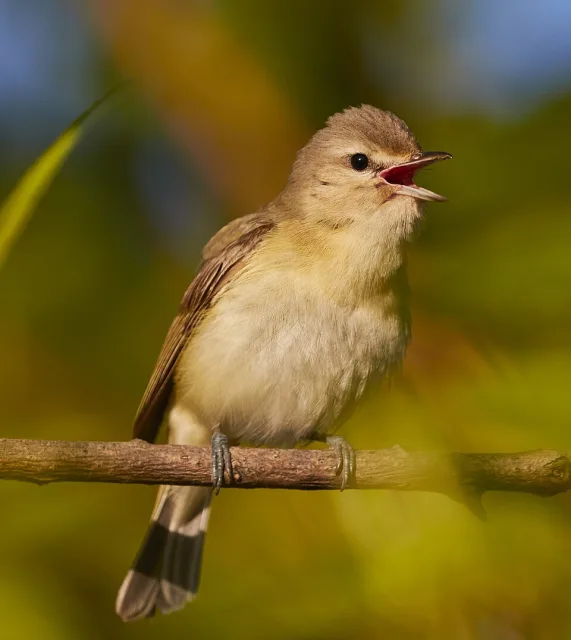
| Warbling Vireo (V. gilvus) | Simplest in appearance: grayish-white with a noticeable white or pale-gray eyebrow; no wing bars or spectacles. | Coast-to-coast breeder in open, mixed, and deciduous woods, river groves, and shade trees. |
| Philadelphia Vireo (V. philadelphicus) | Small and dull; yellowish wash on the throat and chest; strong, dark line through the eye; lack of wing bars. | Primarily an eastern migrant and rare breeder in the far Northeast; passes through the central and eastern US en route to Central America. |
2. The Solitary/Spectacled Complex (The Westerners)
This group was once considered a single species ("Solitary Vireo") but is now split into three distinct, geographically separated species, all characterized by a bold white "spectacle" of eye-ring and lore, and two white wing bars.
| Species | Key Identification Marks | US Range & Habitat |
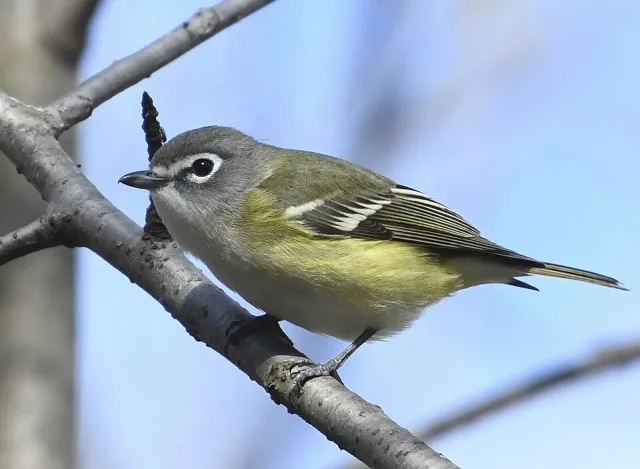
| Blue-headed Vireo (V. solitarius) | Deep blue-gray head and crown; bright olive-green back; white throat and bold spectacles. | Breeds in cool, coniferous and mixed forests of the Northeast and Appalachian Mountains; winters in the Southeast. |
| Cassin's Vireo (V. cassinii) | Duller and grayer overall than the Blue-headed; light olive-gray crown and back; less contrasting spectacles. | Breeds in coniferous and montane forests of the Pacific Northwest and western mountains. |
| Plumbeous Vireo (V. plumbeus) | Mostly gray, lacking the olive-green tones of the other two; faint or no green wash on the back. | Breeds in pine-oak and juniper forests of the interior Southwest and Rocky Mountains. |

3. The Southern and Southwestern Specialties
These species are restricted to the southern tier of the US, often near the Mexican border or the coast.
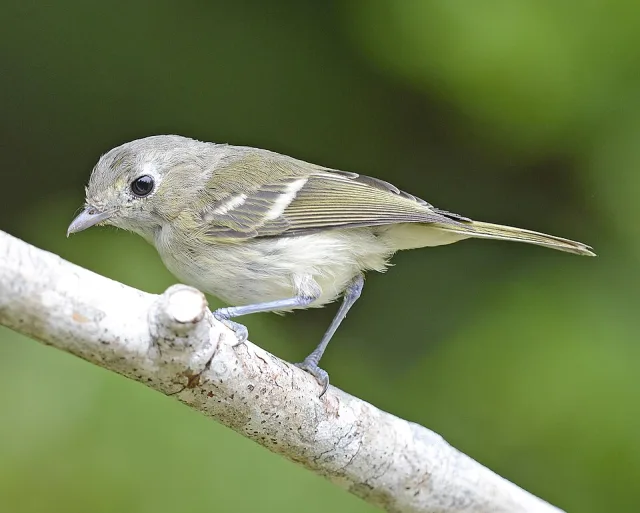
| Species | Key Identification Marks | US Range & Habitat |
| Hutton's Vireo (V. huttoni) | Smallest vireo; very similar to a Ruby-crowned Kinglet; dull olive-green with weak eye-ring and two wing bars; distinctive wing-flicking behavior. | Year-round resident along the Pacific Coast and in oak woodlands of the Southwest. |
| Bell's Vireo (V. bellii) | Drab, gray-green, and small; weak eye-ring and often a single, faint wing bar. Best identified by its scratchy, energetic song. | Breeds in dense, low riparian and scrub habitats of the Southwest and Great Plains; highly susceptible to Cowbird parasitism. |
| Gray Vireo (V. vicinior) | Entirely gray, including the eye-ring, with virtually no green or yellow; often pumps its tail (a unique habit for a vireo). | Restricted to arid, scrubby foothills and pinyon-juniper woodlands of the arid Southwest. |
| Black-capped Vireo (V. atricapilla) | Endangered Species. Male has a striking black cap, white spectacles, and bright red iris; female is similar but with a slate-gray cap. | Highly specialized breeder in dense, shrubby oak woodlands of Texas and Oklahoma. |
| Black-whiskered Vireo (V. altiloquus) | Very similar to Red-eyed Vireo, but with distinct black streaks or "whiskers" on the sides of the throat. | Found locally in mangrove and coastal scrub in the extreme southern parts of Florida. |
Rare Vagrants
A few tropical species occasionally wander into the US, primarily in South Texas or South Florida, thrilling birders:
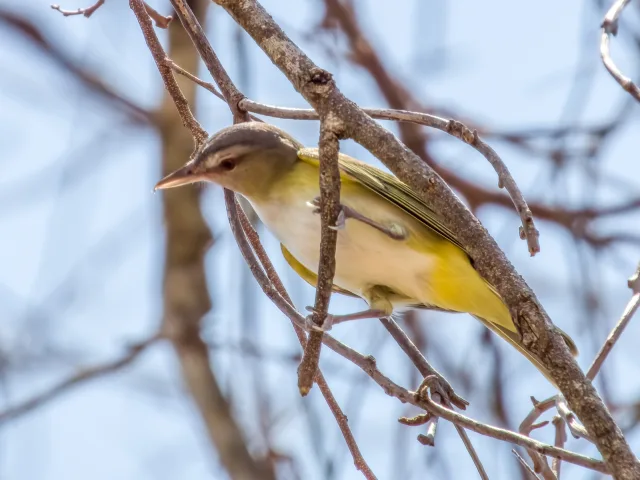
Yellow-green Vireo (V. flavoviridis): An occasional vagrant, primarily to South Texas, resembling a Red-eyed Vireo but with a brighter, more extensive yellow-green wash.
Thick-billed Vireo (V. crassirostris): A very rare vagrant from the Caribbean, distinguished by its very large, thick bill.
Cuban Vireo (V. gundlachii): An extremely rare visitor, almost exclusively found in the Florida Keys.

Yellow-green Vireo
In the US, identifying vireos often relies as much on learning their slow, methodical songs as on seeing their subtle plumage differences, making them one of the most rewarding groups for advanced birders to study.
