

Utah, a state defined by its dramatic topography—from the high peaks of the Uinta Mountains to the vast salt flats and the deep canyons of the Colorado Plateau—is arguably one of the best locations in North America for viewing birds of prey. The combination of varied ecosystems, massive tracts of undeveloped public land, and its crucial position along major migratory corridors creates a veritable raptor superhighway. With over 30 species of diurnal and nocturnal birds of prey documented within its borders, Utah offers unparalleled opportunities to observe everything from massive Golden Eagles to tiny Flammulated Owls.
The sheer diversity and abundance of raptors here aren’t accidental; they’re the direct result of the state’s unique geography and climate, which provide ideal nesting, foraging, and migratory conditions year-round.
The Geography of Greatness: Why Utah is a Raptor Mecca
Three primary factors contribute to Utah's status as a world-class raptor viewing destination.

1. The Intersection of Biomes
Utah is a place where three major ecological regions converge: the Great Basin (characterized by sagebrush and juniper), the Colorado Plateau (arid canyons and mesas), and the Wasatch and Uinta Mountains (coniferous and alpine zones). This creates distinct foraging niches and prey bases for different raptor species:
- Open Country Hunters: The vast, open grasslands and sagebrush steppe of the Great Basin are perfect for species that hunt on the wing, such as Northern Harriers and Rough-legged Hawks (in winter). The abundant small mammals (voles, mice, ground squirrels) sustain large populations of Red-tailed Hawks and American Kestrels.
- Canyon and Cliff Dwellers: The red-rock country of Southern Utah and the steep slopes of the Wasatch Range provide inaccessible cliff faces and canyons essential for nesting. This is the domain of the Golden Eagle, Peregrine Falcon, and Prairie Falcon.
- Forested Owls: The mountainous zones offer the dense coniferous forest needed by specialized owls like the Boreal Owl and the smallest, the Flammulated Owl.
2. Thermal Corridors and Concentration Points

The abrupt rise of the Wasatch Front (the steep transition from the valley floor to the mountains) creates ideal conditions for thermal lift, which migratory raptors ride effortlessly. This corridor acts as a natural funnel during migration.
HawkWatch International: Areas like the Wellsville Mountains and the Goshute Mountains (just west of the state line in Nevada, but essential to Utah's raptor flyway) become major bottlenecks for migrating raptors in the fall. Tens of thousands of birds, including Sharp-shinned Hawks, Cooper’s Hawks, and various falcons, pass through these points annually, offering phenomenal observation opportunities.
Crucially, the sheer variety of prey species—from waterfowl and upland game birds to lizards and rodents—ensures that raptors have food available in every season. The wetlands and playas surrounding the Great Salt Lake are particularly vital, supporting high densities of raptors that prey on the millions of waterfowl and shorebirds passing through.

Key Diurnal Raptors of Utah (The Day Hunters)
Utah’s daytime skies are patrolled by a diverse and fascinating array of hawks, eagles, and falcons.
The Eagles
Golden Eagle (Aquila chrysaetos): Utah’s quintessential bird of the high desert and mountains. It is the most common eagle in the state, easily distinguished from the Bald Eagle by its all-brown plumage and golden-brown nape feathers.
- Habitat: Remote, rugged mountains, canyons, and vast open rangelands.
- Spotting Tip: Look for them soaring high above canyon walls or perched atop utility poles in open country. Their wings are long and held in a slight dihedral (shallow 'V') when gliding.

Golden Eagle

The Falcons
Falcons are built for speed, with sleek bodies and pointed wings.
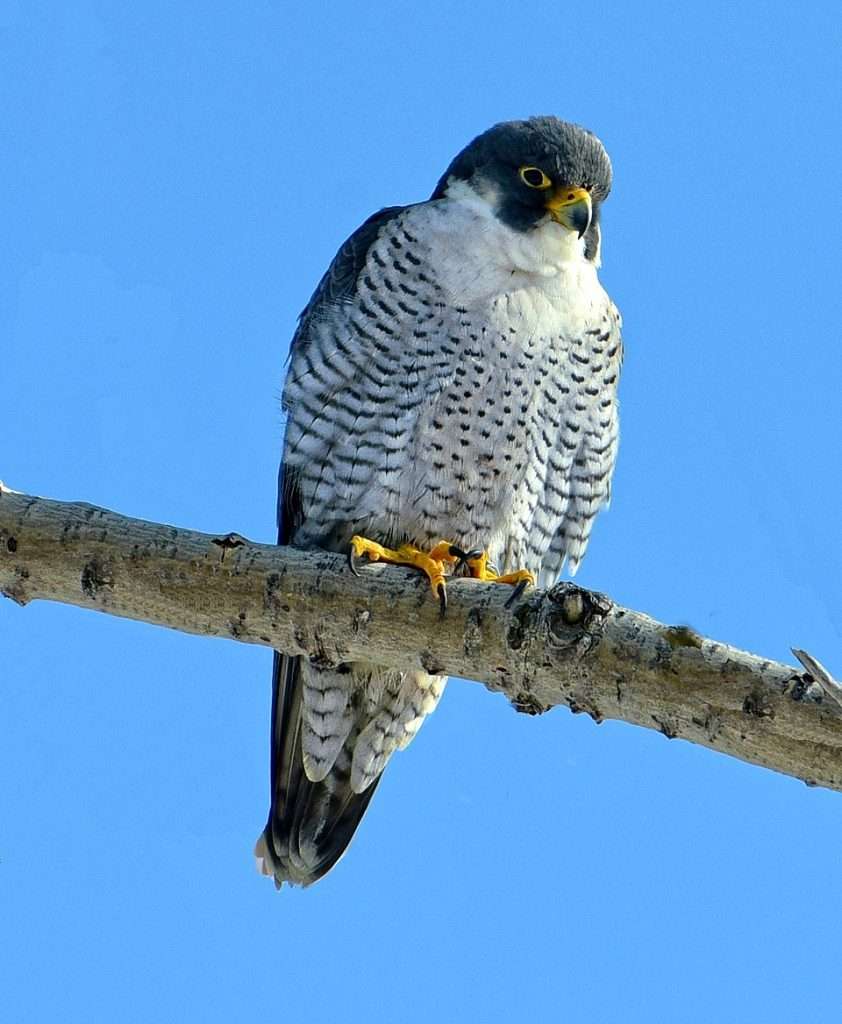
Peregrine Falcon (Falco peregrinus): The world’s fastest animal, this falcon is found nesting on cliffs in the Wasatch Mountains and the canyonlands.
Prairie Falcon (Falco mexicanus): The most common large falcon, it is lighter-colored and prefers the arid plains and buttes of the Great Basin and Colorado Plateau, often hunting ground squirrels.

Spotting Tip: Look for them near the tops of canyons or powerline towers. The Prairie Falcon is typically a pale brown with dark "armpit" patches (axillaries) visible in flight.
The Hawks
The most numerous group, encompassing buteos (broad-winged, soaring hawks) and accipiters (short-winged, agile hunters).
Red-tailed Hawk (Buteo jamaicensis): The ubiquitous sentinel of the Utah landscape. Found everywhere, easily identified by its broad wings, belly band, and, when mature, its famous reddish tail.

Spotting Tip: Check nearly every telephone pole, highway sign, and isolated tree—they are the most common roadside raptor.
Ferruginous Hawk (Buteo regalis): North America’s largest hawk, found predominantly in the open grasslands and sagebrush of western Utah. Its name comes from the rusty (ferruginous) shoulder patches and leg feathers.

Spotting Tip: Look for it perched low on a haystack or small rise. Its flight profile shows a pale underwing with dark wingtips and a distinctive dark "V" where its leg feathers meet.
Northern Harrier (Circus hudsonius): A distinctive hawk that flies low over marshes and fields with a buoyant, rocking motion, relying on its hearing to catch prey.
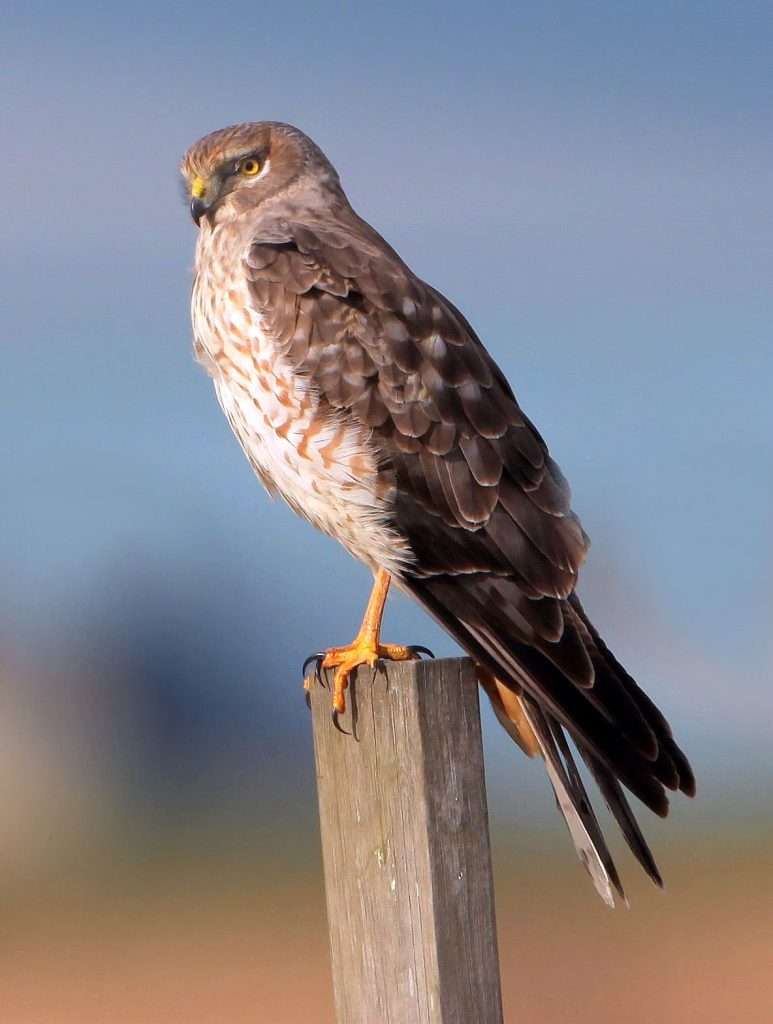
Spotting Tip: Look for the conspicuous white rump patch (visible in both sexes) as it glides over cattails and grasslands.
The Night Watchmen: Utah’s Owls (Nocturnal Raptors)
Utah’s remote forests and deep canyons hide a wonderful diversity of owls, often requiring specialized knowledge and night hiking to find.
Great Horned Owl (Bubo virginianus): The most common and widespread owl, recognizable by its large size and prominent ear tufts. Found in all habitats, from suburban parks to canyon bottoms.

Flammulated Owl (Psiloscops flammeolus): The smallest of the state's cavity-nesting owls, barely larger than a sparrow. It is a summer resident of the high-elevation Ponderosa Pine forests, feeding primarily on insects.

Spotting Tip: Search the mid to high-elevation coniferous forests (like those in the Dixie National Forest). The only way to reliably find this owl is to listen for its soft, low, monotonic hoot at night.
Burrowing Owl (Athene cunicularia): A unique, long-legged owl of the open plains that nests underground in abandoned prairie dog or badger burrows.

Spotting Tip: Look for it standing near the entrance of a burrow in open grasslands or pastures, often teetering on long legs. They are diurnal, making them easier to spot during the day.
Tips for Raptor Watching in Utah
Raptor watching requires patience and a good pair of binoculars or a spotting scope.
- Check Powerlines and Poles: In vast, open areas, raptors frequently use man-made structures as their highest available perch to survey the land. This is especially effective for Red-tailed Hawks and Eagles.
- Use a Spotting Scope for Cliffs: To find nesting Peregrine or Prairie Falcons and Golden Eagles, you must scan large cliff faces from a distance. A scope is essential for this. Good locations include areas near Zion National Park and the high passes of the Wasatch Range.
- Time the Migration: Visit observation points run by HawkWatch International, such as the Wellsville Mountains, during September and October for peak migration traffic. You can often see dozens of individual raptors pass overhead in a single hour.
- Visit Refuges: The Bear River Migratory Bird Refuge and the wetlands around the Great Salt Lake are outstanding locations, particularly in winter, for spotting Northern Harriers, Bald Eagles, and various wintering hawks.
- Go Nocturnal for Owls: For species like the Flammulated Owl or Western Screech-Owl, go out around dusk or after dark in their preferred habitat and listen for their specific calls. Playing recordings (spishing) is sometimes used to lure them, but should be done judiciously to avoid disturbing the bird.
Utah's expansive, rugged landscape offers the perfect blend of habitat, prey, and geography to sustain a dynamic and diverse raptor population, solidifying its reputation as a must-visit destination for any serious bird of prey enthusiast.
