
In the world of birdwatching, there is a distinct line between a "birder" and a "twitcher." While a birder might spend a peaceful Sunday at a local marsh, a twitcher is a high-stakes adrenaline junkie for whom a rare bird alert is a command to drop everything—jobs, spouses, and financial sanity—to race across the country.
The term "twitcher" allegedly originated in the 1950s to describe the nervous, shivering excitement of British birders who, upon hearing of a rarity, would literally "twitch" with anticipation. Today, that nervous energy has evolved into a global subculture defined by extreme logistics, staggering costs, and behaviors that border on the obsessive.
The British "Stampede"
Nowhere is twitching more codified or competitive than in the United Kingdom. Because the U.K. is geographically compact, a "mega-rarity" can be reached from almost anywhere within a day’s drive. This creates a unique phenomenon: the mass exodus.
When a Golden-winged Warbler (a native of North America) was spotted in Kent, an estimated 2,500 people converged on the site within 48 hours. In the U.K., these "mega-twitches" often take place in quiet residential cul-de-sacs. There are legendary stories of hundreds of middle-aged men in waterproof gear standing on ladders to peer over a stranger’s garden fence, while the bewildered homeowner sells tea and coffee to fund their local church or a cat shelter.

In the Scilly Isles, a prime spot for vagrants, the arrival of a rare bird can trigger a "400-meter hurdle" of birders. Eyewitnesses have described the sight of hundreds of men running along the beach, tripods slung over shoulders, leaping over boat guy-lines and face-planting in the sand, all to catch the first boat to a neighboring island before the sun goes down.
The American "Big Year"
In the United States, the scale is different, but the obsession is just as fierce. Because the U.S. is so vast, American twitching—often called "chasing"—usually involves last-minute flights and grueling road trips.
The ultimate expression of this is the Big Year, a 365-day marathon to see as many species as possible. In 2013, birder Neil Hayward traveled over 250,000 miles, spent tens of thousands of dollars, and weathered multiple thunderstorms in Arizona just to see a single hummingbird at sunset. He eventually set a record of 749 species, but not without a massive toll on his personal life.
From Cardinals to Cockatoos: The Ultimate U.S. Birder’s Guide to Australia
American birders have been known to hire private planes to reach remote Alaskan islands like Attu, where they spend weeks living in converted shipping containers, eating canned food, and biking through freezing rain on the off-chance that a storm from Siberia "delivers" a rare Asian flycatcher to U.S. soil.
When the Obsession Turns Wild
The extremes to which twitchers go can sometimes lead to the surreal or the tragic:
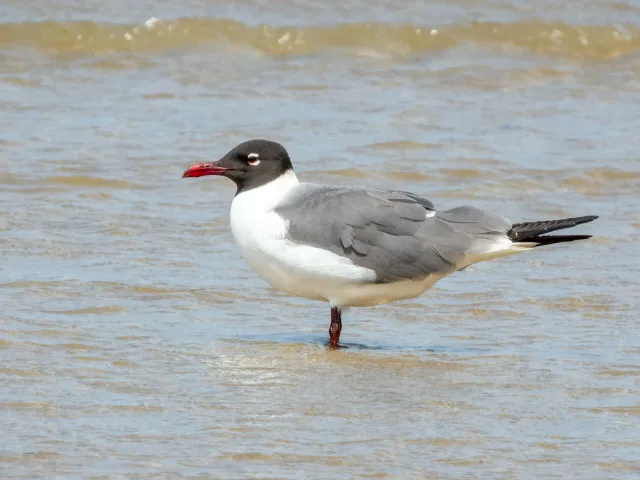
The Corpse Tick: There is an apocryphal but famous story from Cornwall, England, where a group of birders arrived to see a Laughing Gull. When they asked a local birder if he had seen it, he reportedly reached down and handed them the bird's fresh corpse, which had died just minutes before they arrived.
The Birding "Brawl": Tensions can run high when a rare bird is hidden in thick brush. There are documented cases of birders getting into verbal and even physical altercations over "blocking" someone’s line of sight or accidentally flushing a bird before everyone in the crowd could see it.
The Ultimate Price: The most extreme (and sobering) example occurred in 1990, when two British birders, Tim Andrews and Mike Entwistle, were twitching in Peru. Their quest for the elusive Oilbird led them into a territory controlled by the Shining Path guerrilla movement. Tragically, both were captured and killed, highlighting the dangerous lengths some will go to for a "life bird."

Why Do They Do It?
To the outsider, spending $5,000 on a flight to see a "small brown bird" that looks nearly identical to a common sparrow seems like madness. But for the twitcher, it’s about the "Tick." It is a combination of competitive sport, treasure hunting, and a deep, primal desire to witness a biological anomaly. It’s the thrill of seeing something that—mathematically and geographically—should not be there. Whether it’s reopening a closed airport in the Shetland Islands for a Cape May Warbler or standing in a muddy ditch in Texas for twelve hours, the twitcher lives for the moment the binoculars focus and the rarity is confirmed.
2025 Twitched Birds
As of late 2025, both the U.S. and U.K. are seeing some heavy-hitting rarities that are currently drawing crowds of "chasers" and "twitchers." Here are the highlights of what is causing a stir right now:
United Kingdom: The December "Megas"
The U.K. is currently playing host to several birds that have traveled immense distances to reach British shores:
Scops Owl (Glamorgan, Wales): This is the current "star" of the U.K. birding scene. A homeowner in Killay discovered this tiny, Mediterranean owl while topping up her garden bird feeders. It is an incredibly rare visitor to the U.K., and its appearance in a suburban garden is the classic "mega" setup that triggers a massive twitch.
Hume’s Warbler (Norfolk): A tiny visitor from the mountains of Central Asia. These warblers are notoriously difficult to distinguish from the more common Yellow-browed Warbler, making them a "prestige" tick for serious birders.
Black Scoter & King Eider (Highland, Scotland): In a rare "double-header," a male Black Scoter (a rare American visitor) and a King Eider have been hanging out together in the same bay in the Scottish Highlands.

Semipalmated Sandpiper (County Clare, Ireland): While technically in Ireland, this North American shorebird is currently on the "to-do" list for many British twitchers willing to take the ferry or a short flight.
United States: The December "Megas"
The ABA (American Birding Association) area is seeing a "winter of firsts," with some truly accidental visitors appearing in unexpected places:
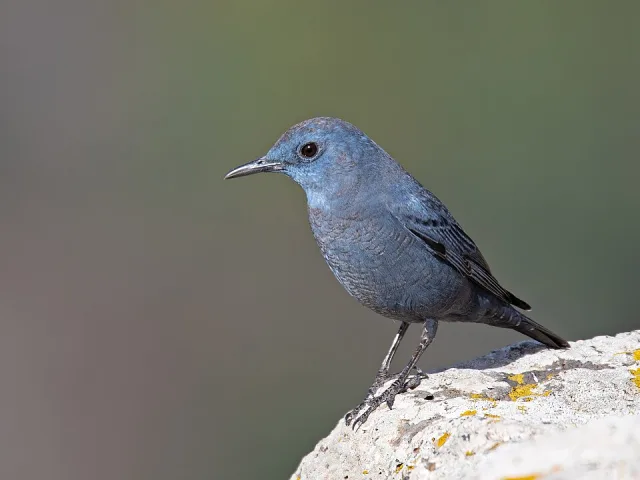
Blue Rock-Thrush (Oahu, Hawaii): This is a first-ever record for the state of Hawaii. Following the legendary sightings in Oregon and California last year, this bird has now appeared on the western point of Oahu, causing a local frenzy.
Yellow-headed Caracara & Cattle Tyrant (Texas Coast): Texas continues its streak as the "rarity capital" of the U.S. Both of these South American species (both ABA Code 5, the highest rarity level) are currently persisting on the Upper Texas Coast.
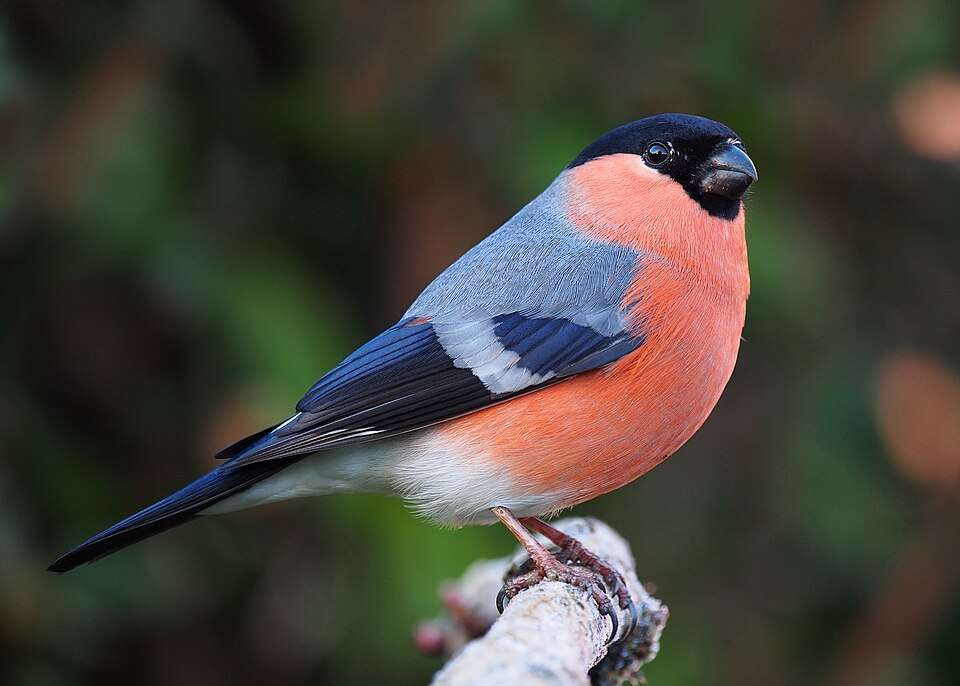
Eurasian Bullfinch (Yukon): In a massive record for the North, a Eurasian Bullfinch—a chunky, pink-breasted bird from Europe/Asia—is currently being seen in the Yukon. It is the first record for the territory.
Steller's Sea-Eagle (Newfoundland): The "Great Wanderer" is still at it. The same individual that toured the East Coast in 2021–2022 is currently being tracked in Newfoundland, proving it has successfully adapted to the North American winter.
Pyrrhuloxia (North Dakota): Usually found in the deserts of the Southwest, a Pyrrhuloxia (sometimes called a "Desert Cardinal") has appeared at a feeder in North Dakota—a first for the state.
Recent "First State Records"
In the last few weeks, several states have recorded species for the very first time, a gold mine for local listers:
New Hampshire: Common Cuckoo (1st state record).
Connecticut: Cassin's Kingbird (1st state record).
Nova Scotia: Common Shelduck (unbanded/wild individual).
From Quiet Hobby to High-Stakes Chase: The Competitive World of Birding
